
Opinions
11:13, 07-Jun-2018
The Heat: The US's attempt to manage China
 ["china"]
Share







Copied
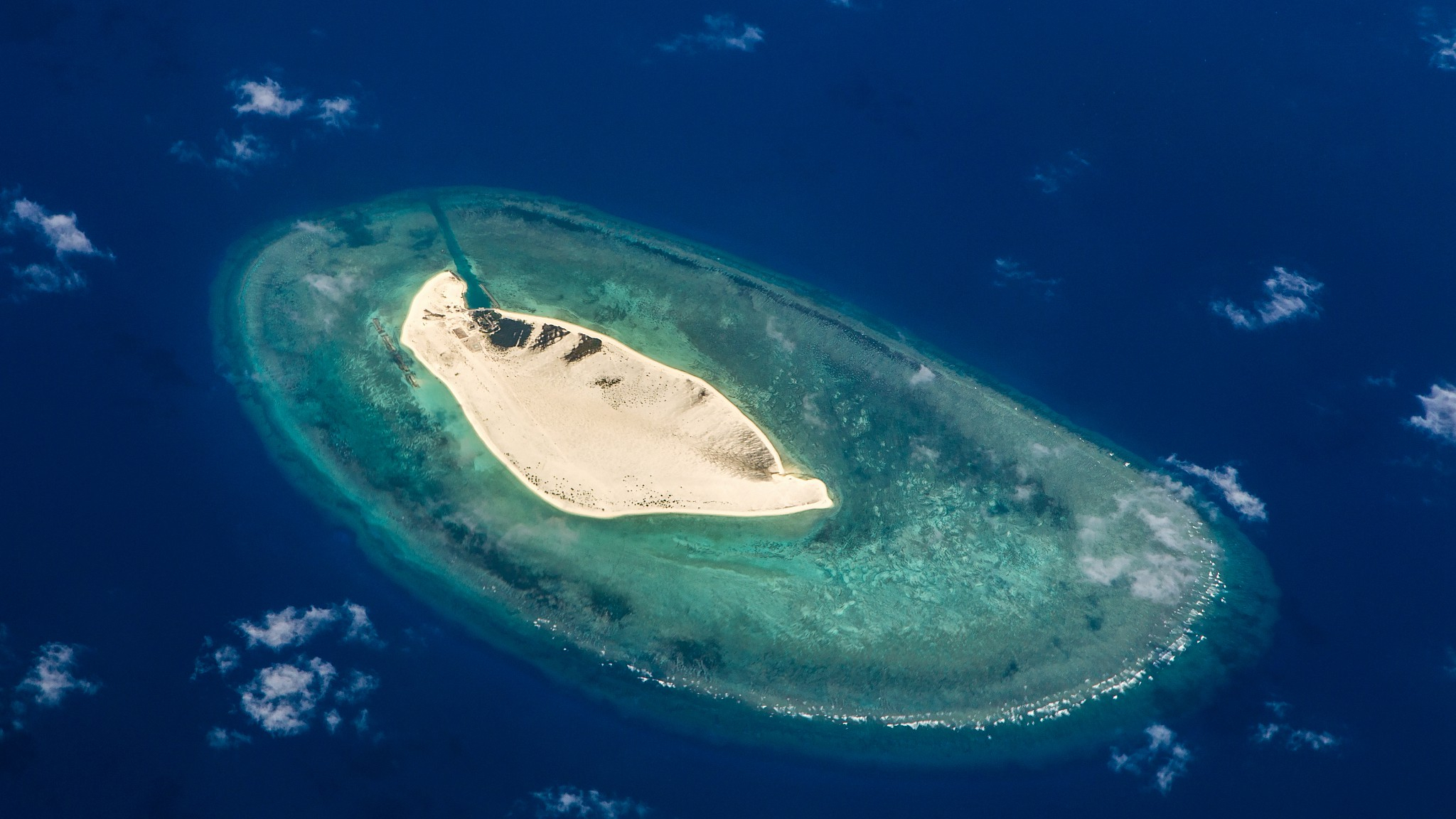
US Secretary of Defense Jim Mattis, who was at the Shangri-La Dialogue in Singapore last week, said that China’s placement of weapon systems in the South China Sea was tied directly to “military use for the purposes of intimidation and coercion,” and reiterated the United States’ centrality to preserving a rules-based order in Asia.
Merrill Matthews, a resident scholar for the Institute for Policy Innovation, viewed the push backs against China as a signal released by the US to reassure some of the Asia-Pacific rim nations that America is back in the game.
Matthews further pointed out that even though Secretary Mattis was speaking to the conference, the real audience for his speech was China. He Lei, vice president of the Academy of Military Science of the Chinese People’s Liberation Army, was aware of the implication and soon responded to Mattis’s comments, arguing that the garrison and deployment of weapons were within the scope of China’s sovereignty, and the United States was interfering with China’s internal affairs.
While the United States was criticizing China’s placement of weapons in the South China Sea, Victor Gao, the director of the China National Association of International Studies, found Mattis’ comments “very provocative, destructive and unconstructive” for peace and stability in Asia. He told CGTN that instead of putting bluffs on China, the United States should be the one to blame.
“The Chinese armament in the Chinese-owned territories, in the South China Sea, is in direct response to the provocation by the United States military in the South China Sea,” Gao said. “China is not to be bluffed, and the more pressure you put onto China, the more resilient will China become.”
01:15
Gao said that China’s placement of weapons was simply a “self-defense,” and the United States might need to refrain from the pushbacks, otherwise China would continue to arm up these islands by sending even more troops.
Matthews offered a different opinion on this issue. He said that the United States’ interest was to make sure that the international sea lanes were open for trade, rather than using the military means as a bluff against China.
“President Obama told us that he got assurances that China was not going to militarize these islands,” Matthews said. “The US now believes that is happening.“
Gao disagreed with Matthew’s standpoint, saying that as the largest trading nation, China pays more attention on the international freedom of navigation for ships in the South China Sea than any other country, and China never blocks the international sea lanes. He said this accusation was another excuse made by the US to provoke disorders.
The US recently renamed its Pacific Command as the Indo-Pacific Command in a move reflecting the growing importance of India’s security role in the region. The timing coincided with the growing tensions over the South China Sea. This seems like another attempt by the Trump administration to manage a rising China.
Sourabh Gupta, a senior Asia-Pacific international relations policy specialist, said that the US was trying to create an exclusive club which kept the majority of Asian countries out of it. However, Indian Prime Minister Narendra Modi chose to stay out of this plan by offering a different view of what “Indo-Pacific” means at the Shangri-La dialogue last week.
“India does not see the Indo-Pacific region as a strategy or as a club of limited members. Nor as a grouping that seeks to dominate,” Modi said. “And by no means do we consider it as directed against any country. A geographical definition, as such, cannot be.”
Despite the possible intention of these actions and the dispute regarding sovereignty over the South China Sea between the two countries, Paolo Von Schirach, president of the Global Policy Institute, took a different look at all this. He said that right now the United States might no longer have the tools and the ability to enforce its own plans.
“The American naval presence in the Pacific region has shrunk significantly because our fleet has shrunk,” he said. “In the Reagan administration, we were talking about a 600-ship Navy. Now we are below 300. I just don’t see America having the tools to implement this strategy whereas China, as a growing power being more prosperous and being able to devote more resources to its military, has had a chance to assert itself more forcefully in its immediate neighborhood.”
The Heat with Anand Naidoo is a 30-minute political talk show on CGTN. It airs weekdays at 7:00 a.m. BJT and 7:00 p.m. Eastern in the United States.