
Culture
20:17, 11-May-2018
Musical artists from Europe converge for 2018 Eurovision finals
 ["china"]
Share







Copied
02:19
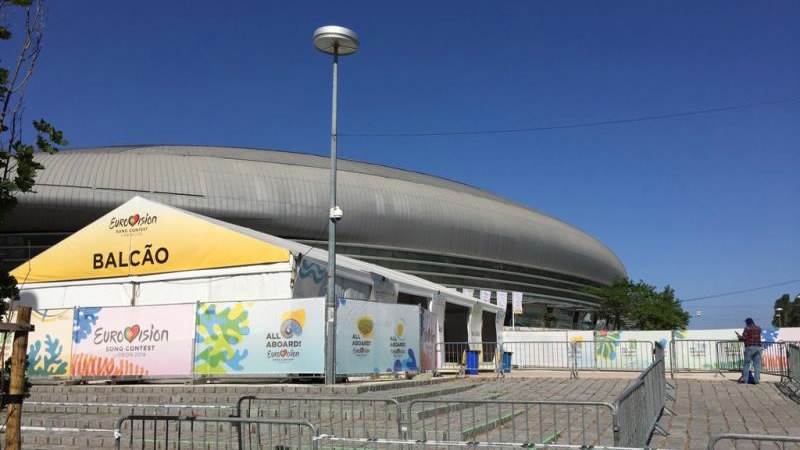
Eurovision, the world’s longest running annual international TV song competition, is now in its 62nd edition, with the final concert set for Saturday night in Lisbon, Portugal because of Portuguese Salvador Sobral's win last year.
Millions of fans from participating countries will be watching the event live and, at the end, voting in real time for the winner. The televised audience also extends around the world.
It’s a moment every spring for Europe, with a long history of division, to set aside differences and enjoy the music and the work of the mostly young performers. Artists like Sweden’s ABBA and Spain’s Julio Iglesias are among various acts which got a boost from their strong Eurovision performances in the past.

Hungary's AWS band at Eurovision 2018. /CGTN Photo
Hungary's AWS band at Eurovision 2018. /CGTN Photo
Among the curiosities, Australia - which is not located anywhere near Europe - has returned again as a special guest to the festival. And this year, it made it into final 26 acts, with Jessica Mauboy’s song “We Got Love.”
If Australia were to win, somehow, then Eurovision 2019 would be held in Germany, by prior arrangement, so that not all of the Europeans would have to go around the globe to Australia, an event organizer told CGTN.
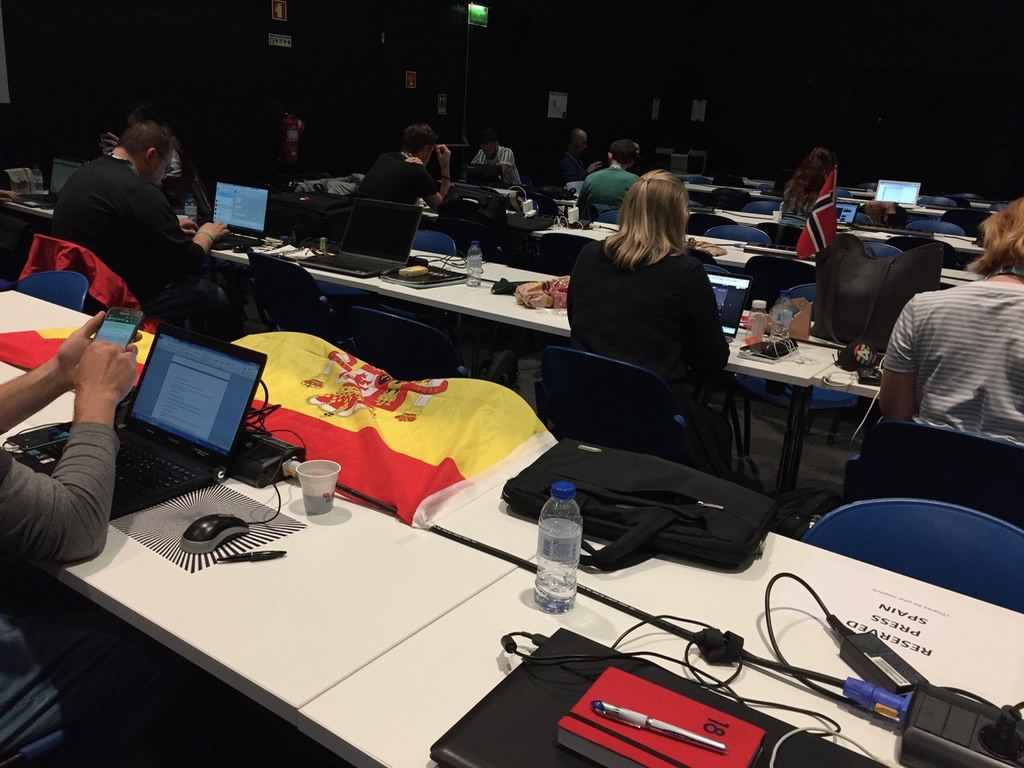
Press delegations show their flags. /CGTN Photo
Press delegations show their flags. /CGTN Photo
But a favorite this year, according to odds makers, is Elene Foureira of Cyprus. Her snappy pop tune, “Fuego”, or “Fire”, is catching a lot of attention. Like many of the Eurovision performers, she’s been working in the music field for several years now.
At Eurovision headquarters, which is at a big Lisbon arena by the Tagus River, we caught an impromptu concert, performed from a bench for some journalists, by Hungary’s entry, a band called AWS. They sung in Hungarian but many of the competing countries are singing in English, presumably to give their work broader appeal.
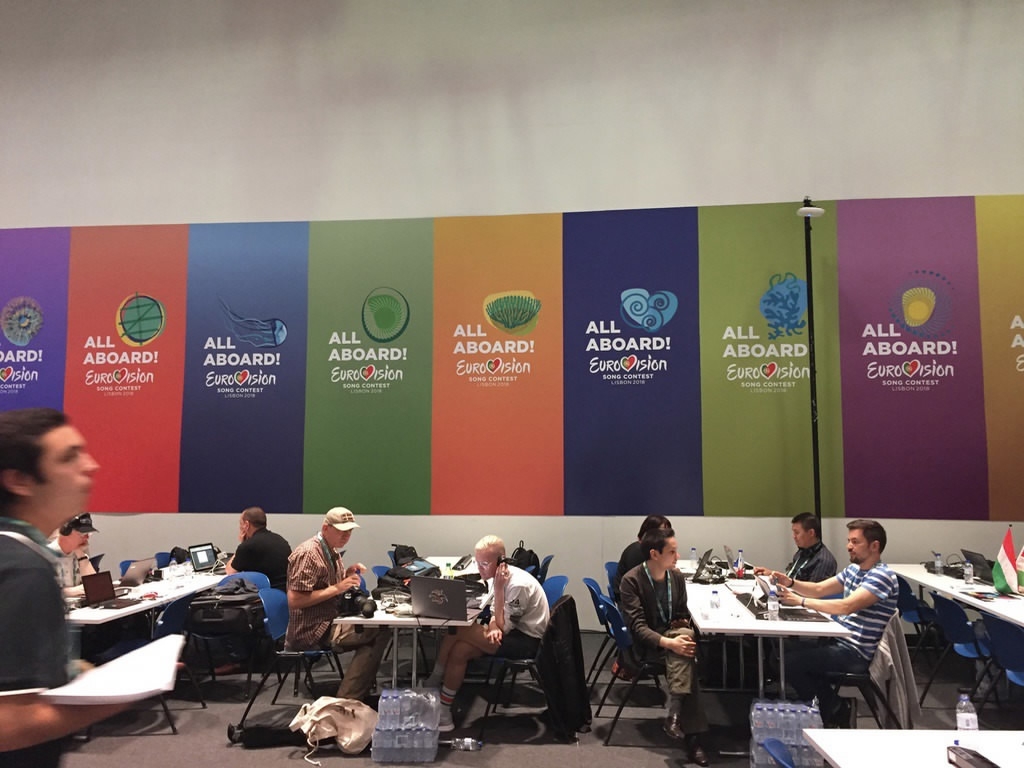
Press room at Eurovision 2018. /CGTN Photo
Press room at Eurovision 2018. /CGTN Photo
Various performers and journalists at the Eurovision site insisted that the finals are not a time for politics. But we’ve observed in the past how countries that are neighbors or friends tend to vote for each other, often leaving other countries on the short end.