01:59
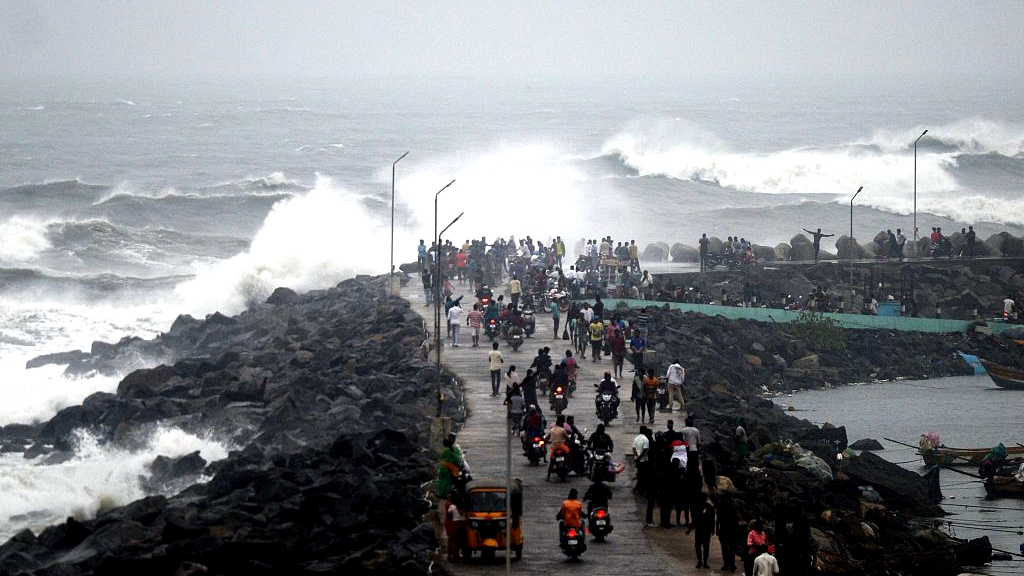
Cyclone Fani has slammed into India's eastern coastline, according to the country's Meteorological Department.
The monster weather system brought heavy rain in the eastern state of Odisha, which is directly in the path of the storm.
Forecasters say the areas could see gusts of up to 200 kilometers per hour, equivalent in strength to a Category 3 to 4 hurricane.
There are no casualties for now. However flooding has been reported from several areas, and reports are coming in of trees falling and roofs of buildings being destroyed.
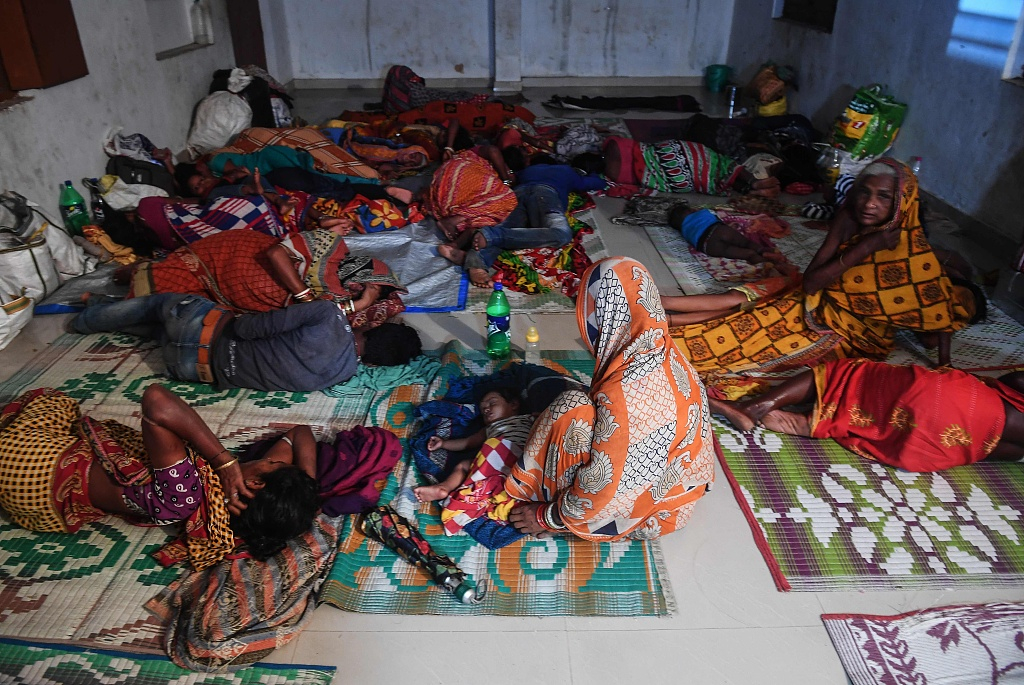
People evacuated for safety rest in a temporary cyclone relief shelter in Puri, the eastern Indian state of Odisha, May 3, 2019. /VCG Photo
People evacuated for safety rest in a temporary cyclone relief shelter in Puri, the eastern Indian state of Odisha, May 3, 2019. /VCG Photo
More than a million people have been evacuated from the eastern state of Odisha, where the storm is expected to hit hardest.
Hundreds of thousands of more people in West Bengal state have also been given orders to flee. Special teams were moving through holiday villages urging tourists to get to safety.
Fani was expected to barrel northeastwards into West Bengal and towards Bangladesh, on a trajectory that will take it over the homes of 100 million people.
India's National Disaster Response Force (NDRF) shared images of several uprooted trees along the coast in Andhra Pradesh state to the south.
The NDRF teams were trying to remove the fallen trees and branches to ensure they don't become projectiles if the winds intensify.
'Total destruction'
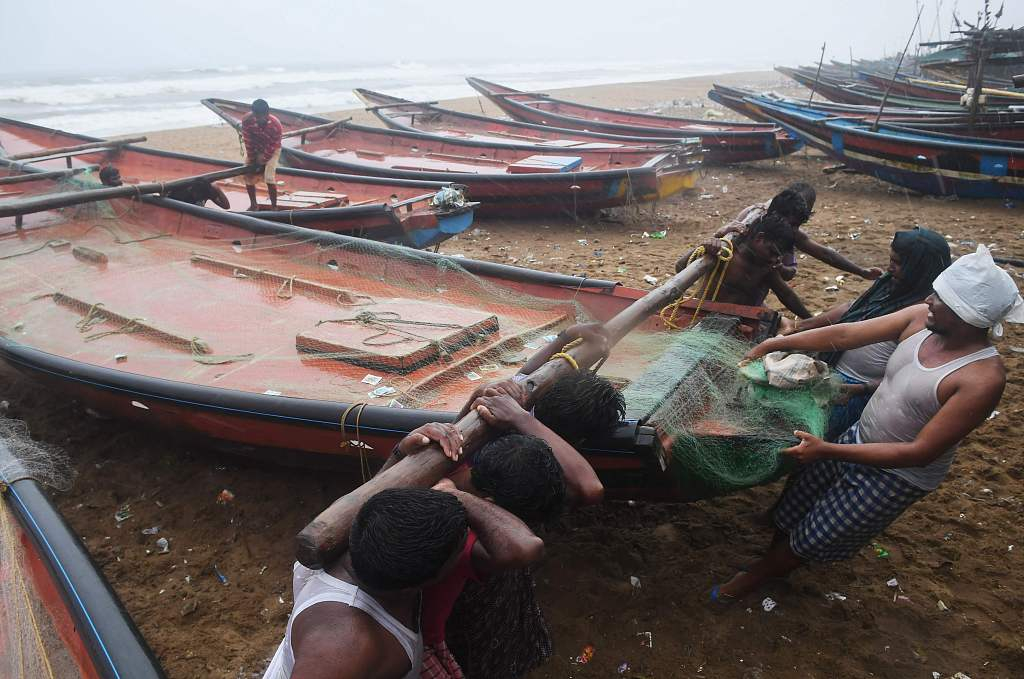
Indian fishers pull a boat to higher ground on a beach in Puri, the eastern state of Odisha, India, May 2, 2019. /VCG Photo
Indian fishers pull a boat to higher ground on a beach in Puri, the eastern state of Odisha, India, May 2, 2019. /VCG Photo
Meteorologists have warned of the "total destruction" of thatched houses, the uprooting of power and communication poles, the "flooding of escape routes" and damage to crops in some areas.
Some 3,000 shelters in schools and government buildings have been set up to accommodate more than a million people in Odisha. More than 100,000 dry food packets are ready to be dropped if needed, reports said.
More than 200 trains have been canceled along coastal routes, according to Indian Railways. Three special trains were running however from Puri to evacuate pilgrims and tourists.
Flights have been canceled in and out of Odisha's capital Bhubaneswar and Kolkata in West Bengal until at least Saturday.
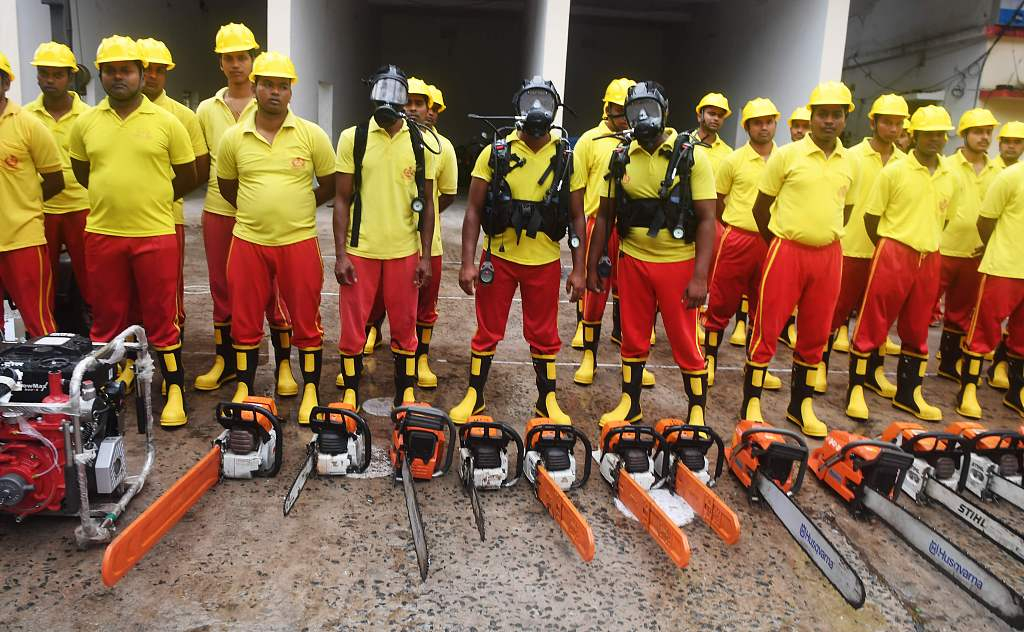
Indian firefighters stand next to their equipment as they get ready ahead of Cyclone Fani's landfall on the Indian coastline, in Puri, the eastern state of Odisha, India, May 2, 2019. /VCG Photo
Indian firefighters stand next to their equipment as they get ready ahead of Cyclone Fani's landfall on the Indian coastline, in Puri, the eastern state of Odisha, India, May 2, 2019. /VCG Photo
Ports have been closed, but the Indian Navy has sent six warships to the region while India's biggest oil and gas producer ONGC evacuated almost 500 workers from offshore rigs.
Measures were also being taken to protect the eight-and-a-half-century old Jagannath temple in the city.
Electricity and water supplies were already cut for much of the city of 200,000 people.
Only a few police vehicles and tractors were trying to pull trees or push aside collapsed walls.
Media reports said hundreds of trees were uprooted at the nearby Chilika Lake just south of Puri in the first violent winds.
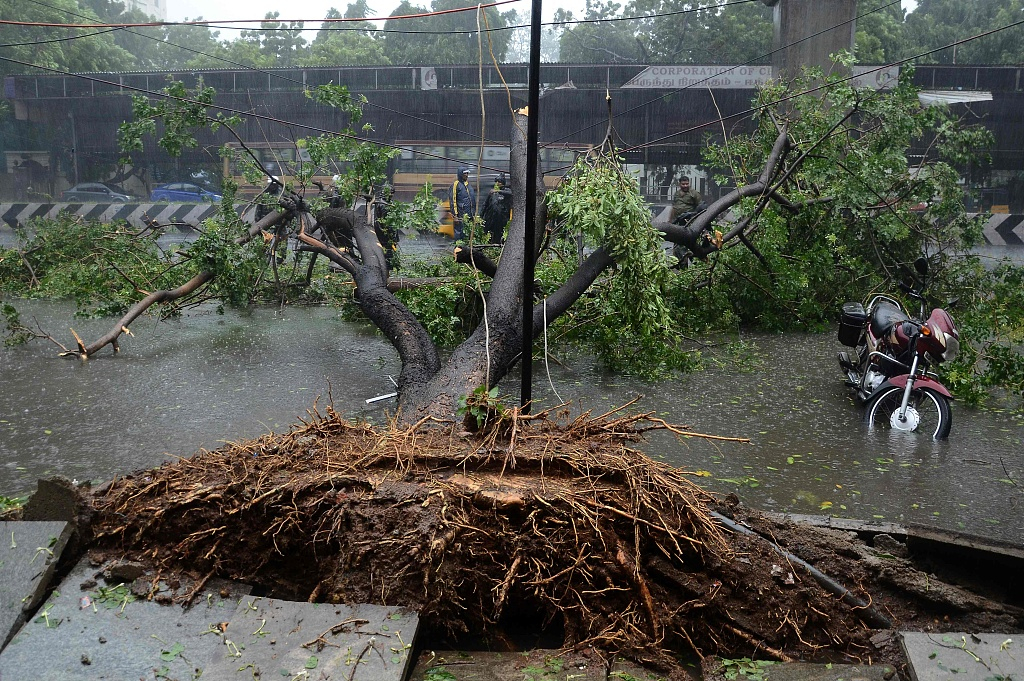
A tree fell across a street after Cyclone Vardah crossed the Indian coast, Tamil Nadu, India, December 12, 2016. /VCG Photo
A tree fell across a street after Cyclone Vardah crossed the Indian coast, Tamil Nadu, India, December 12, 2016. /VCG Photo
Metal shutters covered storefronts and sand blew up the streets from the nearby beach.
But a few thousand are known to have defied the evacuation orders in Puri. Some took shelter in local schools and hotels.
Krishna Chandra Sahu, 43, took seven members of his family to a city hotel to ride out the storm.
"We didn't feel our home was safe, so we came here," he said.
"We will just stay for the day until the cyclone has passed. We are not scared, but we feel safer here."
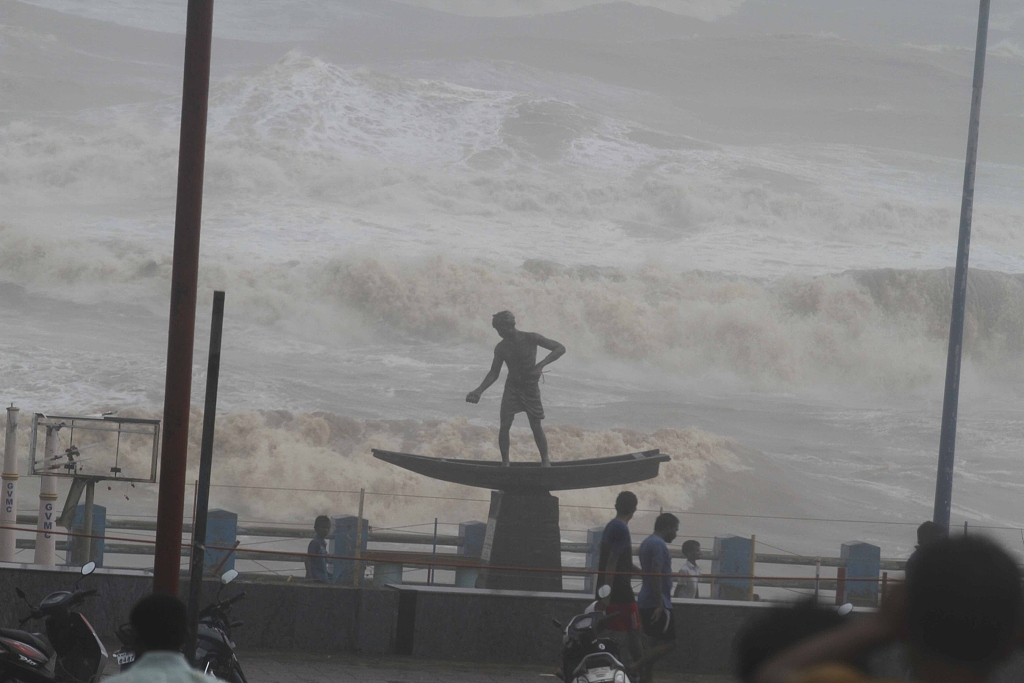
Cyclone Hudhud hit India's east coast, killing at least six people and leaving behind a trail of destruction in Andhra Pradesh and neighboring Odisha, India, October 12, 2014. /VCG Photo
Cyclone Hudhud hit India's east coast, killing at least six people and leaving behind a trail of destruction in Andhra Pradesh and neighboring Odisha, India, October 12, 2014. /VCG Photo
In Bangladesh, disaster management chief Mohammad Hashim said that more than 4,000 cyclone shelters had been opened in 19 coastal districts.
The country's weather bureau has told deep-sea fishing vessels to stay near the coast, while inland water transport activities were suspended.
India's east coast is vulnerable to destructive storms.
In 2017 Cyclone Ockhi left nearly 250 people dead and more than 600 missing in Tamil Nadu and Kerala.
The 1999 storm took 10,000 lives, as well as wreaking 4.5 billion U.S. dollars worth of damage.

 ["china"]