
Tech & Sci
13:42, 03-Jul-2018
The race to rub out plastic
Updated
10:55, 16-Jul-2018
 ["china"]
Share







Copied
02:07
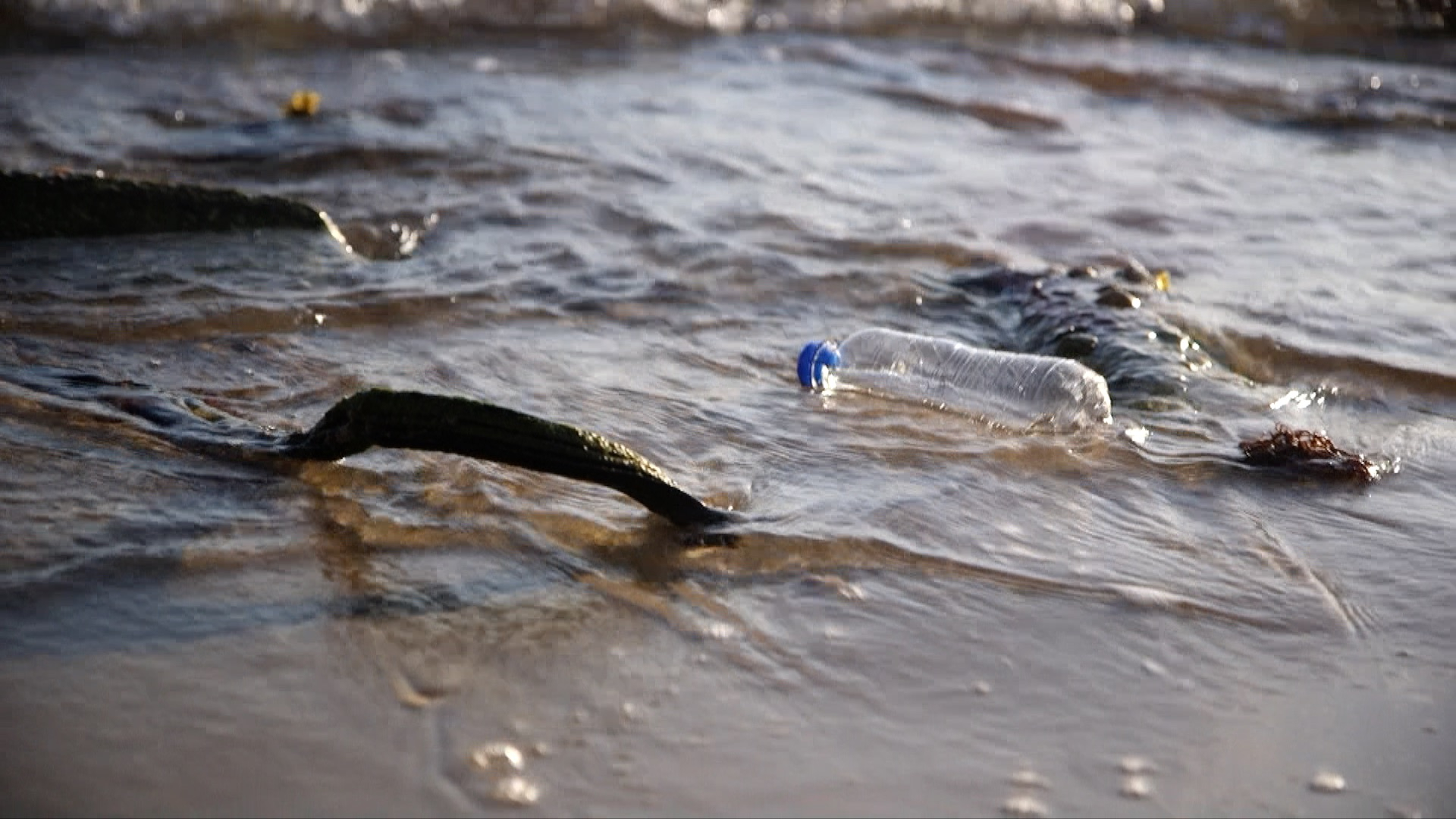
Most of the 270,000 tonnes of plastic floating around the world’s rivers, lakes, seas and oceans and taking up space in landfills is not recyclable.
Consumers, environmentalists and governments have been made painfully aware of this fact during the past year as the world sees an increasing number of images depicting garbage-lined shores, animals dying of plastic ingestion and toxic landfills dotted with bags and bottles that will not disintegrate for generations to come.
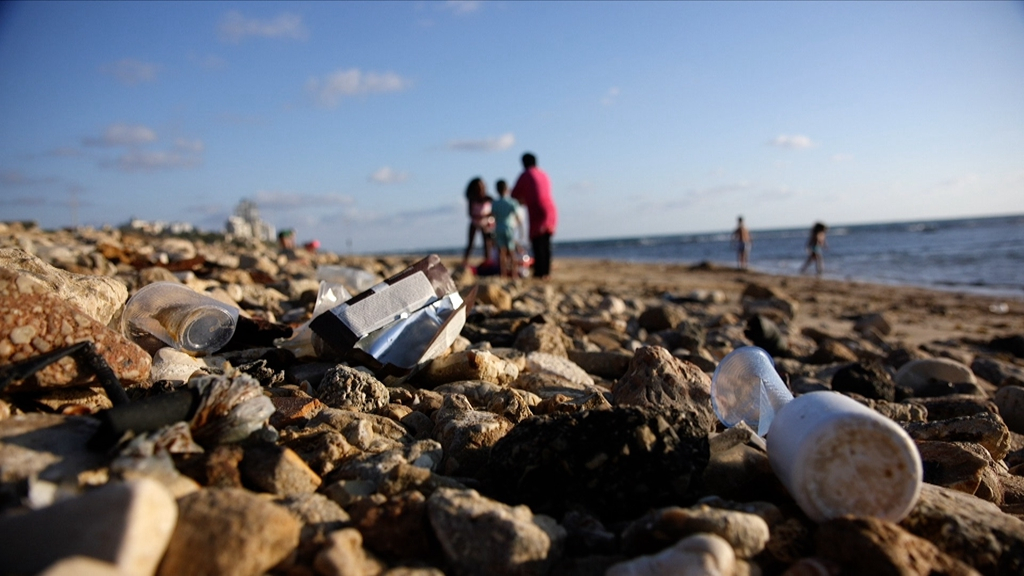
Family on beach. /CGTN Photo
Family on beach. /CGTN Photo
China: The country behind world awareness
Awareness of the scope of the problem started when China began rejecting about half of the world’s refuse on Jan. 1 of this year. Until that point, countries shipped plastic and paper waste to China for recycling.
Governments are now scrambling to find ways of moderating plastic use through awareness campaigns and funding R&D for developing plastic alternatives.
“It stays here after us, after our children, after our grandchildren. For hundreds of years, each and every fork and each and every spoon or straw they use is still here,” said Maya Gakoviss, CEO of Zalul Environmental Association.
Solution: Bio-degradable packaging
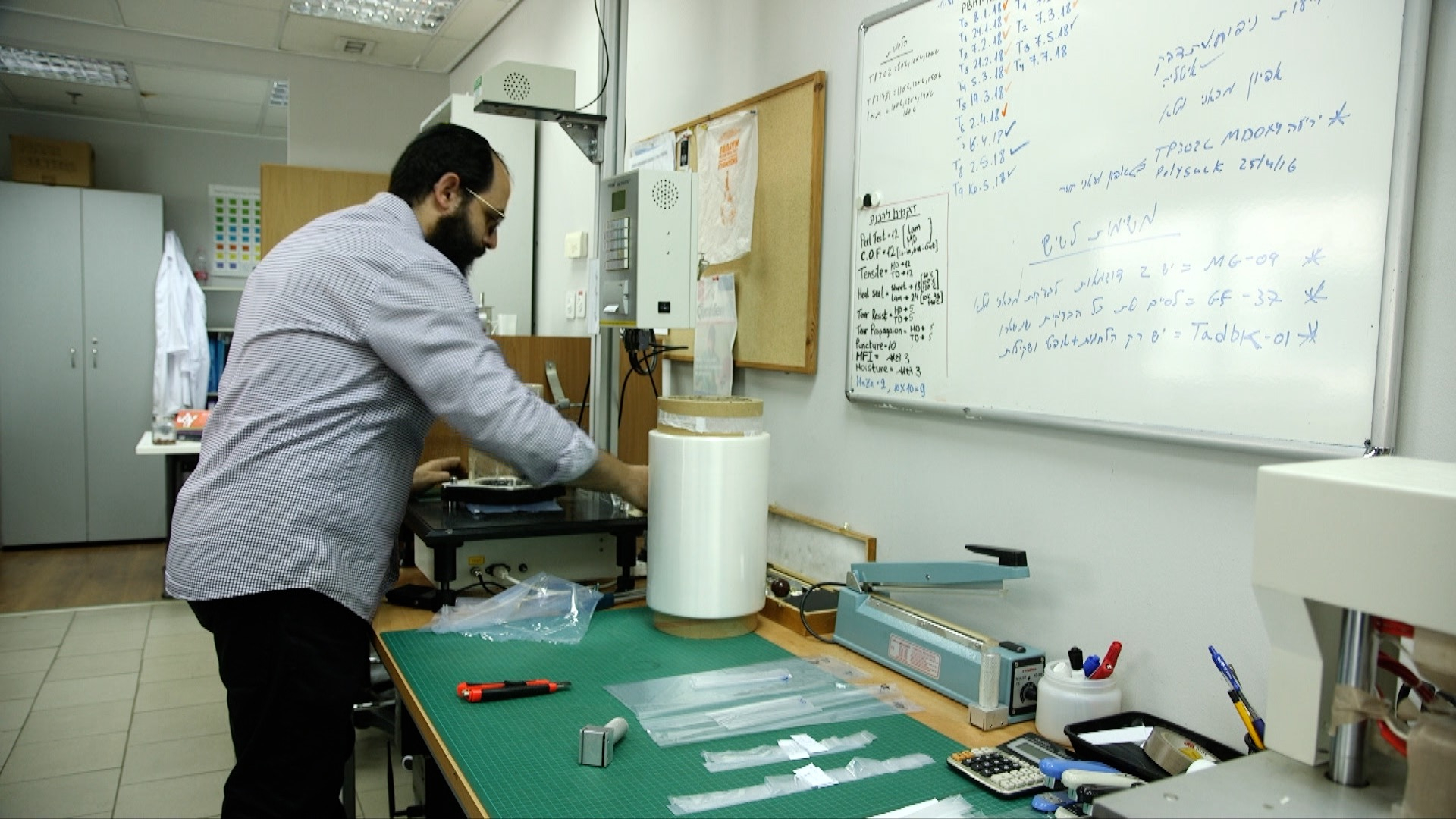
Bio-degradable packaging production. /CGTN Photo
Bio-degradable packaging production. /CGTN Photo
One solution: bio-degradable packaging that “disappears” through composting within six months.
Tel Aviv-based TIPA is working with counterparts in the US, Europe, Australia and India, to supply bio-degradable packaging for food and clothing products. CEO Daphna Nissenbaum says the recent rush of awareness is generating a “hurricane of demand” for the product.
One of the challenges is keeping costs of the alternative low. Bio-degradable packing costs an average two to three times the current market standard.
What the environmentalists say
Environmentalists advise caution around the terms “bio-degradable” and “compostable” – specific conditions are needed for both to happen. Conservationists ultimately aim for a zero-packaging target. In the interim, avoiding single-use items like bottles, straws and bags is advised for people who want to play a part in cutting down plastic consumption.