
Opinion
17:27, 04-May-2019
Huawei lawyer's disqualification: A result of U.S. bipartisan politics
 ["china"]
Share






Copied
Editor's Note: The article is based on an interview with Wang Yong, a professor at the School of International Studies at Peking University. The article reflects the expert's opinion and not necessarily views of CGTN.
Against the backdrop of Sino-U.S. trade talks, American prosecutors on Thursday filed a "sealed classified motion" to disqualify Huawei's lead lawyer James Cole from defending the company without giving further details.
Cole, a partner at the Washington-based law firm Sidley Austin, was the No. 2 official at the U.S. Justice Department during the Barack Obama's presidency, according to media reports.
The move is closely connected to Washington's bipartisan politics, Wang Yong, a professor at the School of International Studies at Peking University, told CGTN. The "revolving door" phenomenon – personnel switching roles between legislators and high-ranking members of enterprises or think tanks that are influenced by the legislation – is commonly seen in the United States.
This means certain interest groups can exert some influences on the decision-making process given their connections with the government. In this case, Cole, former deputy U.S. attorney general during the period when the White House was obtaining information about Huawei's Iran businesses, is undoubtedly playing a significant role in the court's final decision on Huawei's CFO Meng Wanzhou.
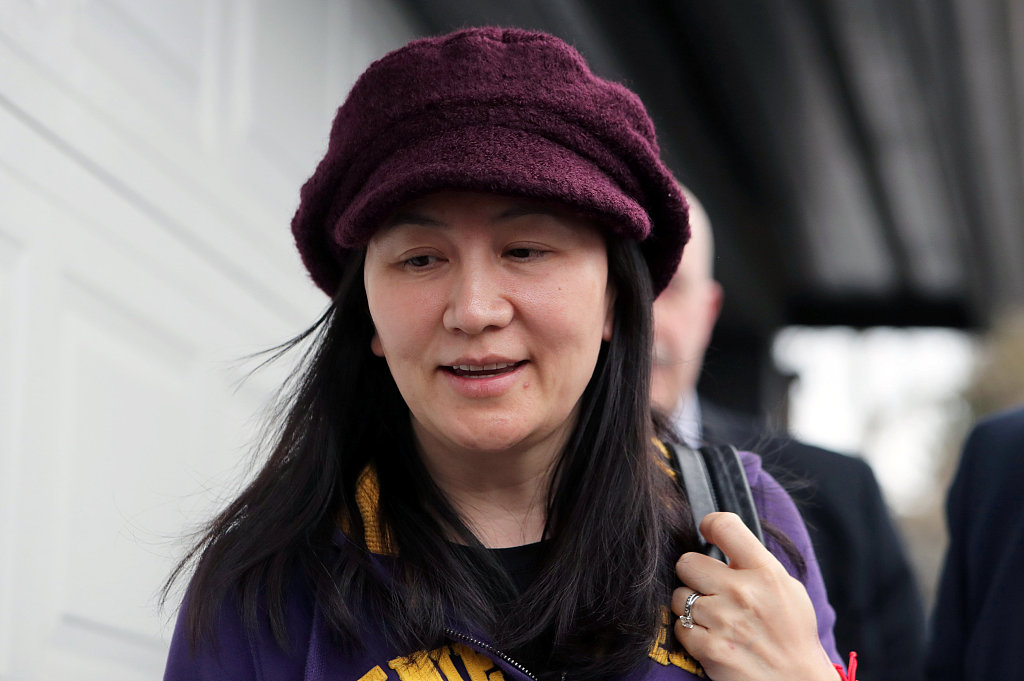
Huawei CFO Meng Wanzhou arrives back at home after her court appearance in Vancouver, British Columbia, Canada, March 6, 2019. /VCG Photo
Huawei CFO Meng Wanzhou arrives back at home after her court appearance in Vancouver, British Columbia, Canada, March 6, 2019. /VCG Photo
Divisions between Republicans and Democrats are behind Cole's disqualification, Wang said. Admittedly, the United States has started to take precautionary measures against the Huawei-3Com deal and become suspicious about the Chinese telecommunications giant's "intelligence gathering intentions" since 2011. But the U.S. under Obama is still a champion of globalization and free trade.
The Donald Trump administration, as many observers believe, is turning the United States into one of the world's most "eminent" protectionist countries by withdrawing it from a slew of international pacts and launching a full-swing strike against Huawei on a scale that has never been seen under previous administrations.
While the Democrats-dominated Obama administration, of which Cole was also a key member, embraced an open economy, the Trump-represented Republicans are regarded by many as advocates for trade protectionism. The Donald Trump administration is even using national security as an excuse to restrain and intervene in the normal activities of Huawei-included foreign enterprises. All divisions between Republicans and Democrats on free trade and globalization considered, the U.S. government disqualifying Cole is not surprising.
Huawei's case is purely political-driven, Wang said, adding that Trump, is playing the hostage card by arresting Meng in the on-again-off-again Sino-U.S. trade talks. There is no evidence of Huawei engaging in any unruly behavior, and the businessman-turned president is using Meng as a bargaining chip for more gains in negotiations with China.
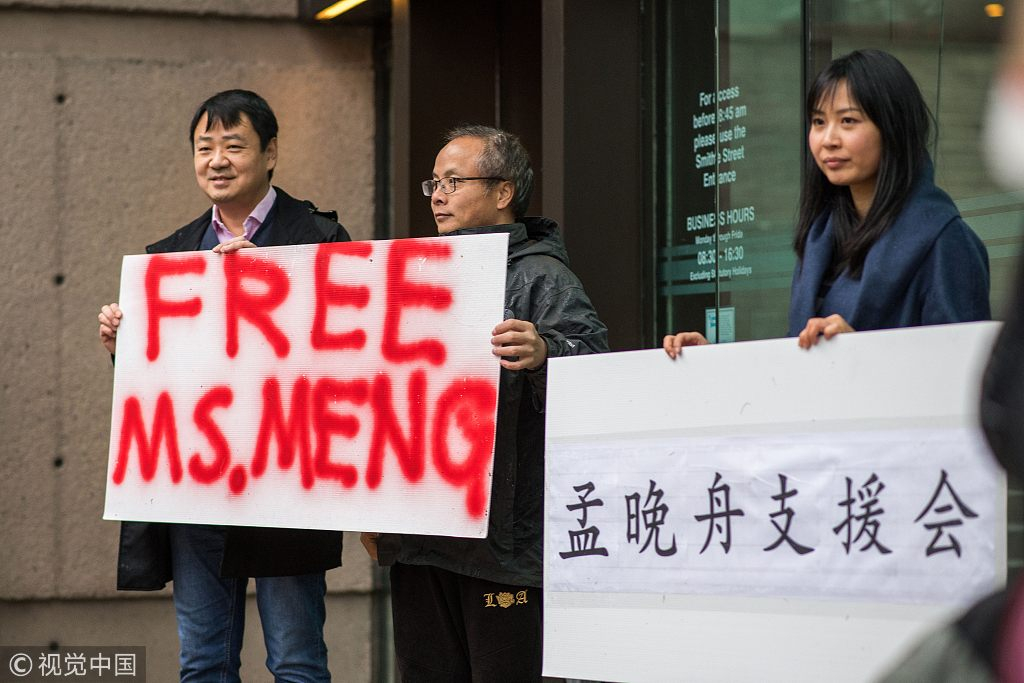
People hold signs in support of Meng Wanzhou outside a bail hearing at the Supreme Court in Vancouver, British Columbia, Canada, December 11, 2018. /VCG Photo
People hold signs in support of Meng Wanzhou outside a bail hearing at the Supreme Court in Vancouver, British Columbia, Canada, December 11, 2018. /VCG Photo
Earlier, Trump astounded the world by saying that he would intervene in Huawei's case if it helps to avoid deterioration in Washington-Beijing ties. "If I think it's good for what will be certainly the largest trade deal ever made – which is a very important thing – what's good for national security, I would certainly intervene if I thought it was necessary," Trump reportedly said. The president's rhetoric is absurd in a country that has been bragging about its judiciary independence.
Whether Meng will be extradited to the United States is, to a large extent, determined by the outcomes of the Sino-U.S. trade talks, Wang said. With the world's largest two economies entering into the tenth round of negotiations, gaps have been gradually narrowed down, and a fundamental trade deal is becoming increasingly likely.
"The deal itself is going along pretty well… We are getting close to a very historic, monumental deal," Trump said after the latest round of talks. There are also reports that the two countries are preparing for a face-to-face meeting between the heads of state where a fundamental deal is to be inked.
With the 2020 presidential campaign in full swing, the Trump administration is eager to end the trade conflicts with its principal trading partner. This means Meng's case, hopefully, will be adequately addressed. But still, the U.S. may require Huawei to pay economic prices for the accused behaviors, especially as the largest two economies are locked in a competition over the lead in 5G, Wang warned.
(If you want to contribute and have specific expertise, please contact us at opinions@cgtn.com.)