
Politics
09:34, 10-Aug-2018
Iraq announces final results of parliamentary elections after manual recount
Updated
08:47, 13-Aug-2018
 ["china"]
Share







Copied
00:38
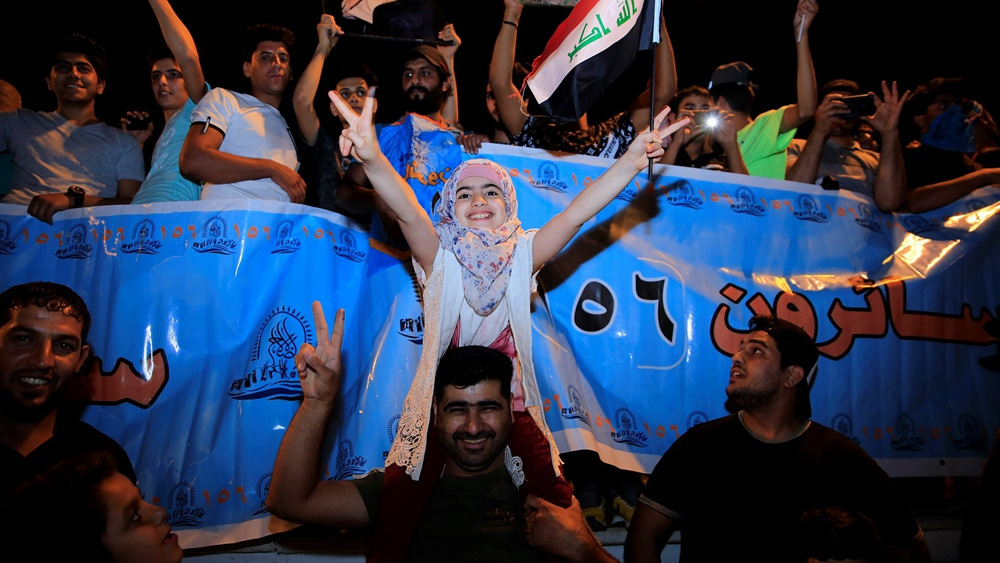
The Iraqi electoral commission announced on Thursday the final results of May 12 parliamentary elections with only a few changes to the results announced earlier.
The announcement was made by the panel of nine judges, who replaced the nine members of the Independent High Electoral Commission (IHEC) to supervise the recount process after allegations of irregularities and fraud.
The results showed no change in 13 of Iraq's 18 provinces, and changes in four provinces involving five seat-winners within their own coalitions.
The only effective change in different coalitions occurred in Baghdad Province, where the Fatah Coalition, led by Hadi Al-Amiri, won a further seat to bring its total to 48, while the seats of Baghdad Coalition reduced to three from four.
On May 12, millions of Iraqis went to nearly 9,000 polling centers across the country to vote for their parliamentary representatives who will form the government for the next four years.
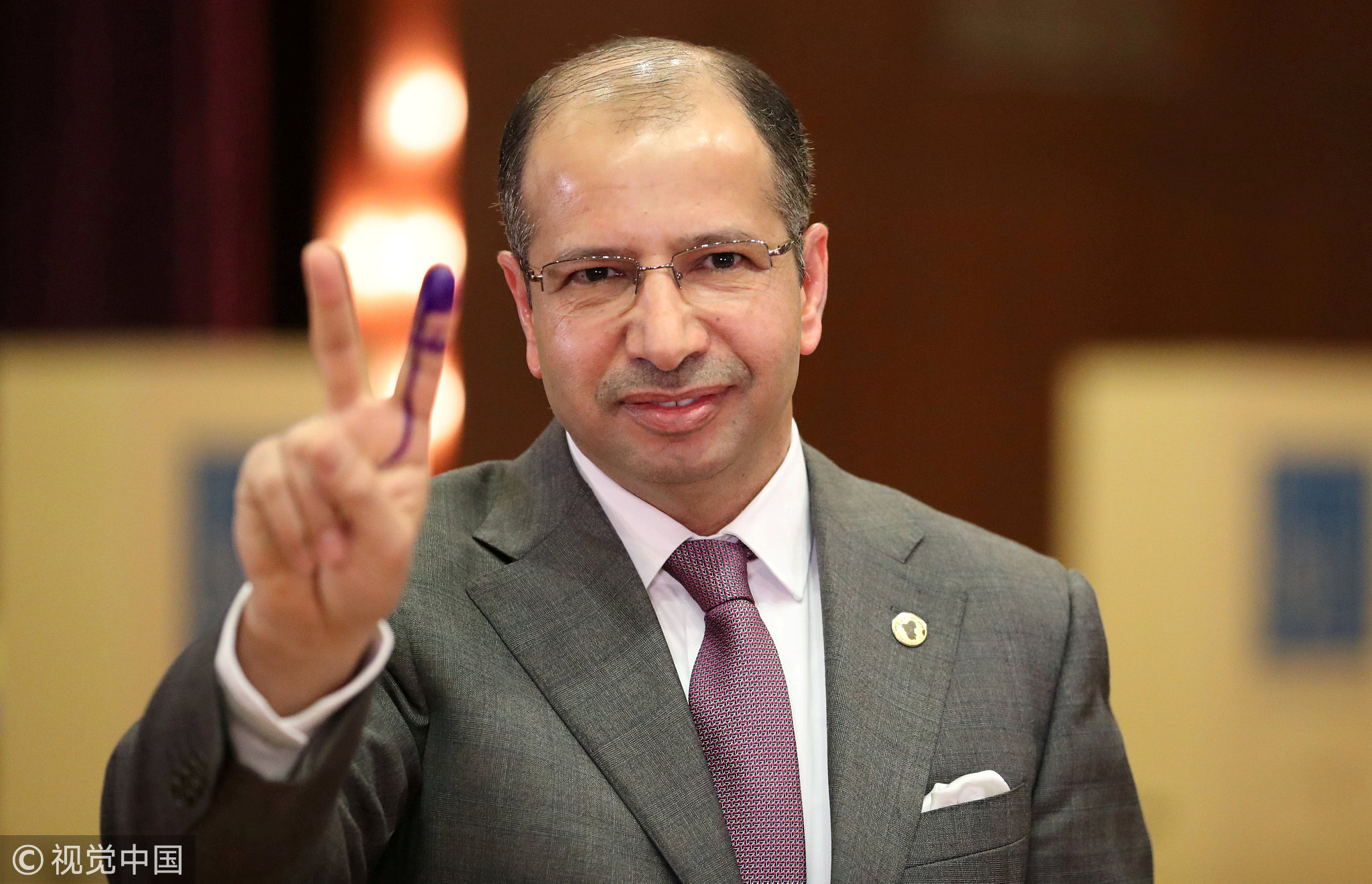
Iraqi Speaker of Parliament Salim al-Jabouri shows his ink-stained finger after casting his vote at a polling station during the parliamentary election in Baghdad, Iraq, May 12, 2018. /VCG Photo
Iraqi Speaker of Parliament Salim al-Jabouri shows his ink-stained finger after casting his vote at a polling station during the parliamentary election in Baghdad, Iraq, May 12, 2018. /VCG Photo
A week later, the former electoral commission announced the results of Iraq's parliamentary election, which showed that the political coalition Al-Sa'iroon, led by Shiite cleric Moqtada Sadr, won the election with 54 seats in the Iraqi 329-seat Council of Representatives (parliament).
The results also showed Fatah Coalition in the second place with 47 seats, while the al-Nasr Coalition, led by current Prime Minister Haider al-Abadi, came in third with 42 seats, and the State of Law Coalition headed by Vice President and former Prime Minister Nuri al-Maliki garnered 25 seats.
The two major Kurdish parties, Kurdistan Democratic Party (KDP), headed by Masoud Barzani, and Patriotic Union of Kurdistan (PUK), took the lead in the Kurdish region and in the ethnically-mixed province of Kirkuk, with 25 seats for the KDP and 18 for the PUK, according to IHEC figures.
However, Iraq witnessed serious setbacks in its political process following the elections as many Iraqi parties, especially in the Kurdish region and the disputed areas, including Kirkuk Province, have complained about alleged irregularities and forgery in the parliamentary elections.
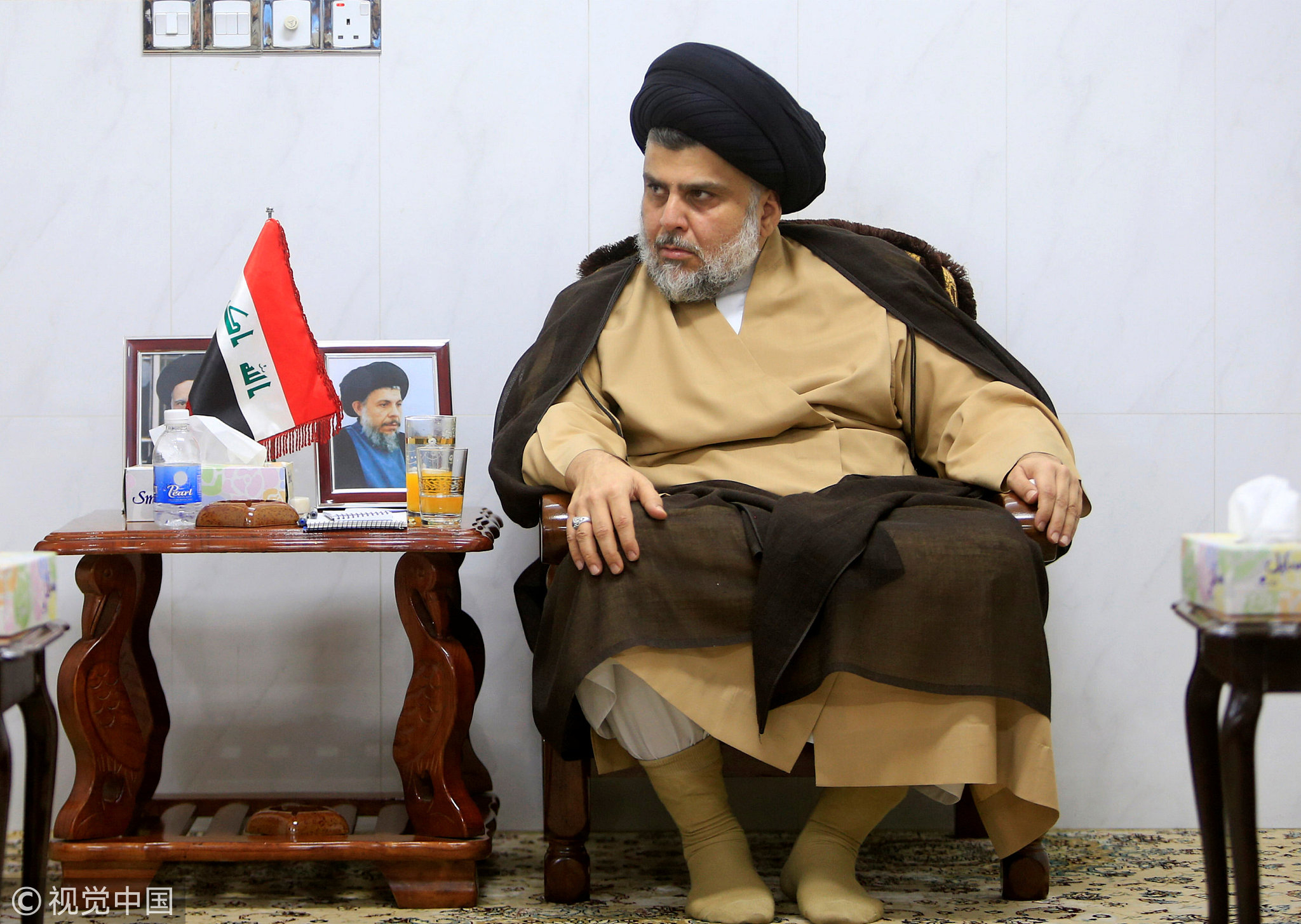
Shiite cleric Moqtada Sadr's political coalition Al-Sa'iroon wins the election with 54 seats in the Iraqi parliament. /VCG Photo
Shiite cleric Moqtada Sadr's political coalition Al-Sa'iroon wins the election with 54 seats in the Iraqi parliament. /VCG Photo
On June 24, the electoral commission with its nine judges decided to a conduct manual recount for suspected ballot boxes inside and outside Iraq.
The prominent Shiite cleric Moqtada al-Sadr said on Thursday that his party will not join the government coalition if the political parties fail to nominate a candidate, who meets the conditions he sets for the country's next prime minister.
Earlier in the month, Sadr put forward 40 conditions which he claimed the candidate of the next Iraqi prime minister should meet.
Among the conditions, the candidate should be independent and is not affiliated with any particular party, nor is he a member of parliament.
In addition, the candidate should not be suspected of financial corruption, or have a dual citizenship.
Sadr also stressed that the political parties should not interfere in the work of the future prime minister, who must nominate five candidates of technocrats for each ministry in his upcoming cabinet.
"I will give a specific time limit (for the political factions) to achieve the 40 conditions. Otherwise the opposition is our decision," Sadr said in a statement posted on his official website.
The deadline will be until the Iraqi Supreme Judicial Council confirmed the final results of the elections, or 15 days, Sadr said without specifying the starting date of the 15 days.
(Cover: Supporters of Iraqi Shiite cleric Moqtada al-Sadr celebrate the results of the parliamentary election at the Tahrir Square, Baghdad, Iraq, May 13, 2018. /VCG Photo)
Source(s): Xinhua News Agency