
World
12:58, 13-Jun-2018
Italy, France trade barbs as migrant ship sets sail for Spain
 ["europe"]
Share







Copied
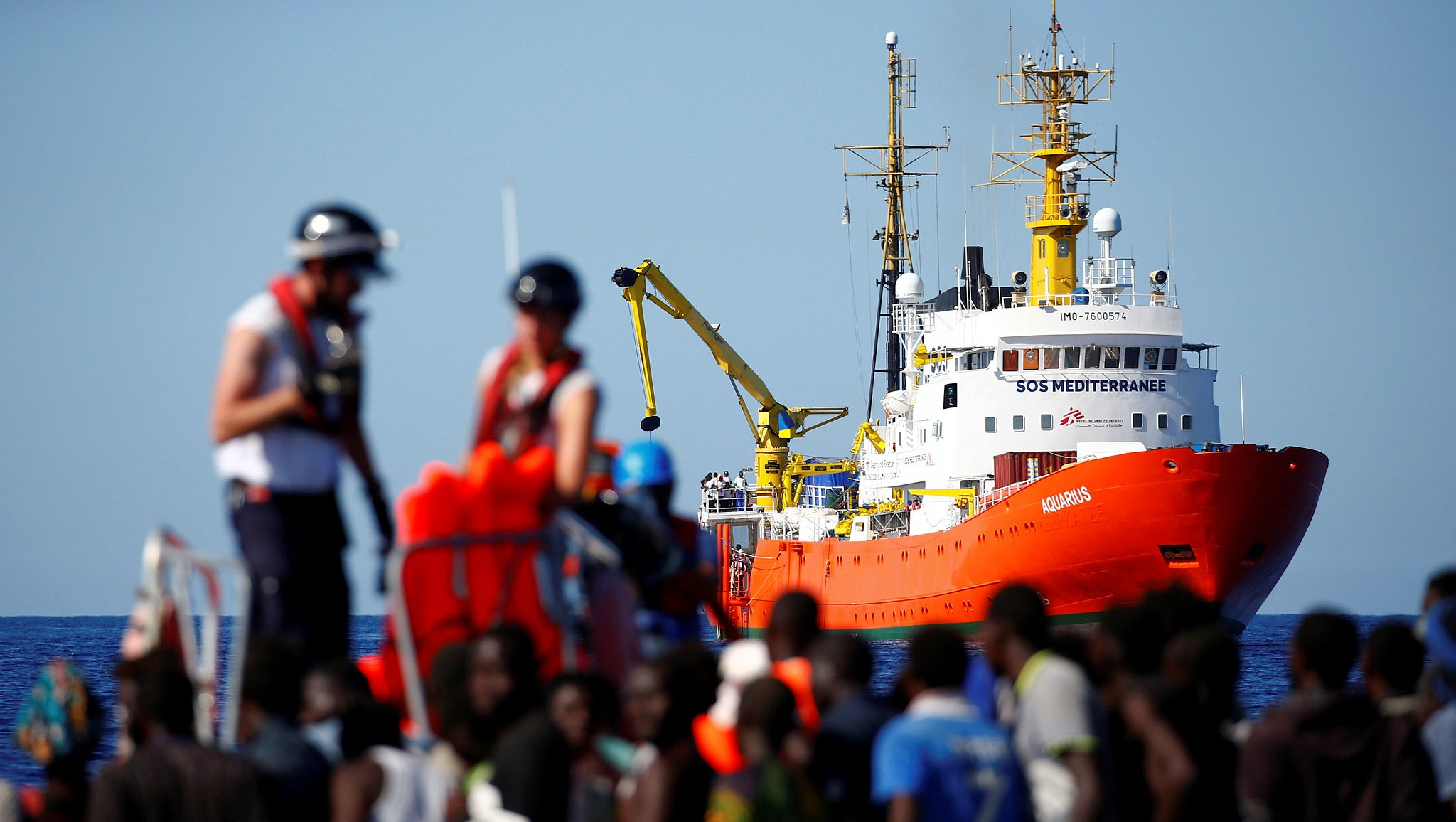
Italy and France embarked on a war of words on Tuesday over the fate of a ship carrying over 600 rescued migrants, even as Spain finally offered a safe haven for the refugees.
The ship was on its way to the Spanish port of Valencia on Wednesday after a days-long standoff.
Over the weekend, the “Aquarius,” run by French NGO SOS Mediterranee rescued some 630 migrants off the coast of Libya but was refused entry into their ports by Italy and Malta.
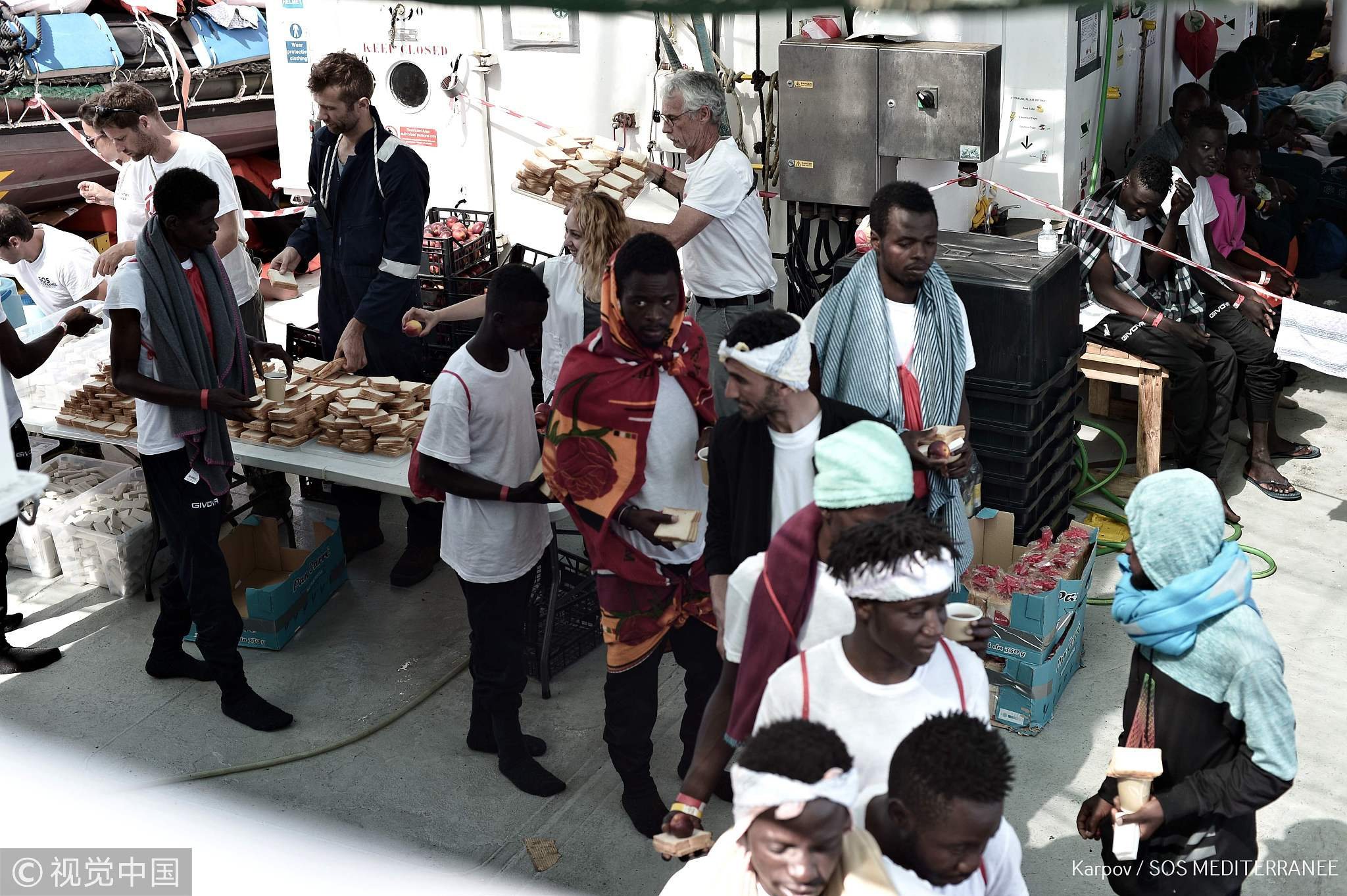
Members of the NGO provide food to rescued migrants aboard the ship Aquarius, June 12, 2018. /VCG Photo
Members of the NGO provide food to rescued migrants aboard the ship Aquarius, June 12, 2018. /VCG Photo
French President Emmanuel Macron, during a cabinet meeting on Tuesday, accused Italy of "cynicism and irresponsibility" over its actions.
"In cases of distress, those with the closest coastline have a responsibility to respond," he said, according to spokesman Benjamin Griveaux. "We need to show solidarity, which Italy has not shown,” Griveaux added.
Italy quickly hit back, slamming French hypocrisy.
"Italy cannot accept hypocritical lessons from countries that have preferred to look the other way on immigration," the new government in Rome said in statement.
Speaking to reporters, Deputy Prime Minister Luigi Di Maio also challenged Paris: "Let them open their ports and if they want we can send them a few people."
Italy’s foreign ministry even went as far as to summon France's ambassador on Wednesday over Macron's comments.
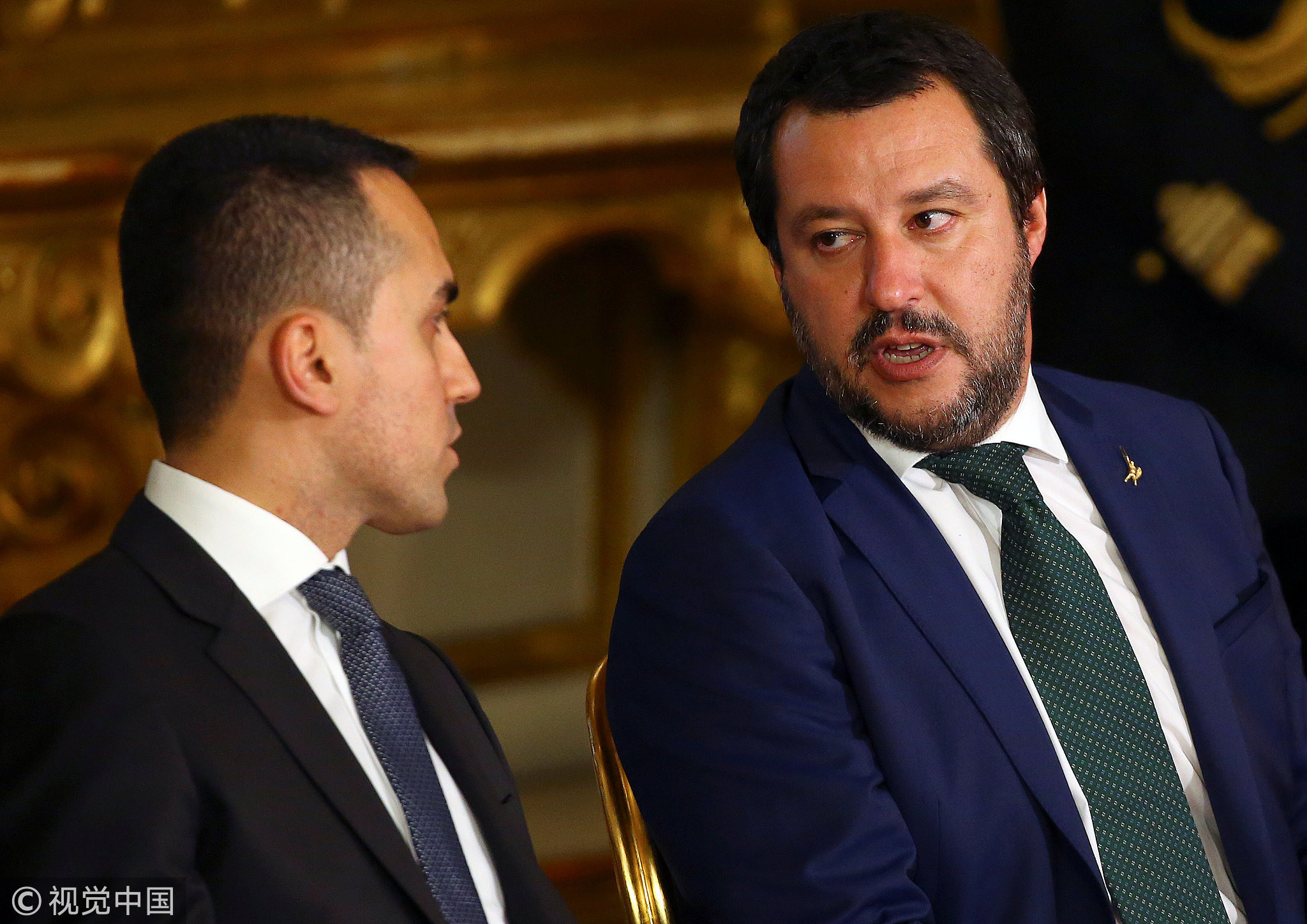
Italian Interior Minister Matteo Salvini (R) talks with Minister of Labor and Industry Luigi Di Maio (L) at the Quirinal palace in Rome, Italy, June 1, 2018. /VCG Photo
Italian Interior Minister Matteo Salvini (R) talks with Minister of Labor and Industry Luigi Di Maio (L) at the Quirinal palace in Rome, Italy, June 1, 2018. /VCG Photo
On Tuesday evening, the Aquarius and two other ships set off for Valencia with the 630 migrants, many of them from Africa, on board. Earlier, hundreds had been transferred off the Aquarius to relieve the overcrowded ship.
The voyage was expected to take several days, with aid groups warning of bad weather brewing.
According to Annelise Borges, a Euronews reporter on board the Aquarius, about 200 migrants were rescued by the ship from the Mediterranean on Saturday after Italian authorities received distress calls. The other 400 were brought to the Aquarius by the Italian coast guard after being rescued elsewhere.
Among the rescued migrants were seven pregnant women, 11 children and over 100 unaccompanied minors, Borges also said.
While Spain’s decision to receive the migrants in Valencia provided a temporary respite in the standoff, Foreign Minister Josep Borrell admitted it was unclear what will happen to them after Spanish authorities have taken them in.
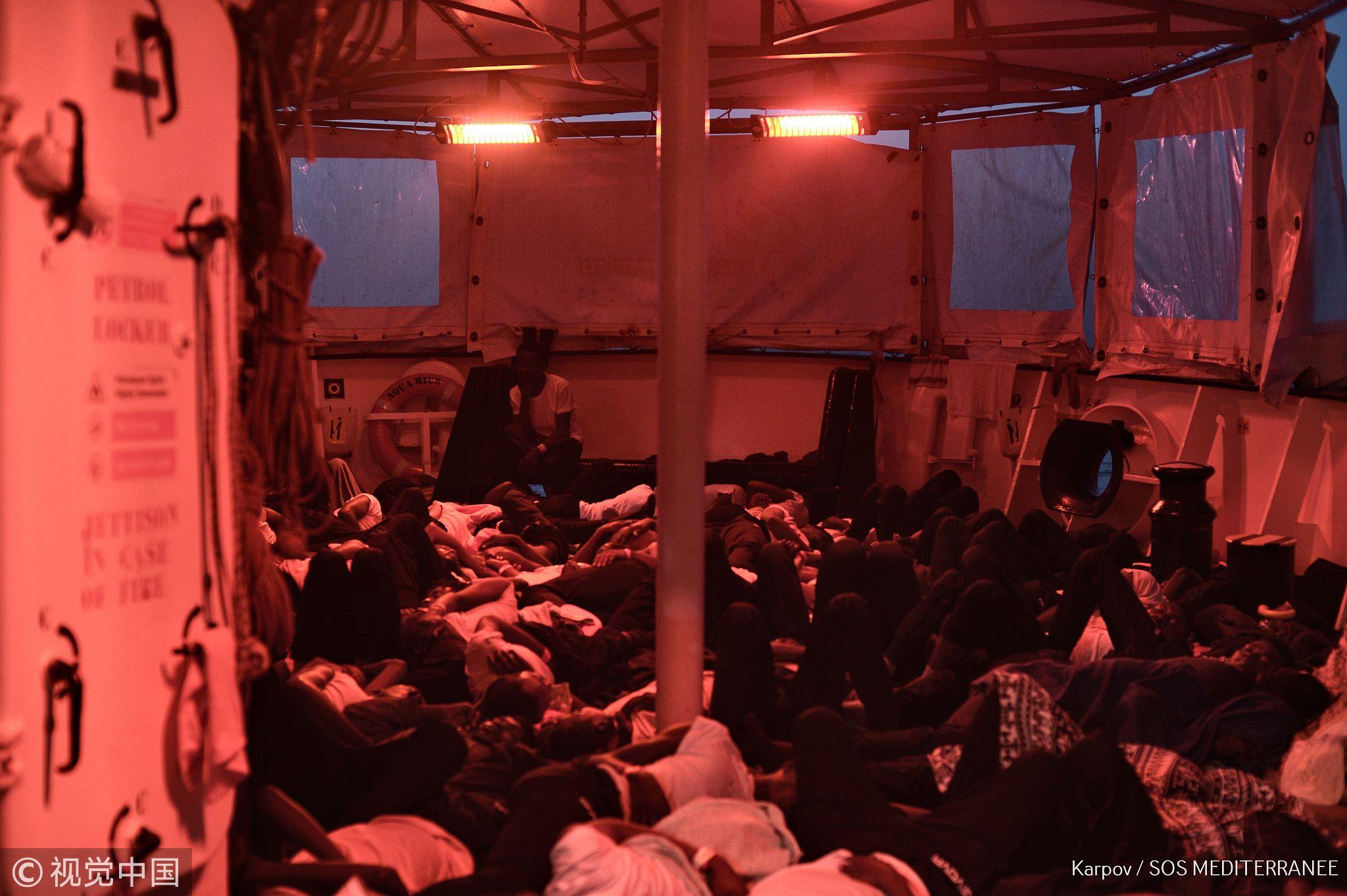
Rescued migrants sleep aboard the French NGO's ship Aquarius, June 12, 2018. /VCG Photo
Rescued migrants sleep aboard the French NGO's ship Aquarius, June 12, 2018. /VCG Photo
Meanwhile, Italy’s refusal to receive the Aquarius has created the first clash between the country’s new populist government and its EU partners. The new government in Rome, which includes the far-right Lega Nord party, has pledged to crackdown on immigration.
It also comes amid increasing divisions within the European Union over how to deal with the current migrant crisis. The issue will be on the agenda at a June 28-29 summit in Brussels.
Under EU rules, a migrant must apply for asylum in his or her first country of arrival, meaning Mediterranean countries like Italy, Greece and Spain have shouldered most of the burden so far.
Meanwhile, countries like Hungary, Poland, Slovakia and the Czech Republic have opposed EU quotas requiring all members to take in a set number of migrants.
On Tuesday, EU Migration Commissioner Dimitris Avramopoulos called for EU states to agree to a workable solution.
"We cannot continue the political ping-pong on who is finally responsible for sheltering the responsibility of migration or protecting external borders because we all are,” he said.
“The European Union as a whole is responsible with all member states… hospitality should be shared and should not be abused," he added.
(With inputs from agencies)
9115km