
Politics
07:14, 19-Jun-2018
US, S. Korea agree to suspend joint military exercises
 ["china"]
Share







Copied
00:37
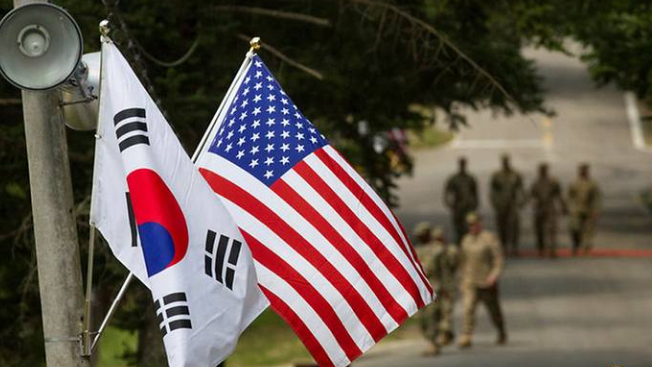
The United States and the Republic of Korea (ROK) on Monday agreed to suspend the joint military exercises scheduled to take place in August after President Donald Trump pledged to end the "war games" following his summit with Kim Jong Un, leader of the Democratic People's Republic of Korea (DPRK) last week, Reuters reported citing a US official.
The official, speaking on condition of anonymity, said the "Ulchi Freedom Guardian" exercises would be suspended in line with Trump's comments and an official announcement was expected in the coming days.
"The ROK and the United States have agreed to suspend all planning activities regarding the Freedom Guardian military drill scheduled for August," according to a ROK defense ministry statement.
A Pentagon statement confirmed the suspension and added that there would be a meeting between the secretaries of defense and state, as well as with Trump's national security adviser on the issue this week.
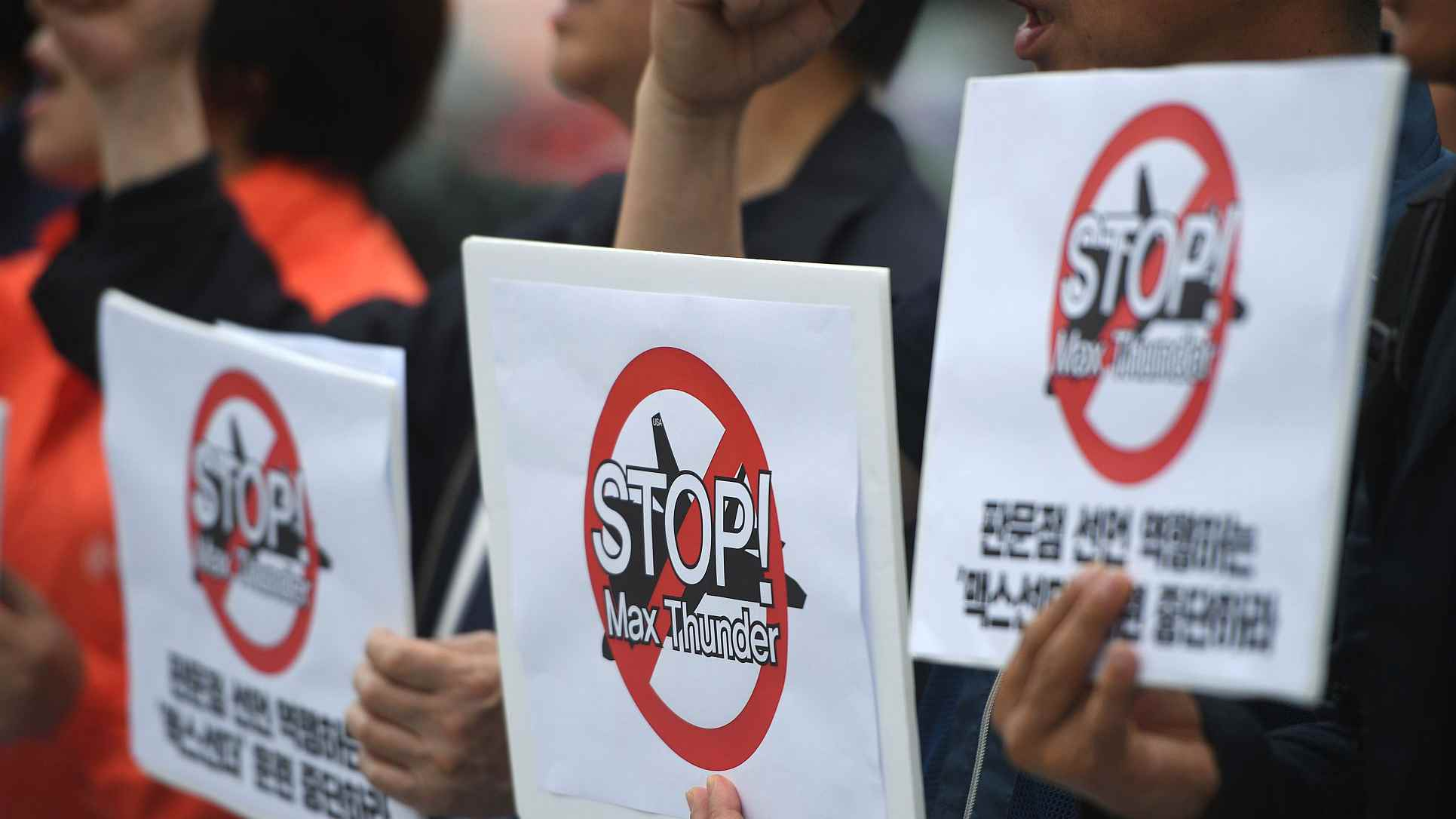
South Korean peace activists hold placards reading "Stop! Max Thunder," during a rally denouncing South Korea-US joint military drills, in front of the US embassy in Seoul, May 16, 2018. /VCG Photo
South Korean peace activists hold placards reading "Stop! Max Thunder," during a rally denouncing South Korea-US joint military drills, in front of the US embassy in Seoul, May 16, 2018. /VCG Photo
"We are still coordinating additional actions. No decisions on subsequent wargames have been made," Pentagon spokeswoman Dana White said.
Last year, 17,500 American and more than 50,000 ROK troops participated in the Ulchi Freedom Guardian drills, although the exercise was mostly focused on computerized simulations rather than live field exercises that use weapons, tanks or aircraft.
The US-ROK exercise calendar hits its high point every spring with the Foal Eagle and Max Thunder drills, which both wrapped up last month.
The decision to halt military exercises on the Korean Peninsula has bewildered many current and former US defense officials, who only learned about it when Trump made his remarks.
The Pentagon has yet to publicly release the cost of previous and future joint military exercises with the ROK, a week after Trump cited their "tremendously expensive" cost as a reason for halting them.
Spending data for previous military exercises in South Korea and elsewhere, however, suggest that the cost of a single exercise would be in the low or perhaps tens of millions of dollars in a US military budget this year of nearly 700 billion US dollars.
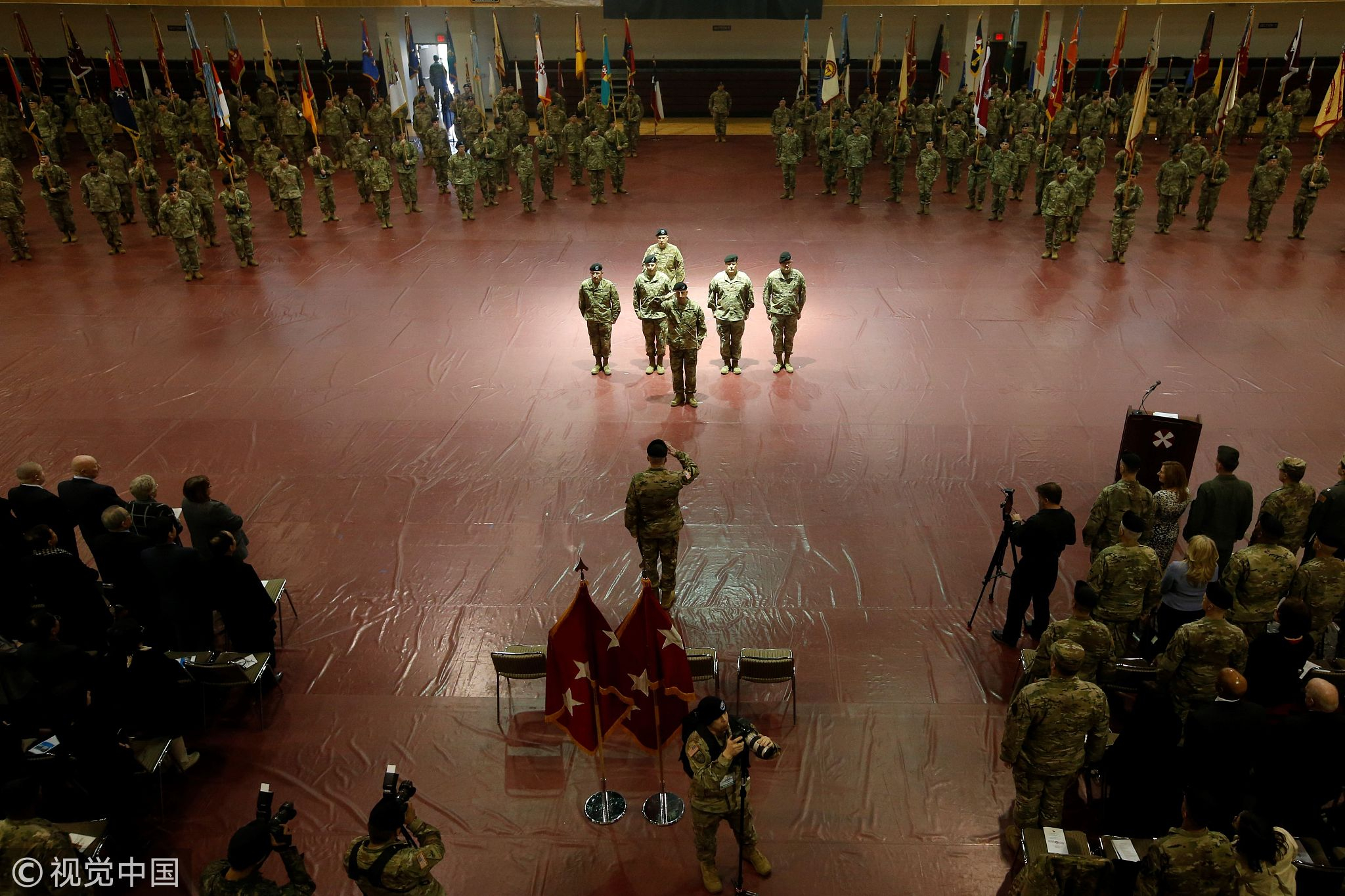
US General Michael A. Bills (front C), salutes during a change of command ceremony at the Collier Fitness Center on Camp Humphreys in Pyeongtaek, Jan. 5, 2018. /VCG Photo
US General Michael A. Bills (front C), salutes during a change of command ceremony at the Collier Fitness Center on Camp Humphreys in Pyeongtaek, Jan. 5, 2018. /VCG Photo
In response to repeated requests for cost data, Pentagon spokesman Lieutenant-Colonel Christopher Logan said, "We are currently evaluating the costs of the exercises."
Calculating the cost of military exercises is a complicated process, often requiring data from different branches of the military and spread over several budgets over different years.
"Troops who would have been involved in the exercises would still require training and certification, which would still cost money," said Abraham Denmark, a former deputy assistant secretary of defense for East Asia under President Barack Obama.
"To me, the idea of this as a cost saving measure doesn't really make much sense," Denmark said.
Source(s): Reuters