
Book
15:09, 06-Aug-2018
Audiobooks, ebooks inject new life into book industry
Updated
14:51, 09-Aug-2018
 ["china"]
Share







Copied
A "well-off, motivated and knowledgeable" man spent over 13,411 yuan (1,963 US dollars) in the first half of the year on a popular audiobook platform in China in a sign of the changing nature of the business.
The favorite books of the largest spender for the six months on Ximalaya FM included "Harry Potter and the Order of the Phoenix" and "Poor Charlie's Almanack."
The information was contained in a report released by the think tank TopKlout in late July.
Riding high on the momentum of audiobooks and ebooks, along with CITIC Press Group, the app epitomizes the ever-changing and evolving industry as well as the way alternative reading methods are injecting new life into books and the way they are received.
Audiobooks reviving classics

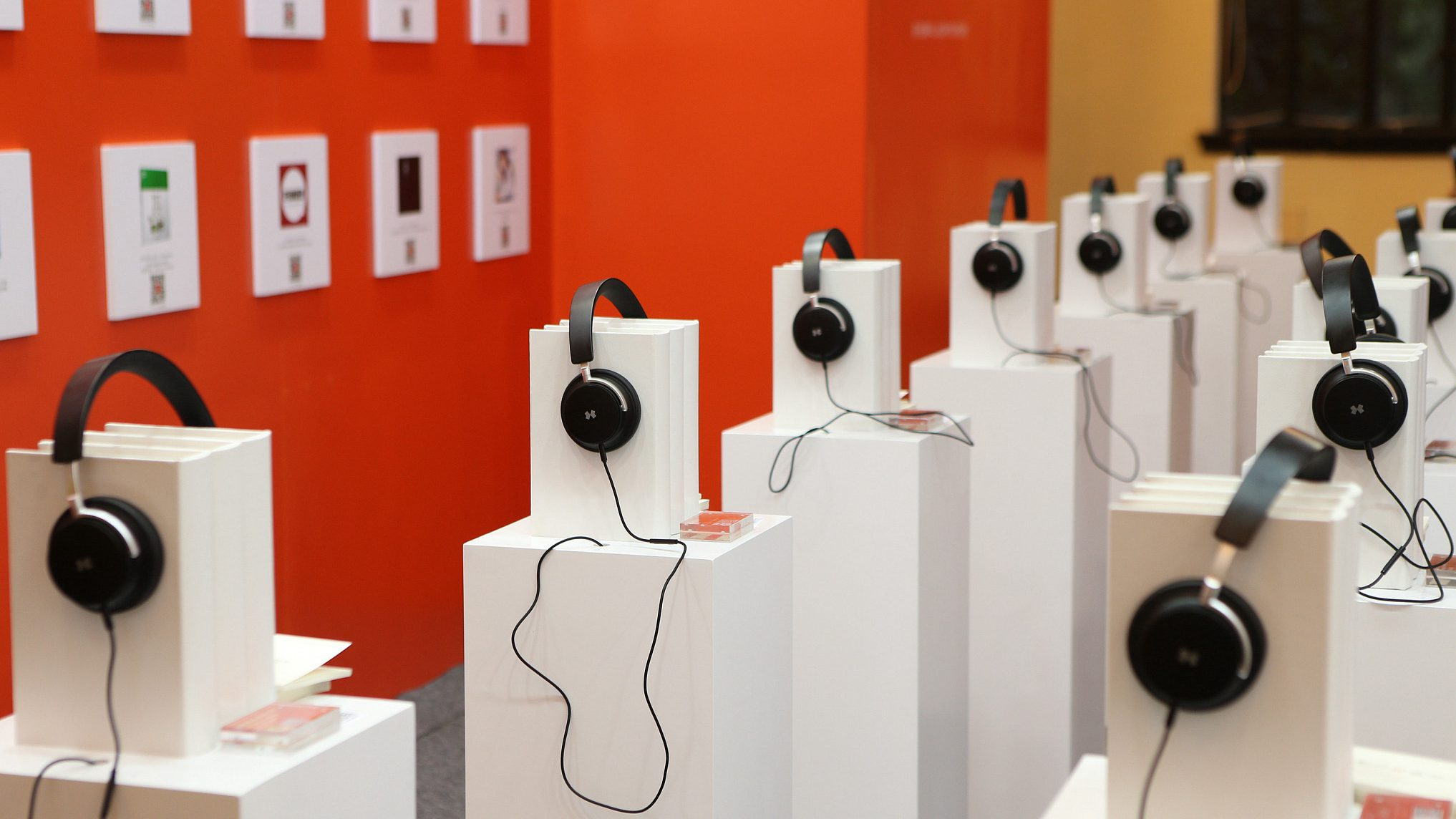
Visitors listen to books at Ximalaya FM exhibition area during Shanghai Book Fair. /VCG Photo
Visitors listen to books at Ximalaya FM exhibition area during Shanghai Book Fair. /VCG Photo
"We've accumulated 470 million users during the six years since founding," said Wu Ting from the public relations department of Ximalaya FM. "More than half of the user flow was brought by audiobooks and the more active users listen to more than 15 books a year."
The popularity of classic novels cannot be understated. Ming Dynasty (1368-1644) novel "Jin Ping Mei" tops the literature category on the platform, having been listened to over 40 million times.
Other classics such as the collection of Austrian novelist Stefan Zweig and "Border Town" written by reputed Chinese writer Shen Congwen are also among eight books with over 10 million listens in the category.
For Shen Dayuan, vice general manager of CITIC United Cloud Technology, a content-oriented Internet company set up by CITIC Press Group, the combination of stories and audio is key to the revival of classic works on the platform.
"Performing the stories with voices is a whole different way of expression and another art form," he said, drawing an analogy between audio novels and the still popular traditional art forms of cross-talk and sketches. "It's got an attraction of its own."
"Our best-selling audiobook is 'Sapiens: A Brief History of Humankind,' as we invited Luo Xin, a famous TV host in Shanghai, to record the audio," he said. "As the book is already a bestseller in other forms, it should be no surprise that the market reacted so positively."
Wu believes audiobooks help people make the most of brief time fragments and meets demand for saving time given the frantic pace of modern life.

E-books on display. /VCG Photo
E-books on display. /VCG Photo
"Similar to what it did for books, the industrial chain of audiobooks can, in turn, provide more possibilities for the traditional publishing business," she said. "The market potential is immeasurable."
For instance, Ximalaya FM asks customers to vote for books they want to listen to, and the platform arranges recordings and productions of the most popular choices.
Audiobooks in China have enjoyed an upsurge in recent years. According to a report published in April by iiMedia Research, another Chinese think tank, the total market value of audiobooks in China rose from 2.37 billion yuan in 2016 to 3.24 billion last year and is expected to reach 7.83 billion yuan by 2020.
Book market coming of age
For ebook dealers, with the debate over whether ebooks will ever replace printed books cooling, they are already looking for ways to take advantage of the evolving market and guide their customers.
"Take 'The Qin Empire' as an example," Shen said as he spoke of the six-book historical novel series based on China's Qin Dynasty (221-207 BC), first published in 2008. "We priced it at 199 yuan upon the release of the ebook two years ago, which most readers found unacceptable."
"So we changed our strategy into pricing it at five cents per thousand words, which literally would cost no less than the original if one finished the series."

Chinese residents spend summer in a bookstore in Yangzhou city, Jiangsu Province. /VCG Photo
Chinese residents spend summer in a bookstore in Yangzhou city, Jiangsu Province. /VCG Photo
A year later, the series became CITIC Press Group's best-selling ebook of 2017 on iReader, enjoying a new life almost 10 years after being published.
The example reflects not only the potential in ebooks as a more convenient reading method but also a coming-of-age for the consumption habits of Chinese customers.
According to the iiMedia report, the number of Chinese who paid for online content doubled from 93 million in 2016 to 190 million in 2017 and is expected to grow by a similar margin to reach 296 million by the end of this year.
The trend is benefiting the audiobook business and driving its insiders to change their strategies.
Apart from the crowd-sourcing approach, Ximalaya FM is already allowing users to give "hosts" of audiobooks rewards, much like what they can on popular live-streaming platforms.
Moreover, they are looking to spend three billion yuan to support audio producers in every aspect. "We'll try to enable every possible way for good hosts to profit from their work, such as by providing subsidies and signing bonuses and others," Wu Ting said.
Source(s): Xinhua News Agency