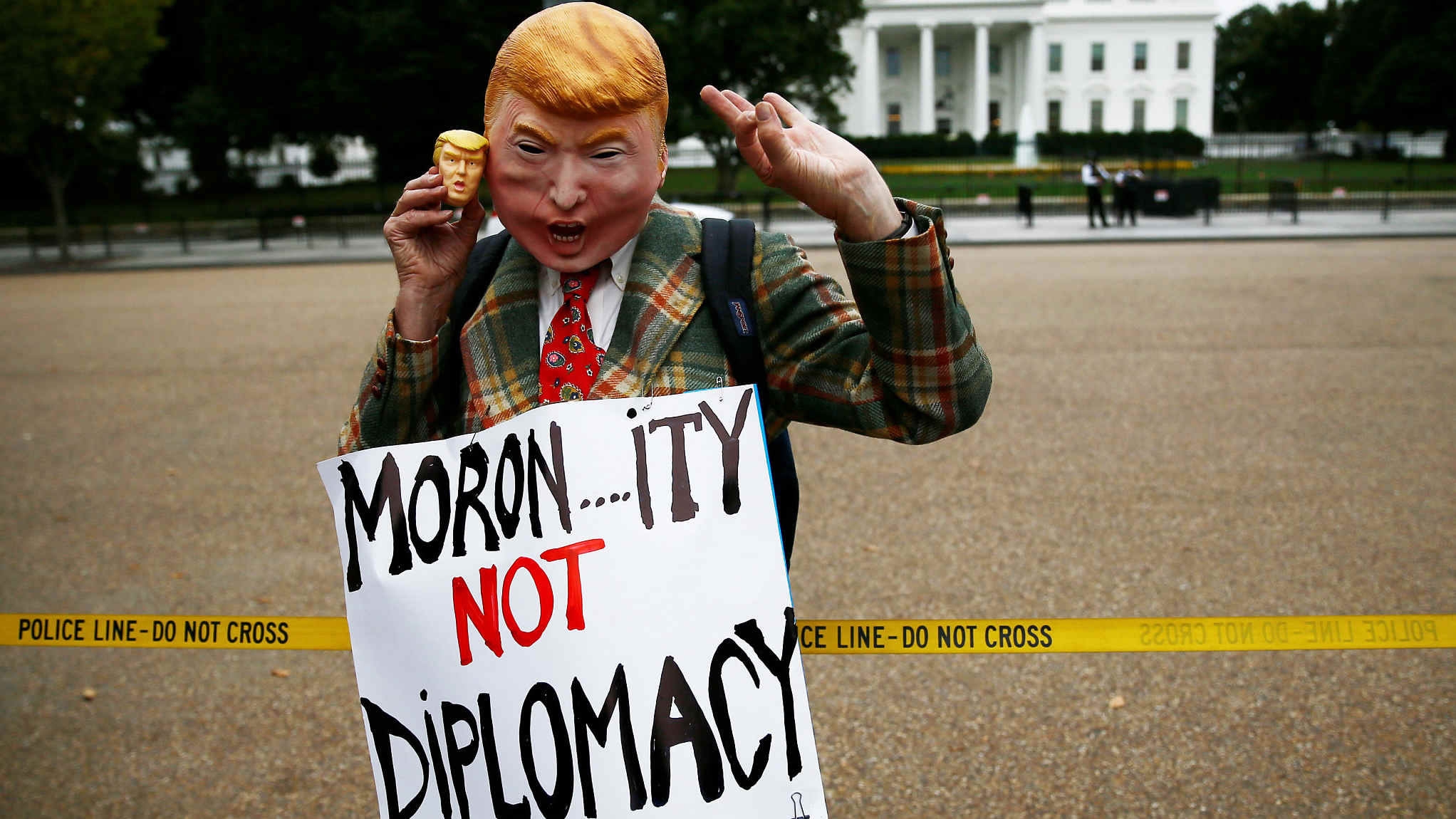
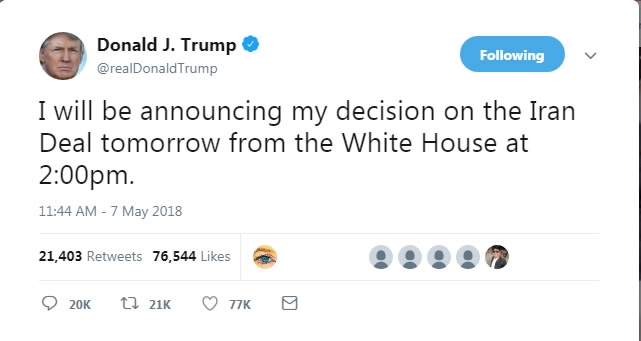
As the deadline for US President Donald Trump to decide on whether to withdraw from the 2015 Iran nuclear accord draws near, all eyes are on the capricious businessman-turned-president to see whether he will extend sanctions waivers or ask for renegotiation – though most observers believe the possibility of signing a new deal is slim.
Holding high the banner of "America First," Trump's ruling style seems to follow a certain pattern: the slightest disagreement leads to Trump either walking away or threatening to walk away from multilateral frameworks that the US is part of. Trump has pulled the US out of the Paris climate accord, the Trans-Pacific Partnership, and UNESCO; and has forced the renegotiation of NAFTA with Mexico and Canada. The Iran nuclear deal could be next in line.
Why does the US dislike the 2015 agreement so much?
An imperfect agreement on arms control
For Washington, the "sunset clause" in the Iran nuclear agreement makes the agreement's restriction on the Iranian nuclear system valid for only 10 years. So the United States thinks the nuclear agreement merely delays time and doesn't really solve the problem. In addition, the Iran nuclear agreement only limits Iran’s nuclear weapons, but does not restrict missiles.
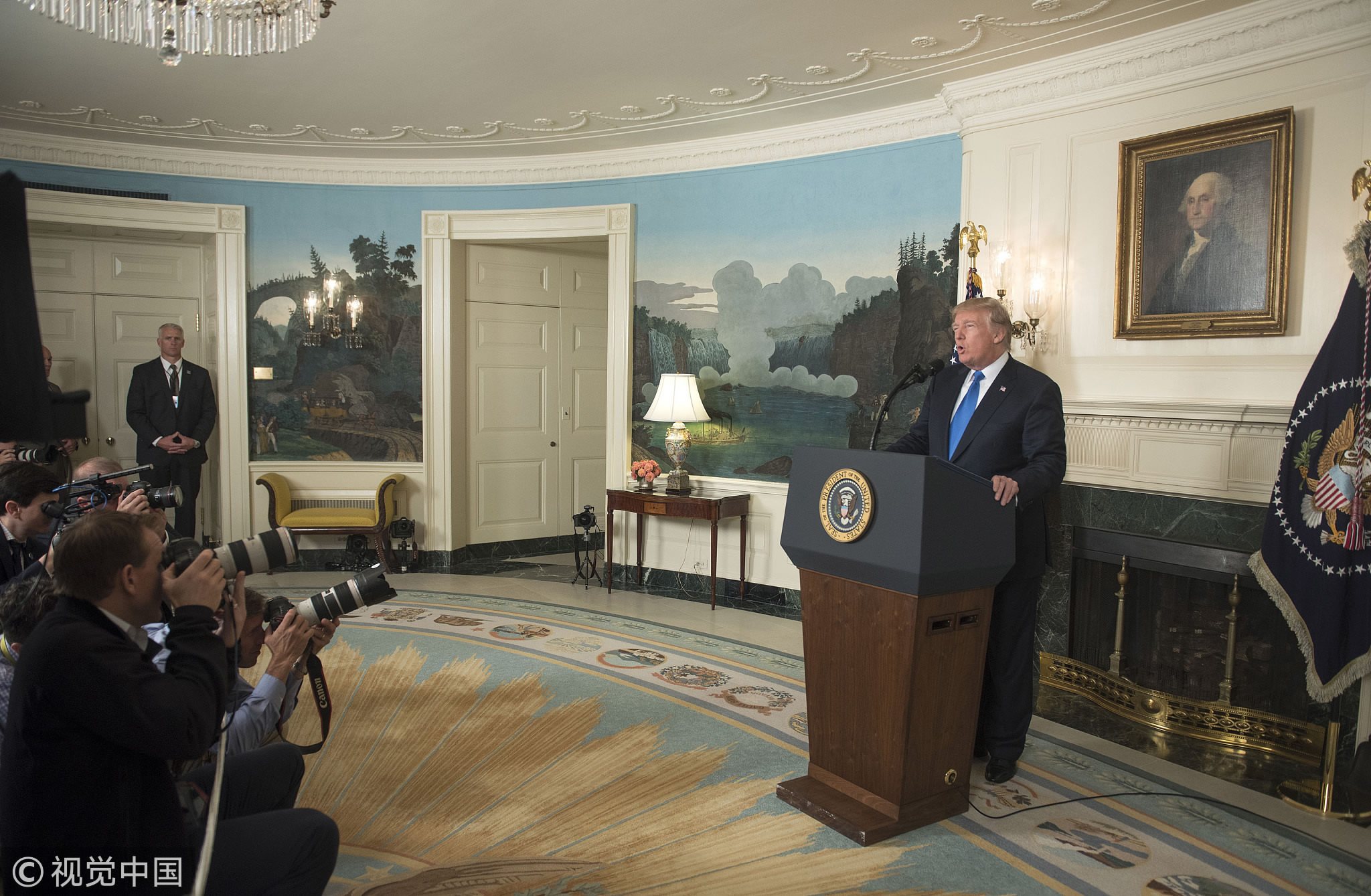
US President Donald Trump delivers remarks on the Iran Strategy in the Diplomatic Reception Room at the White House in Washington, DC on October 13, 2017./VCG Photo.
US President Donald Trump delivers remarks on the Iran Strategy in the Diplomatic Reception Room at the White House in Washington, DC on October 13, 2017./VCG Photo.
However, the threat of Iranian missiles cannot be ignored,” Ruan Zongze, executive deputy director of the China Institute of International Studies, who is also a member of the Public Consultation Committee of the Ministry of Foreign Affairs, told CGTN.
Iran’s Middle East influence a threat to US interests
In Ruan’s opinion, after Iraq crumbled following the US invasion, Tehran had almost no Shia rivals, and became a true heavyweight player in the region – much to the concern of predominately-Sunni Saudi Arabia.
Alliances among regional and international powers in the Middle East are quite clear, drawn according to sectarian lines and historical animosities: Iran and Russia are up against Saudi Arabia and the US.
As members of opposite camps, Iran is the target of the US. Meanwhile, as an opponent of Iran, Israel is worried about Tehran’s growing influence in the Middle East. Since Israel is the representative for US interests in the Middle East, curbing Iran’s growing sway is a way for Washington to ease Israel’s concerns.
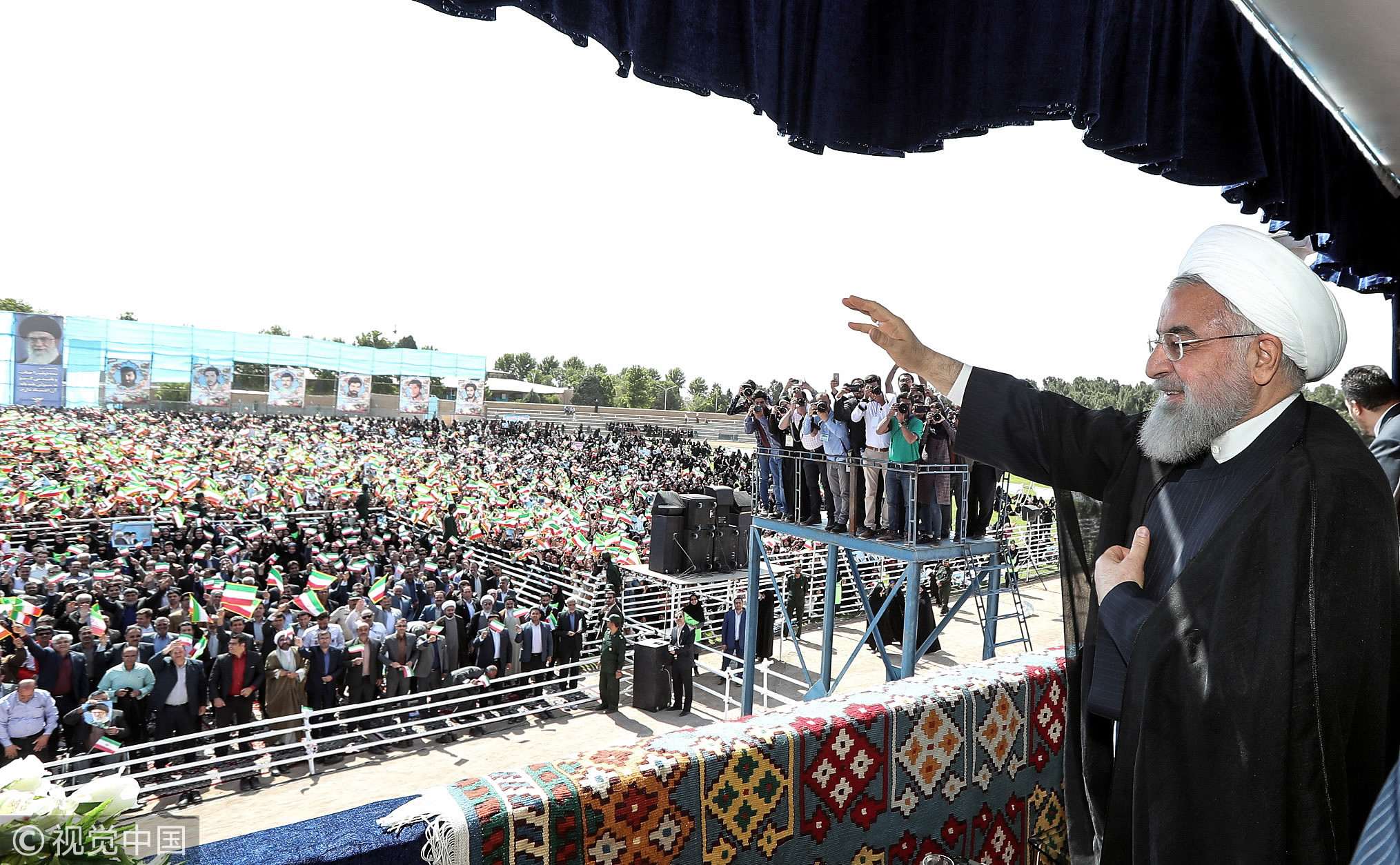
Iranian President Hassan Rouhani said that if the United States quits the nuclear deal between Tehran and world powers then Washington would regret it "like never before"during a rally speech in the northwestern city of Sabzevar on May 6, 2018./VCG Photo.
Iranian President Hassan Rouhani said that if the United States quits the nuclear deal between Tehran and world powers then Washington would regret it "like never before"during a rally speech in the northwestern city of Sabzevar on May 6, 2018./VCG Photo.
This view is echoed by Li Shaoxian, vice president of the China Institute of Contemporary International Relations.
“After the United States announced the elimination of ISIL in 2017, curbing Iran became the focus of the US' Middle East policy. When the new US Secretary of State Mike Pompeo visited the Middle East at the beginning of his term in office, one of the important goals was to unite the United States’ ‘allies’ in the Middle East and contain Iran, including the possible reactions of the withdrawal from the Iran nuclear agreement.”
Trump’s policies are intensely personal
It is no secret that Trump is pro-Israel.
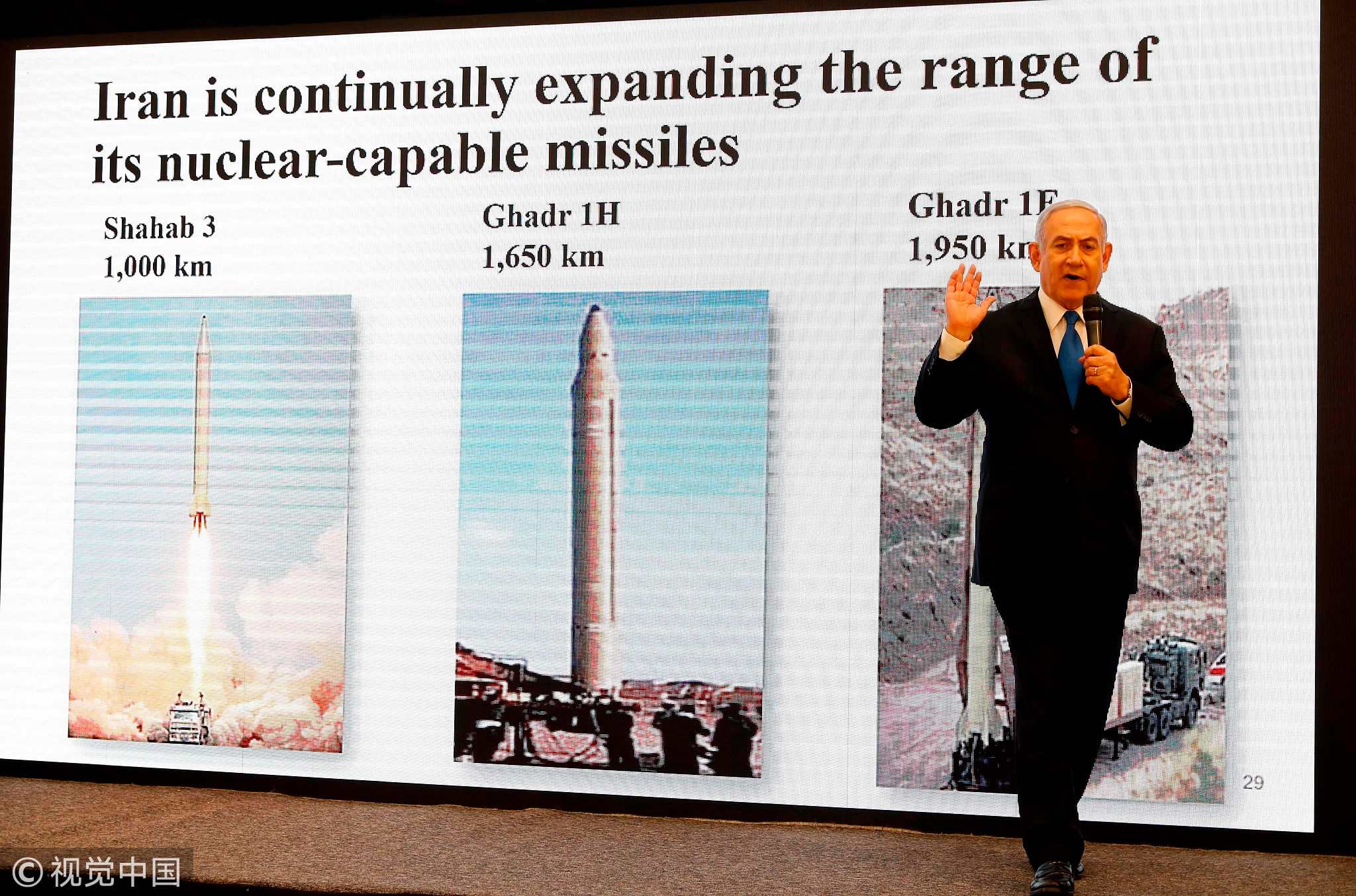
Israeli Prime Minister Benjamin Netanyahu delivers a speech on Iran's nuclear program at the defense ministry in Tel Aviv on April 30, 2018./VCG Photo.
Israeli Prime Minister Benjamin Netanyahu delivers a speech on Iran's nuclear program at the defense ministry in Tel Aviv on April 30, 2018./VCG Photo.
“The Trump family has a very good relationship with Israel. His daughter Ivanka...has converted to Judaism. On May 12, the US may withdraw from the Iran nuclear agreement and on May 14, the US embassy in Israel is going to officially move to Jerusalem,” Ruan said, noting that all these policies demonstrate that Trump has Israel’s interests at heart.
Besides, Trump is almost “against every policy from the Obama era.”

US President Donald Trump and First Lady Melania Trump greet Prime Minister Benjamin Netanyahu and Sara Netanyahu of Israel at the White House in Washington, DC, March 5, 2018. /VCG Photo.
US President Donald Trump and First Lady Melania Trump greet Prime Minister Benjamin Netanyahu and Sara Netanyahu of Israel at the White House in Washington, DC, March 5, 2018. /VCG Photo.
The tradition in the US political system is that the incumbent president will overturn his predecessor's policies, and Trump has taken it to the extreme. He almost completely dismantled Obama's legacy, both domestically by trying to wipe out Obama’s signature Patient Protection and Affordable Care Act or Obamacare and repealing the Clean Power Plan for example; and internationally by walking away from the Paris accord, rolling back the progress in US-Cuba ties, and threatening to reinstate sanctions on Iran.
Ruan also pointed out that Trump may gain more confidence as he believes he had a central role in the easing of tensions on the Korean Peninsula.
“Trump believes that the easing of the DPRK nuclear issue is the result of him exerting extreme pressure on North Korea [DPRK]. Therefore, he tries to deal with Iran in a similar way and continues to use methods of extreme pressure to fight for US interests.”
In a sense, Trump is promoting “unilateralism,” which was endorsed by the Bush administration before, proceeding with the interests of his country in mind and ignoring Washington’s international responsibilities and obligations.
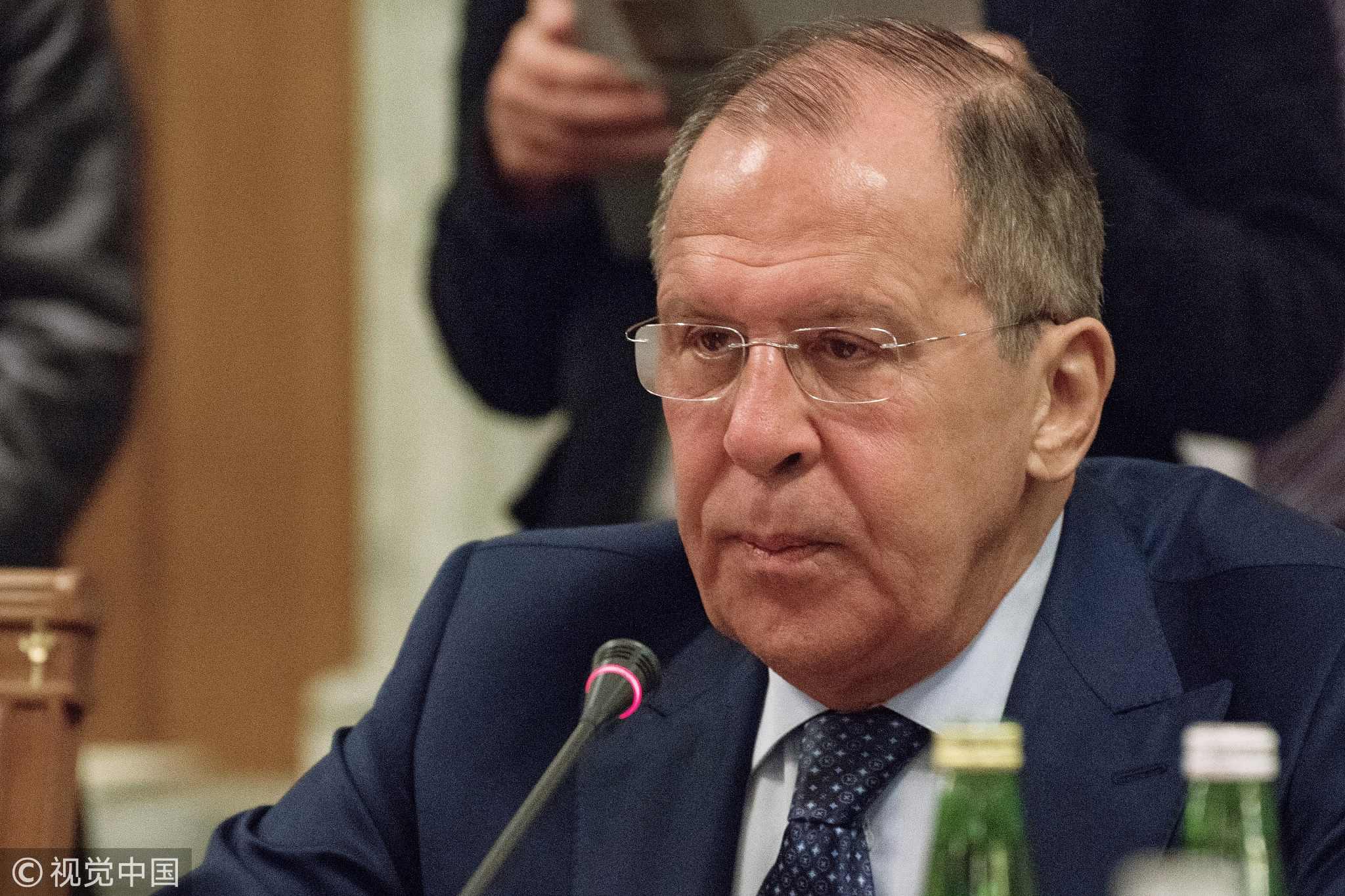
Russian Foreign Minister Sergei Lavrov said that if the United States withdraws from Iran’s nuclear agreement, it will not be conducive to maintaining the global non-proliferation regime on May 3, 2018./VCG Photo./VCG Photo.
Russian Foreign Minister Sergei Lavrov said that if the United States withdraws from Iran’s nuclear agreement, it will not be conducive to maintaining the global non-proliferation regime on May 3, 2018./VCG Photo./VCG Photo.
UN Secretary-General Antonio Guterres has called on President Trump not to withdraw from the international deal to curb the development of Iran's nuclear weapons. Guterres said the Middle East is in a dangerous position and there is risk of war if the deal is not preserved.
But Trump is not one who listens to other people’s suggestions. Given his unpredictable personality, it is hard to say what exactly Trump is going to do at the last minute.
(The article is based on an interview with Ruan Zongze, the executive deputy director of the China Institute of International Studies and Li Shaoxian, vice president of the China Institute of Contemporary International Relations. The article reflects the experts’ opinion, and not necessarily the views of CGTN.)

 ["china"]