
Lifestyle
14:01, 06-May-2019
Reporter’s Diary: Writing letters to China's 'left-behind children'
 ["china"]
Share







Copied
04:00
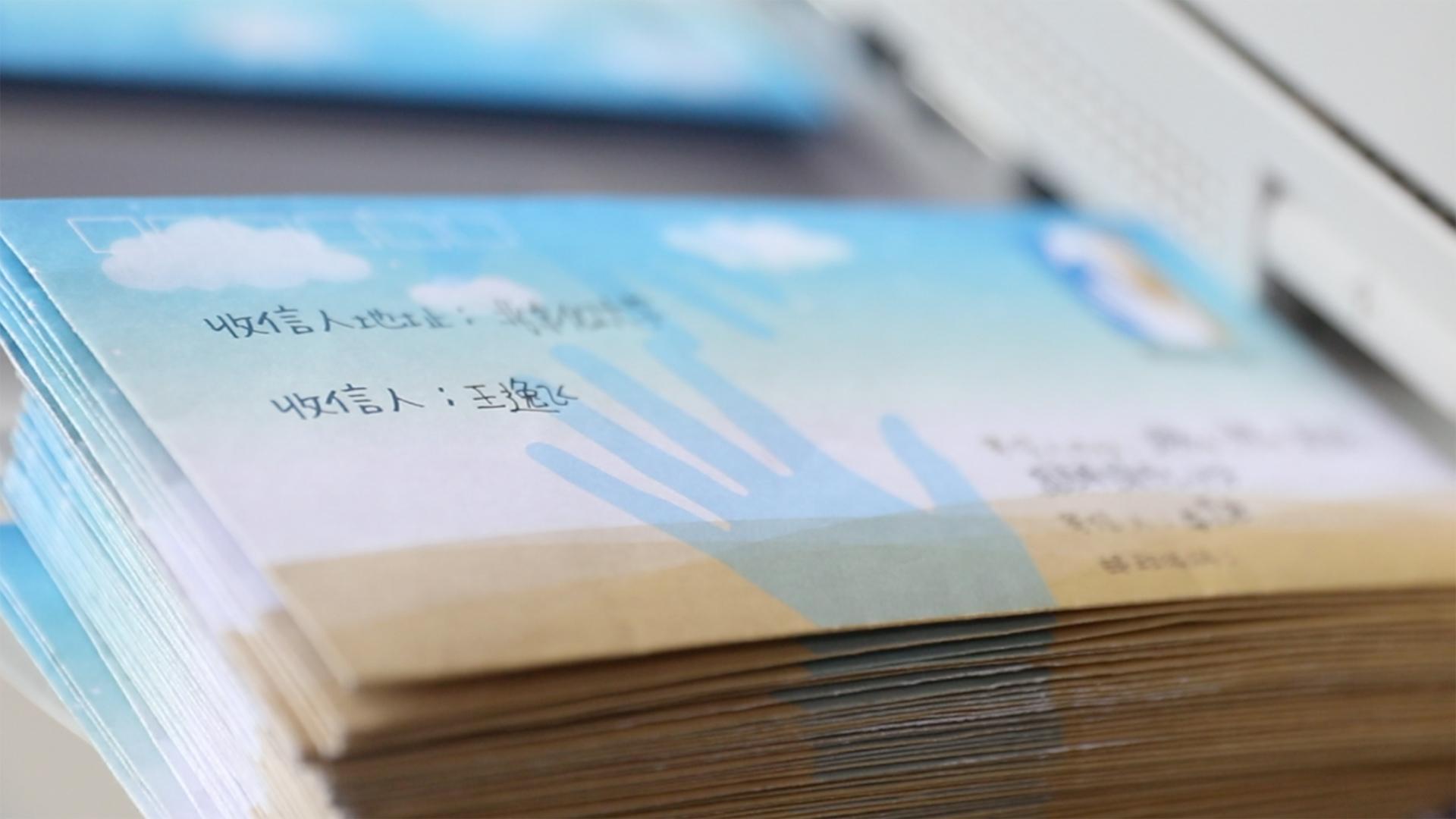
“Left-behind children” has long been a thorny issue in China, as the country ramps up efforts to expand urbanization. Millions of children are left at home in rural areas with other family members, while their parents move to the cities for jobs, or in some cases, these children's parents have passed away.
Official figures put the number of “left-behind children” in China at 6.9 million as of August 2018, according to Chinese Ministry of Civil Affairs. The staggering figure went down by 22.7 percent compared with that in 2016 when Chinese authorities first did research on these children.
Research shows 96 percent of the left-behind children live with their grandparents, while the rest are taken after by their relatives. In addition, 89.1 percent of them are below 14 years old.
A great majority of these kids live in the rural areas of southwest China's Sichuan Province, followed by some central Chinese provinces – including Anhui, Hunan, Henan and Jiangxi, to name just a few – whose economy is comparatively weaker, prompting more rural workers to seek life in urban areas.
'Blue Letter' helps connect left-behind children with outside world
For most, writing letters by hand has been something of a bygone era, but a Chinese non-governmental organization – known as Blue Letter – has been helping these children find pen pals to facilitate their communication with the outside world.
CGTN visited the Guangzhou headquarters of Blue Letter. About 2,000 letters come in and out of the place – which is slightly bigger than a three-bedroom apartment – on a daily basis.
Initiated 11 years ago, the organization now has over 10,000 volunteers nationwide corresponding with the left-behind children one on one. Founder of Blue Letter Zhou Wenhua was inspired by a left-behind child's story and decided to recruit more volunteers.
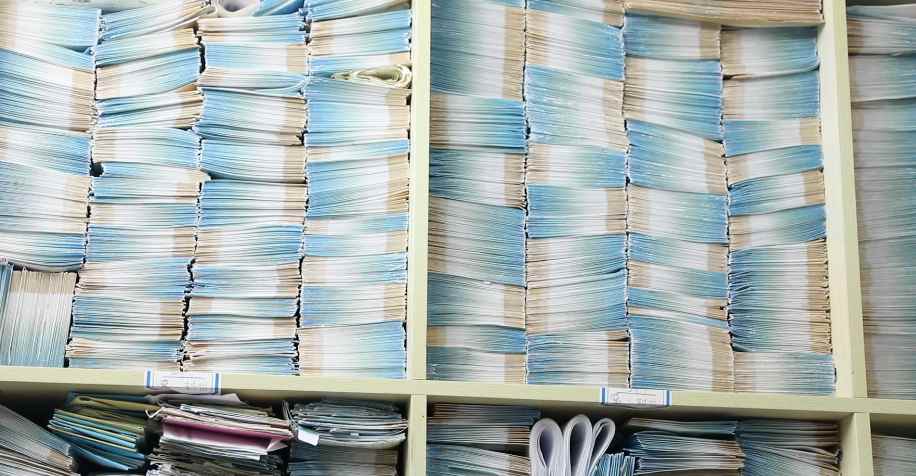
Blue letters. /CGTN Photo
Blue letters. /CGTN Photo
Over the next three years, Blue Letter plans to reach out to about 1,000 schools where left behind children study. Regardless, the standards for volunteers, most of whom are college students at this stage, are quite high.
“We're not teaching these children how to behave. All they need is some company. The volunteers talk to them on an equal basis, and the quality of empathy is also quite important in a volunteer. More importantly, these children tend to imitate, so if you'd like to share your life and experiences with them, they are more likely to open their worlds to you,” said Zhou. “You can also put ‘blue letter project' in your search engine and be one of our volunteers.”
Left-behind children are required to fill in forms – before they start with the program – presenting their interests and personalities, in the hope of finding themselves the right volunteers. And the only means for the two parties to communicate is by writing letters.
We visited a volunteer who is studying in Sun Yat-sen University in the southern Chinese city of Guangzhou.
“This is very new – college students and left-behind children writing letters to each other to help the children deal with their difficulties in life. Being an only child, I myself met some problems in my social and school life when I was a kid, but I didn't have anyone older who could help me. Now I can help these children as an older sister,” said Zhou Jiamin, Blue Letter volunteer.
The child the college volunteer has been writing letters to over the past year lives in a village of central China's Hunan Province. We drove nearly 10 hours to the small village tucked away in the mountains.
It happened to be China's May Day holiday, the child named Tan Xiaojiao was at home without school, which gave us a chance of a home visit. Quite contrary to what one may have guessed, the child's family lived in a nice three-story house, part of China's efforts of building “modern countryside.” Tan seems to be well adjusted to her life at home, living with her grandmother without her parents most of the time.
I brought along with me the letter from Zhou Jiamin and delivered it to the child personally, though traditionally letters are sent to the school where left-behind children study.
“In seventh grade, my teachers told us about this program. Then they submitted the list of left-behind children in class. That's how I joined. I feel happy and comfortable every time I finish a letter. I guess writing letters is a way for me to relax,” said Tan Xiaojiao, a left-behind child.
Tan wishes to study finance and economics in college, the same major her volunteer Zhou Jiamin does.
Solutions
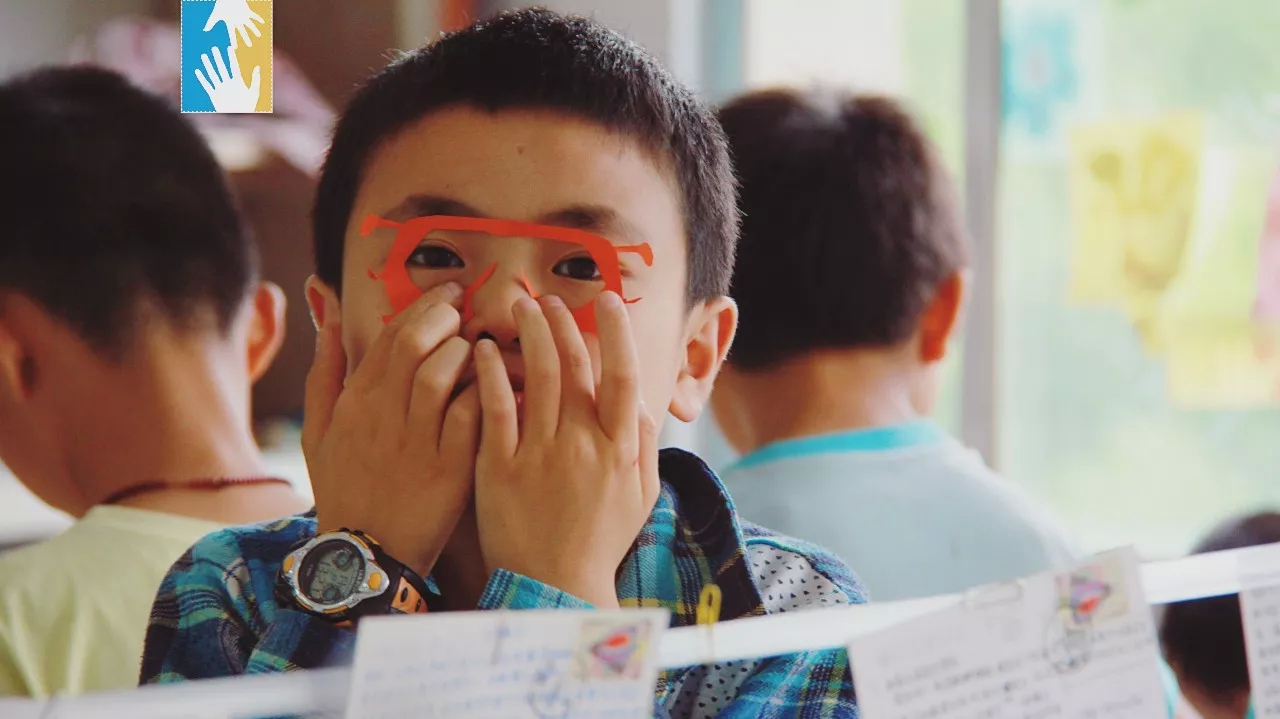
A boy playing with his papercut mask. /Photo via lanxinfeng.org
A boy playing with his papercut mask. /Photo via lanxinfeng.org
Nearly seven million children are left behind by their parents, with the major reason being China's household registration system.
Left-behind children with rural household registration are not allowed to enroll in high schools in cities in most cases, and in some places these children are denied elementary and junior high school education. Therefore, parents leaving to work in cities are not capable of bringing along their children, hence the phenomenon of “left-behind children” in China.
Numerous left-behind children become reluctant to go to school due to parents' migration to urban areas. As a consequence, many of these children become truants and some drop out of school, which restricts their social mobility in the future due to lack of education.
“The separation between parents and left-behind children poses a challenge to their social relationships. Left-behind children are more introverted than those who grow up with their parents and are more susceptible to being bullied at school,” according to a report titled “The Sad Plight of China's Left-behind Children” by Cesar Chelala.
In June 2015, four siblings – the youngest just five years old – whose parents had left home to work elsewhere, killed themselves by consuming pesticide. The China Daily report makes clear it is not an isolated case.
Quite a few schools, some dedicated specifically to left-behind children, have been established to provide these children with better education. Nevertheless, a lack of funding and teaching resources is posing challenges to the children's education.
Chinese authorities called for new regulation and rules to protect left-behind children at the beginning of 2019, which states that children under the age of 16 are forbidden to live alone without legal custodians. It also calls on the local governments at all levels, charity organizations and other institutions to provide social services for these children.