
Politics
23:33, 09-Jun-2018
CIS official hails SCO for improving international order
 ["china"]
Share







Copied
02:03
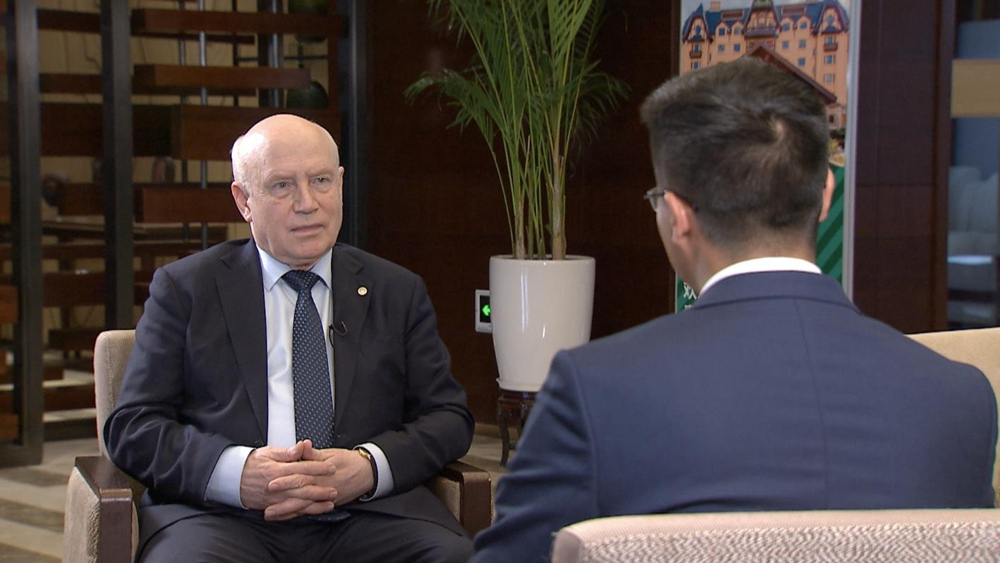
One of the international organizations which will be involved at the Shanghai Cooperation Organization (SCO) summit this year is the CIS – or the Commonwealth of Independent States – a political and economic confederation founded after the dissolution of the Soviet Union. How has it been cooperating with the SCO, and how does it see their future partnership? CGTN's Cui Hui'ao sat down with its executive secretary, Sergei Lebedev.
Asked on his expectations for the SCO summit, Lebedev said he has attended the SCO summit many times. "It is a great honor for me to attend such meetings as this. One of the core aspects of this year's SCO summit is the participation of its two new members, Pakistan and India. Today, the SCO has become an influential organization when it comes to improving the international order. Its aim is consolidation, peace, stability and cooperation."
Lebedev said the world has a positive stance on the SCO, and each SCO summit can bring positive factors for both itself and world peace. "So I believe that tomorrow's summit can also be positive, and Sunday's Qingdao declaration will further promote peace in the region and the world."
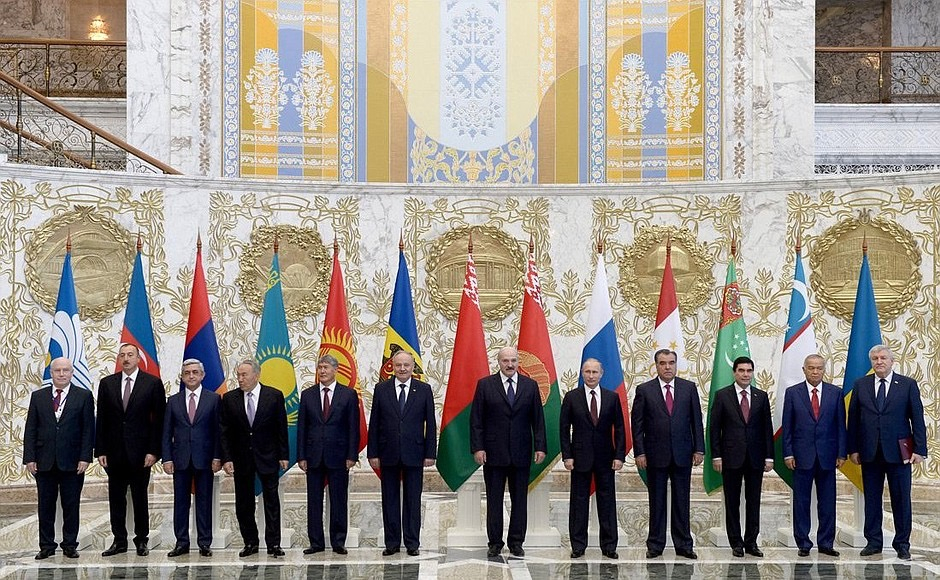
The 2014 Summit of Heads of State of the Commonwealth of Independent States. /VCG Photo
The 2014 Summit of Heads of State of the Commonwealth of Independent States. /VCG Photo
The Commonwealth of Independent States has a 26-year history, founded after the dissolution of the Soviet Union. In this regard, the SCO is younger, but Lebedev said their goals and objectives are very similar.
"Their principles are around mutual respect, equality and non-interference in the internal affairs of others. These common points allow us to coordinate our actions, hold meetings, as well as share and exchange our views. For example, all eight member states of the CIS have worked with the SCO in some form. In 2017, a memorandum of understanding was signed between the two organizations."
Lebedev said his organization and the SCO regularly hold meetings at the secretary-general level, while various experts also meet regularly and invite each other to participate in activities.
Last June, Lebedev also attended the 17th meeting of the Council of Heads of State of the SCO in Kazakhstan, at which Chinese President Xi Jinping delivered a keynote speech, advocating that the SCO members build a community of shared future, deepen cooperation, and strengthen people-to-people exchanges.
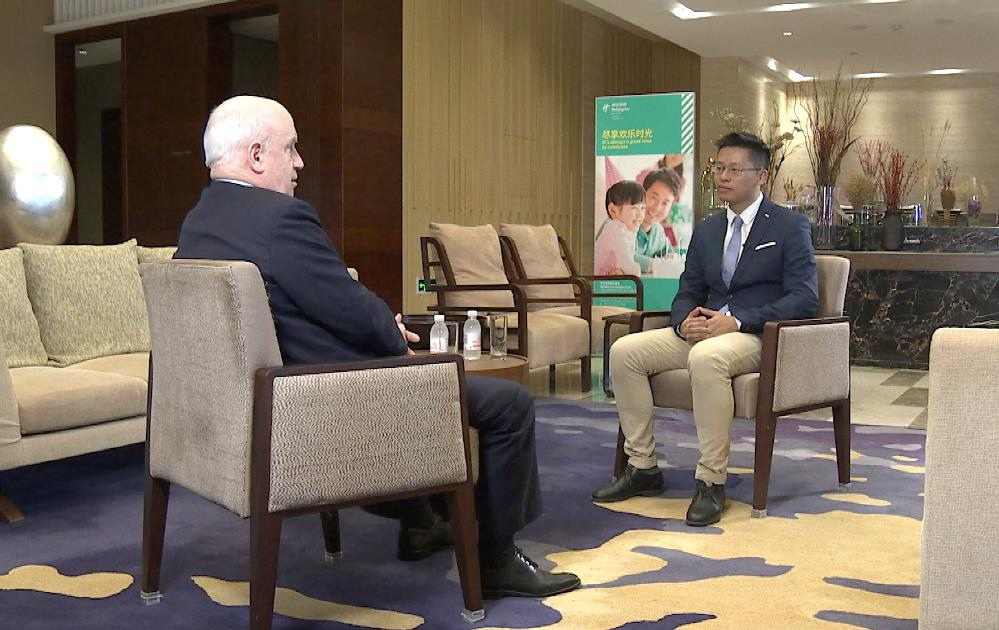
CIS Executive Secretary Sergei Lebedev (L) talks with CGTN reporter Cui Hui'ao. /CGTN Photo
CIS Executive Secretary Sergei Lebedev (L) talks with CGTN reporter Cui Hui'ao. /CGTN Photo
Lebedev said he remembers Xi's speech very well, "It impressed not just me, but other representatives at the summit. President Xi announced the five principles for building a community of shared future, and they are all very constructive. They can be used to construct the ideal global structure and environment. They can serve to establish good neighborly, equitable and mutually-beneficial relations, which will no doubt also contribute to global peace and stability."
Finally, CGTN asked Lebedev about his thoughts on the relations between China and the CIS member states that have developed rapidly over the past two decades, especially in trade. He said both share the same goals and principles.
"We are both building bilateral and multilateral relations that are based on mutual trust, non-interference in each other's internal affairs and mutually-beneficial cooperation. We have not yet, nor will we pressurize other countries. I can give you an example: the founding statute of the CIS stipulates that all decisions must be adopted by consensus; that is to say, if one of the parties does not agree, the resolution will not be adopted. The CIS does not have supranational institutions, nor does the SCO have such institutions. This is in line with the interests of the people from all nations."