
Technology
11:29, 08-Jul-2018
Students from across the world compete in China while learning more about the future of the workforce
Updated
11:28, 11-Jul-2018
 ["china"]
Share







Copied
02:29
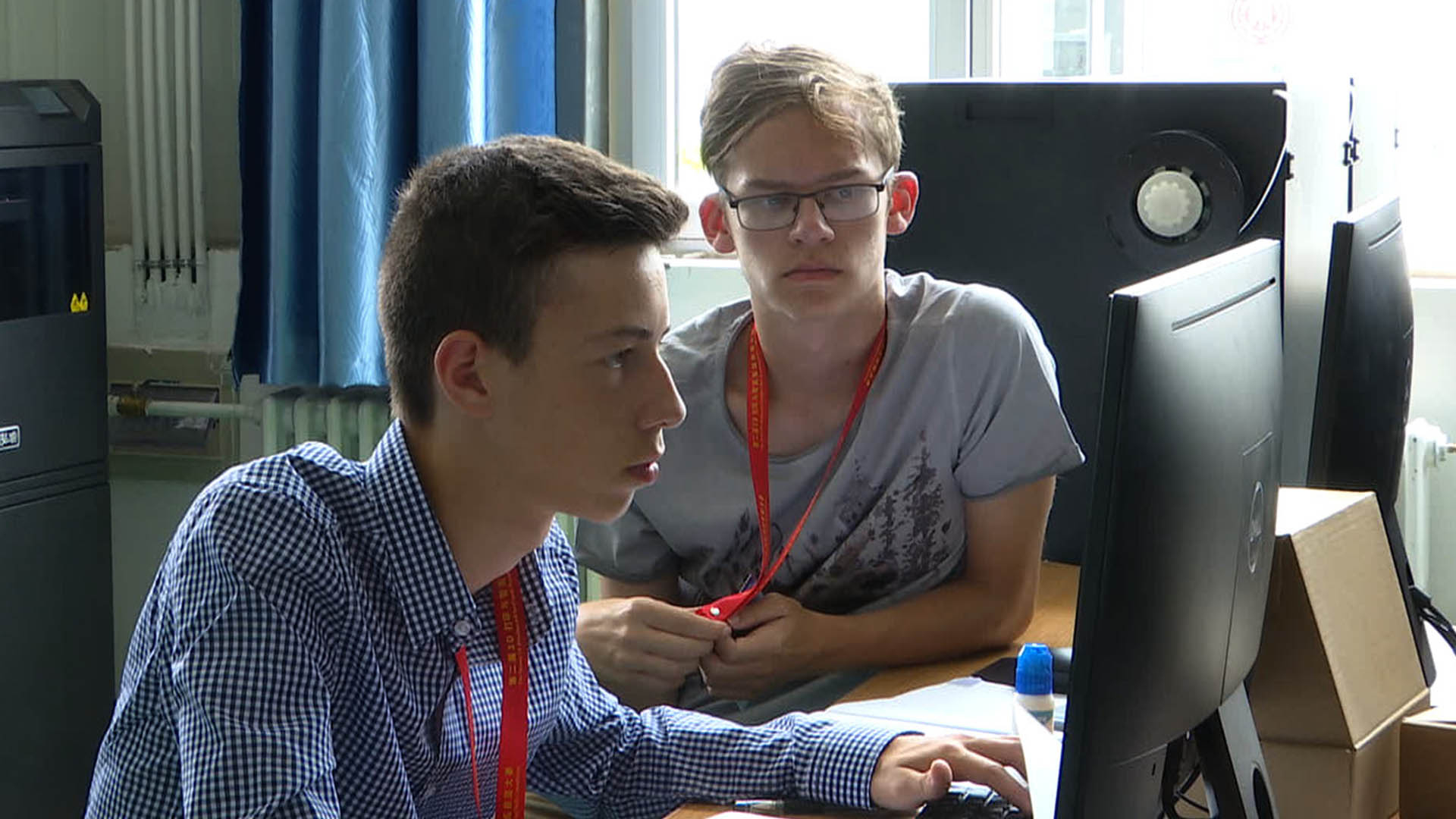
Digital, green, and service economies are transforming the labor market throughout developing, emerging, and advanced industries alike, requiring a more skilled workforce. CGTN went to the city of Chifeng in north China’s Inner Mongolia Autonomous Region, where students are competing with each other and also learning what the future holds.

In the coming years, 3D printers will be at the heart of full-scale production capabilities in several industries around the world. /CGTN Photo
In the coming years, 3D printers will be at the heart of full-scale production capabilities in several industries around the world. /CGTN Photo
3D printers are expected to be at the heart of full-scale production capabilities in several industries around the world in the near future. To prepare for this, the Belt and Road Initiative and the BRICS skills development alliance are holding the second 3D Printing and Intelligent Manufacturing Competition.
Haider Shahzaib, one contestant from Pakistan, told CGTN that students from all over the world will travel to other countries for employment, but if they are "in a shell," they cannot develop. "That's why you have to step out and see what kind of skills are needed."
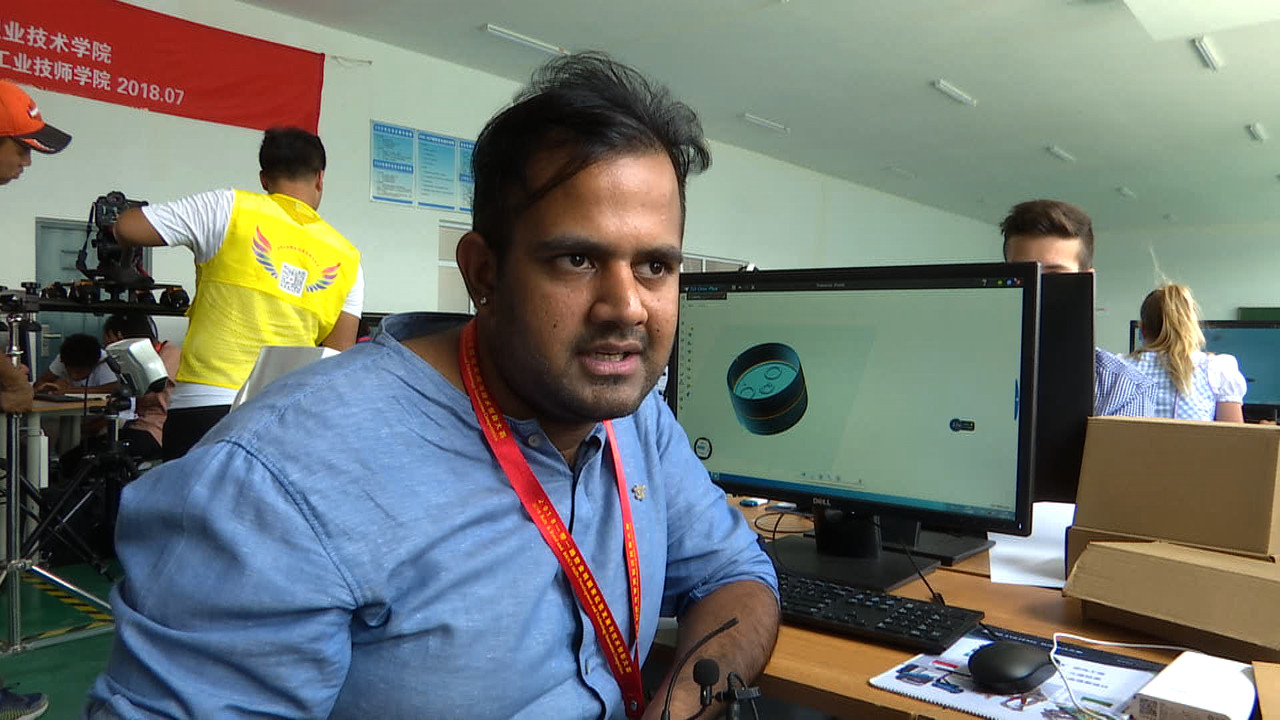
Haider Shahzaib, one contestant from Pakistan, thinks that students from around the world have to step out and see what kind of skills are needed. /CGTN Photo
Haider Shahzaib, one contestant from Pakistan, thinks that students from around the world have to step out and see what kind of skills are needed. /CGTN Photo
During last year’s BRICS summit, world leaders shook hands and agreed to promote the development of skills and technology exchanges. Numerous competitions involving students from all over the world were organized in the wake of the summit, including this one.
Franz Matejka, the coach of the Austrian team, talked about having a goal-oriented approach when interviewed by CGTN. According to Matejka, that approach gives students more freedom to develop their own way with the available tools and guidance.
Many Chinese contestants also took part in the contest. One particular competition focused on manufacturing-related skills, including welding, machinery and electrical engineering. For college students, it is challenging to make a product out of raw materials in just few hours.
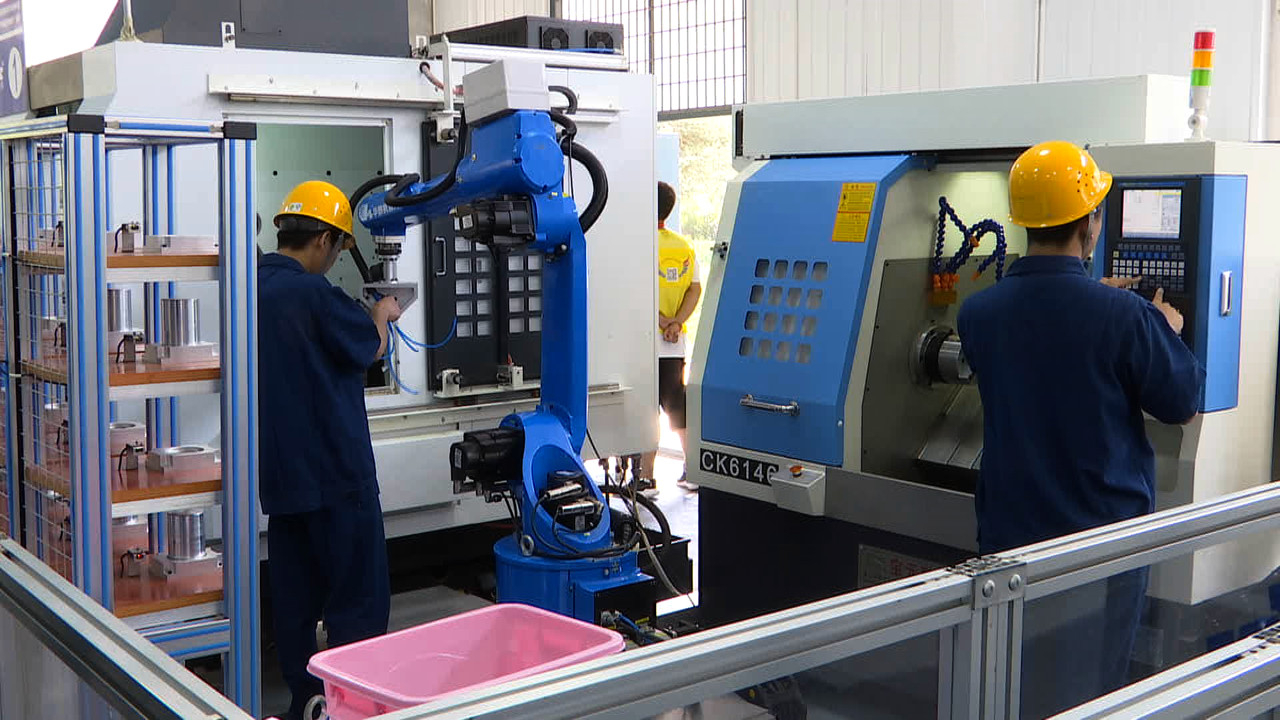
Chinese contestants in the competition /CGTN Photo
Chinese contestants in the competition /CGTN Photo
Wang Zimeng, one contestant from east China's Anhui Province, said, "The task involves smart manufacturing, which is an area that we are still learning [about]. I think the next era of manufacturing is all about efficiency and reducing cost, and the competition is showing us the future trends."
Liu Hui, vice director of the organizing committee of the Belt and Road and BRICS Business Council Alliance, told CGTN that these competitions may help promote the unification of industry standards, and by sharing standards, the skills of young talents can find better recognition, no matter where they go.
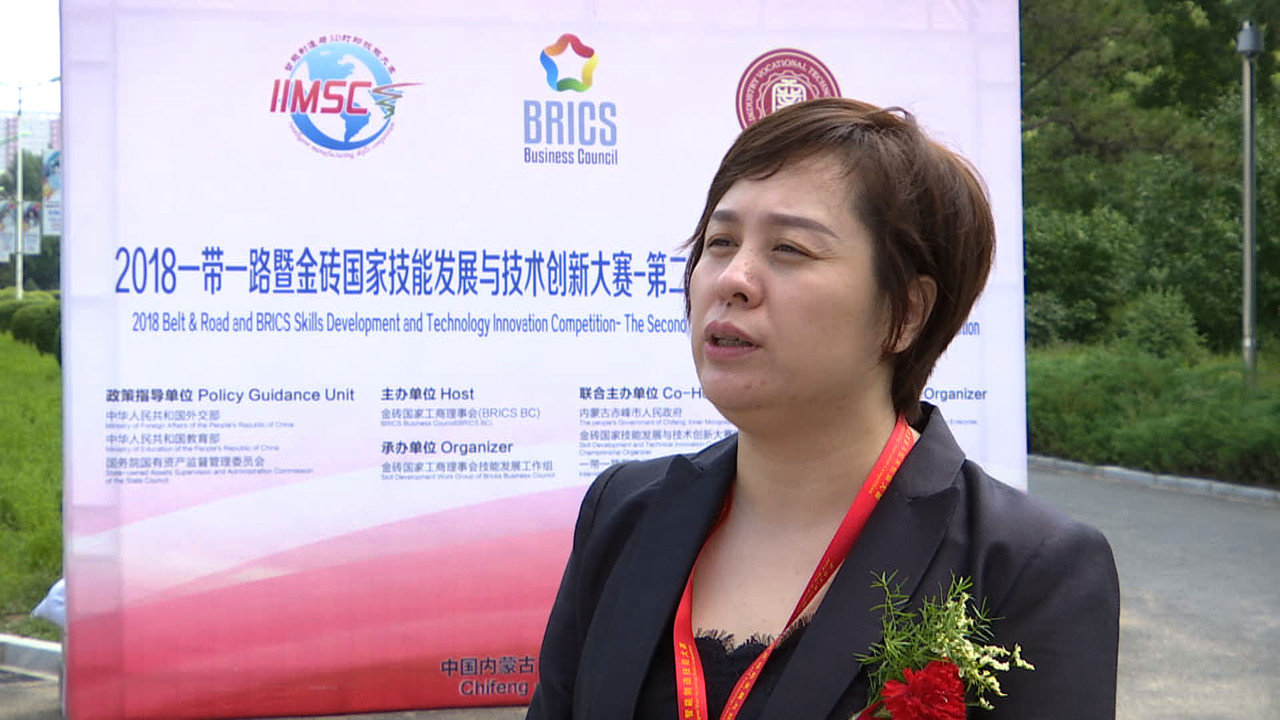
Liu Hui, vice director of the organizing committee, told CGTN that such competitions may help promote the unification of industry standards. /CGTN Photo
Liu Hui, vice director of the organizing committee, told CGTN that such competitions may help promote the unification of industry standards. /CGTN Photo
The winning teams will be qualified for the BRICS Skills Competition in South Africa, where the 2018 BRICS Summit will be held this September. The BRICS Skills Competition will focus on ensuring skills development and job creation for young people.
(Top image: Two Austrian contestants in the 3D Printing and Intelligent Manufacturing Competition /CGTN Photo)