
Opinions
23:06, 13-May-2018
Iran’s deal-saving journey: Why is China the first stop?
 ["china"]
Share







Copied
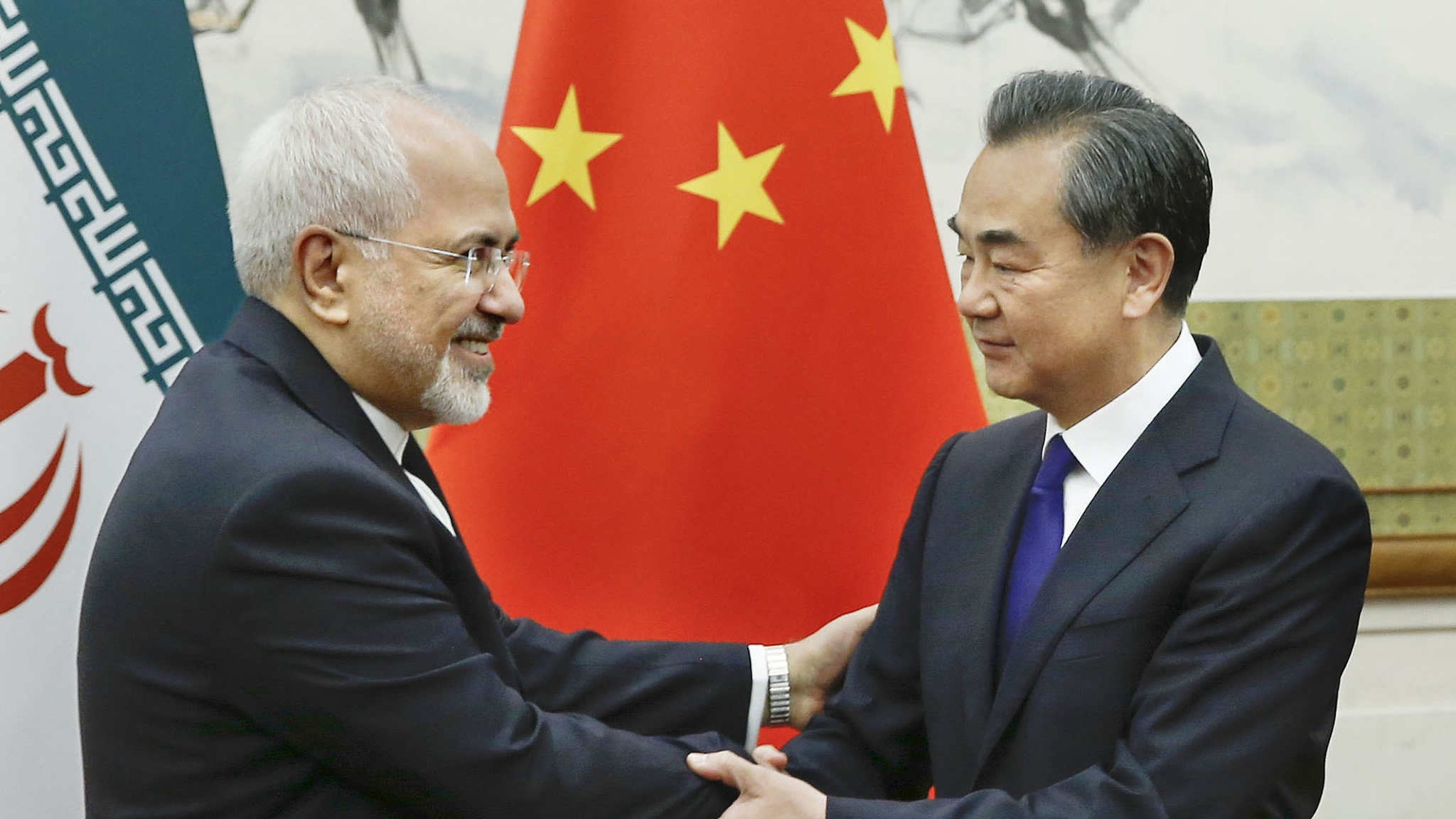
“It is a strong indication showing that Iran has attached great importance to China's role in this issue”, says Li Guofu, Director of the Middle East Studies Center, at the China Institute of International Studies, in an interview with CGTN.
Iran’s Foreign Minister Mohammad Javad Zarif has arrived in Beijing for a meeting with his Chinese counterpart Wang Yi to communicate on the Iran nuclear deal, which is on a vulnerable condition after the US announced pulling out of it.
Zarif’s deal-saving journey begins with China. He will then fly to Moscow and Brussels to meet all the remaining parties in the Joint Comprehensive Plan of Action (JCPOA).
Before leaving, Zarif published a government statement on his Twitter page, saying Iran will seek “constrictive and dignified engagement with the world”, despite America’s “continuous violations”.
According to Li Guofu, as China’s influence on international affairs has been rising and China has been developing close relations with Iran, it is not surprising that Iran chose China as the first stop.
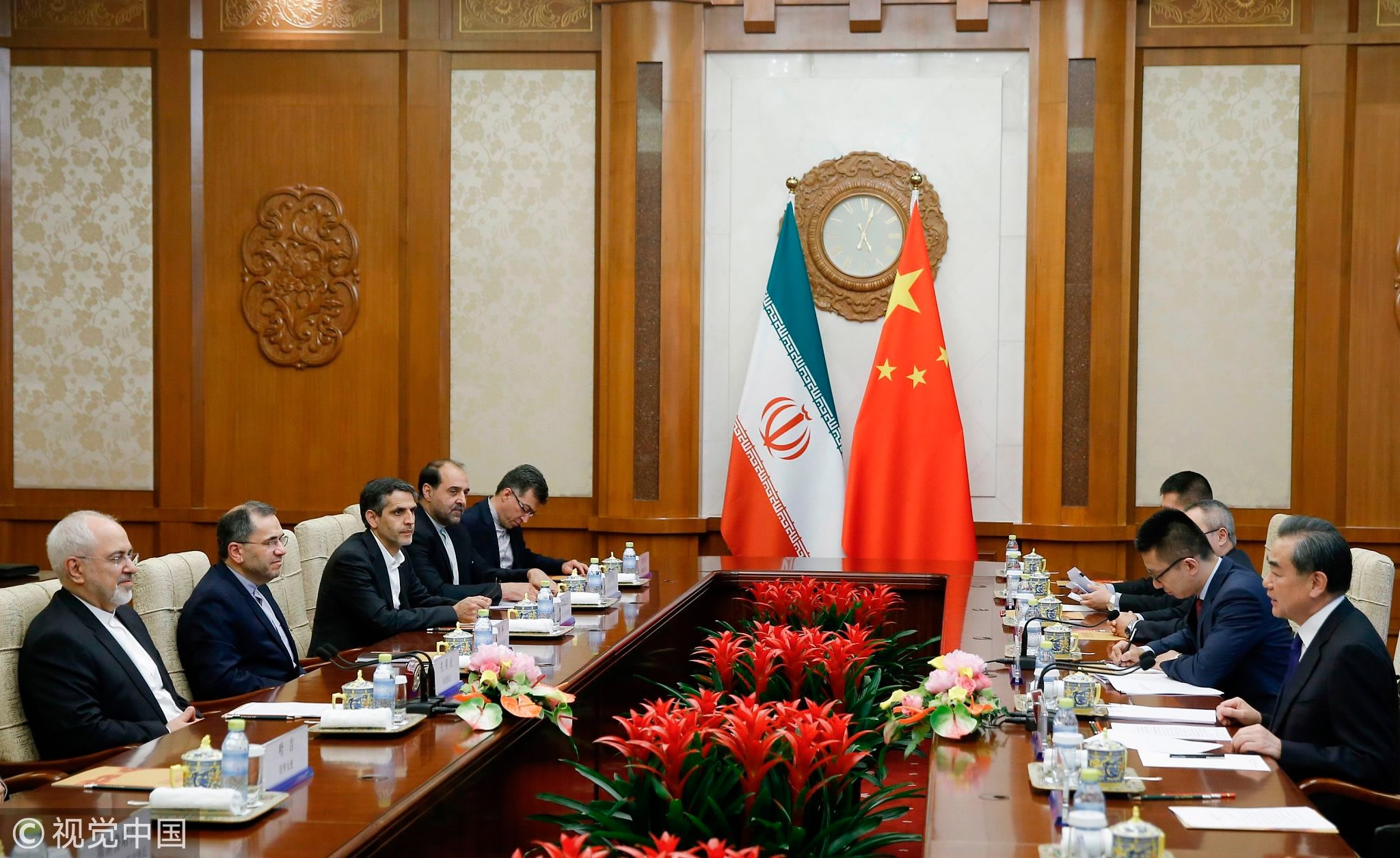
Chinese State Councillor and Foreign Minister Wang Yi (R) holds talks with Iranian Foreign Minister Mohammad Javad Zarif (L) at the Diaoyutai state guesthouse in Beijing on May 13, 2018. /VCG Photo
Chinese State Councillor and Foreign Minister Wang Yi (R) holds talks with Iranian Foreign Minister Mohammad Javad Zarif (L) at the Diaoyutai state guesthouse in Beijing on May 13, 2018. /VCG Photo
China is the largest trading and investing partners with Iran, also the largest buyer of Iran’s oil. It is interesting to note that one day after Trump announced withdrawal from the JCPOA and threatened more strict economic sanctions, Xinhua has reported that China has launched a new freight train service between China and Iran. The new train route is expected to shorten the transportation by 20 days compared with ocean shipping.
While Europe is negotiating its way between Iran and the US, China’s message is clear: China is not afraid of its bully and threat. It stands firmly on the side of multilateralism.
The economic sanctions announced by Trump were not only between the US and Iran. It forbids all countries doing business with Iran, otherwise it will not be allowed in the American market.
In an interview with France Europe 1, France’s Minister for the Economy Bruno Le Maire has condemned America’s role as the “world economic police” and said that Europe should strengthen its “economic sovereignty”.
Li Guofu reminds that US President Donald Trump has crossed Europe by discarding the rules and their alliance relationship many times, such as withdrawing from the Paris agreements and imposing steel and aluminum tariffs. In his view, this could be “the beginning” of rift between the traditional alliance, namely Europe and the US.
According to the analysis by Dina Esfandiary, research fellow at Center for Science and Security Studies, Kings College, China differs from Europe since it owns many companies that are independent from America’s market.
“The more the United States overreaches, the more other countries are going to look for ways to set up longstanding systems that US sanctions would no longer be able to affect,” said Esfandiary.
And so the irony begins: one deal was broken, and new deals will be built, sadly without Trump.