
Lifestyle
14:36, 01-May-2019
Migrant workers gaining respect in big cities
 ["china"]
Share







Copied
02:11
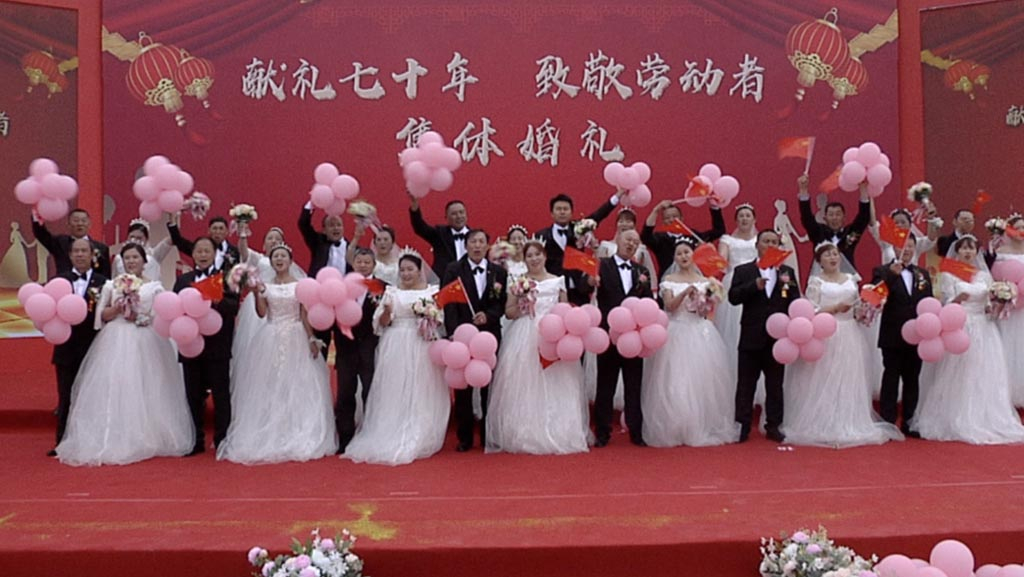
Zou Lingdong, 49, comes from a rural area of Nanyang in central China's Henan Province. Twenty-three years ago, he left his hometown and has worked in many cities across China. Now, he is working in a construction site to build a museum outside Zhengzhou, the provincial capital.
Zou said, “I remember when I got my first job in a big city, I worked day and night. Twenty people slept on the same bed. The food was bad. It was not a life.”
With the coming of International Labor Day, Zou Lingdong got a surprise. The company decided to hold a group wedding for 15 couples on the construction site. Last Friday, it was the first time that Zou saw his wife in a wedding dress.
Overjoyed, Zhang Yupei, Zou's wife, said, “This has been my dream for many years. He once promised me to shoot wedding photos, but we never got a chance. ”
In China, migrant workers can make up half of the country's urban workforce. But they used to be the most socially marginalized group of people.
However, things have changed in recent years.
Zou observed, “Now I don't have to worry about the safety when working on the construction site. We have a helmet and different kinds of protection. The company even buys us insurance. I get paid on time. Now, I feel I get more and more love and understanding today. ”
Zhang Hongxing, also a migrant worker, said that,“We migrant workers help build the cities. But we used to suffer prejudice and discrimination. Now I feel more and more city residents are showing their hospitality to us.”
China continues to relax restrictions on the hukou, the country's household registration system. The country hopes that more than 100 million migrant workers will obtain their hukou in second and third-tier cities. Moreover, more public services will continue to be improved for migrant workers.