
Politics
08:34, 08-May-2018
Trump to announce decision on Iran nuclear deal on Tuesday
 ["china"]
Share






Copied
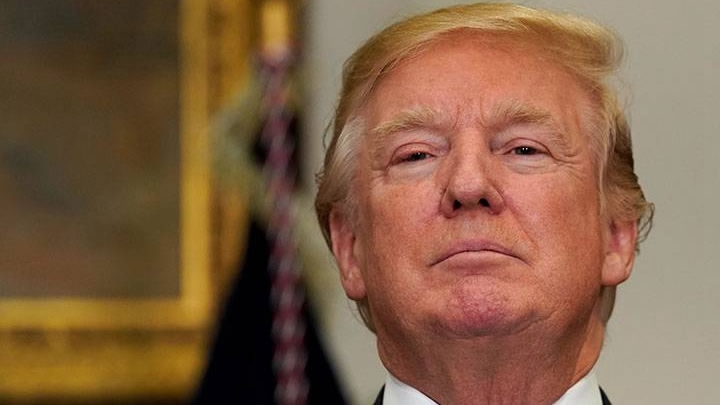
US President Donald Trump said on Monday that he would announce a decision on Tuesday about the future of an international nuclear agreement with Iran, as Tehran hinted it might stay in the 2015 accord even if Washington pulls out.
"I will be announcing my decision on the Iran Deal tomorrow from the White House at 2:00 p.m.," Trump said in a Twitter post on Monday.
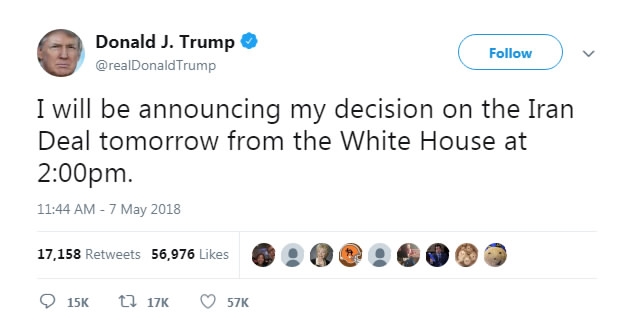
Screenshot of Donald Trump's tweet
Screenshot of Donald Trump's tweet
Trump has repeatedly threatened to withdraw from the multilateral Joint Comprehensive Plan of Action (JCPOA), which was signed in 2015 and lifted economic sanctions on Iran in exchange for Tehran limiting its nuclear ambitions, unless European allies who also signed the deal fix what he has called its shortcomings.
Under US law, Trump has until May 12 to decide whether to reintroduce US sanctions on Iran, which would deal a heavy blow to the agreement and likely upset Washington's European allies.
Bringing back US sanctions could also trigger a backlash by Iran, which could resume its nuclear arms program or punish US allies in Syria, Iraq, Yemen and Lebanon, diplomats said.
Trump has all but decided to withdraw from the accord but exactly how he will do so remains unclear, two White House officials and a source familiar with the administration's internal debate said last week.
One of the officials said it was possible Trump will end up with a decision that "is not a full pullout," but was unable to describe what that might look like.
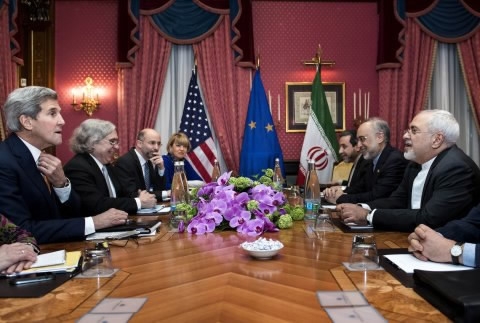
March 26, 2015: US Secretary of State John Kerry (L), US Secretary of Energy Ernest Moniz (2nd L), Head of the Iranian Atomic Energy Organisation Ali Akbar Salehi (2nd R) and Iranian Foreign Minister Javad Zarif (R) wait with others ahead of a meeting at the Beau Rivage Palace Hotel in Lausanne. /Reuters Photo
March 26, 2015: US Secretary of State John Kerry (L), US Secretary of Energy Ernest Moniz (2nd L), Head of the Iranian Atomic Energy Organisation Ali Akbar Salehi (2nd R) and Iranian Foreign Minister Javad Zarif (R) wait with others ahead of a meeting at the Beau Rivage Palace Hotel in Lausanne. /Reuters Photo
Under the agreement with the US, France, Germany, Britain, Russia and China, Iran strictly limited uranium enrichment capacity to try to show that it was not trying to develop atomic bombs. In exchange, Iran received relief from economic sanctions.
Iranian President Hassan Rouhani suggested on Monday that Iran could remain in the accord even if the US dropped out, but said that Tehran would fiercely resist US pressure to limit its influence in the Middle East.
Rouhani said the Islamic Republic had been preparing for every possible scenario, including a deal without Washington, which would still include other signatories that remain committed to it, or no deal at all.
"We are prepared for all scenarios and no change will occur in our lives next week," Rouhani said in a speech broadcast live on state TV.
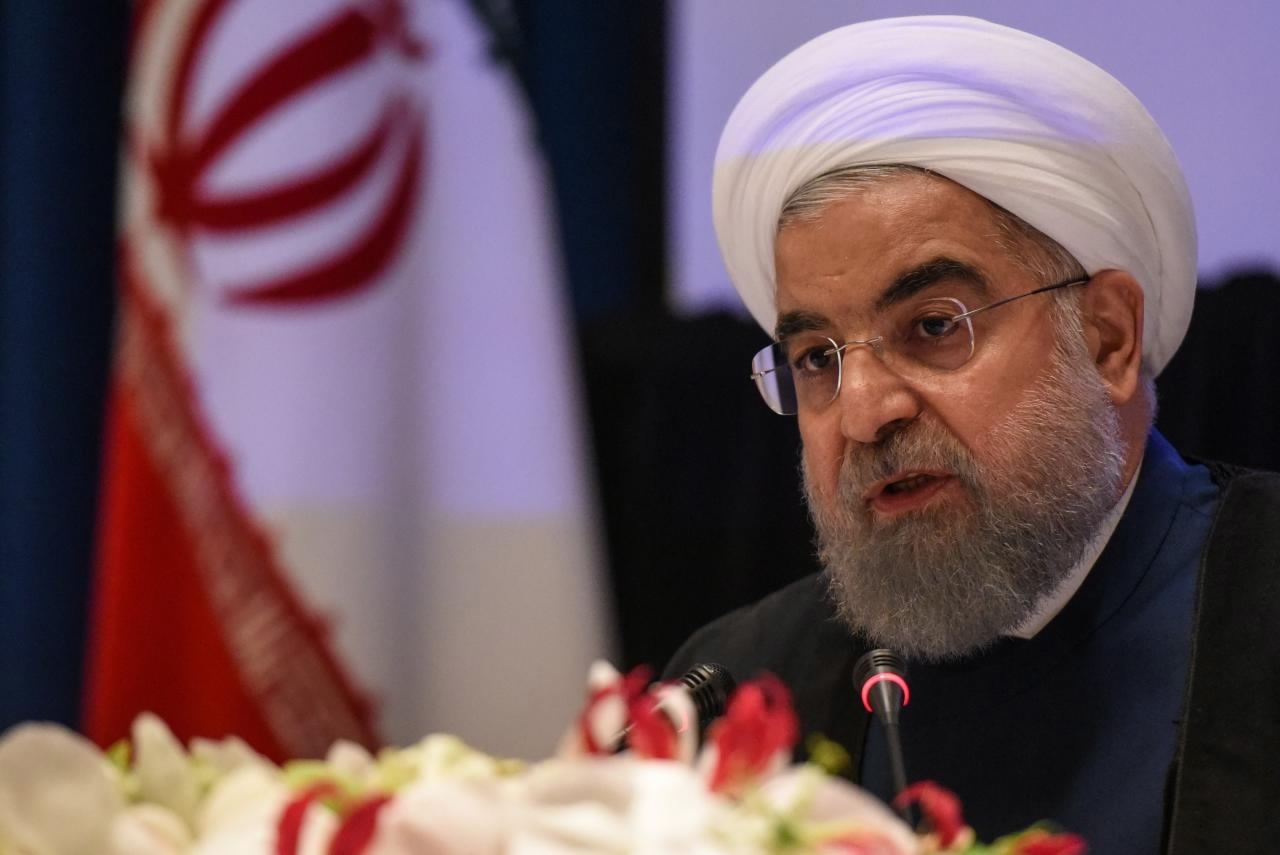
Sept. 20, 2017: Iran's President Hassan Rouhani delivers remarks at a news conference during the UN General Assembly in New York City, US. /Reuters Photo
Sept. 20, 2017: Iran's President Hassan Rouhani delivers remarks at a news conference during the UN General Assembly in New York City, US. /Reuters Photo
"If we can get what we want from a deal without America, then Iran will continue to remain committed to the deal. What Iran wants is our interests to be guaranteed by its non-American signatories. In that case, getting rid of America's mischievous presence will be fine for Iran."
Trump's Iran tweet helped oil prices break 70 US dollars a barrel to reach their highest level since late 2014.
Supporters of the deal argue that withdrawing from the JCPOA would undermine Trump's push for the Democratic People's Republic of Korea (DPRK) to denuclearize. Trump is planning on meeting with DPRK's Kim Jong Un within the next month.
Earlier Monday, Trump criticized John Kerry after reports that the former secretary of state has been promoting the Iran nuclear deal.
Trump said on Twitter: "The United States does not need John Kerry's possibly illegal Shadow Diplomacy on the very badly negotiated Iran Deal. He was the one that created this MESS in the first place!"
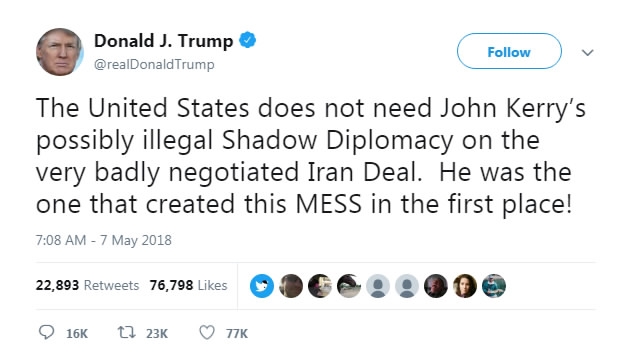
Screenshot of US President Donald Trump's tweet
Screenshot of US President Donald Trump's tweet
Kerry, who was also the lead negotiators for the Obama administration on the Paris climate accord, has been promoting both agreements since he left office.
Allies committed to deal
Britain, France and Germany remain committed to the accord and, in an effort to address US complaints, want to open talks on Iran's ballistic missile program, its nuclear activities beyond 2025, when pivotal provisions of the deal expire, and its role in the wars in Syria and Yemen.
British Foreign Secretary Boris Johnson, in Washington this week, said the deal's weaknesses could be remedied.
"At this moment Britain is working alongside the Trump administration and our French and German allies to ensure that they are," he said in a commentary in the New York Times.
Johnson met US Secretary of State Mike Pompeo and Vice President Mike Pence on Monday.
Diplomats say Iran would rather the deal remain intact out of concern about a revival of domestic unrest over economic hardships that mounted over the years sanctions were in place.
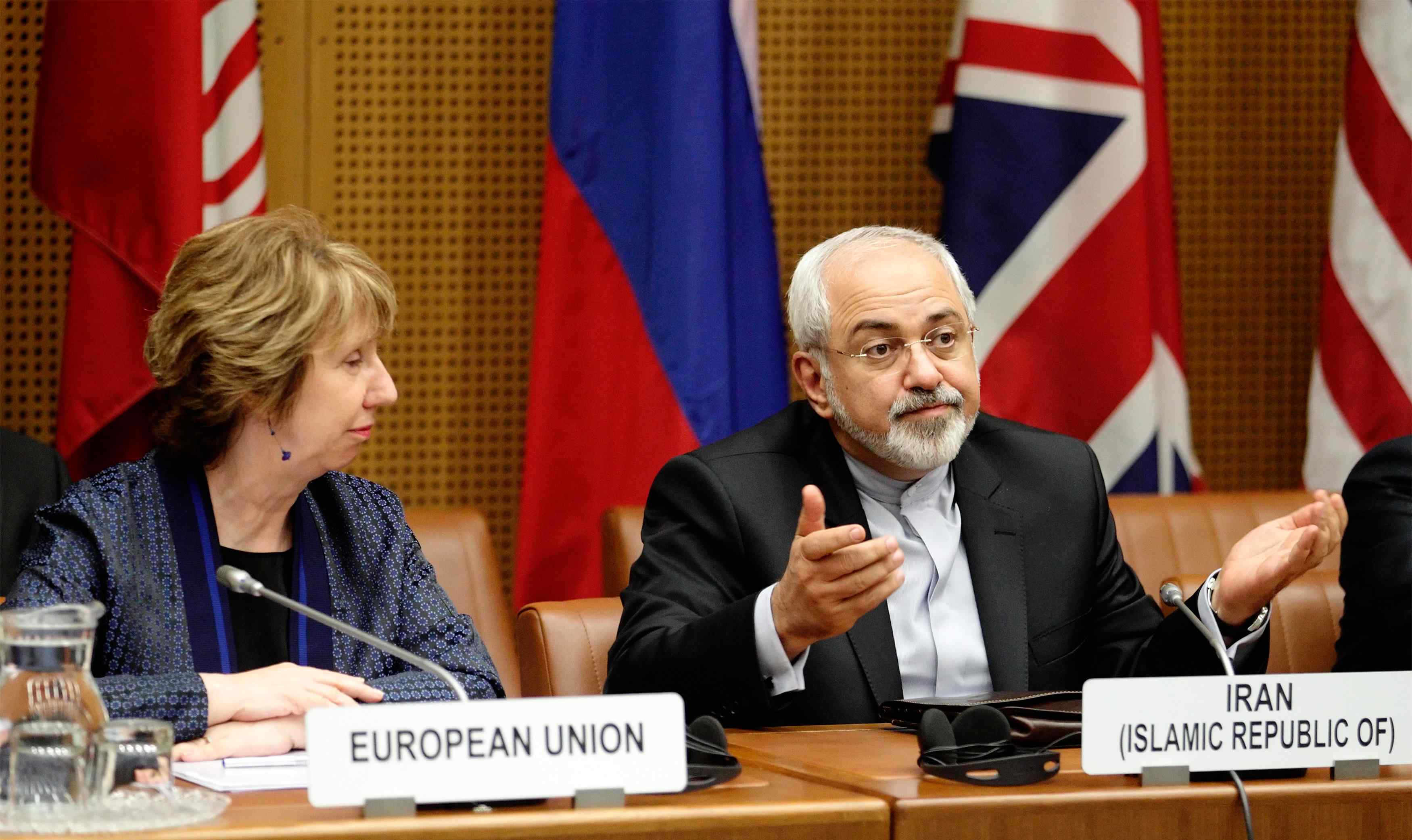
June 17, 2014: EU Foreign Policy Chief Catherine Ashton (L) and Iranian Foreign Minister Mohammad Javad Zarif before talks in Vienna. /Reuters Photo
June 17, 2014: EU Foreign Policy Chief Catherine Ashton (L) and Iranian Foreign Minister Mohammad Javad Zarif before talks in Vienna. /Reuters Photo
Sanctions imposed on Iran in early 2012 by the US and EU over its nuclear program cut Iran's crude exports from a peak of 2.5 million barrels per day (bpd) before the sanctions to a little more than 1 million bpd.
But Iran re-emerged as a major oil exporter in January 2016 when international sanctions were suspended in return for curbs on Iran’s nuclear program.
On Monday, Iran's oil ministry's news service quoted senior officials as saying the country's oil industry will continue to develop even if the US pulls out of the nuclear deal, and Tehran would see the accord as operational as long as it can sell oil.
Iran's clerical rulers have repeatedly ruled out reducing its sway across the region, as the US and its European allies may seek as part of any new deal.
"If they want to make sure that we are not after a nuclear bomb, we have said repeatedly that we are not and we will not be," Rouhani said. "But if they want to weaken Iran and limit its influence whether in the region or globally, Iran will fiercely resist."
Underlining Tehran's growing regional clout, pro-Iranian group Hezbollah and its political allies won just over half the seats in Lebanon's parliamentary election, unofficial results showed on Monday.
11159km
Source(s): AP
,Reuters
,Xinhua News Agency