
Opinions
10:36, 30-Aug-2018
The Heat: NAFTA negotiations on the swing
Updated
09:52, 02-Sep-2018
 ["china"]
Share







Copied
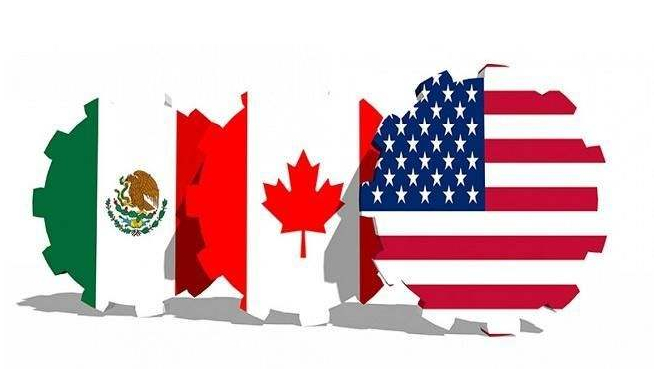
After a long year of negotiations, the United States and Mexico may have settled on some provisions for an updated NAFTA. However, the absence of Canada at the table largely undermines its credibility to be a “North American Free Trade Agreement”, despite US President Donald Trump’s threats to dump Ottawa.
At this point, the deal has come out with just a few principals, including uplifting the lowest salary to 16 dollars per hour to keep the supply chain in North America. While some people worried that Mexico would increase its competitiveness because US investors will pull out as a result of the rising labor costs, said Manuel Suarez-Mier, a Latin America economic consultant, adding that the deal is fairly acceptable.
“This deal is way better than its alternatives,” said Manuel. “If you take a look at Trump’s original offer, or a no-deal option, this is a better solution.”
In addition to the comment, Manuel also mentioned the wage rise includes only 40 percent of the labor market, leaving the rest flexible to go along WTO rules.
Another factor of forcing a deal out is time. Mexico will be welcoming a new president on December 1, while on the US side, another three months of reviewing by the Congress is needed to meet the December deadline.
00:48

With the midterm election approaching in the US, Trump needs to secure more deals to save him from the “zero win” trouble. Although he tweeted a lot about a “successful deal” with the Democratic People's Republic of Korea (DPRK), the US president has yet not signed on any official agreement with Kim Jong Un.
On the other hand, the recent trade and tariff disputes with China and other countries have resulted in a sharp loss for farmers, which shakes their trust of the president. In this context, a successful NAFTA could be a winning goal that Trump wants to score.
Heather Long, the Economics correspondent for The Washington Post, emphasized the strategic importance of the deal. As the automobile industry entering a new era of value-adding electronic revolution, it’s an essential step to keep the supply chain in the hands of North America.
That goal will be unrealistic to accomplish without the involvement of Canada, according to Earl Anthony Wayne, the former US Ambassador to Mexico and a Public Policy Fellow at the Wilson Center.
“Canada is the biggest trade partner of the US,” he said. “The country is so deeply integrated into the auto industry that a deal without Canada means leaving a large portion out, essentially diminishing its impact.”
It is widely acknowledged by political analysts that excluding Canada is not an option for the US.
“Pulling out of NAFTA will cost the US more than one million jobs,” said Earl. “You may use it as a threat, the penalty has to be taken seriously, which is something you definitely want to avoid.”
Heather weighed into that point, saying that the last thing a Republican would like to see is a breaking NAFTA.
As for Canada, the pressure is accumulating on the shoulder of Prime Minister Justin Trudeau sit at the negotiating table. Trudeau, too, needs key ridings to secure more seats in the 2019 election.
Carlo Dade, director of the Trade & Investment Centre at the Canada West Foundation, said that the Congress has given instructions to the administration to achieve a trilateral trade agreement, instead of “showing up at last minute and take whatever there is on a bilateral agreement”.
However, he also pointed out that Trudeau is not as eager to reach a deal as Trump. Apart from NAFTA, Canada is also in partnership with the European Union and a member in TPP. According to a test model from the bank of international settlement, the worst case that Canada will face with the US withdraw from NAFTA is a 2.2-percent loss in GDP, which may be eased if it transfers the automobile market share to Mexico by keeping a unilateral relationship.
On the other hand, the outcome of the present NAFTA deal may not as good as the president promises. The deal aims to increase factory jobs within the US border and close a trade deficit with other countries, especially China, but the outcome could be modest.
“I think this is another version of ‘making North America great again’,” said Heather. “It’s too early to predict where the job improvement will happen without much details coming out. In terms of trade deficit, the deal will probably have very minimal impact.”
The Heat with Anand Naidoo is a 30-minute political talk show on CGTN. It airs weekdays at 7:00 a.m. BJT and 7:00 p.m. Eastern in the United States.