
Politics
12:19, 24-Sep-2018
Merkel's rattled coalition moves to end spy chief row
Updated
12:10, 27-Sep-2018
 ["europe"]
Share







Copied
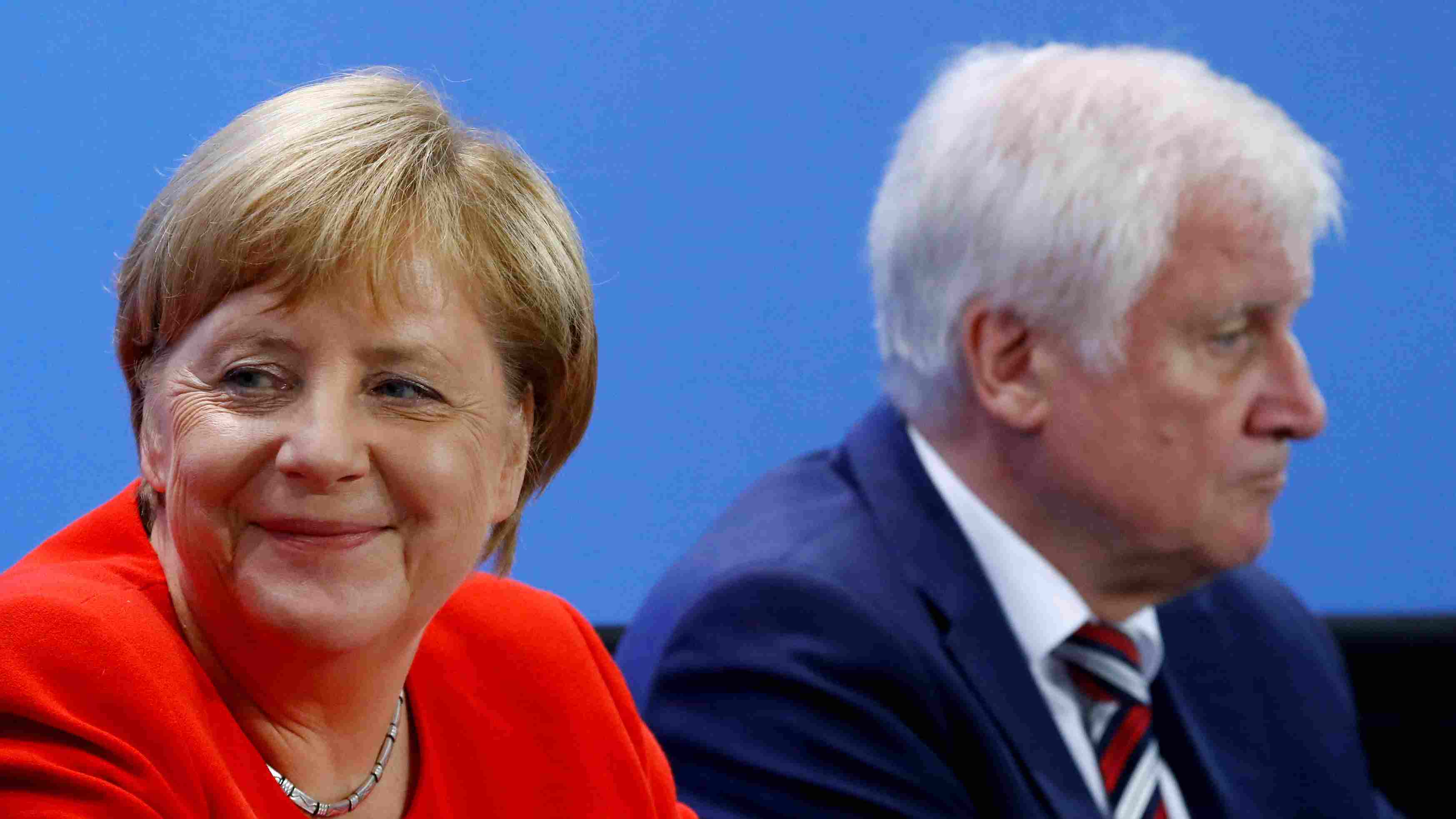
The spymaster row that has threatened to bring down Germany's governing coalition took a fresh twist on Sunday evening when the man at the center of the storm was moved to yet another job.
Hans-Georg Maassen was shifted from his role as head of Germany's domestic spy agency last week after appearing to play down the severity of far-right violence in the eastern city of Chemnitz in August.
Read more:
Maassen questioned whether any "hunting down" of foreigners had taken place during violence that followed a fatal knife attack - in which the top suspects are asylum seekers - in Chemnitz, suggesting he did not believe amateur video footage was genuine. In doing so he directly contradicted Chancellor Angela Merkel.
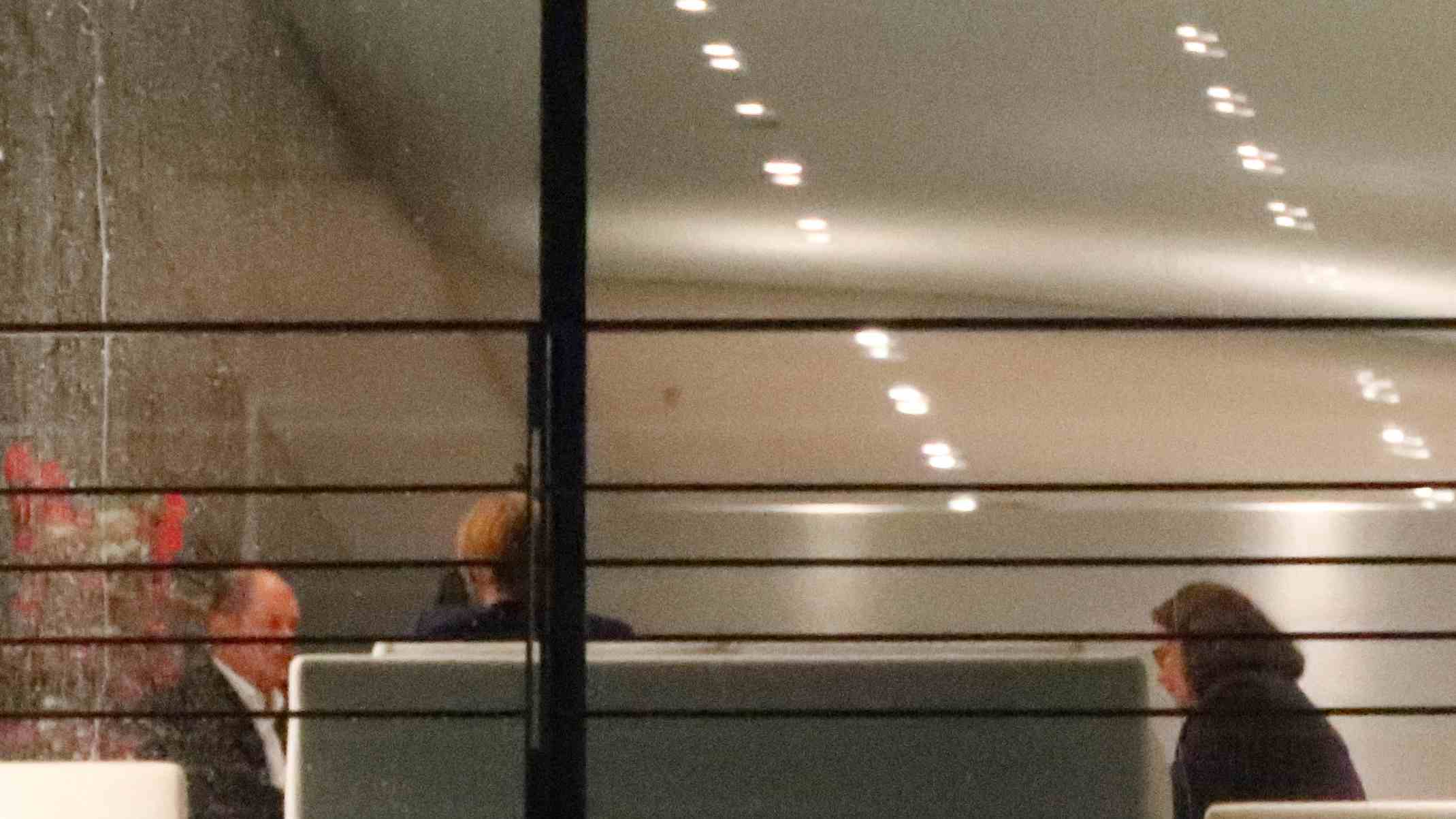
German Finance Minister Olaf Scholz, Chancellor Angela Merkel and Andrea
Nahles, leader of the Social Democrats, discuss the future of Hans-Georg Maassen, head
of the domestic intelligence agency, at the chancellery in Berlin, Germany, September 23, 2018. /VCG Photo
German Finance Minister Olaf Scholz, Chancellor Angela Merkel and Andrea Nahles, leader of the Social Democrats, discuss the future of Hans-Georg Maassen, head of the domestic intelligence agency, at the chancellery in Berlin, Germany, September 23, 2018. /VCG Photo
The comments led to a clash between the two junior members of Merkel's coalition, with the center-left Social Democrats calling for Maassen to be fired and the conservative Christian Social Union (CSU), led by Interior Minister Horst Seehofer, saying he should stay.
The 55-year-old Maassen was then moved to a more senior post of state secretary in an attempted compromise. However, the accompanying pay rise sparked an outcry from the public and heaped pressure on Social Democrat leader Andrea Nahles.
On Sunday night, Merkel and her coalition partners attempted to bring an end to the row by moving Maassen to a new role as special adviser at the interior ministry.
The job doesn't come with a higher status or an increase in salary, and will see Maasen working with Seehofer as an adviser on European and international issues.
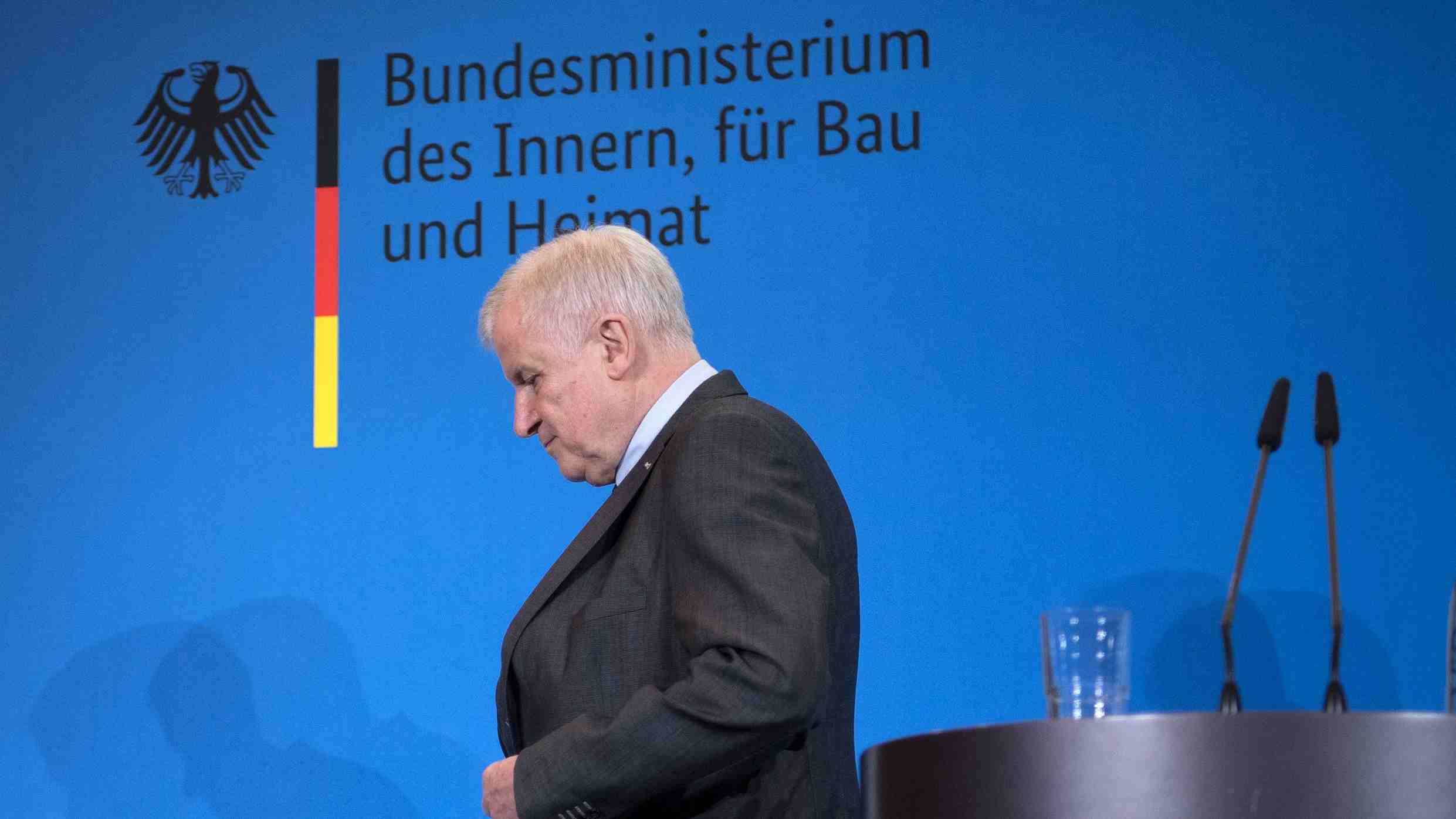
German Interior Minister Horst Seehofer leaves after addressing a press conference at the Interior Ministry in Berlin, Germany, September 23, 2018. /VCG Photo
German Interior Minister Horst Seehofer leaves after addressing a press conference at the Interior Ministry in Berlin, Germany, September 23, 2018. /VCG Photo
The affair is the second major threat to the coalition in recent months, following a public standoff between Merkel and Seehofer over immigration. The coalition is also split over how to deal with diesel cars with high nitrogen oxide emissions.
A new Emnid poll for Bild am Sonntag newspaper found that 67 percent of Germans believe the three party leaders no longer share a common basis of trust, AFP reported on Monday, although a narrow majority also rejected the options of new elections.
Immigration has been a central issue in German politics since Merkel allowed up to two million migrants into the country during the 2015 migrant crisis.
The far-right Alternative for Germany (AfD) party has since prospered at the polls, enjoying significant gains in the September 2017 election.
It is now the largest opposition party in the Bundestag and is neck-and-neck in second place with the Social Democrats ahead of regional elections in October.
The rise of the far-right party is a particular threat to Seehofer's CSU, which could lose its absolute majority in Bavaria as a result of the AfD peeling off votes.
Merkel's CDU/CSU conservative bloc scored 28 percent and the Social Democrats 17 percent in the Enmid poll, putting the coalition on 45 percent – its lowest ever support in the survey. The AfD was on 16 percent.