
North America
22:40, 03-Apr-2019
U.S. House Judiciary Committee authorizes subpoena for full Mueller report
Updated
09:49, 04-Apr-2019
 ["china"]
Share







Copied
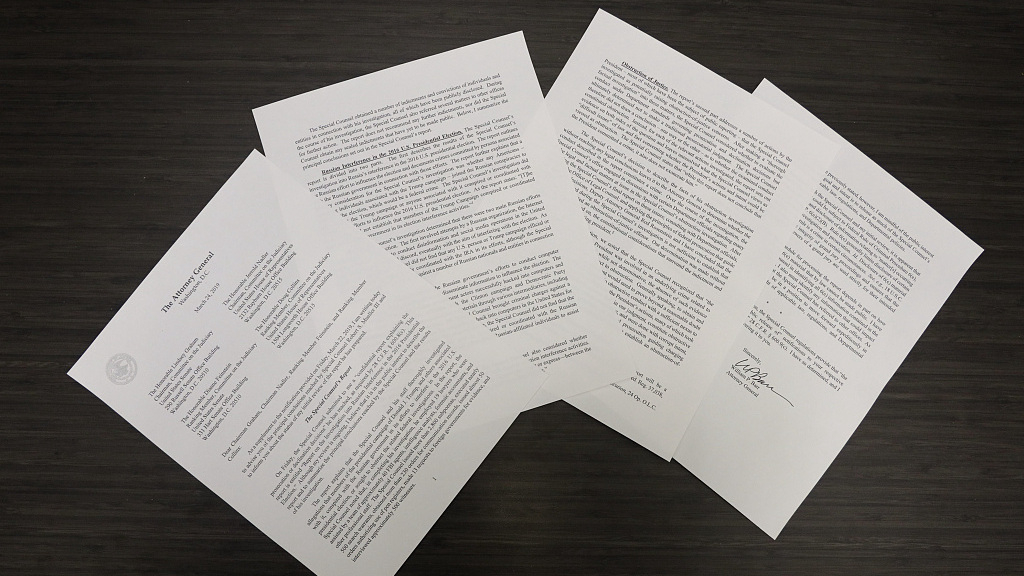
The U.S. House Judiciary Committee on Wednesday authorized its chairman to use a subpoena to try to force the Justice Department to give Congress a full copy of the Mueller report on allegations of Russian meddling in the 2016 U.S. presidential election. The committee voted in favor of the move.
The 24-17 vote along party lines – with Democrats in favor and President Donald Trump's fellow Republicans opposed – authorized the panel's chairman, Jerrold Nadler, to subpoena Mueller's material.
Read more:
The measure also authorized Nadler to subpoena documents and testimony from five former Trump aides, including former political advisor Steve Bannon and former White House counsel Donald McGahn.
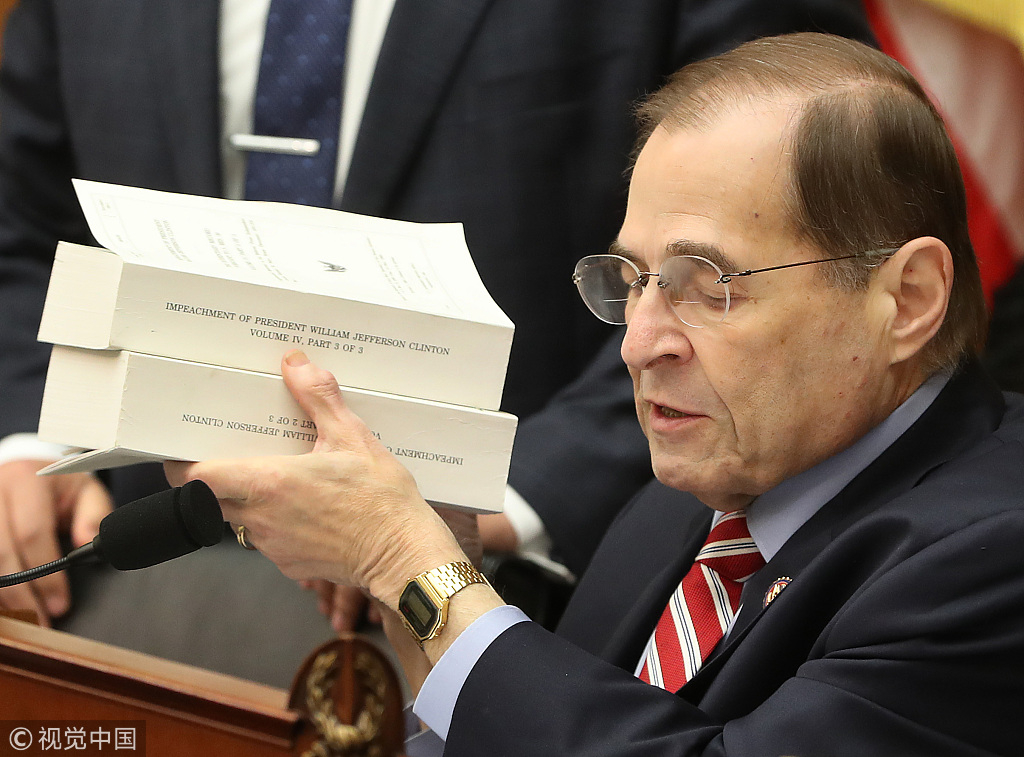
House Judiciary Chairman Rep. Jerrold Nadler holds up files during a House Judiciary Committee markup vote on Capital Hill, Washington, DC, U.S., April 3, 2019. /VCG Photo
House Judiciary Chairman Rep. Jerrold Nadler holds up files during a House Judiciary Committee markup vote on Capital Hill, Washington, DC, U.S., April 3, 2019. /VCG Photo
Attorney General Bill Barr last week told Congress he was prepared to hand over the Mueller report by mid-April, but one stripped of the extensive grand jury interviews and subpoenaed material; materials collected by intelligence sources; and evidence related to other investigations and third parties.
Nadler, whose committee would preside over any impeachment proceedings against the president, said the committee has the right to see the entire 400-page report and all supporting evidence.
"The committee is entitled and must see the material," Nadler said after the vote.
"We are not willing to let the attorney general, who after all is a political appointee of the president, substitute his judgement for ours."
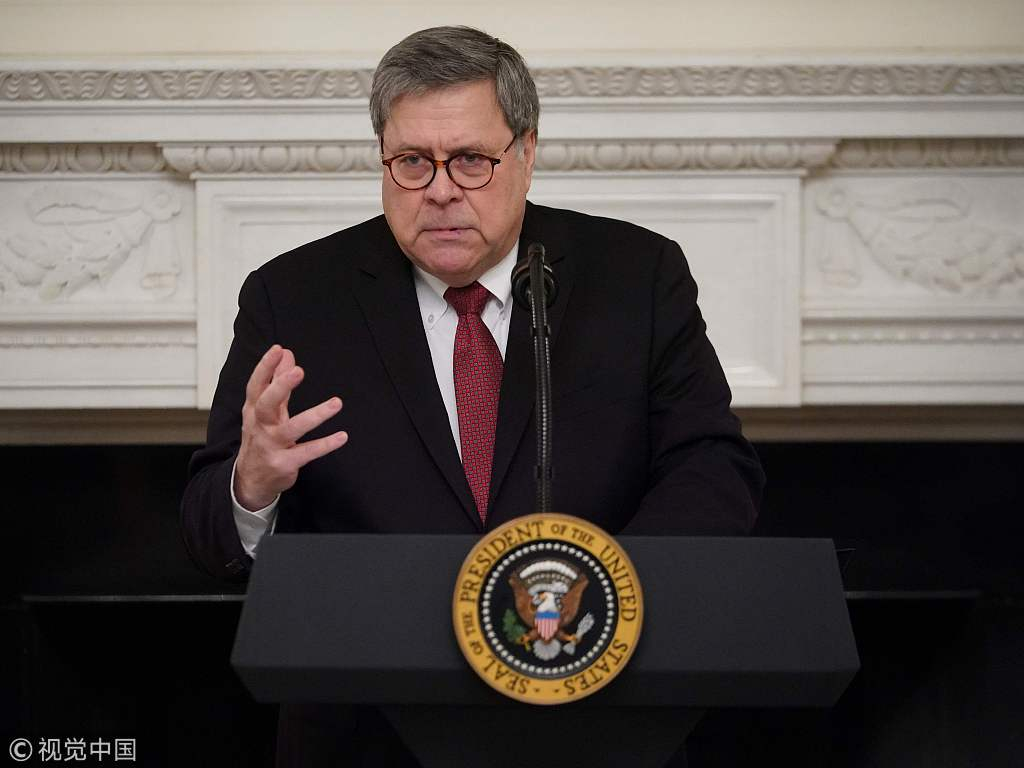
United States Attorney General William Barr addresses the National Association of Attorneys General in the State Dining Room of the White House in Washington, DC, U.S., on March 4, 2019. /VCG Photo
United States Attorney General William Barr addresses the National Association of Attorneys General in the State Dining Room of the White House in Washington, DC, U.S., on March 4, 2019. /VCG Photo
The demand could set up a constitutional showdown over whether the House has a right to demand normally secret grand jury materials that could hurt the president.
In Barr's March 24 four-page summary of Mueller's conclusions, he said there was no evidence that anyone in the Trump campaign conspired or coordinated with the Russian government to skew the 2016 presidential election in Trump's favor.
Barr also declared that while Mueller himself reached no conclusion on the issue of whether Trump criminally obstructed the Russia investigation, his own review found there was not enough evidence to support obstruction allegations.
Trump at the time declared that the report was a "complete exoneration" of him.
But Democrats say it is clear that Mueller had reason to suspect Trump of obstruction and that the public deserves to see the full picture, and not rely on Barr's judgement.
(With input from Reuters, AFP)