
Opinions
23:08, 03-Oct-2018
Trade war and WTO: Updating the WTO, or waging a trade war?
Updated
23:03, 06-Oct-2018
 ["china"]
Share






Copied
04:03
"…it seems clear that the United States erred in supporting China's entry into the WTO on terms that have proven to be ineffective in securing China's embrace of an open, market-oriented trade regime."
The above quote from the 2017 USTR Report to Congress on China's WTO Compliance effectively shows a much sharper tone than previous years towards China's trade practice. It seems that the US has been using WTO rules to accuse China to justify the trade war it has launched, while at the same time threatening to pull up from the WTO if it doesn't "shape up".
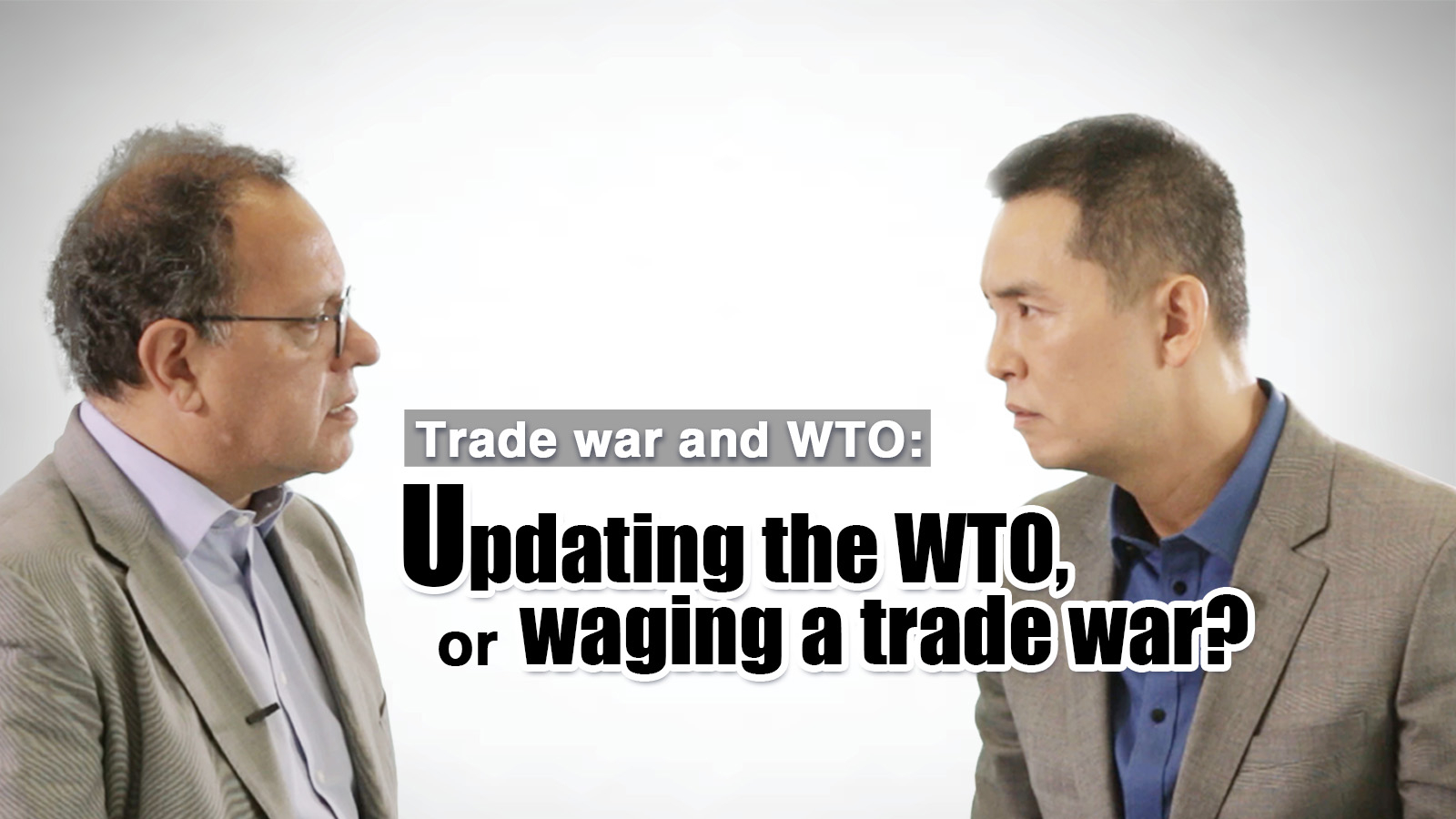
As the USTR busy writing the annual report for this year, CGTN anchor Zou Yue's interview with Ricardo Melendez-Ortiz, CEO and Co-Founder of the International Centre for Trade and Sustainable Development, may shed new lights on how the global trading system should work.
Zou: People say trade war will end eventually in a fashion or down the road somewhere. What do you think the endgame would look like, and what cost to each side?
Ricardo: Where would they end is a very big question. Perhaps we'll have to wait until the costs that you mentioned before become more real, more significant.
Zou: But do you fear that the costs will be too high, not only economically, but probably structurally to the world economy and the economies of both sides? (Absolutely) Irreparable damages.
Ricardo: The problem with that is that you have a dispute settlement mechanism in the WTO that is also being impaired for political reasons. So it doesn't work with that efficiency and effectiveness that it needs to work in a context like the one we're living through.
Zou: Who to blame for the failure of that mechanism?
Ricardo: The Americans would like to see a number of reforms, systemic reforms in the WTO and within the system, but also substantive reforms in agreements that they have for a long time felt that they are at a disadvantage with.
But the WTO is a multilateral agreement and the WTO is a balance of rights and obligations. And so it is very difficult to really push one country's agenda into the other 164.
Zou: Let's look at the big picture – that's the global trading system. China and the US probably have different understandings about the philosophies and the structures, how this global trading system should work. What do you think they are fighting for? What is the crux of the problem?
Ricardo: That's an excellent question. Specifically, is the WTO a prescription for a policy that dictates economic models for all countries around the world? Or is the WTO a mechanism that should ensure a level playing field and a fair competitiveness between different economies in a globalized market?
Zou: And America supported the previous one; China supports the latter.
Ricardo: Exactly, and this is a very big discussion. Do we have one single approach to development?
And the truth is that today, any economist will tell you that this is the biggest test for economics. We really don't clearly understand how to set up a blueprint for every country with very different endowments, natural, and in terms of capabilities, to converge in terms of their development.
ZY: And who do you think will finally win the argument philosophically?
Ricardo: Well, with the diversity that we have in the world today, it probably makes more sense to have a system that makes sure that the domestic policies and the economic policies that countries have do not spill over negatively on international markets or other countries' possibilities of development.
So that is the device actually in the global economy that should ensure again this level playing field and take care of the negative spillover.
(If you want to contribute and have specific expertise, please contact us at opinions@cgtn.com)