
Wild Life
11:44, 01-Jun-2018
Critically endangered mountain gorilla numbers climb up to over 1,000
 ["africa"]
Share







Copied
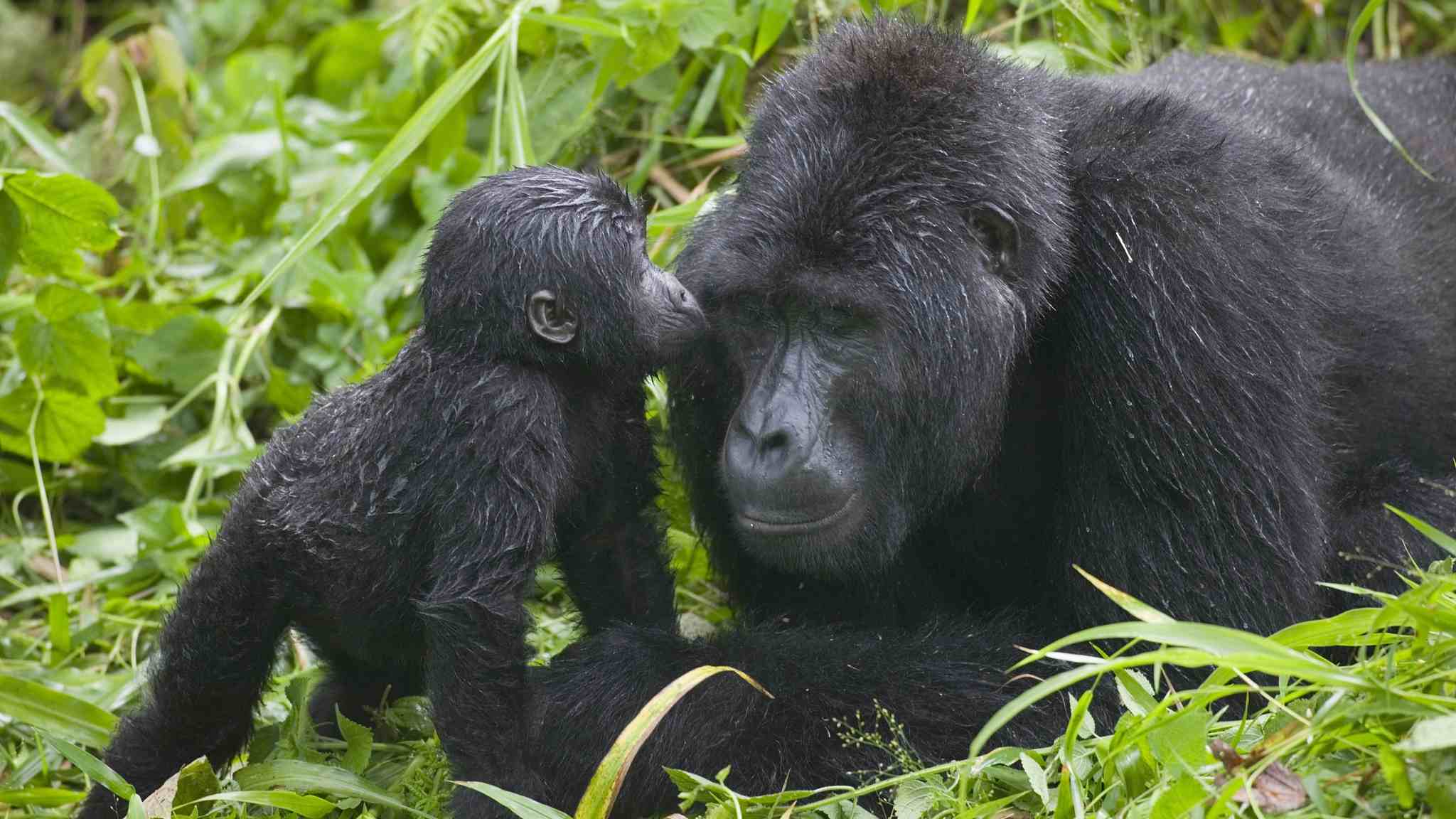
Critically endangered mountain gorilla numbers have exceeded 1,000, the only great apes in the world whose population has started to rise, a new census report claimed.
Researchers found a minimum of 604 in Virunga Volcanoes, Rwanda, and 400 gorilla individuals living in Uganda’s Bwindi Impenetrable National Park. In Virunga, gorillas are living in 41 social groups and 14 solitary males.
The last gorilla census conducted in 2010, counted a minimum of 480 individuals living in Virunga Volcanoes. The recent census shows 26 percent increase in the number of gorillas over a six-year-period, which is a 3.8 percent annual rate of growth.
Researchers from several non-governmental organizations, and the Max Planck Institute for Evolutionary Anthropology, involved in the study attribute increase in gorillas’ population to “improved methods used in the recent census as well as the actual growth of the population.”
Martha Robbins, a gorilla expert at the Max Planck Institute for Evolutionary Anthropology, claimed the increase is an outcome Rwanda, Uganda, and the Democratic Republic of Congo (DRC) to conserve critically endangered great apes and hard work of ground park staffs.
“This represents one of the rare success stories in conservation. The population of mountain gorillas in the Virunga Volcanoes has more than doubled in the past three decades, despite intensive threats of poaching, habitat degradation, and civil conflict,” Robbins said.
In 1996, the International Union for Conservation of Nature (IUCN) declared gorillas critically endangered. In the mid-1980s, the population of mountain gorillas in the Virunga Volcanoes had plummeted to only 250 individuals.
Low numbers prompted, IUCN to upgrade gorillas from endangered to the critically endangered status. Experts identified: poaching, political instability of the DRC region of the Virunga Volcanoes, and the risk of disease transmission by humans, as significant threats to the great apes' survival.
“However, as conservation efforts are re-established, and political stability returns to the region, it is also possible that this subspecies would warrant down-listing to Endangered [status],” IUCN maintained.
The census involved intensive fieldwork in 2015 and 2016, followed by detailed genetic analysis. Surveyors covered more than 440 square-km inside Virunga Volcanoes and walked more than 2000 km.
The fecal samples analysis revealed that there is a minimum of 186 gorillas that are unhabituated or not regularly contacted by humans. The remaining 70 percent of the population consists of 418 gorillas that are habituated for research and tourism.
“This dramatic increase also shows that extreme conservation efforts including tourism, veterinary work and community projects can have a positive impact on one of our closest living relatives,” Robbins added.
[Top Image: Mountain gorillas at Bwindi National Park in Uganda /VCG Photo]