
TV Show
15:33, 06-Apr-2019
Tsai Ing-wen is touching the ‘red line,’ experts warn
 ["china"]
Share







Copied
01:49

On March 31, two Chinese J-11 fighter jets flew past the median line of the Taiwan Strait. Immediately, Taiwan accused the Chinese mainland of “reckless and provocative” incursion and violating a tacit agreement. However, the concept of the “median line” of the Taiwan Strait has never been accepted by the Chinese mainland.
Zhong Houtao, the research fellow at Chinese Academy of Social Sciences, clarified the misunderstanding of the “median line” concept. The “median line” was created by the U.S. in 1954, when the U.S. agreed to provide military defense to Taiwan within the “median line” area. This was also called “Taiwan-U.S. mutual defense agreement.” However, this agreement was terminated in 1979.
“There is no so-called ‘median line' or ‘middle line,'” Zhong said. “This agreement (Taiwan-U.S. mutual defense agreement) was terminated in 1979. So the United States will not continue to recognize the line for now. From the U.S.' response, you can find no one is considering this line. This is just a psychological line, not a real line.”
“For the Chinese mainland, we have never recognized this line,” Zhong added.
Speaking of the intention from the Chinese mainland, Zhong emphasized that it is a strong signal from the mainland to both Taiwan authorities and the U.S.
“She (Tsai) is touching our red line,” stated Zhong. “In the just several months, the United States has been playing the ‘Taiwan card.' For example, the United States sent its warships through the Taiwan Strait, and the U.S. Congress passed several acts related to Taiwan. The United States is also interfering in China's domestic affairs. For these two reasons, the Chinese mainland has to take some countermeasures.”
01:12
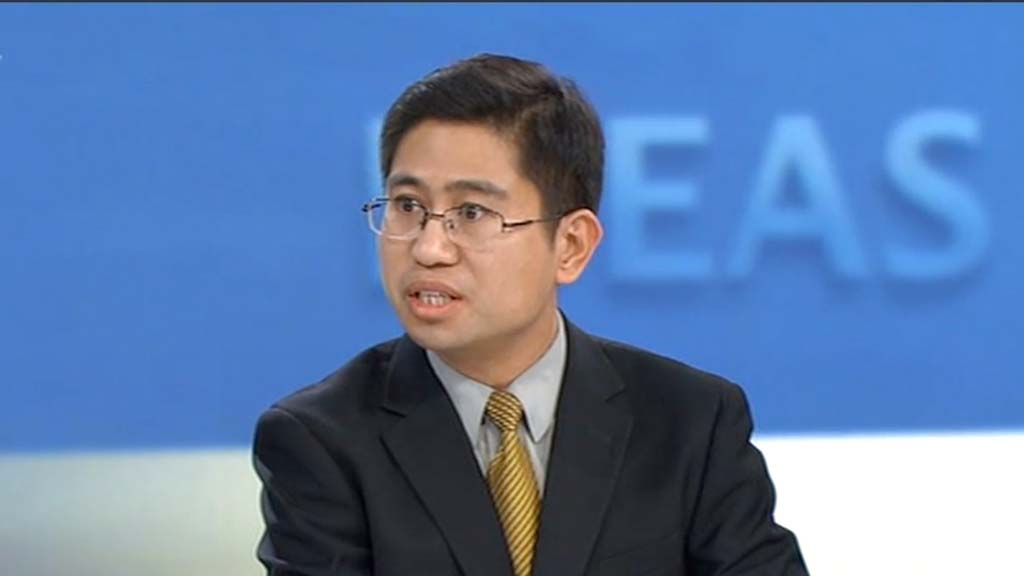
In terms of the fierce response from Taiwan's leader Tsai Ing-wen, Einar Tangen, current affairs commentator, pointed out that U.S. President Trump and Tsai are both using this for political gain, especially since Tsai is approaching 2020 election.
“She's (Tsai) trying to provoke incident to try to play victim in this particular situation. And therefore, ask the U.S. to get more in terms of arms and more upgraded things like F16, she's been asking for this for quite some time,” Tangen said. “She feels trapped by her own administration…this is the only thing that is really kind of keeping her even with her lesser pull numbers.”
00:48
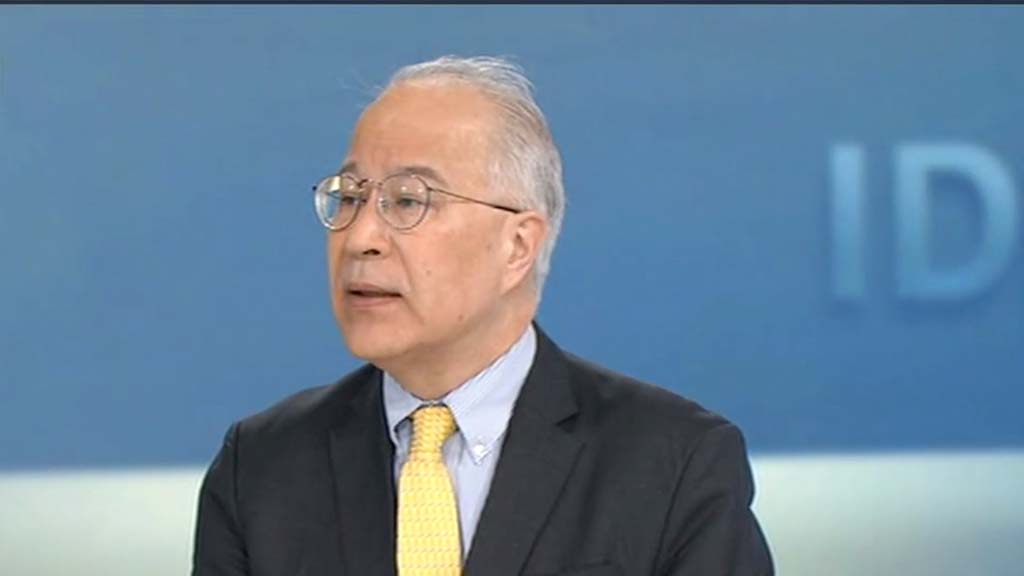
Professor Cheng Youping from Taipei University, agreed that the Trump administration and Tsai Ing-wen both took political advantages from each other.
“This is obviously very clear political signal sent by mainland China to the United States, reminding the United States should keep a distance from Taiwan independence movement,” professor Cheng stated. “Tsai Ing-wen is facing a very tough competition nowadays, because her economic performance is terrible. So the only thing she could play is the ‘independence card', or the ‘American card.'”
03:29
(If you want to contribute and have specific expertise, please contact us at opinions@cgtn.com.)