
Tech & Sci
14:17, 26-Jun-2018
Chinese companies’ growing presence in Silicon Valley
 ["china"]
Share







Copied
03:48
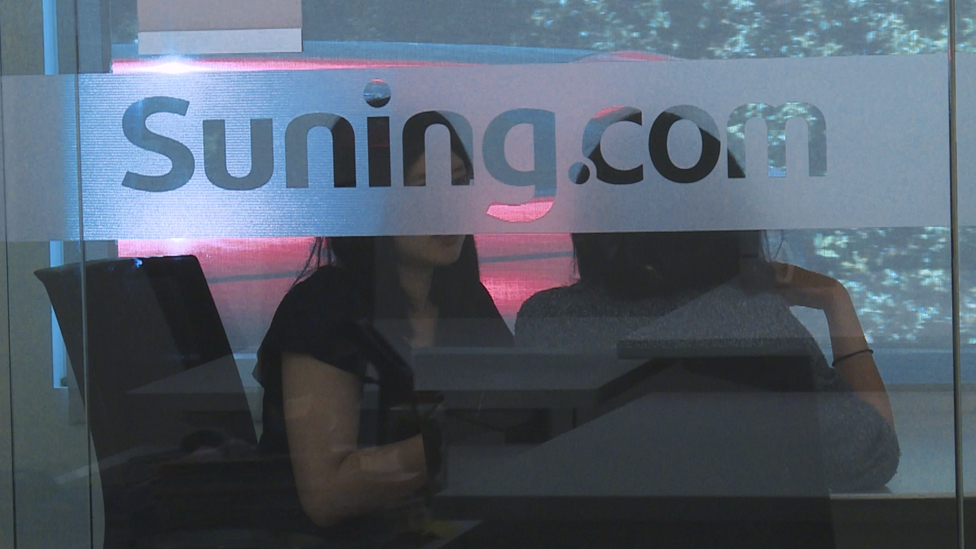
Fierce domestic competition among China’s big name tech firms is now expanding to include the US.
Tencent opened an artificial intelligence lab in Seattle last year. Baidu established its second research and development center in California's Silicon Valley last October. And now in Silicon Valley, there are two Alibaba cloud computing centers providing services to the company’s overseas consumers.
Establishing a research center has become a new norm or even a symbol of status for Chinese tech firms.
Suning, China’s equivalent of US consumer electronics company Best Buy, is transforming itself from a traditional retail chain to another Alibaba or Amazon. In 2013, it opened its own Silicon Valley research enter.
Bill Shao is Suning's research director and has been working in the valley for 22 years. He is now working on this hologram prototype which has an important role in the unmanned retail stores Suning envisions for the future.
"By adding holograms, we can have an assistant that you can interact with," Suning says. "And you can get information from him or her about anything of the product."
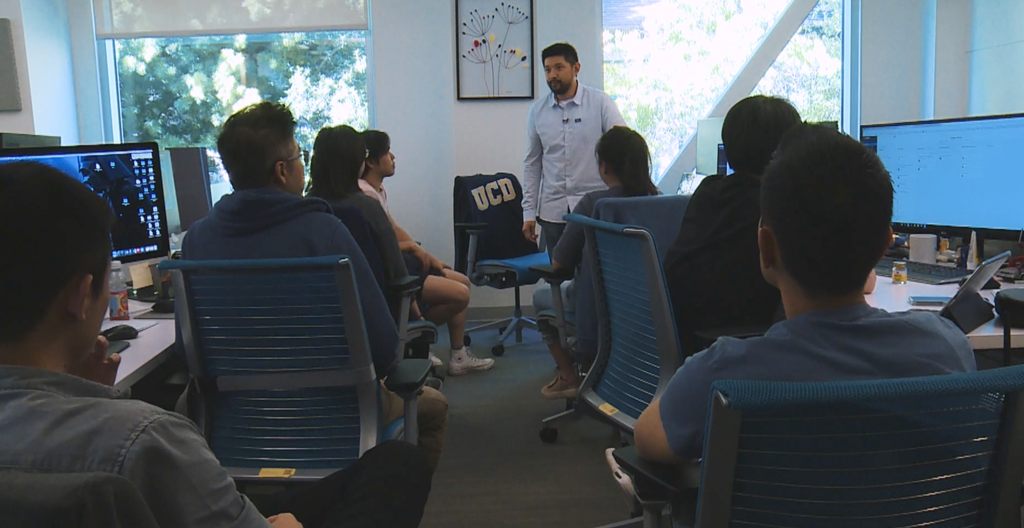
Suning's research director Bill Shao has a discussion with his team. /CGTN Photo
Suning's research director Bill Shao has a discussion with his team. /CGTN Photo
Suning says setting up a Silicon Valley branch offers the company access to the most cutting-edge and innovative technology.
Tang Jie, the general manager of Suning Commerce USA's R&D Center, told CGTN that in the headquarters, there are 7,000 engineers. But in Silicon Valley, they only have 40 people. Tang added, “Actually these 40 people are our core innovation engine.”
But Tang admitted that many Chinese companies like Suning face challenges, namely, increasing their brand awareness in the US if they want to hire top-tier talent.
In 2014, a young Chinese woman graduated from Columbia University and saw a market niche. A year later, Pingo Wu founded Red Cube in the Silicon Valley, making social-marketing videos for Chinese companies that have global ambitions.
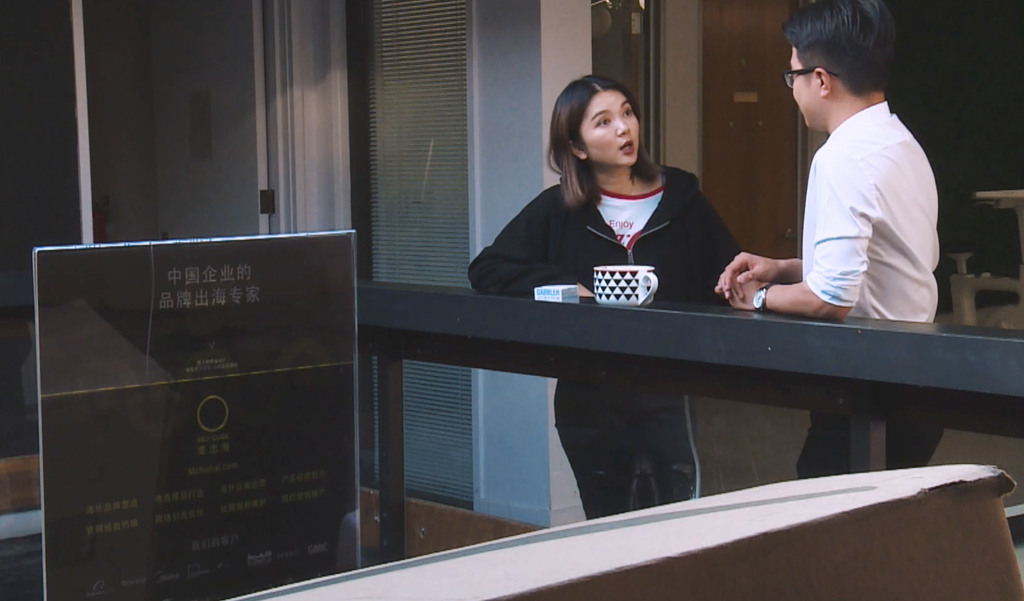
Pingo Wu (L), founder & CEO of Red Cube. /CGTN Photo
Pingo Wu (L), founder & CEO of Red Cube. /CGTN Photo
"Only young people can do this," says Wu. "It’s about internet marketing and selling. We know where the targeted customers are and what they like. And most importantly, we have dreams and passion, we’re willing to try our best.”
In three years’ time, Wu's company has grown from three people to over 50, and moved from a small office to a 750-square-meter work space.
But the outlook is not totally clear.
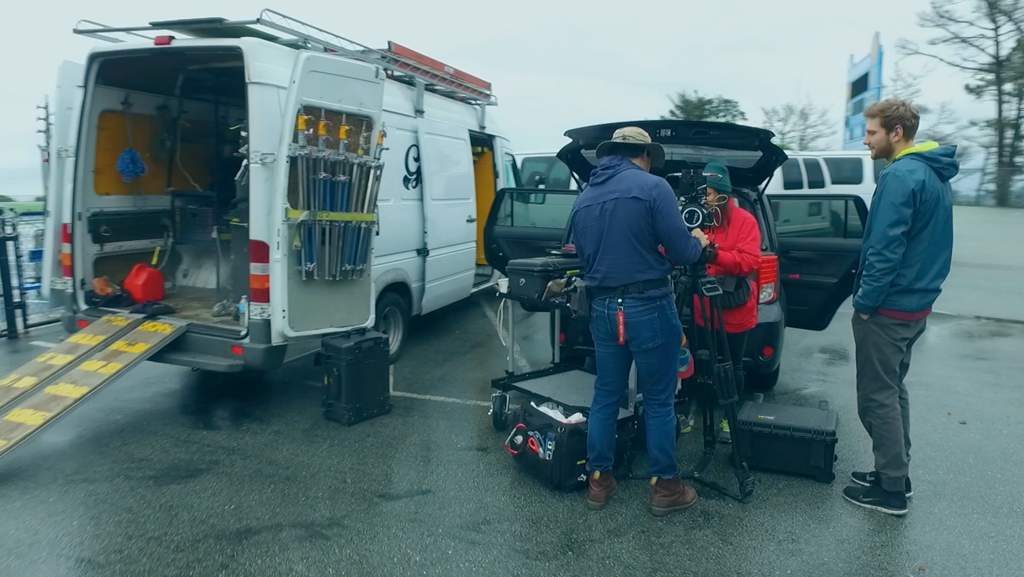
Red Cube crew prepares for a commercial shooting. /CGTN Photo
Red Cube crew prepares for a commercial shooting. /CGTN Photo
Chinese investments in the US totaled 1.8 billion US dollars for the first five months of this year – according to data from the Rhodium Group research firm. That’s a 92-percent drop compared to the same period in 2017.
Though Wu said her video business is booming faster than ever, she has made some changes.
With US President Donald Trump promoting his “made in America” agenda, Wu decided to get in on the manufacturing end of the business, rather than just promoting the products of others.
“It’s a new type of partnership," she says. "Recently we just invested in a Chinese kitchen-ware company to become their shareholder. Now we’re building a factory in the US to manufacture their products on American soil. So we’re responsible for the whole chain from manufacturing to marketing in the US.”
With the escalating trade conflict between China and the US, Wu's manufacturing-to-marketing model may find a new win-win solution for small business and workers in both countries.