
Business
14:41, 30-May-2018
EU trade chief Cecilia Malmstrom: A soft US cap ‘would be less damaging’
 ["europe"]
Share







Copied
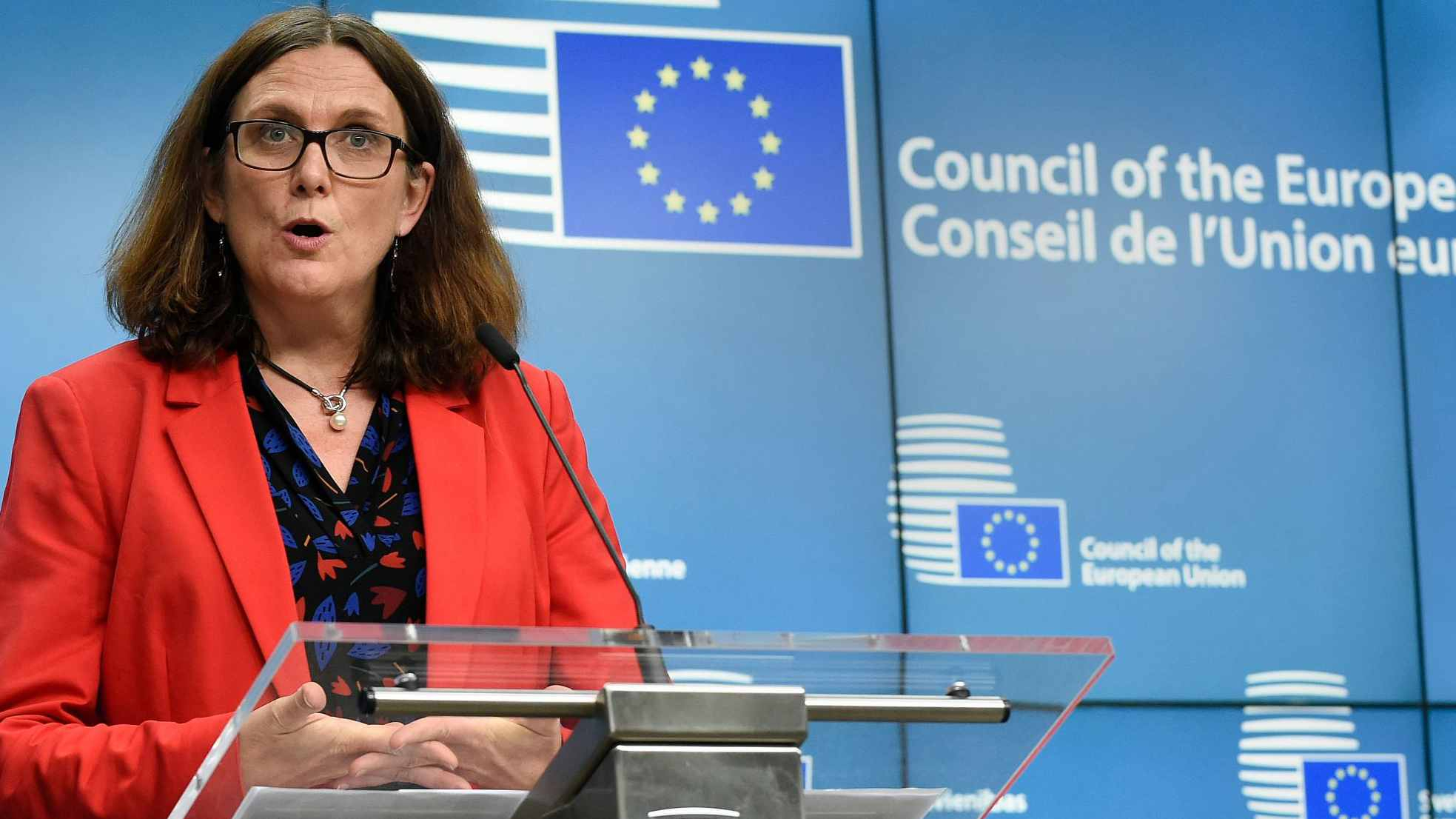
On Tuesday, the European Union (EU) trade commissioner Cecilia Malmstrom expressed her expectation that the United States could apply import caps on European steel and aluminum products following the deadline of June 1 for a temporary exemption.
The EU Trade Commissioner indicated to the members of European Parliament (MEPs), gathered in Strasbourg for its plenary session, that despite the European Commission's campaign to receive a "full, permanent and unconditional exemption from the tariffs," she expected trade restrictions.
"Realistically, if the US decides to refrain from applying duties, I expect them nonetheless to want to impose some sort of cap on EU exports," Malmstrom told MEPs.
"The question is whether that would be a hard cap -- meaning volume limits above which no further EU exports would be possible -- or a soft cap, under which further exports would be possible but under duties."
Malmstrom said that a soft US cap "would be less damaging," but she considered it "unrealistic" to expect Washington to waive tariffs and forgo imposing quotas.
In a last ditch attempt, the EU Trade Commissioner will travel to Paris on Wednesday to meet with US Commerce Secretary Wilbur Ross and US Trade Representative Robert Lighthizer, hoping to avoid the implementation of steel and aluminum tariffs before the Friday deadline when a temporary waiver for the EU will expire.
The import duties, 25 percent for steel and 10 percent for aluminum, were announced on March 1 by US President Donald Trump as a measure to take for reasons of national security. Since the announcement, the US has been criticized by its trading partners for taking protectionist measures, and starting what has been referred to as a trade war.
"Our future course of action will depend on the nature and the severity of measures imposed on our exports by the United States and the injury it does to our industry," Malmstrom said, repeating promises to respond "immediately" with counter measures, including import duties of 2.8 billion euros (3.23 billion dollars) on American goods as soon as June 20. The EU would also launch legal measures through the WTO.
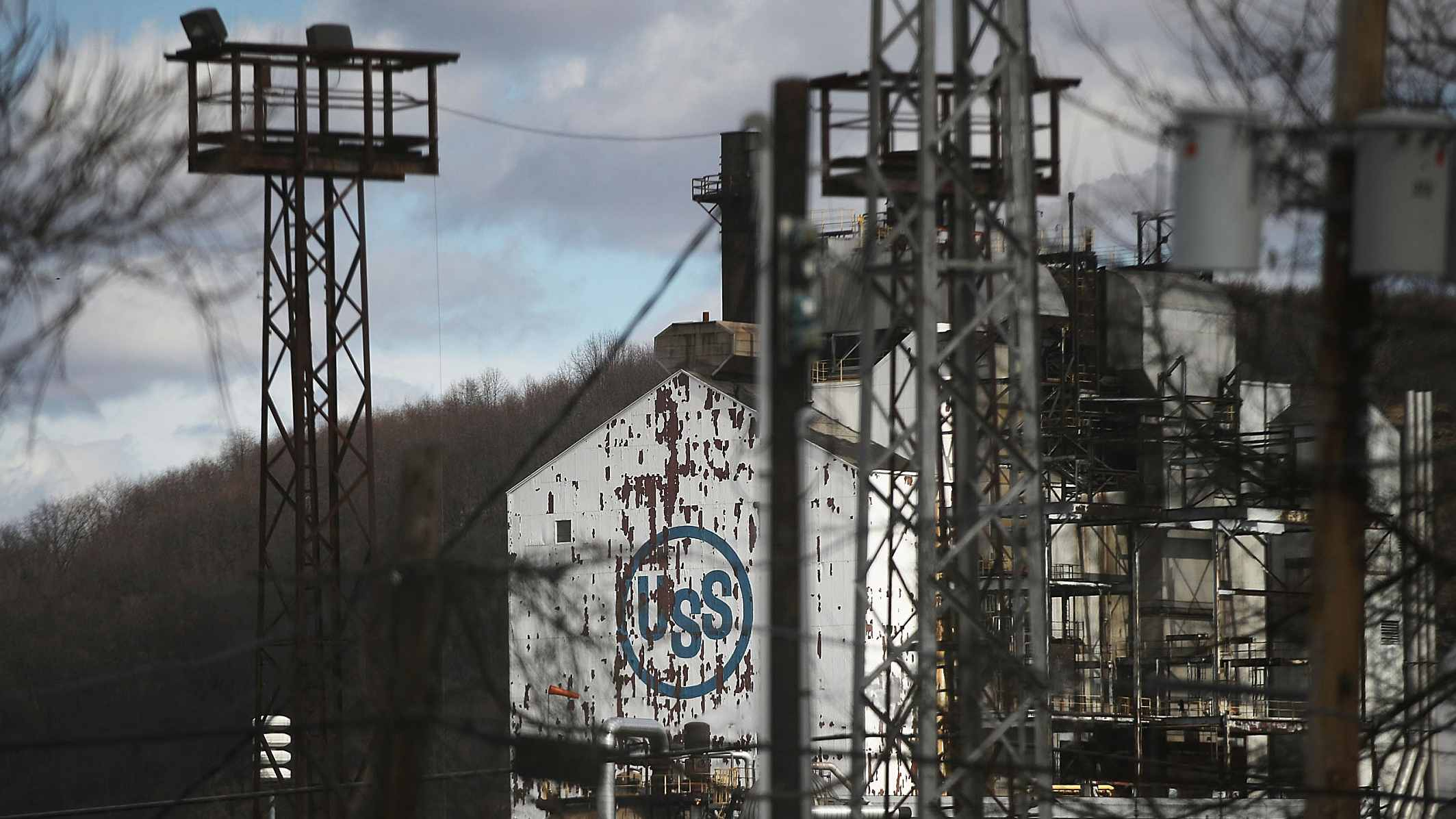
The United States Steel Corporation plant stands in the town of Clairton on March 2, 2018, in Clairton, Pennsylvania. /VCG Photo
The United States Steel Corporation plant stands in the town of Clairton on March 2, 2018, in Clairton, Pennsylvania. /VCG Photo
Observers have also expected the EU and the US will agree on trade restraints. "This is convenient for EU producers (they can increase prices) and for the US (can claim a 'win')," Daniel Gros, Director of the European think tank Center for European Policy Studies (CEPS) said.
"Both sides don't want to have a tariff war with each other," said Fredrik Erixon, Director of the European Centre for International Political Economy, a Brussels-based think tank.
Erixon said the US is using the threat of steel tariffs to get the EU to become more accepting of other US wishes, like reducing tariffs in the auto sector.
US Commerce Secretary Wilbur Ross has initiated a Section 232 investigation into the national security implications of automobile imports, according to the US Commerce Department.
The latest move has provoked widespread opposition from US lawmakers, business groups and major trading partners, as they think the unilateral move threatens to disrupt global supply chains and kill American jobs.
European Commission Vice-President Jyrki Katainen said "it's very difficult to understand" the US investigation into vehicle imports under the Section 232.
Source(s): Xinhua News Agency