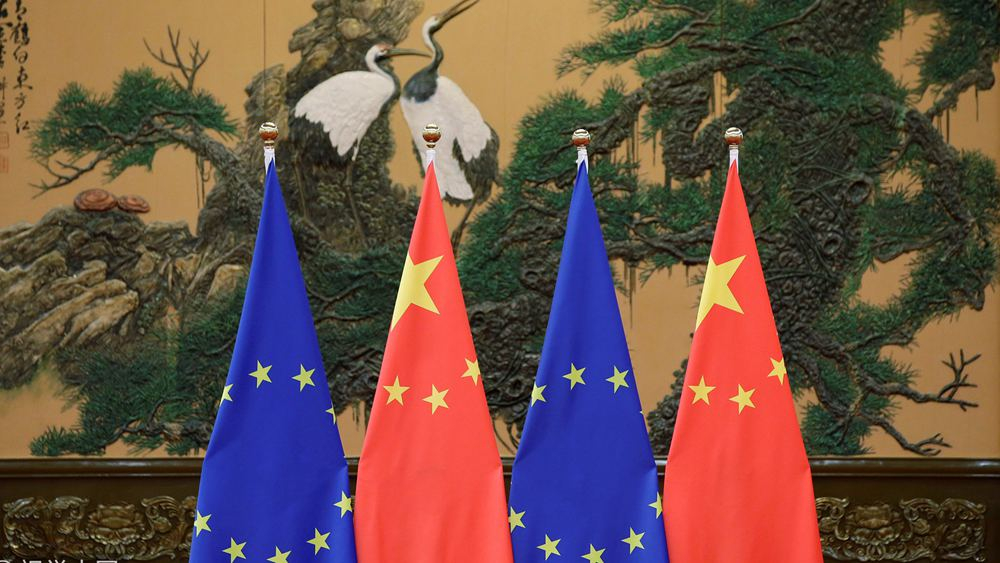
German Chancellor Angela Merkel's visit to China has drawn wide attention as this visit comes at a crucial time, when US President Donald Trump is gaming up his unilateralism play, adding uncertainty to a series of issues ranging from the Iran nuclear deal to climate and free trade.
Germany, one of the leaders of the European countries, is China's biggest trading partner in Europe. The two countries have also been coordinating on key international issues, hence the development of the China-German ties can be seen as an indicator of the general China-Europe relationship.
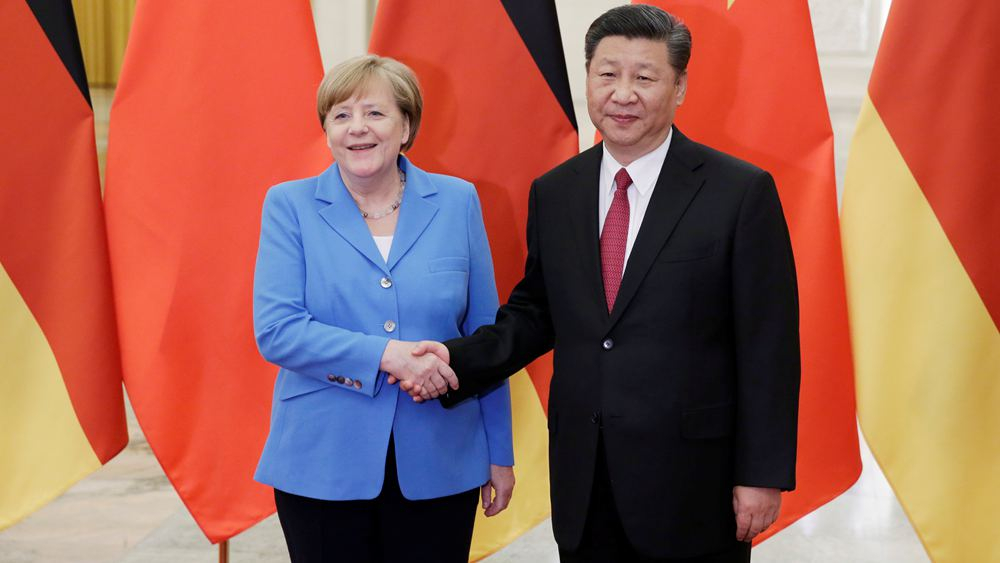
China's President Xi Jinping (R) meets German Chancellor Angela Merkel at the Great Hall of the People in Beijing, China, May 24, 2018. /Reuters Photo
China's President Xi Jinping (R) meets German Chancellor Angela Merkel at the Great Hall of the People in Beijing, China, May 24, 2018. /Reuters Photo
With the Trump administration pulling out of several deals that are strongly backed by China and most European countries, the staunch alliance between Europe and the United States are put into question. The US' threat to impose punishing tariffs on the EU's steel and aluminum exports has further alienated its longtime ally.
How are the European countries, represented by Germany, seek to cooperate with China when faced with an increasingly protectionist United States?
Outcomes of the Merkel visit to China
During Merkel's talks with Chinese President Xi Jinping and Premier Li Keqiang, a consensus has been reached that China will work with Germany to push the improvement of global governance under a multilateral framework.
The two sides have also agreed to enhance communication and coordination on hot-spot and thorny issues.
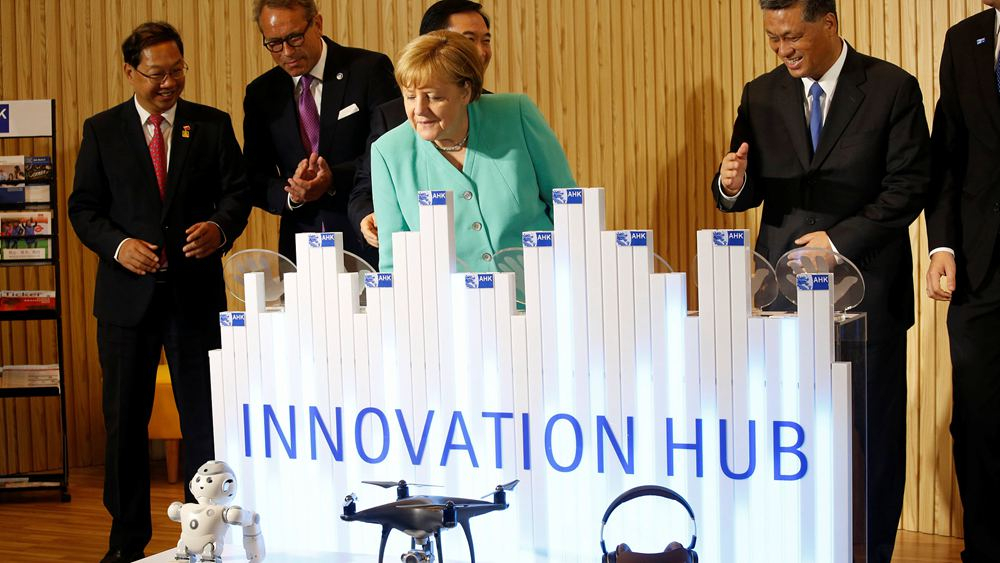
German Chancellor Angela Merkel looks at a robot as she attends the opening of AHK Innovation Hub in Shenzhen, China, May 25, 2018. /VCG Photo
German Chancellor Angela Merkel looks at a robot as she attends the opening of AHK Innovation Hub in Shenzhen, China, May 25, 2018. /VCG Photo
Regarding the issue of trade, Xi said Germany is welcome to seize opportunities brought by China's further opening-up and the two countries should cooperate more on new industries.
During Li's meeting with Merkel, he called for more cooperation in smart manufacturing between the two countries, meaning industries such as artificial intelligence, new energy automobiles, and autonomous vehicles.
Germany created the concept of "Industry 4.0" in 2012, while China launched the "Made in China 2025" plan in 2015. Both initiatives aim at improving entrepreneurship and innovation in the manufacturing sector.
In this visit, Merkel has also secured China's promise to further relax its market access and open its gate wider for more foreign investment in sectors like banking, securities and automobiles, strengthen the protection of intellectual property rights, and create a fairer trade environment.
In the meantime, Li also called for a reciprocal access to Germany's market for Chinese enterprises and investment, saying the opening-up should be mutual. One would be blocking its own way by closing his door to others, Li stressed.
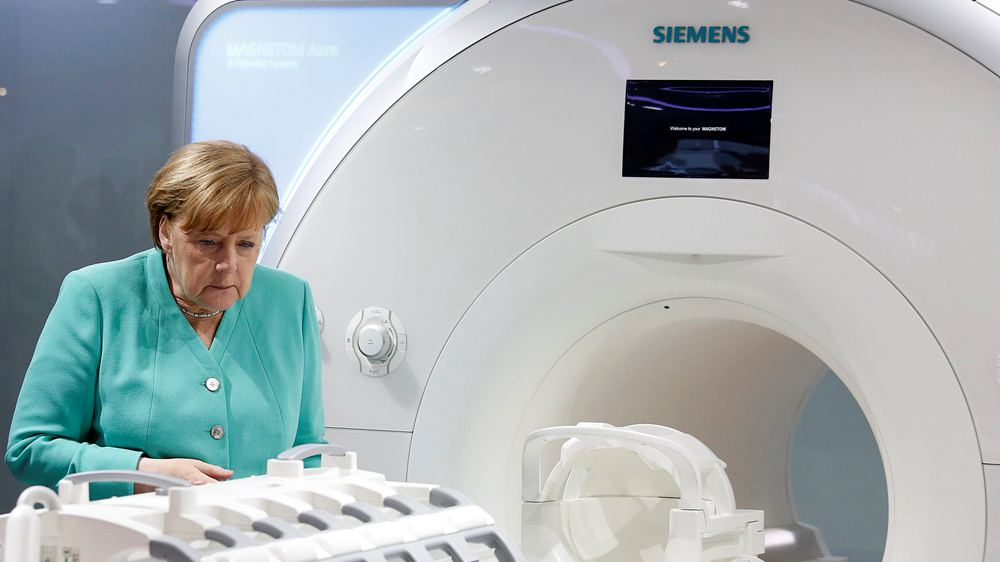
German Chancellor Angela Merkel checks a magnetic resonance imaging machine as she visits Siemens Healthineers in Shenzhen, China, May 25, 2018. /VCG Photo
German Chancellor Angela Merkel checks a magnetic resonance imaging machine as she visits Siemens Healthineers in Shenzhen, China, May 25, 2018. /VCG Photo
China has also explained its stance on its cooperation with central and eastern European countries, known as the "16+1" mechanism, addressing Germany, or rather, western Europe's concern about whether this mechanism would divide the European Union.
At a joint press release held at the Great Hall of the People on Thursday, Li said the "16+1" mechanism is a significant part and beneficial supplement to the China-Europe ties. It could help with the common development of China and eastern European countries, thus reducing the economic discrepancy within the EU and better advance the integration of European countries.
In response, Merkel said the "16+1" cooperation is conducive to the construction of infrastructure facilities in central and eastern Europe, which is actually a helpful addition to the development of the European Union.
China and Europe: agreements and differences
With China and Europe showing solidarity through backing the Iran nuclear deal, the Paris Agreement and a more open and fairer trade relationship under the multilateral framework, the two sides are moving closer on the world stage.
Europe's relationship with its traditional ally, the United States, instead, have soured, following Trump's decisions to withdraw from the Iran nuclear deal and the Paris Climate Agreement and threats to slap punitive tariffs on Europe's steel and aluminum exports since June 1. These protectionist and unilateral moves have severely dented European countries' confidence in the trans-Pacific coalition.
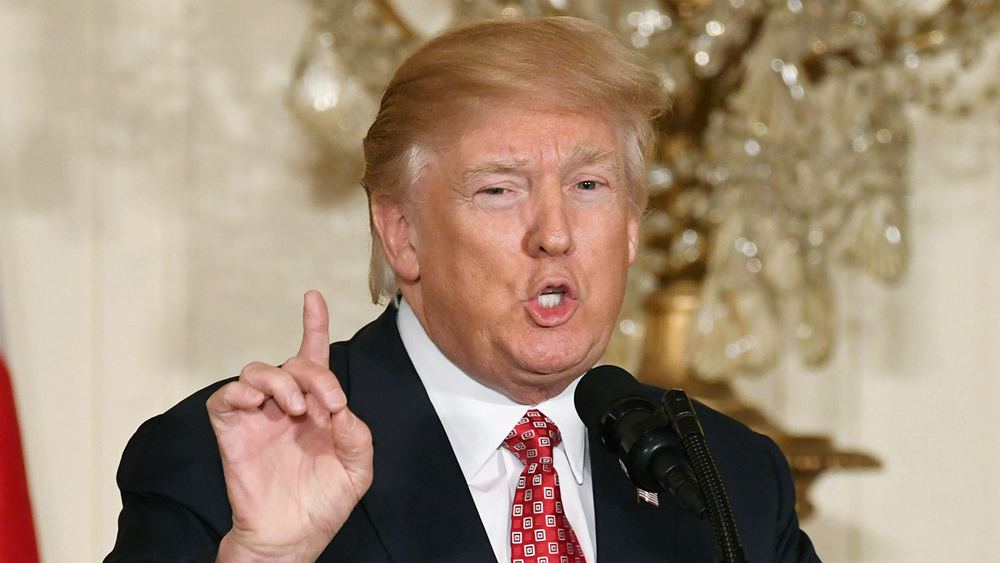
U.S. President Donald Trump, seen in this file photo, threatened on March 3, 2018, to impose a tax on European cars if the European Union raises tariffs on American goods in response to his plans for steel and aluminum tariffs. /VCG Photo
U.S. President Donald Trump, seen in this file photo, threatened on March 3, 2018, to impose a tax on European cars if the European Union raises tariffs on American goods in response to his plans for steel and aluminum tariffs. /VCG Photo
However, as experts pointed out, the estrangement between the two allies doesn't necessarily guarantee a smooth path for the development of China-Europe ties.
Xin Hua, researcher at the China Institute of International Studies, emphasized that there are still tons of issues on which Europe and the US see eye to eye, including the collective goals of reinforcing NATO, expanding the EU toward east Europe, and containing Russia. The two sides also share the same interests in fighting against the Islamic State Group in the Middle East. Not long ago, France and America formed a coalition and bombed Syria without gaining the approval from the United Nations, Xin added.
According to Xin, it is difficult and unrealistic for European countries to totally side with China or stand on the opposite of the US.
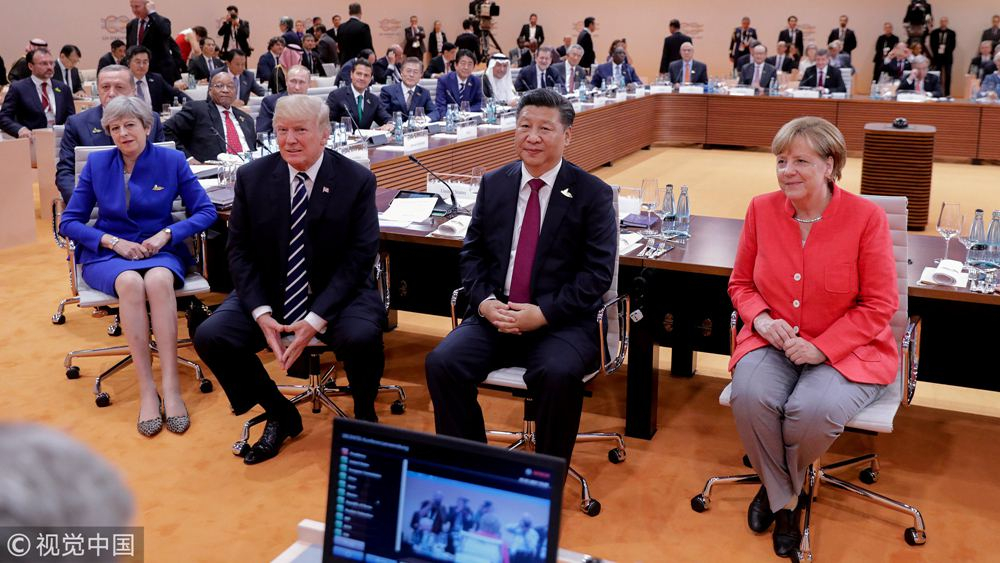
(L-R) British Prime Minister Theresa May, US President Donald Trump, China's President Xi Jinping and German Chancellor Angela Merkel turn around for photographers at the start of the first working session of the G20 summit in Hamburg, Germany, July 7, 2017. /VCG Photo
(L-R) British Prime Minister Theresa May, US President Donald Trump, China's President Xi Jinping and German Chancellor Angela Merkel turn around for photographers at the start of the first working session of the G20 summit in Hamburg, Germany, July 7, 2017. /VCG Photo
As to Europe's cooperation with China, it's unlikely that it will embark on an uneventful journey either, as a report by Reuter's Noah Barkin mentioned, Merkel's government still bears concerns about Chinese business practices and would continue pushing for Beijing to play fair on trade and investment.
German government officials have also cast doubt on China's Belt and Road Initiative, warning that this might be China's plan to extend its political influence into Europe. The protection of Intellectual property rights and human rights issues also top the political agenda of some European countries when they view their relationships with China.
Pragmatic cooperation on common grounds
Since Europe has such a mixed perception of China, it becomes even more urgent for the two sides to come up with a way to cast aside political disagreements and maximize the profits to be generated from this rapidly growing relationship.
As the Chinese President said when he met with Merkel on Thursday, China and Germany should promote building a new type of international relations and overcome their ideological differences while enhancing cooperation.
China has repeatedly vowed to further open up. At the 2018 annual meeting of the Bo'ao Forum for Asia, Xi
delivered a strong defense of China’s economic openness and globalization along with commitment to further reforms.
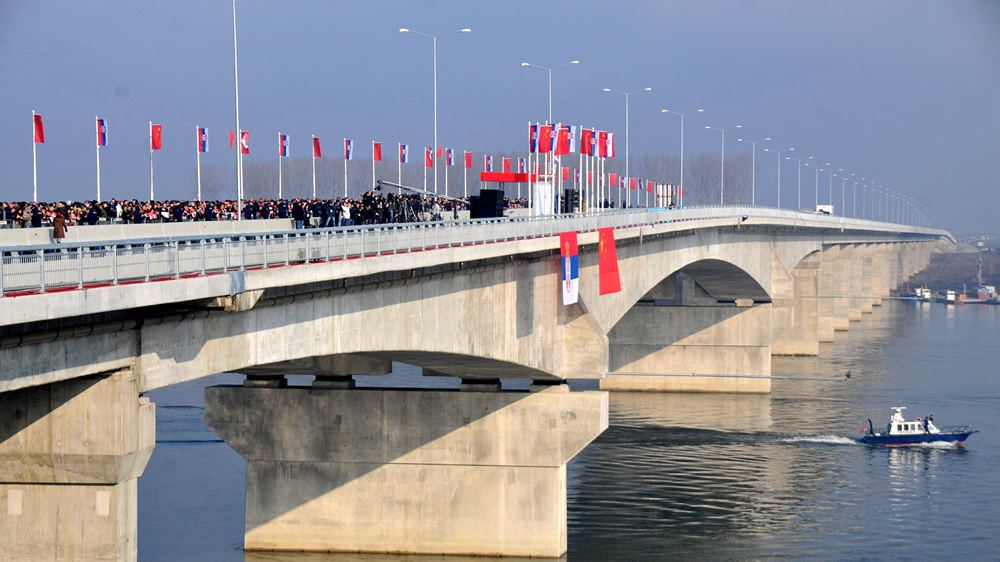
December 18, 2014: People attend a ceremony held to open the 1507- meter-long Mihajlo Pupin Bridge spanning the River Danube between the Zemun and Borca districts of Belgrade, Serbia. China provided loans and a construction team to the building of the bridge. /VCG Photo
December 18, 2014: People attend a ceremony held to open the 1507- meter-long Mihajlo Pupin Bridge spanning the River Danube between the Zemun and Borca districts of Belgrade, Serbia. China provided loans and a construction team to the building of the bridge. /VCG Photo
This is an opportunity for Europe to step up its collaboration with China, not only through inking economic and trade deals, but also through cooperating in fields that it previously showed concerns about, such as the protection of intellectual property rights, in order to speed up China's reforms in those areas.
Xin Hua pointed out, the recent trade talks between China and the US would also set an encouraging example for the EU to avoid trade wars through dialogue and negotiation, and boost European countries' faith in fighting unilateralism.
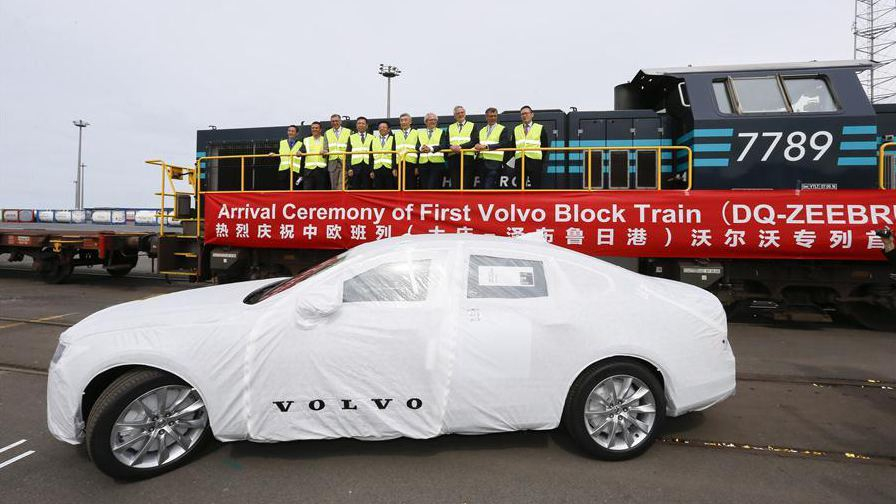
June 30, 2017: Participants attend the arrival ceremony of the first Volvo block train at Zeebrugge Port in Zeebrugge, Belgium. The freight train carrying 123 brand new Volvo cars made in northeast China marks a milestone in the history of cargo transport between the two countries. /Xinhua Photo
June 30, 2017: Participants attend the arrival ceremony of the first Volvo block train at Zeebrugge Port in Zeebrugge, Belgium. The freight train carrying 123 brand new Volvo cars made in northeast China marks a milestone in the history of cargo transport between the two countries. /Xinhua Photo
With the visits between Chinese leaders and their European counterparts getting more and more frequent—Chinese State Counselor and Foreign Minister Wang Yi just finished his visit to France, Spain and Portugal and earlier this year, French President Emmanuel Macron and British Prime Minister Teresa May both paid China a visit, let alone the latest visit by Merkel— China and Europe are bound to deepen political consensus and mutual trust between the two, and lay the ground for more communication and coordination on global affairs, so as to create a positive momentum in the defense of a multilateral world system and free trade.

 ["china"]