
Opinions
18:13, 09-Jun-2018
Expert: Trump's trade policy jeopardizes US relations with allies
 ["china"]
Share







Copied
Editor's note: This article is based on an interview with Brian Becker, an executive director of the ANSWER Coalition.
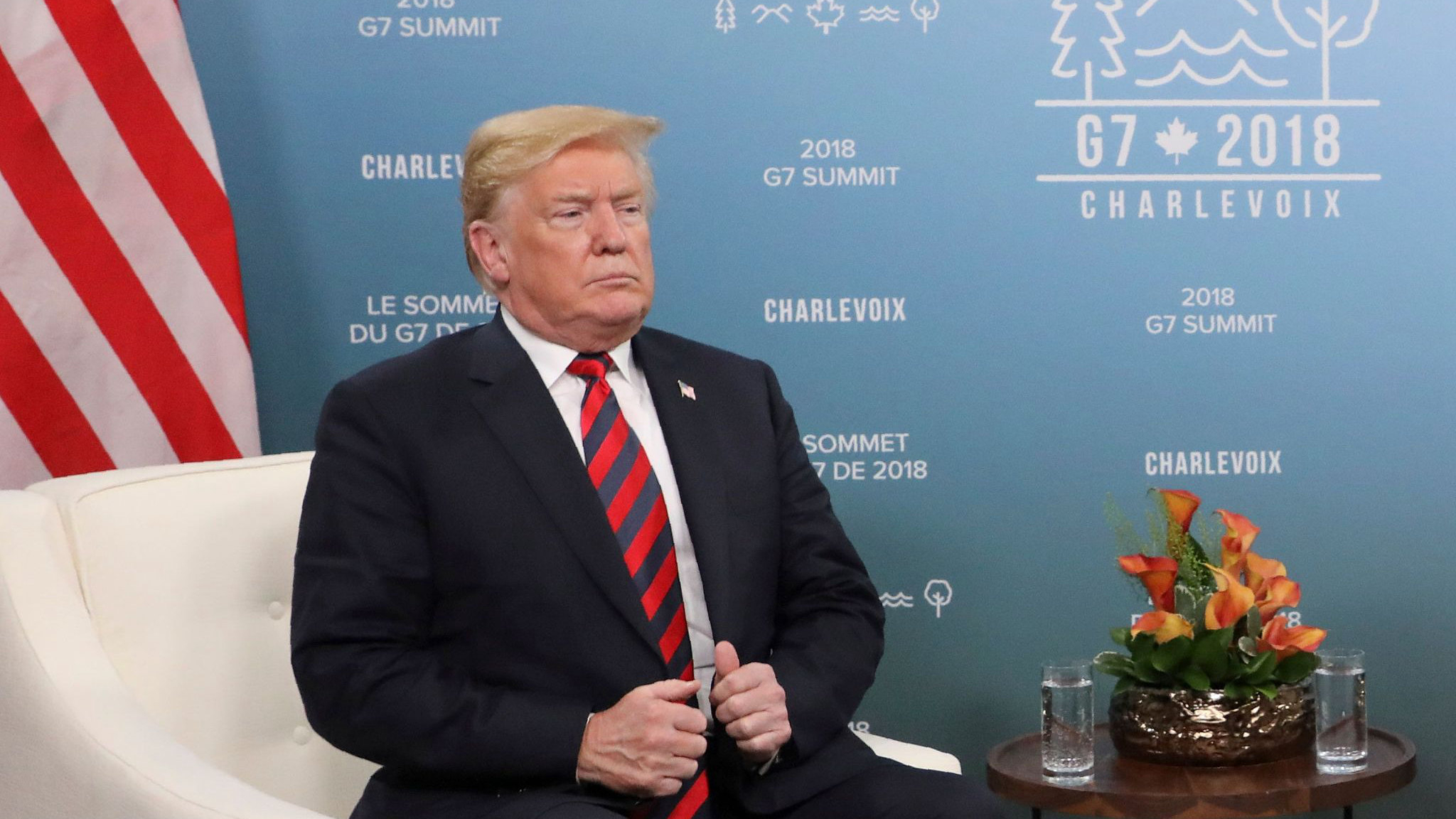
US President Donald Trump faces off with key allies at the G7 summit in Canada in what’s expected to be a showdown over trade.
As one of the most controversial politicians around the world, Trump has attempted to rescue the American economy by imposing tariffs on its loyal allies – the EU and Canada.
His decision brought fierce criticism both inside and outside of the countries involved. During the summit, Trump finds himself in an isolated position.
Trump's trade policy has deeply damaged the cohesion of the G7 and US relations with its allies.
France, the US’ most important ally in terms of economy and military, is deeply hurt by the high tariffs imposed by the US.
French President Emmanuel Macron on Thursday criticized Trump on Twitter, describing his policy as "not good for anyone, starting with the American workers!" and adding that "isolationism is bad for the American people."
Brian Becker, executive director of the ANSWER Coalition, thinks that Macron's speech is a reflection of the rising levels of dissatisfaction in EU countries toward not only President Trump, but the whole US.
"The public opinion in Europe is turning very strongly against not just Donald Trump, but against the United States for these bullying tactics," Becker told CGTN.
He added that there may be a “venomous rivalry” among US allies about who's going to shoulder the burden of the economic contraction caused by this kind of nationalism.
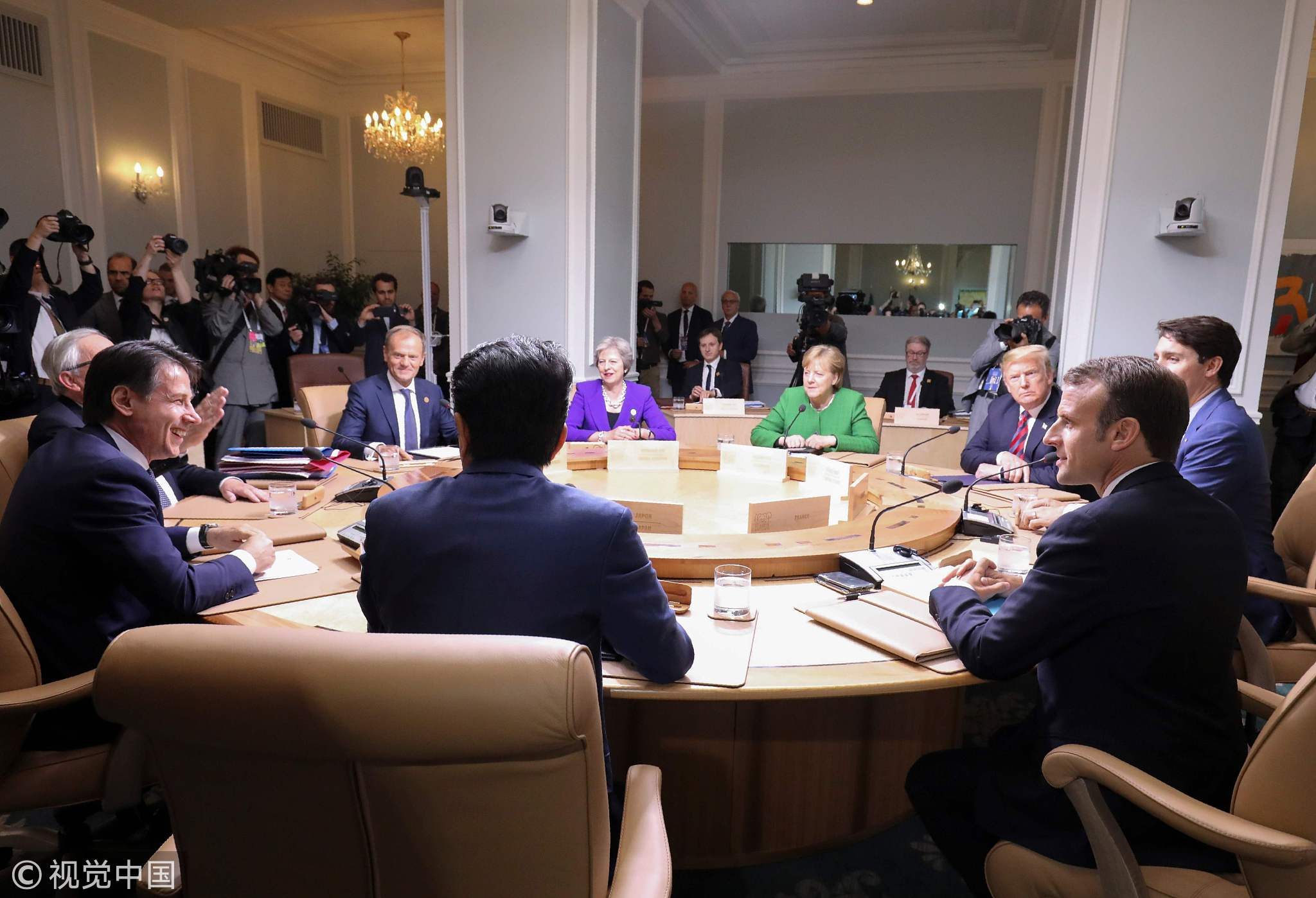
June 8, 2018: Leaders of the G7 participate in a working session of the G7 Summit in La Malbaie, Quebec, Canada./ VCG Photo
June 8, 2018: Leaders of the G7 participate in a working session of the G7 Summit in La Malbaie, Quebec, Canada./ VCG Photo
This will be accelerated by Trump's series of protectionist trade policies.
Remi Piet, senior director for Americas Market Intelligence, points out that Trump's attempt to create jobs in the US through imposing tariffs on steel and aluminum is a very shortsighted view.
He argues that applying trade protectionism may create jobs in some new industries that rely on steel.
However, it doesn't work for the manufacturing sector because the high tariffs will force the US manufacturing companies to import steel at a higher cost.
The companies will struggle to be competitive as higher price in materials will inevitably be passed down to consumers.
Piet added that companies may not be adversely affected in the short run, but higher tariffs will cause the loss of jobs in the long run due to higher costs and lost profits.
Donald Trump's trade policy not only jeopardizes the US economy, but also undermines the US’ image amongst its allies, which is harmful to the cohesion of the West.