
Politics
17:05, 28-Apr-2018
Korean Peninsula: Six questions as peace momentum builds
 ["other"]
Share







Copied
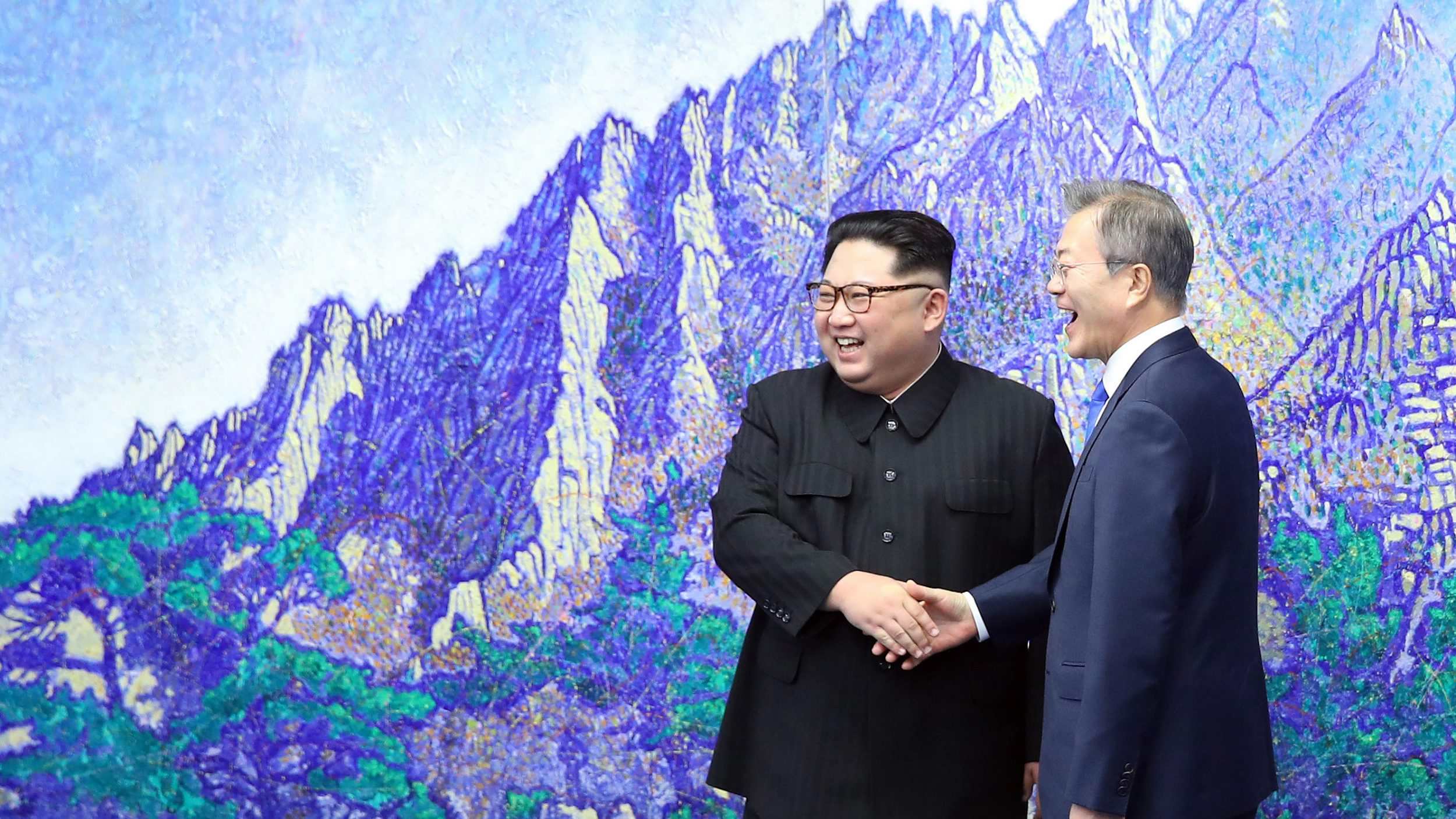
Leaders from around the world have lauded the symbolism and progress made at Friday's inter-Korean summit. As momentum towards peace builds following the meeting between Democratic People's Republic of Korea (DPRK) leader Kim Jong Un and Republic of Korea (ROK) President Moon Jae-in, what challenges lie ahead?
1. Building on progress
The turnaround in rhetoric on the Korean Peninsula over recent months has been striking. The next step will be to see whether concrete action is taken to back up the goals outlined in the Panmunjom Declaration, and whether the vague, larger goals included in it can be fleshed out.
Hopes for the future are high, but the test will be whether action follows the warm words and other parties can build positively on the accomplishments made on Friday.
Will concrete action be taken to back up the goals outlined in the Panmunjom declaration?
2. Multilateralism
Achieving the goals set out at the inter-Korean summit will require agreement from several actors and be complicated by domestic considerations.
Bilateral talks between Kim and Chinese President Xi Jinping, as well as the Kim-Moon summit, have given the process momentum. To nail down progress negotiations must at some point include a multilateral approach, possibly with something akin to the six-party talks that began in 2003 restarted.
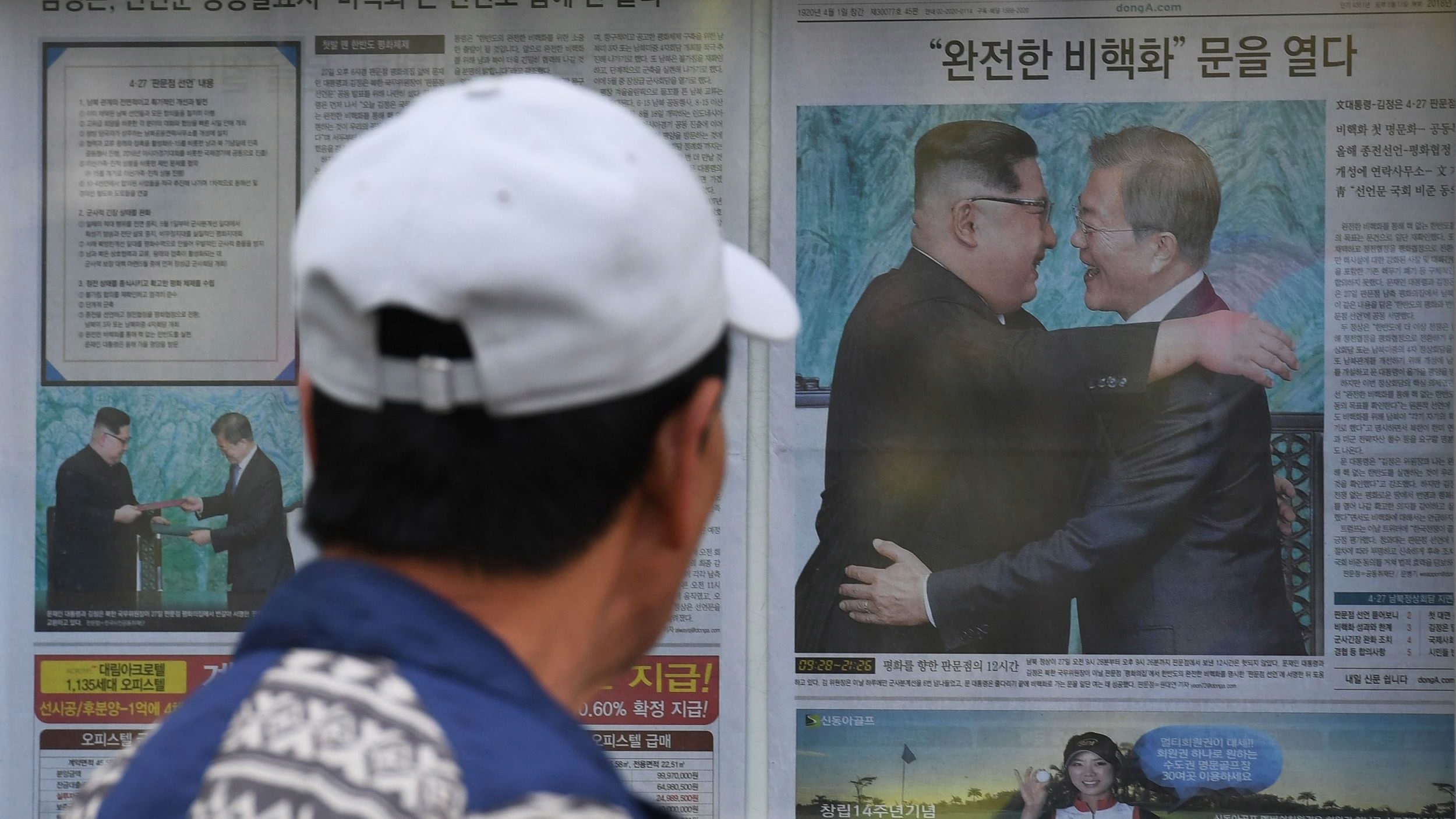
A man in Seoul walks past a newspaper featuring a front page story about the summit between ROK President Moon Jae-in and DPRK leader Kim Jong Un, April 28, 2018. /VCG Photo
A man in Seoul walks past a newspaper featuring a front page story about the summit between ROK President Moon Jae-in and DPRK leader Kim Jong Un, April 28, 2018. /VCG Photo
The US is determined to keep up its campaign of "maximum pressure," but some question whether the warmth of Friday's meeting means the ROK will be prepared to ease up as tensions are defused.
It's unclear whether military training exercises between the ROK and US will be suspended, a move that would support the "dual track" approach proposed by China.
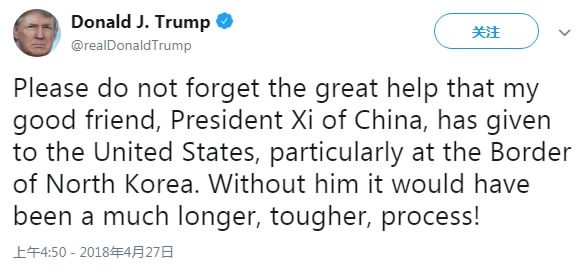
Twitter Screenshot
Twitter Screenshot
The eye-catching agreement to move towards a peace treaty officially ending the Korean War by the end of the year is one example of the complications ahead. Such an agreement would require a sign-off from the US, and approval from at least two-thirds of the Senate.
Will the relevant actors be willing to work together for common solutions?
3. Denuclearization
The issue of denuclearization is central to finding a solution acceptable to all. Friday's declaration "confirmed the common goal of realizing, through complete denuclearization, a nuclear-free Korean Peninsula."
But no time frame or further details were given, and no practical measures as to how this would happen were outlined.
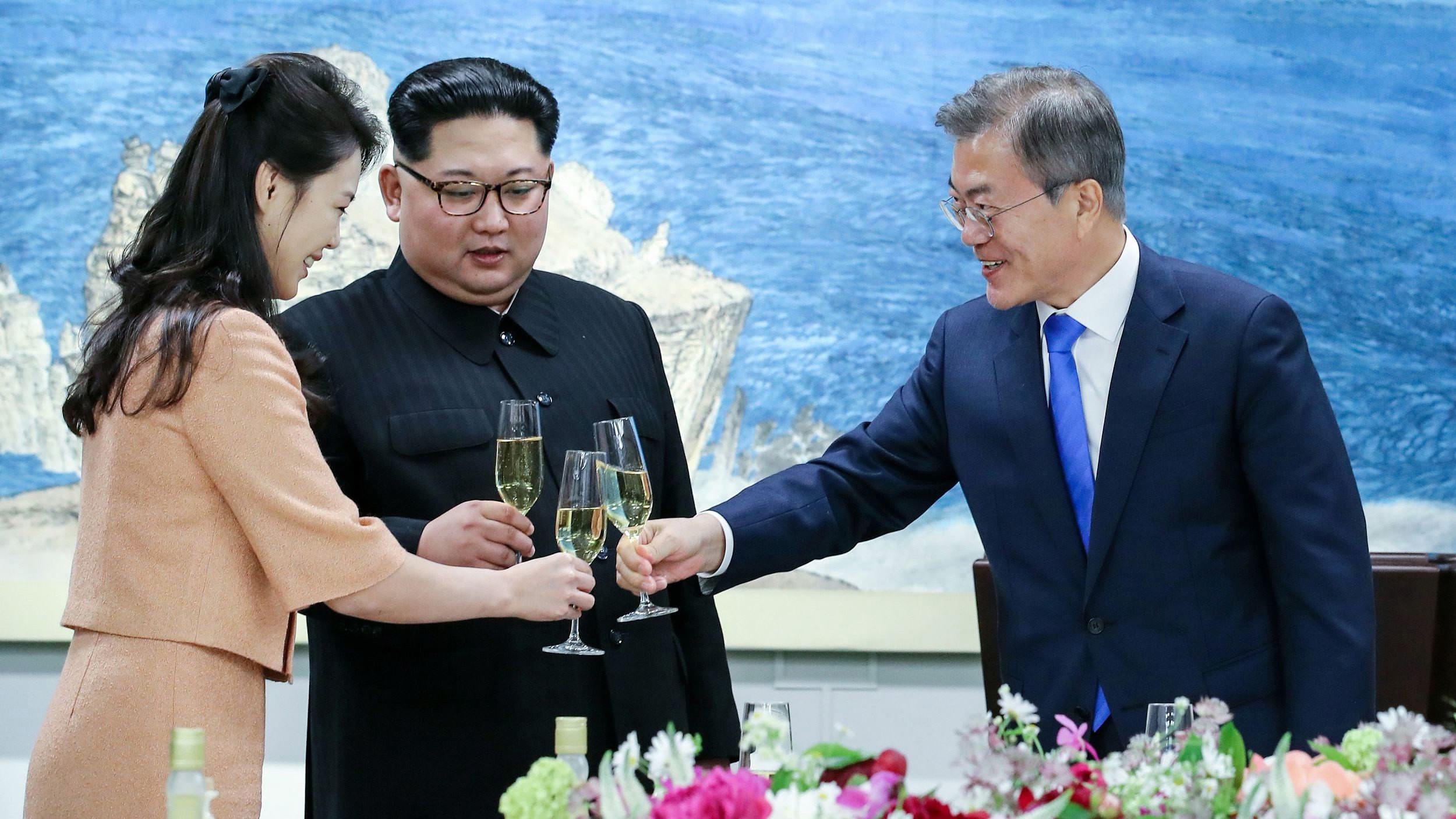
DPRK leader Kim Jong Un (2nd L) and his wife Ri Sol Ju (L) toast with ROK President Moon Jae-in (R) during the official dinner at the end of their historic summit at the truce village of Panmunjom on April 27, 2018. /VCG Photo
DPRK leader Kim Jong Un (2nd L) and his wife Ri Sol Ju (L) toast with ROK President Moon Jae-in (R) during the official dinner at the end of their historic summit at the truce village of Panmunjom on April 27, 2018. /VCG Photo
Furthermore, denuclearization means different things to different sides. The US sees it as the end of the DPRK's nuclear weapons program; the DPRK has concerns about the US security guarantee to the ROK (and Japan) and the continued stationing of around 28,000 American troops in the south.
Can all sides agree on an acceptable path to denuclearization?
4. Kim-Trump meeting
Most eyes will now turn to the planned meeting between Kim and US President Donald Trump.
The success of the inter-Korean summit appeared to encourage Trump, after days in which he had suggested his floated meeting with Kim might not take place. He revealed on Friday that the location options had been narrowed to two or three sites and the meeting will be set up "very shortly."
But huge issues remain. Trump wants the DPRK to give up its nuclear weapons – irreversibly – as a first step, Kim is likely to see this only as a final move after receiving much in return. The Trump administration has to date said that sanctions relief or trade measures would only follow complete surrender of nuclear weapons.
Kim and Moon showed how both sides can walk away from a summit with wins and momentum, will Kim and Trump be able to do the same?
5. Concessions
The concessions all sides are willing to make over the coming weeks will be closely watched.
Kim has already promised to end nuclear tests and close down a nuclear test facility, a move Trump took as a concession and Kim said was a sign of the success of the DPRK's nuclear program.

ROK President Moon Jae-in and DPRK leader Kim Jong Un, April 28, 2018. /VCG Photo
ROK President Moon Jae-in and DPRK leader Kim Jong Un, April 28, 2018. /VCG Photo
The inter-Korean summit laid more foundations to progress and areas for cooperation, but without either side giving much up. As talks move forward, more will have to be put on the table.
What concessions are the various parties prepared to offer?
6. Surprises
Kim has made a whirlwind entrance onto the global diplomatic stage, beginning with a visit to China for talks with President Xi. After the inter-Korean summit, the face-to-face meeting with Trump is his next scheduled event. However, he has not been shy of doing the unexpected.
The DPRK leader invited Moon to step into the north on Friday – "not a planned event," according to ROK officials – and reportedly told the ROK president he was willing to visit Seoul "any time if you invite me."
Will Kim – or other parties – surprise again over the coming weeks?