
World
20:14, 13-Aug-2018
Hippo on Kenyan lake kills Chinese tourist, injures another
Updated
19:37, 16-Aug-2018
 ["africa"]
Share







Copied
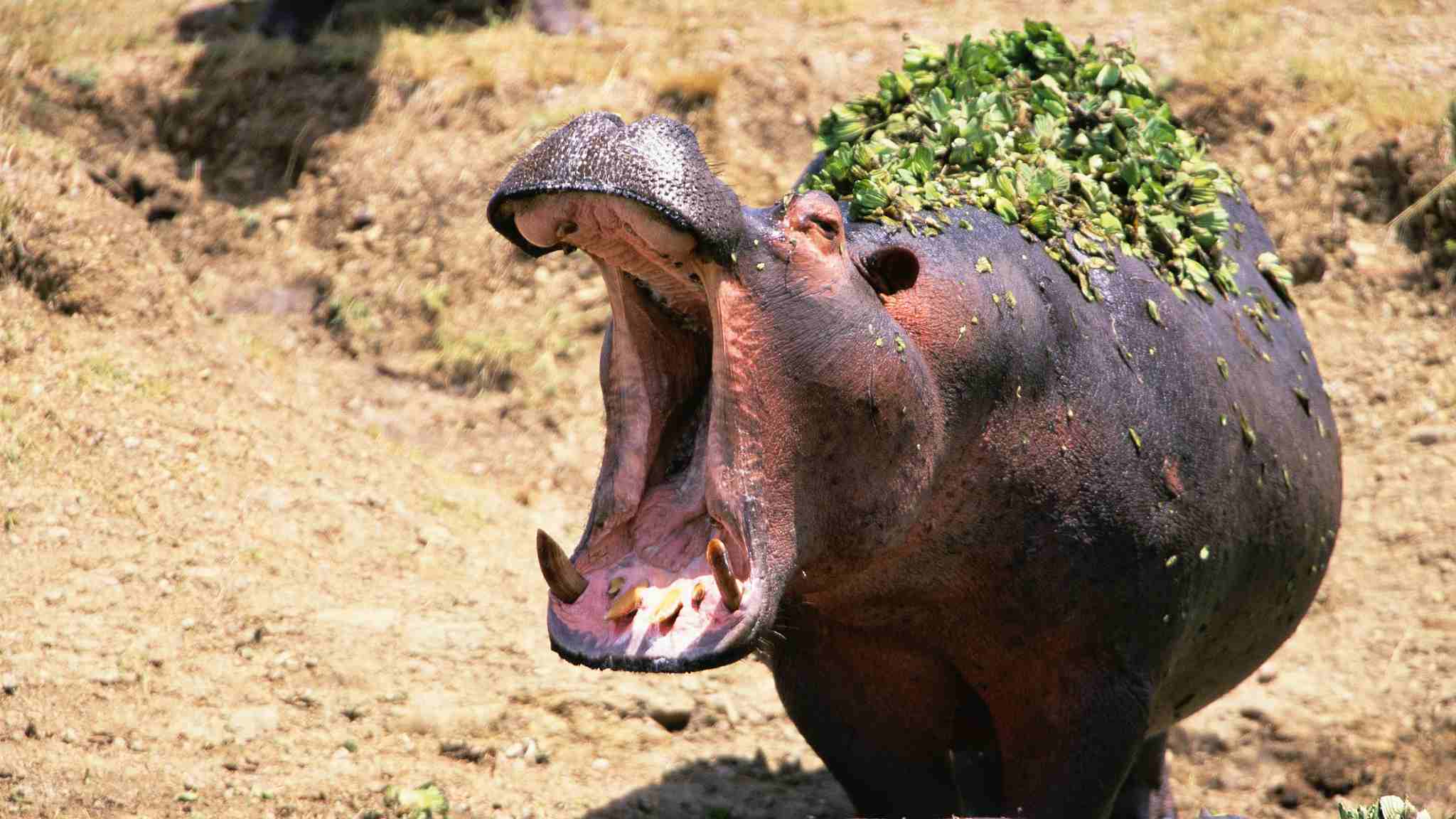
Fifteen Chinese members of a tourist group were reportedly injured from a bus incident in Nairobi, Kenya, days after a tourist in the same company was killed and another was injured in a hippopotamus attack at a wildlife resort, reported Channel NewsAsia.
The Chinese embassy in Nairobi had sent diplomats to the scene, and reminded tourists in the area on how to avoid wildlife attacks in a statement.
“It is the unshakable duty of the Chinese government to provide consular protection services to Taiwanese compatriots," Xinhua News Agency quoted an embassy spokesman as saying.
The embassy advised tourists against approaching hippos from short distances in the statement.
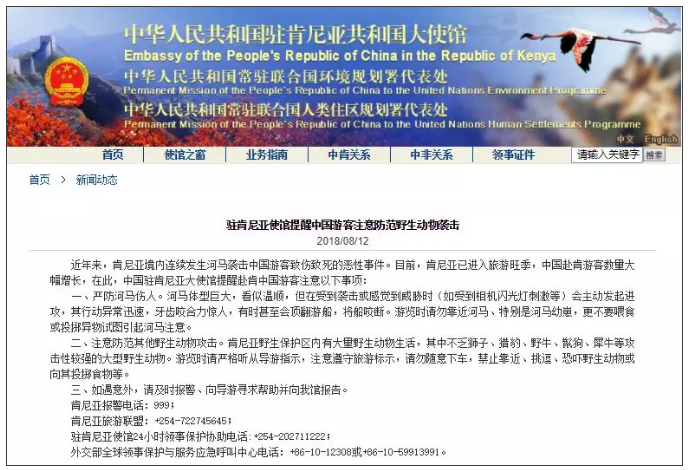
The Chinese embassy issued reminders that advised tourists to not approach hippos from short distances. /Screenshot via WeChat
The Chinese embassy issued reminders that advised tourists to not approach hippos from short distances. /Screenshot via WeChat
The tourist group, comprising 30 people from southeast China's Taiwan, was visiting Lake Naivasha in Kenya's Rift Valley – a popular tourist destination to spot hippos, giraffes and zebras about 100 kilometers from the capital Nairobi.
The wildlife attack occurred on the shores of the lake on Aug. 11, where a Chinese tourist, Chang Mingchuang, 66, died after being bitten by a hippo while taking pictures — just hours after a hippo killed a local fisherman in the same area in another incident, according to Kenya news publication The Star.
The latest attack has brought the number of people killed by the mostly herbivorous mammals around Lake Naivasha to six so far in 2018, reported the BBC.
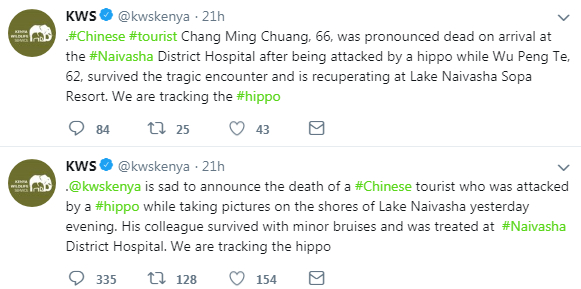
Kenya Wildlife Service announced the death and injury of two Chinese tourists in the hippo attack on Twitter. /Screenshot via Twitter
Kenya Wildlife Service announced the death and injury of two Chinese tourists in the hippo attack on Twitter. /Screenshot via Twitter
"His injuries were serious and he died minutes after he was retrieved from the lake," said Rift Valley head of criminal investigations Gideon Kibunja.
James Omollo, a witness at the scene, said to The Star that Chang got too close to the animal, which turned against him and bit him on the chest.
Chang’s colleague in the same group, Wu Pengte, 62, was also injured in the attack on Saturday night but survived with minor bruises after being taken to the local hospital for treatment, said Kenya Wildlife Service on Twitter.
The service is tracking the hippo. The circumstances are not yet clear regarding the two Chinese men that were attacked.
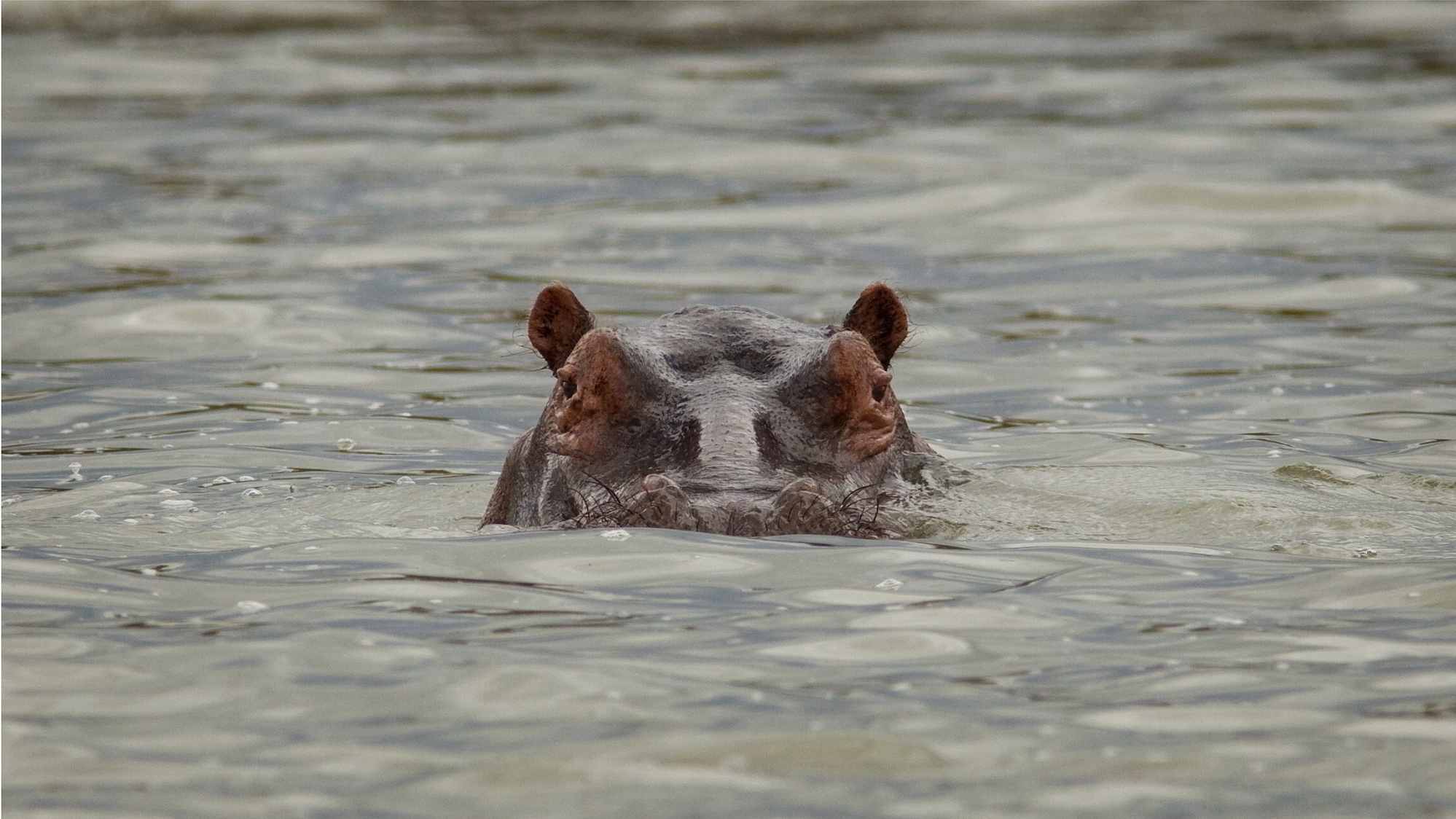
A hippo spotted at Lake Naivasha. /VCG Photo
A hippo spotted at Lake Naivasha. /VCG Photo
The Chinese tourists strayed into an area where the hippos were resting, leading to the fatal attack, according to David Kilo, chairman of the Lake Naivasha Boat Owners Association.
"This is not the first time,” Kilo added that the animals were being forced to stray into nearby hotels and farms for grazing because of rising water levels caused by heavy rain.
The closure of wildlife corridors and encroachment of riparian land has contributed to the rising attacks as conflict between human and hippos has increased, he said.