
Sports
21:02, 04-May-2018
The challenge in the CBA's new group divisions – travel time
 ["china"]
Share







Copied
In an attempt to make games more exciting for fans, the CBA recently introduced a restructuring of the way teams are organized.
Starting next season, the CBA will divide its 20 teams into four groups, based on their performance the previous season. Each team will play against the other four teams in the group four times each (two home and two away games), and twice against teams from the other groups (one home and one away game).
A move to create more intensity

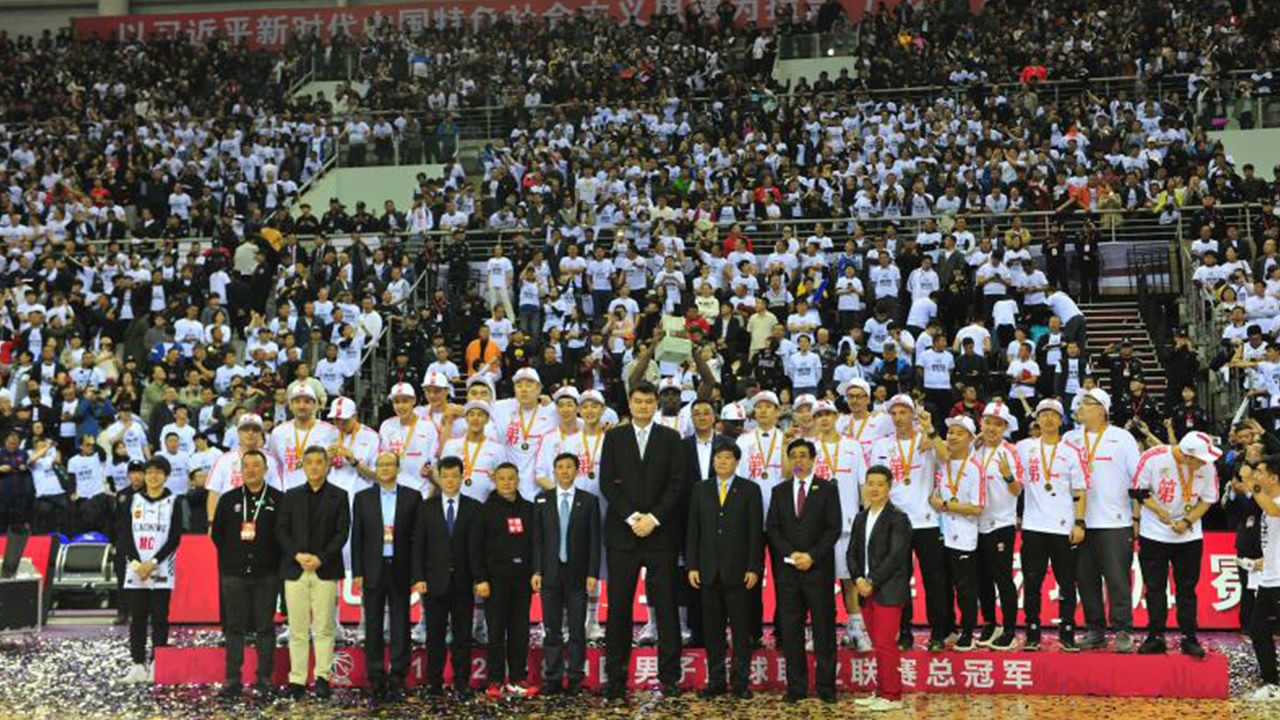
The Liaoning Leopards winning the 2017-18 CBA championship. /VCG Photo
The Liaoning Leopards winning the 2017-18 CBA championship. /VCG Photo
The decision hopes to create games with more intensity and excitement, especially for fans who have been jealous of the NBA's 82 games – a regular season that's more than double than that of the CBA's.
The new division of groups for the coming season looks like this:
Group A: Liaoning Leopard, Shenzhen Leopards, Guangzhou Long Lions, Qingdao Double Star Eagle and Jinlin Northeast Tigers
Group B: Zhejiang Lions, Beijing Ducks, Shanghai Sharks, Jiangsu Tongxi and Tianjin Golden Lion
Group C: Guangdong Tigers, Xinjiang Glying Tigers, Zhejiang Chouzhou, Shanxi Fenjiu and Sichuan Whales
Group D: Shandong Hi-Speed, Jiangsu Dragon, Beijing Begcl, Fujian SBS and Fubon Bayi Rockets
Each team next season will play 46 games, eight more than what they're used to. The eight additional games will see teams playing different opponents – against teams that are both strong and weak – in an attempt to give the games balance and provide equality among the different groups.
Certain teams will travel way more than others

Yi Jianlian, core player for the Guangdong Tigers /VCG Photo
Yi Jianlian, core player for the Guangdong Tigers /VCG Photo
Though the additional eight games don't sound like many, the four away games could cause problems for some teams in terms of travel. Distances between the home courts of the four teams in each group vary vastly. For example, if the Guangdong Tigers head into a series of away games against the other four teams in Group C, it's route could look like: Dongguan to Chengdu to Urumqi to Taiyuan to Hangzhou, traveling about 7.661 kilometers if they were to take the most direct route.
By contrast, teams in Group B are much luckier. A set of consecutive road games for the Zhejiang Lions could look like: Hangzhou to Shanghai to Nanjing to Tianjin to Beijing, traveling only 1.626 kilometers.
Away games are one of the major difficulties basketball teams face, both in the NBA and CBA. The more time players spend on planes, the more exhausted players become, which can be disastrous for a team. Moreover, the CBA will change the pace of games from five games in two weeks to three games in one week, making away games even more time-consuming.
Arranging the schedule is key

Ding Yanyuhang, two-time CBA MVP of season 2016-17 and season 2017-18 /VCG Photo
Ding Yanyuhang, two-time CBA MVP of season 2016-17 and season 2017-18 /VCG Photo
The NBA divides its 30 teams into Eastern and Western Conferences, with six divisions based on geography. The league tries to maintain a balance between the intensity and equality of games and a team's travel time in the following way: Teams play more games against opponents in the same division and fewer games with teams from other divisions.
In the coming season, the CBA could take a lesson from the NBA by arranging it so that teams play their away games consecutively when they're in the same area as another opponent. For example, the NBA has the famous tour into Texas, meaning the team will face the San Antonio Spurs, the Houston Rockets and The Dallas Mavericks continuously (not necessarily in that order). The CBA could introduce something like "a tour into Guangdong."