
Culture
17:41, 24-May-2018
Baked goods and wi-fi bring Mt. Qomolangma climbers closer to home
 ["china"]
Share







Copied
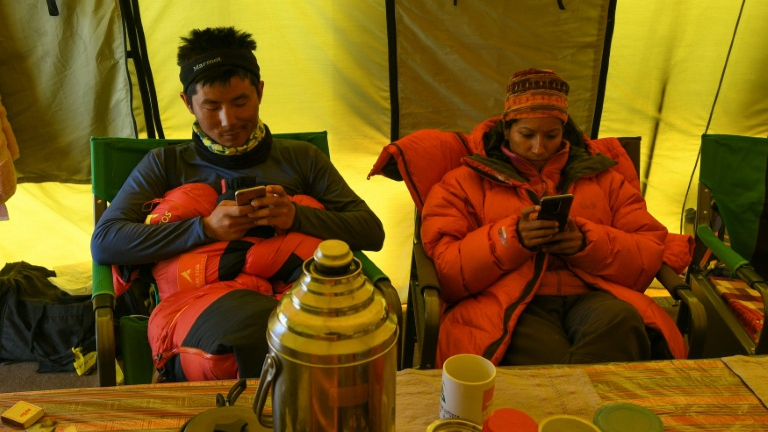
Wi-Fi, baked goods and trendy coffee: gone are the days of deprivation at Qomolangma base camp, with hipster perks and modern conveniences ensuring life is cushier than before on the roof of the world.
The Khumbu glacier at the foot of Qomolangma transforms every spring into a high-altitude metropolis of surprising luxury for the hundreds of climbers aiming for the peak of the world's highest mountain.
Canned food and bulky satellite phones are a thing of the past.
Today's climbers enjoy fresh salads, Instagram and comforts that are unthinkable when Edmund Hillary and Tenzing Norgay first stood atop the 8,848-meter peak 65 years ago.
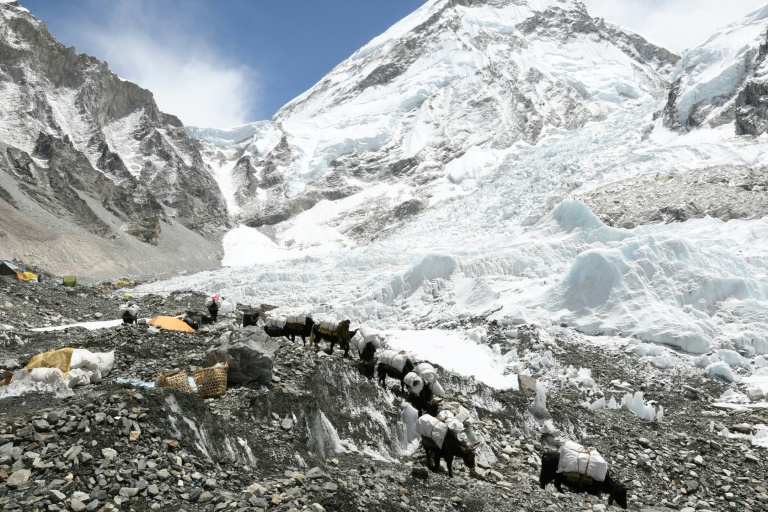
Zopkios, a cross between a cow and a yak, carry supplies at Qomolangma base camp. /AFP Photo
Zopkios, a cross between a cow and a yak, carry supplies at Qomolangma base camp. /AFP Photo
"The first question people ask when they arrive at base camp is where's the wi-fi. The second question is where's the hot shower," said Qomolangma veteran Russell Brice, owner of Himalayan Experience, one of the oldest and most established expedition operators.
The first intrepid teams to attempt Qomolangma took a month to reach base camp on the Nepal side of the mountain.
The journey was cut to eight days with the construction of a small mountain airstrip at Lukla, the gateway to the Qomolangma region.
Around 2,500 yaks make that journey at the beginning of the spring climbing season in April to turn the rock-strewn glacier into the world's highest city for two months of the year.
Tents have carpeted floors and bouquets of plastic flowers. The piping hot showers run on solar power offer respite from the freezing temperatures outside.
A brigade of helicopters keeps the tent town stocked with daily deliveries of fresh supplies to cater for the 1,500 or so people at base camp.
Climbers who want a break from high altitude life can even hitch a heli ride back to Kathmandu for some R and R before returning to attempt the summit.
At Alpine Ascents' camp, breakfast comes with Turkish drip coffee.
"Cappuccino machines don't work at altitude," director Gordon Janow explained.
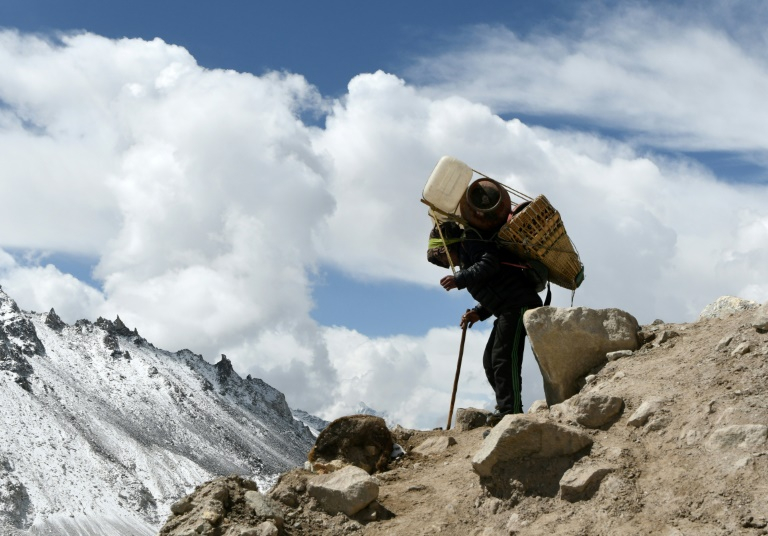
A porter carries supplies to Qomolangma base camp, where bargain operators offer cheaper ways to glory-chasers. /AFP Photo
A porter carries supplies to Qomolangma base camp, where bargain operators offer cheaper ways to glory-chasers. /AFP Photo
Meanwhile, over at Seven Summit Treks' camp, the smell of freshly baked cinnamon rolls from its bakery greets climbers returning from acclimatization run high on the mountain.
Fresh salads are served up by Adventure Consultants, a New Zealand-based operator, whose chef once worked in a restaurant with three Michelin stars in France.
"People seem to like simple foods. Of course being here is so far removed from cities and normal life that basic salads and fresh vegetables seem to keep everyone happy," said chef James Perry.
He swapped a fully kitted-out kitchen in an ambassador's residence in Brussels for two gas hobs and a temperamental oven at base camp.
"Each have their own peculiarities," he replied in a diplomatic tone when asked who was more difficult to please: climbers or ambassadors?
'Evolution' of base camp
Greg Vernovage of International Mountain Guides, one of the largest teams on the mountain, said the modern-day perks were part of the natural "evolution" of base camp.
But others lament the direction it is going.
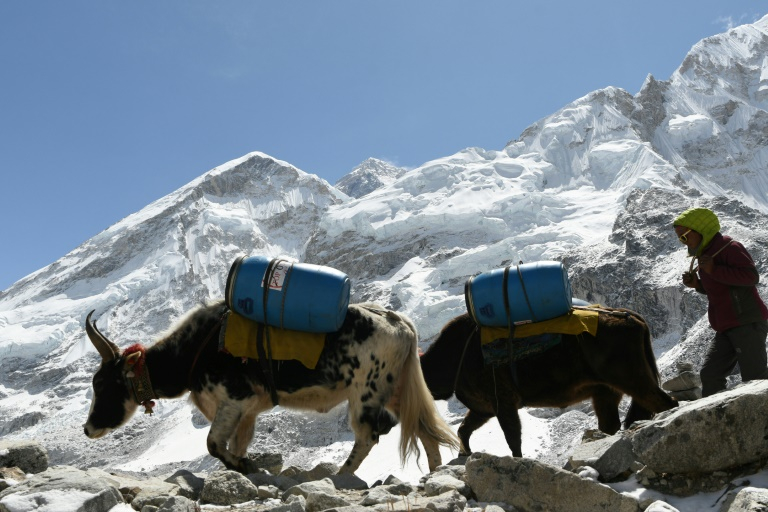
Around 2,500 yaks make that
journey at the beginning of the spring climbing season in April to turn
the rock-strewn glacier into the world's highest city for two months of
the year. /AFP Photo
Around 2,500 yaks make that journey at the beginning of the spring climbing season in April to turn the rock-strewn glacier into the world's highest city for two months of the year. /AFP Photo
Everyone on "the Hill" used to know each other, veterans say, and shared everything from radio frequencies and weather forecasts to banter over an afternoon "guides' brew," a combination of whiskey, honey and water.
Today, they say the village atmosphere is gone.
Base camp is a warren of tents as more climbers than ever try to reach the top of the world.
Last year saw a record 373 permits granted to foreign climbers to venture up Qomolangma from the Nepal side, and this year fell just shy of that.
Money has also sown division in the once close-knit community.
The crowds starting to gain popularity as prices drop, with bargain operators offering cheaper, and many fear unacceptably risky, ways for glory-chasers to the summit.
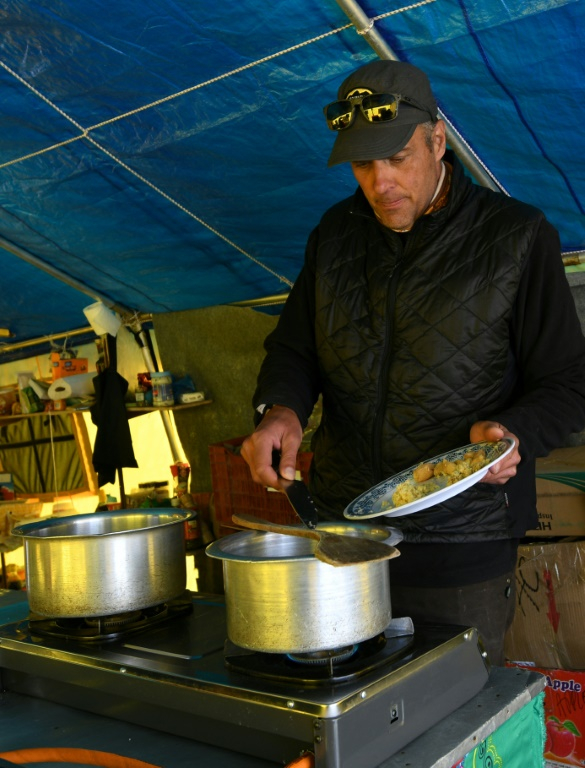
Chef James Perry swapped a kitchen
in an ambassador's residence in Brussels for two gas hobs and a
temperamental oven at base camp. /AFP Photo
Chef James Perry swapped a kitchen in an ambassador's residence in Brussels for two gas hobs and a temperamental oven at base camp. /AFP Photo
Foreign operators usually charge climbers around 65,000 US dollars to reach the summit. They complain that Nepali equipment is not safe and invites climbers by offering packages for as little as 20,000 US dollars.
Nepali-run expedition groups reply that foreigners trips to Qomolangma and are threatened by the competition they represent.
The modern-day conveniences may make life at base camp more comfortable, but reaching the summit remains as dangerous as ever.
Three climbers have died this year, and reported last year, six climbers perished.
Brice from the Himalayan experience said anything that improved comfort, physically and mentally, was essential as climbers prepared to ascend almost to the cruising altitude of a jetliner.
"The psychological impact of how people feel will impact how they perform on the mountain," he said.
(With input from AFP)