
Opinion
09:50, 06-May-2019
China should not be a campaign issue in U.S. elections
 ["china"]
Share







Copied
Editor's Note: Adam Garrie is the director of the UK-based global policy and analysis think tank Eurasia Future and co-host of talk show "The History Boys." The article reflects the author's opinion, and not necessarily the views of CGTN.
Donald Trump and his administration are well known for anti-China rhetoric even though it appears that Washington and Beijing are likely to finalize a trade deal that will end the Chinese portion of Trump's so-called global trade war.
In normal circumstances, a domestic political opposition to a government intent on a global protectionist posture would advance an argument in favour of free trade, but for the Democratic Party in the U.S., something less logical is occurring.
Instead of making free trade a major campaign issue, some Democrats are trying to make the issue about China itself. This electoral strategy is ultimately unhelpful for the long term sustainability of China-U.S. relations.
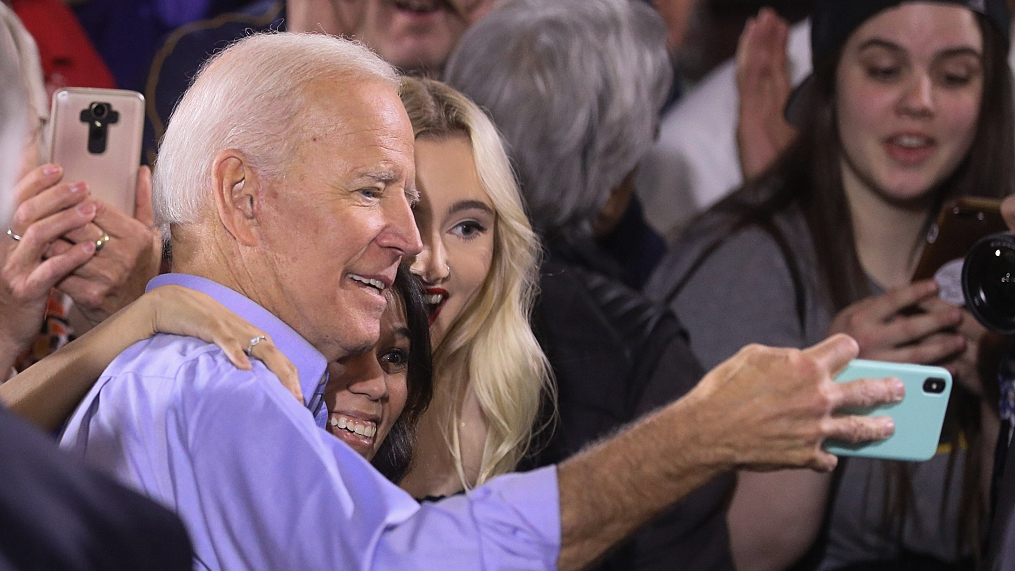
Democratic presidential contender Joe Biden has stated that China is not “bad folk” while also stating that he does not see China as a competitive “threat.” Although Biden's specific words seem rational and positive, within the context of a hostile American election season, these words can easily be exploited by those seeking to make China the focus of an election that ought to be an issues based campaign.
2016 Democratic nominee Hillary Clinton also recently added to the “China discussion” by apparently jokingly suggesting that the Chinese government should hack into Donald Trump's personal tax records.
Beyond simply being a joke made in terribly poor taste, the mere suggestion that China would conduct itself in such a way not only misrepresents China in the extreme, but it could easily fan the flames of anti-Chinese sentiment at a time when a new trade deal between China and the U.S. ought to restore some measure of normalcy to U.S. politics when it comes to China.
Instead, words like those of Hillary Clinton and Biden risk provoking Trump into making further anti-Chinese statements, thus setting up a dangerous game of rhetorical political ping pong in which prominent U.S. politicians trade insults and misguided “praise” for China at the expense of a genuine sense of rational win-win thinking.
The fact of the matter is that political systems like that in the U.S. inevitably produce elections that degenerate from issues-based events into shouting matches that focus on the personal, the petty and even the vulgar. This is a feature of most adversarial political systems and adversarial presidential systems in particular.
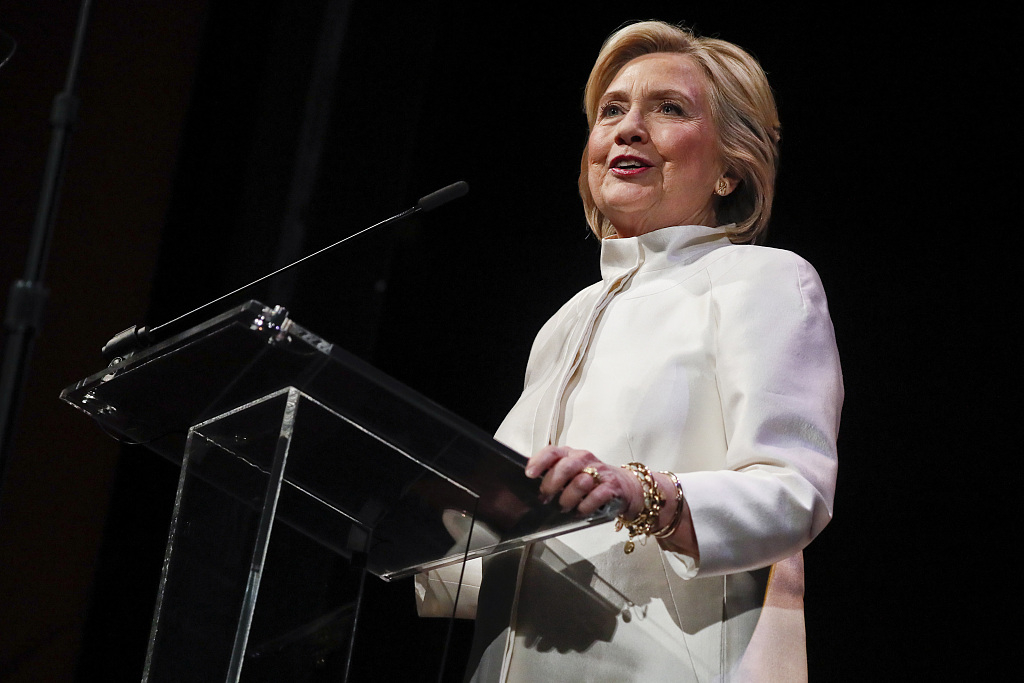
Former Secretary of State Hillary Clinton speaks at the 18th annual Vital Voices Global Leadership Awards at The Kennedy Center in Washington, DC, April 24, 2019. /VCG Photo
Former Secretary of State Hillary Clinton speaks at the 18th annual Vital Voices Global Leadership Awards at The Kennedy Center in Washington, DC, April 24, 2019. /VCG Photo
But even at the height of the Cold War, foreign policy arguments between U.S. presidential candidates tended to revolve around how to best manage a general consensus. Today it appears that the very approach various candidates advocate when it comes to foreign relations is becoming a tool of politicized gamesmanship.
This has already happened in respect of Russia-U.S. relations and there is now a danger that some in the U.S. want to repeat this by needlessly politicizing China-U.S. relations.
This is why it is incumbent upon those seeking a rational win-win approach to China-U.S. relations to demystify the grandiose statements emanating from U.S. politicians concerning China. The truth is much simpler than the fiction. China seeks to trade freely and transparently with countries throughout the world in accordance with the well-established rules-based system of international commerce.
This of course includes the United States, a country that China values as a major trading partner.
China has never meddled in U.S. political affairs and retains a policy never to do so in respect of the affairs of any foreign power. China however does feel that U.S. provocations in the Taiwan Strait and South China Sea are not only counterproductive but are open acts of interference in China's internal affairs and its situation with its ASEAN neighbors and partners.
Even so, China seeks dialogue based de-escalation as a means of conflict resolution with any country. Thus far, such techniques have worked well in respect of building stronger partnerships with the ASEAN countries, while such techniques have helped to de-escalate tensions in Myanmar's Rakhine state and neighboring Bangladesh. China has also used a dialogue based approach to de-escalate tensions with India after the 2017 border issue threatened to strain ties.
If U.S. politicians want to make China into a matter over which to play rhetorical political ping pong, there is nothing anyone can do to stop this. However, Americans should be privy to the information about the kind of win-win relationship China seeks with the U.S. in order to better see through the zero-sum rhetoric of some U.S. politicians.
(If you want to contribute and have specific expertise, please contact us at opinions@cgtn.com.)