
Politics
11:49, 15-May-2018
US, Iran foe in pole position after Iraqi elections
 ["other"]
Share







Copied
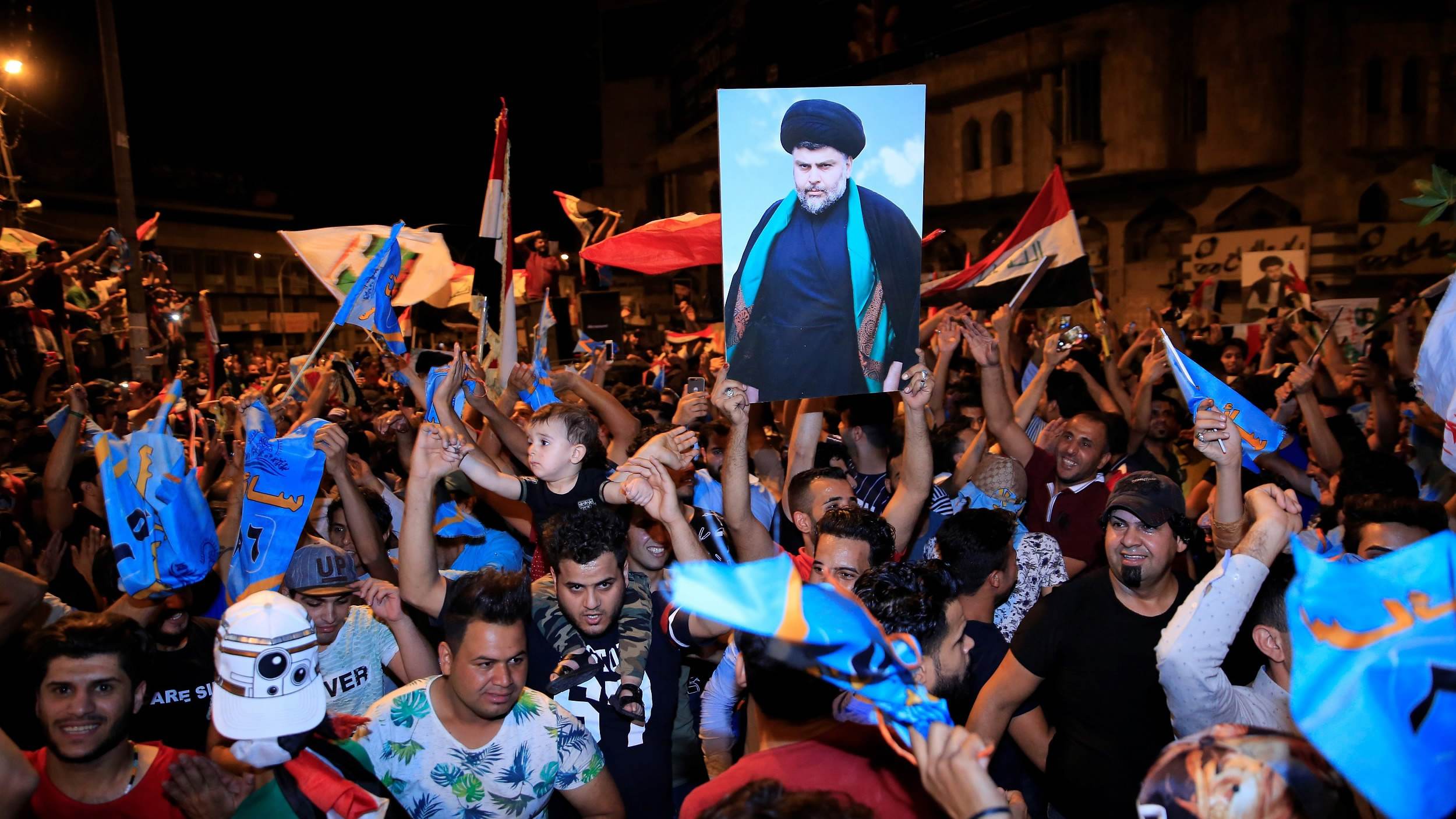
A coalition led by populist cleric Moqtada al-Sadr, an opponent of US and Iranian influence in Iraq, looks to have won the most votes and seats in the country's parliamentary elections.
In results that upturned analysts' predictions, incumbent Prime Minister Haider al-Abadi, an ally of both Washington and Tehran, was pushed into third place behind Sadr and pro-Iranian Shia militia chief Hadi al-Amiri.
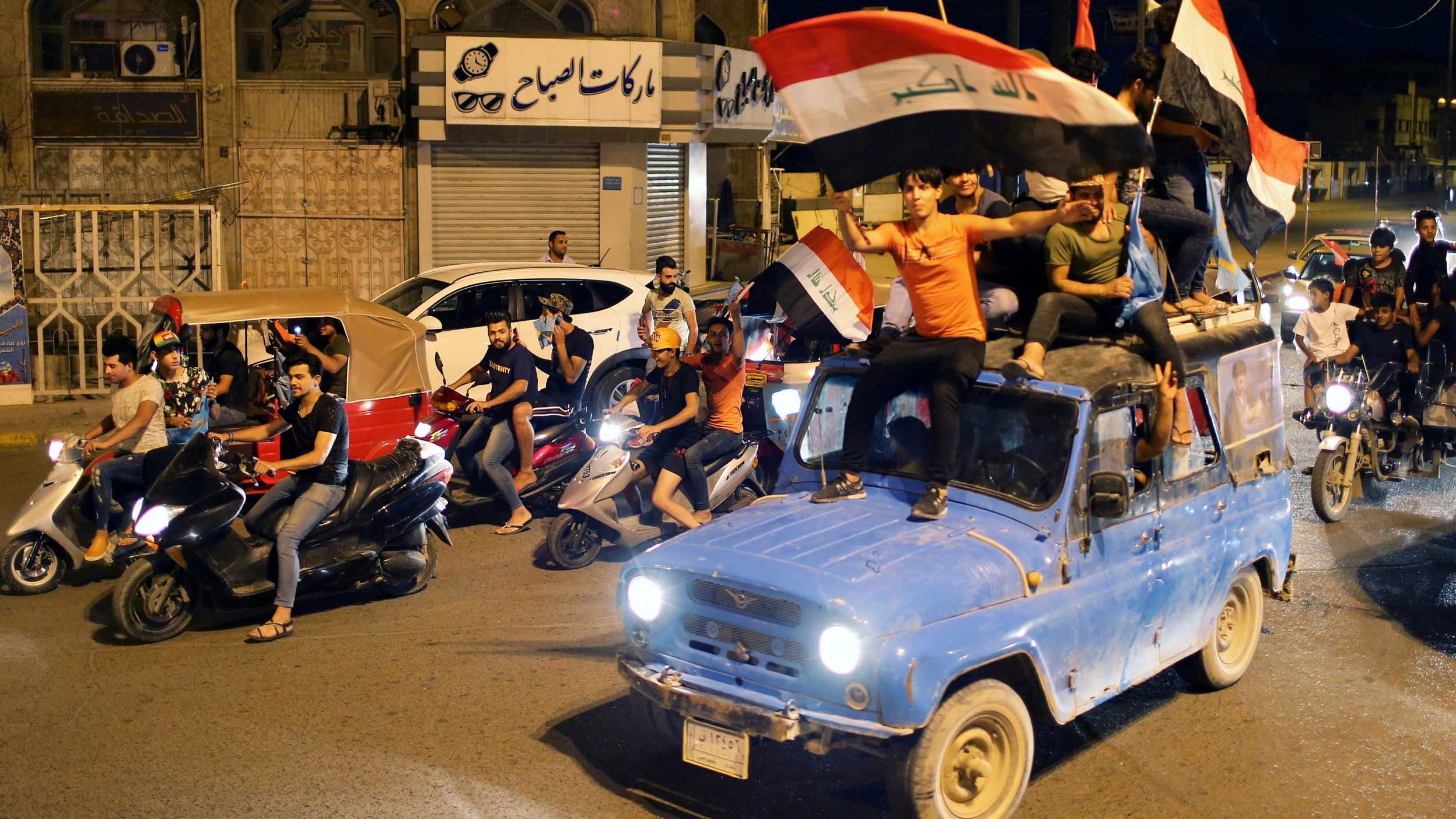
Iraqis celebrate after the results of Iraq's parliamentary election were announced in Baghdad, Iraq, May 14, 2018. /VCG Photo
Iraqis celebrate after the results of Iraq's parliamentary election were announced in Baghdad, Iraq, May 14, 2018. /VCG Photo
Saturday's election results throw open the race to be the next prime minister at a time of high tensions following the US withdrawal from the Iran nuclear deal.
Sadr cannot take the top job because he did not stand as a candidate, but in a tweet on Monday suggested he would seek a broad technocratic coalition.
What were the results?
The final results are yet to be announced, but with 92 percent of the vote counted Sadr and Amiri both came first in four of 10 provinces. The cleric's bloc won significantly more votes in the capital, Baghdad, which has the highest number of seats.
An unverified document provided to Reuters suggested Sadr had won the nationwide popular vote with over 1.3 million votes and gained around 54 of parliament's 329 seats.
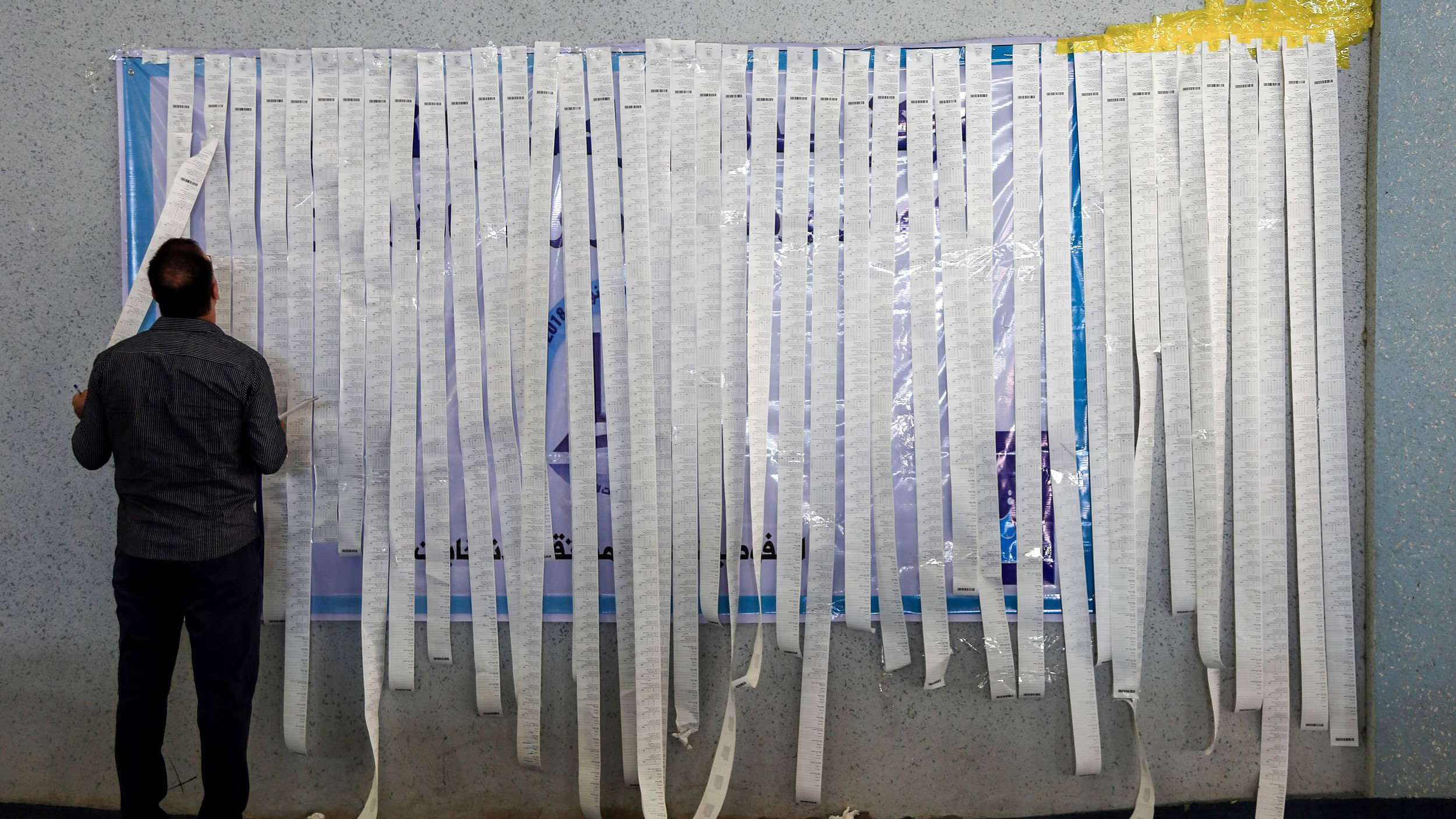
An Iraqi electoral commission employee examines electronic counting machine print-outs in the central holy city of Najaf, May 13, 2018. /VCG Photo
An Iraqi electoral commission employee examines electronic counting machine print-outs in the central holy city of Najaf, May 13, 2018. /VCG Photo
He was followed by Amiri with more than 1.2 million votes, translating into around 47 seats, and Abadi with more than 1 million votes and about 42 seats. Former Prime Minister Nuri al-Maliki, a close ally of Iran like Amiri, came in fourth with around 25 seats.
Turnout was 44.52 percent with 92 percent of votes counted, the Independent High Electoral Commission said, the lowest participation rate in Iraq's post-Saddam history. The remaining uncounted ballots are not expected to significantly change the outcome.
Who is Moqtada al-Sadr?
Sadr is an opponent of both the US and Iran, which have wielded influence in Iraq since a US-led invasion toppled Sunni dictator Saddam Hussein in 2003 and thrust the Shia majority into power.
The cleric has led two uprisings against US forces in Iraq and is one of the few Shia leaders to distance himself from Iran.
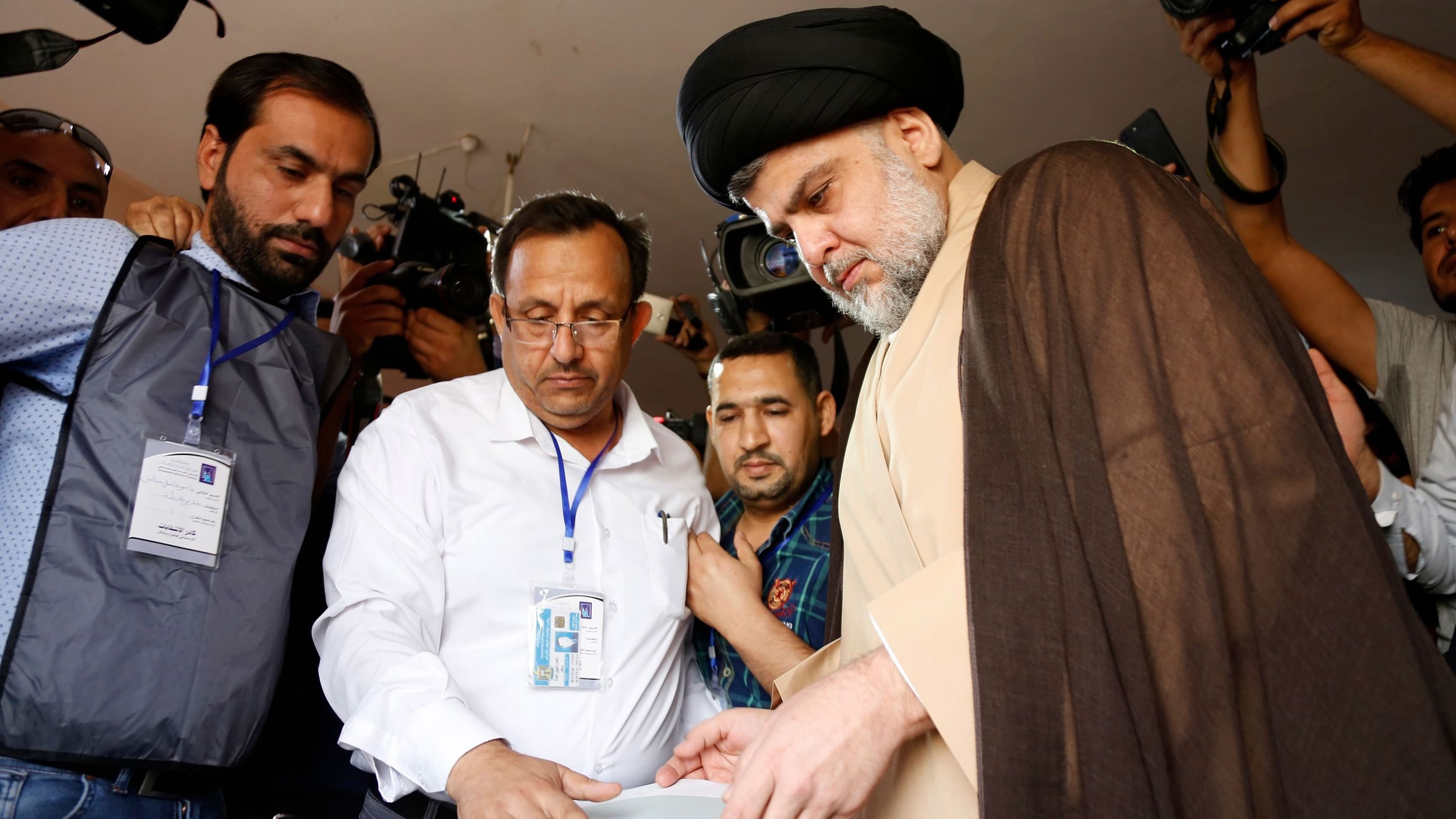
Iraqi cleric Moqtada al-Sadr (C-R) puts his ballot through an electronic counting machine into a ballot box at a polling station in the central holy city of Najaf, May 12, 2018. /VCG Photo
Iraqi cleric Moqtada al-Sadr (C-R) puts his ballot through an electronic counting machine into a ballot box at a polling station in the central holy city of Najaf, May 12, 2018. /VCG Photo
Projecting himself as an Iraqi nationalist, Sadr has a zealous following among the young, poor and dispossessed.
He cannot become prime minister as he did not run in the election, though his apparent victory puts him in a position to pick someone for the job. But even then, his bloc might not necessarily form the next government.
What happens next?
A long period of negotiation over a coalition large enough to form a majority and a prime minister is expected. Any coalition requires at 165 seats in the 329-seat parliament. The government must be formed within 90 days of the official results.
Abadi might still be granted a second term in office by parliament. On Monday he called on all political blocs to respect the results and suggested he was willing to work with Sadr to form a government.
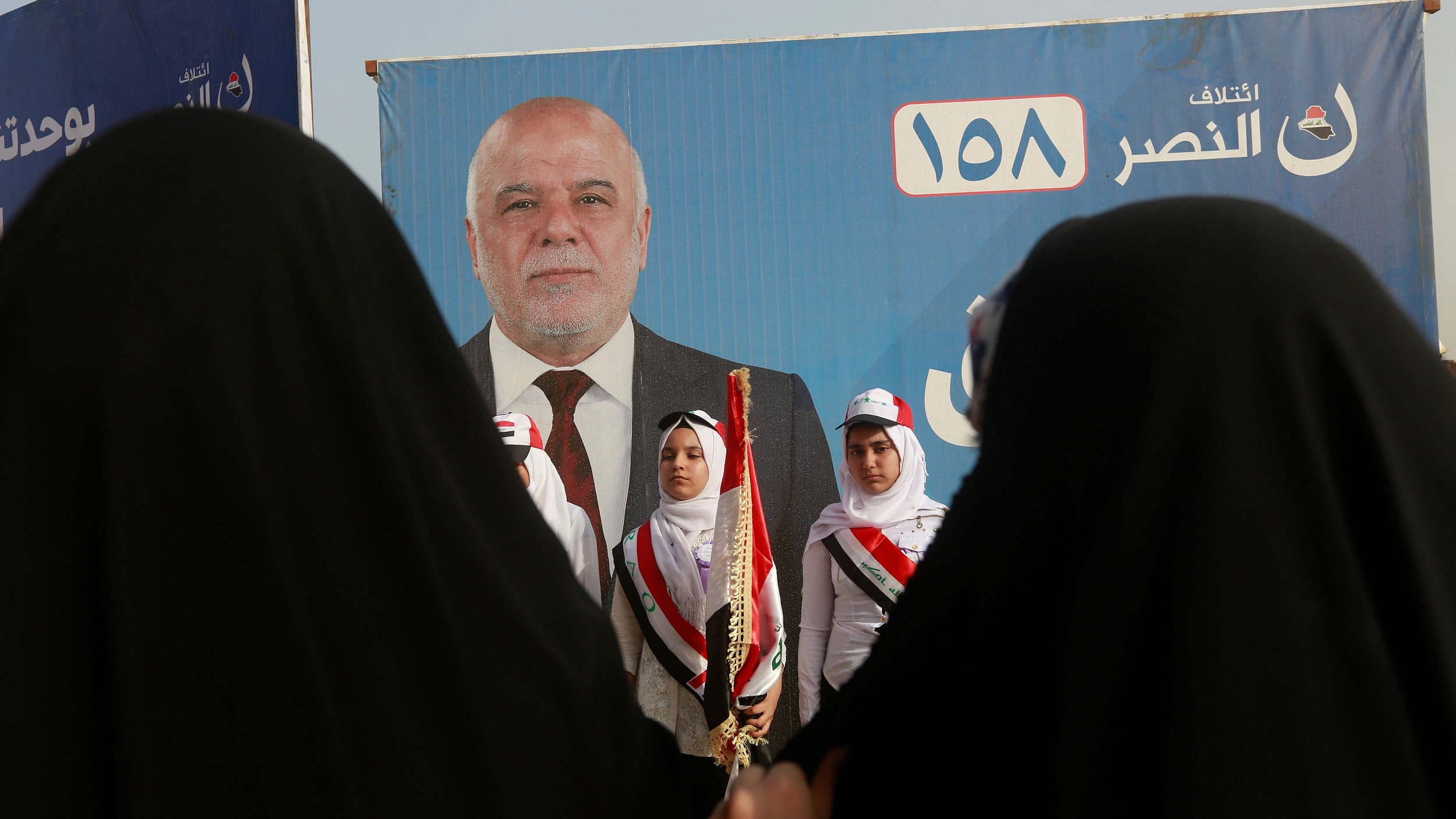
Iraqi Prime Minister Haidar al-Abadi may yet be granted a second term in office. /VCG Photo
Iraqi Prime Minister Haidar al-Abadi may yet be granted a second term in office. /VCG Photo
"We are ready to work and cooperate in forming the strongest government for Iraq, free of corruption," Abadi said in a live televised address. Corruption has been at the top of Sadr's agenda for several years.
During the campaign, frustrated Iraqis of all shades complained about their political elite's systematic patronage, bad governance and corruption, saying they did not receive any benefits of their country's oil wealth.
Winning the largest number of seats does not automatically guarantee that Sadr will be able to hand-pick a prime minister. The other winning blocs would have to agree on the nomination.
Tehran tensions
Celebrations erupted on the streets of Baghdad on Sunday, with thousands of Sadr's supporters singing, chanting, dancing and setting off fireworks while carrying his picture and waving Iraqi flags. Many chanted "Iran out."
Iran has publicly suggested it will not allow Sadr's bloc to govern, however. "We will not allow liberals and communists to govern in Iraq," Ali Akbar Velayati, top adviser to the Islamic Republic's Supreme Leader Ayatollah Ali Khamenei, said in February.
Whoever wins the election will have to contend with the fallout from US President Donald Trump's decision to quit the Iran nuclear deal, a move Iraqis fear could turn their country into a theater of conflict between Washington and Tehran.
They will also face the mammoth task of rebuilding a country left shattered by the battle against ISIL. More than 2 million people remain internally displaced across the country and ISIL – while weakened – still has the capability to launch deadly attacks.
(With inputs from agencies)
6301km