
Animal
11:27, 17-Jun-2018
Study reveals significant change in diet of endangered Cook Inlet belugas
 ["china"]
Share







Copied

A new study shows the critically endangered Cook Inlet white whales have significantly changed their diet from ocean-like prey to more freshwater feeding over the past 50 years.
Researchers from the University of Alaska Fairbanks (UAF) in the northwest US state of Alaska used isotope analysis to identify the food sources for Cook Inlet belugas since the 1950s.
By studying isotope signatures from beluga skulls and growth layers in teeth, the researchers found that the marine mammals seem to have shifted to more freshwater-influenced feeding as their range gradually contracted.
"Figuring out what started to drive belugas toward freshwater environments and away from the marine environments might be key in figuring out why they haven't recovered," said Mark Nelson, the lead author of the study.
Like the legendary Moby Dick, the full-grown beluga whale is snowy white. The species is usually found in seasonally ice-covered waters throughout Arctic and sub-Arctic regions, the one almost exclusive in Cook Inlet is named after the waters.
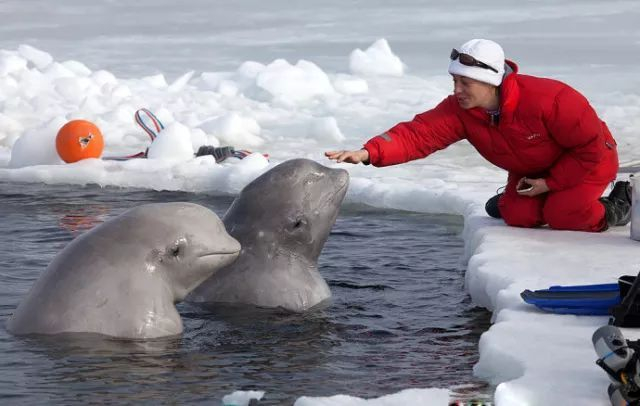
File photo shows two beluga whales in the Arctic region. /Photo via souhu.com
File photo shows two beluga whales in the Arctic region. /Photo via souhu.com
According to Nelson, the white whales are spending more time in the upper reaches of Cook Inlet, and it's showing in their diet.
The findings came after the UAF researchers analyzed samples of 20 beluga skulls at the University of Alaska Museum of the North, along with analysis of tooth growth layers from 26 belugas provided by the museum and the Alaska Department of Fish and Game.
The study presents the first evidence for a long-term change in the feeding ecology of Cook Inlet belugas.
Cook Inlet belugas were listed as endangered under the US Endangered Species Act in 2008, and have a current population of about 340, far below the 1,300 belugas that scientists say swam in the silty water between Anchorage and the Gulf of Alaska as recently as the 1970s.
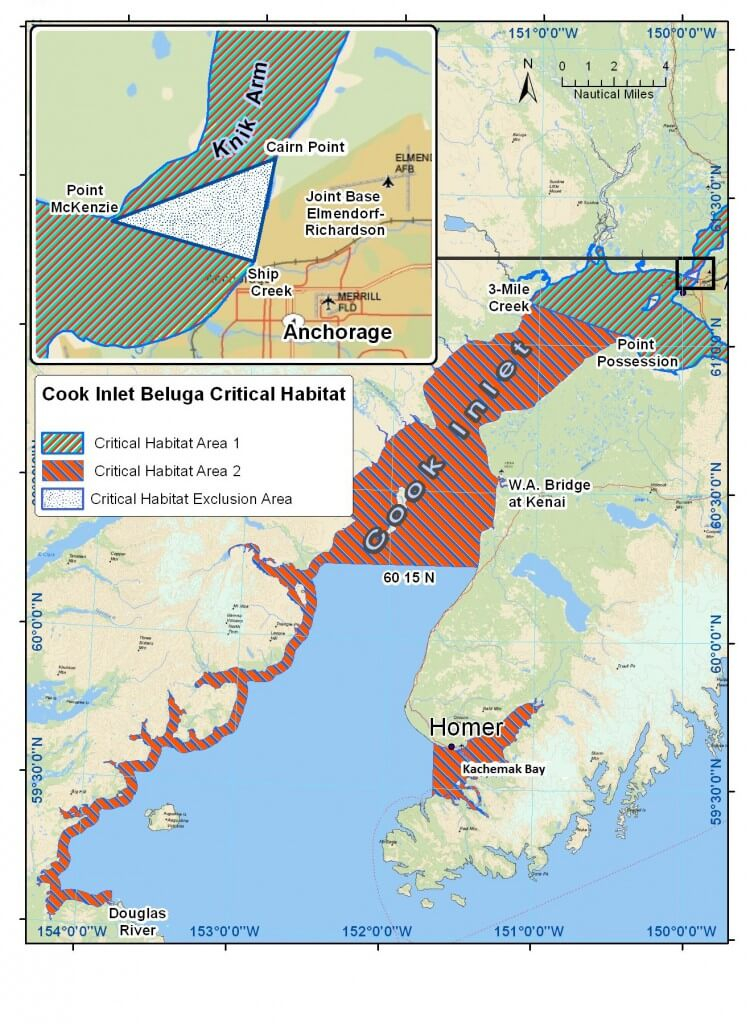
Map of the Cook Inlet beluga whale's critical habitat /Photo courtesy of US National Oceanic and Atmospheric Administration
Map of the Cook Inlet beluga whale's critical habitat /Photo courtesy of US National Oceanic and Atmospheric Administration
"There's been a change in where they're feeding and what they're feeding on," Nelson said, adding that belugas have not only declined in numbers, but also contracted their range.
The results of the study will help in the conservation of the endangered species of white whales in Cook Inlet in the Gulf of Alaska.
(Top image: Belugas in the Arctic /Photo courtesy of US National Oceanic and Atmospheric Administration)
Source(s): Xinhua News Agency