
Eco
21:58, 17-Jun-2018
Sand warrior helps turn deserts into fertile land
 ["china"]
Share







Copied
02:21
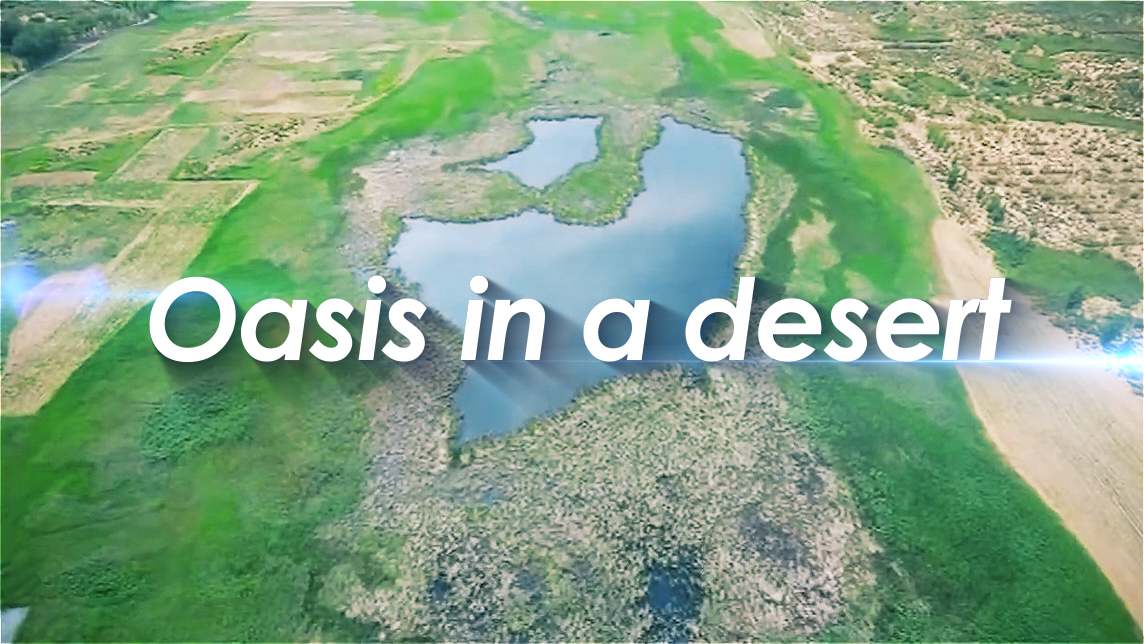
Ten years ago, this place was barren and full of sandstorms.
But now, greenery fills this place, and the deserts are becoming fertile land.
Zhang Yinglong is the head of a shelterbelt in Maowusu Desert of Shenmu, a remote county in Shaanxi Province.
He's in his fifties now, and he's been trying to fix the dunes over the last 12 years.
“It's only with a stable soil condition that vegetation can grow well. You see the grass? It is a good example,” says Zhang Yinglong.
The shelterbelt is located on the Loess Plateau in northern Shaanxi, and desertification is its biggest obstacle.
The area covers more than 20-thousand hectares, with 24 million trees to prevent more sand dunes.
But he believes combating desertification is more than just planting trees.
The quality of life must be taken into consideration for sustainable growth.
“With the gradual improvement of the ecosystem, the return of population is inevitable. Then it's necessary to provide them with enough income through our sand industry,” Zhang Yinglong tells us.
He has persuaded farmers to grow economy-driven crops and plants, and these efforts have started to bear fruit.
The rape flower fields planted last year brought farmers direct earnings of 120-thousand yuan, and drove the local economy up by 400-thousand yuan.
He Peijun, a tourist, says: “I didn't expect to see such beautiful rape flowers. I'm very shocked.”
Officials have also come to realize that achieving both ecological and economic benefits is a mark of development.
Lyu Xuebin is the head of the forestry bureau of Yulin city, Shaanxi Province, “We'll combine desertification prevention with the increase of income for farmers. The income through forestry should be about 30 percent of the entire income of poor households.”
And that will make its way to the family table.
Zhang Yinglong hopes the farm won't become part of the wasteland, and that his efforts will prevent people from relocating away from the grasslands.
And all that might just hold back the harsh desert in the long run.