
Opinions
07:55, 26-May-2018
Opinion: Why Burkina Faso broke up with Taiwan?
 ["china"]
Share







Copied
Editor’s note: Liam Lee is chairperson of China-Africa Correspondent Club and senior international desk correspondent based in Beijing. The article reflects the author's opinion, and not necessarily the views of CGTN.
May 24, the day was doomed to be miserable for the leader of the Taiwan authorities Tsai Ing-wen, who learnt to promote sales of lychee via social media in the afternoon, while her heart went half cold at a news from the Reuters in the evening.
Burkina Faso, one of the last two African countries having so-called "diplomatic relations" with Taiwan, declared to sever ties with Taiwan. Tsai Ing-wen put the blame on the mainland across the strait at an emergency meeting at night, but didn’t think about at all the reasons why African countries were willing to come closer to Beijing.
In Tsai Ing-wen’s opinion, “ Monetary Aid ” represents the reason for defeat of Taiwan in competition with Beijing. What is unknown to Tsai is that the cooperation between China and African countries has long been concluded as “it is better to teach them to fish than to give them fish”.
Taking Burkina Faso as an example, the land-locked country faces nothing but two problems, they are terrorists’ menace and the weak and incompetent economy. And crop and cotton growing techniques play a key role in solving the second problem.
It is better to say the diplomatic strategies of Taiwan authorities rather than the economic power of Beijing are responsible for what the Taiwan authorities wishfully attributes to the shrinking of it’s international place. Never had Beijing output values amid her exchanges and cooperation with other countries and regions, especially with African countries. And in recent years, Beijing has been making humanity, friendship and mutual respect a guideline for its action.
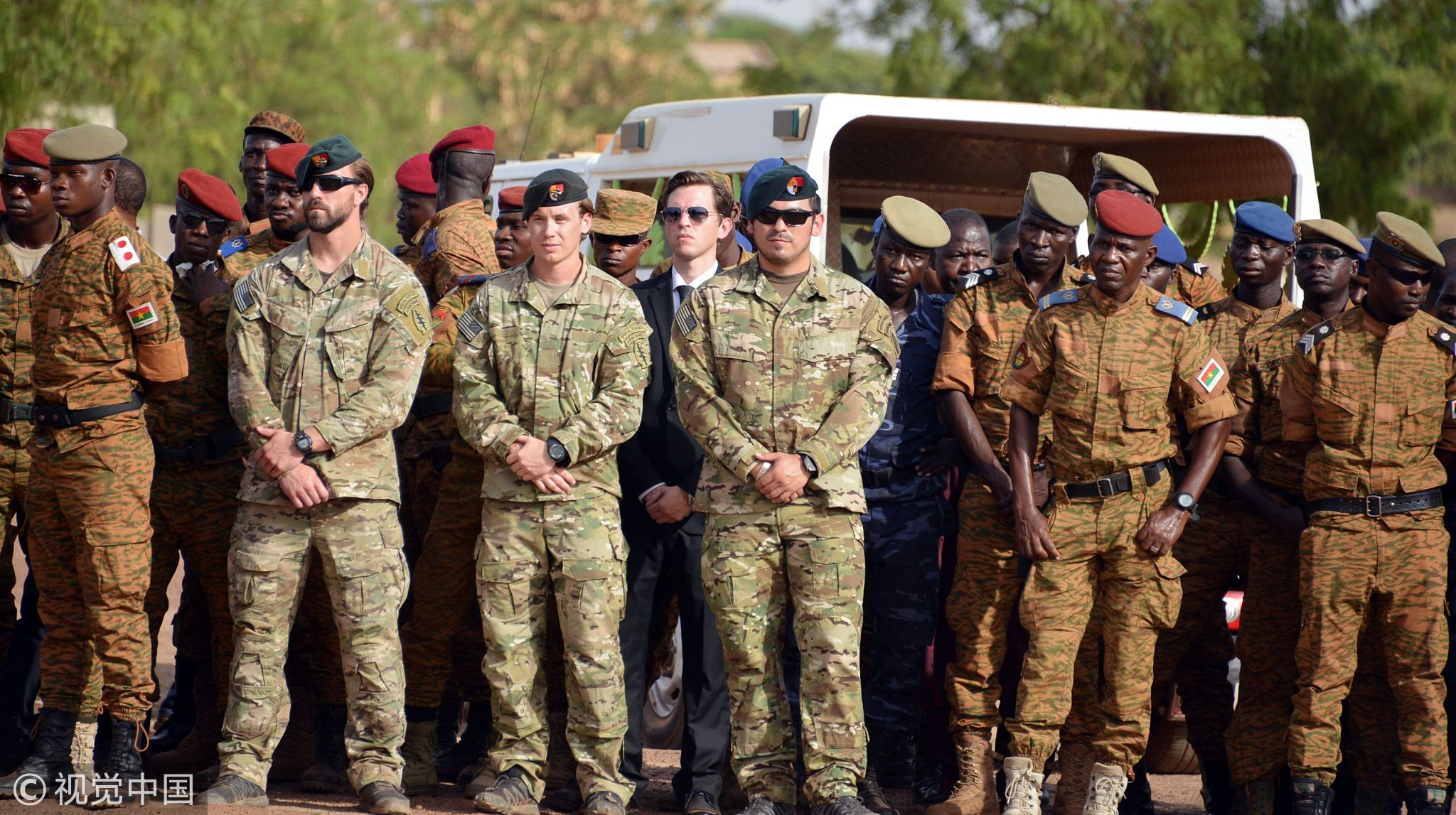
A Burkina Faso's military and foreign military stand guard, May 24, 2018, in Ouagadougou. /VCG Photo
A Burkina Faso's military and foreign military stand guard, May 24, 2018, in Ouagadougou. /VCG Photo
Burkina Faso as an example again, the country hadn’t established diplomatic ties with China for a long time before, but China still helped the former in different international situations.
At the Ninth Ministerial Conference of the WTO held at Bali Island of Indonesia in 2013, I witnessed the strengthening of Chinese’s support to four African cotton countries (including the Republic of Benin, Burkina Faso, the Republic of Chad and the Republic of Mali).
China has gained a lot of experiences from the cooperation in the fields of agriculture with countries which had long friendships with Beijing and with countries that newly built diplomatic ties with China.
In the Republic of Malawi, another extremely underdeveloped country in Africa, one Chinese company established a profitable commercial circle with local agricultural cooperatives with only 30,000 US dollars of investment.
Furthermore, China has built grain breeding laboratories in many countries and sent agricultural expert panels there. All these experiences could be introduced to Burkina Faso as well, and it can be described as spending minimum money but fulfilling maximum goals.
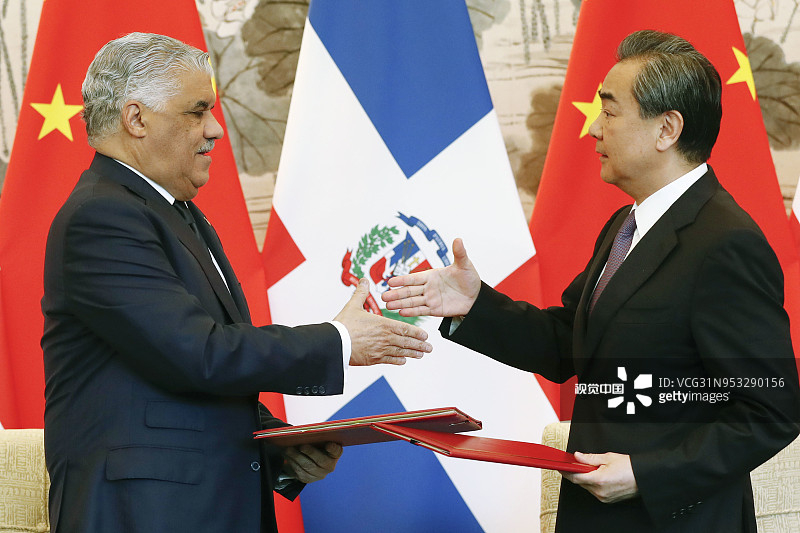
Dominican Republic Foreign Minister Miguel Vargas (L) and Chinese State Councilor and Foreign Minister Wang Yi shake hands at a ceremony in Beijing, May 1, 2018, to announce the establishment of diplomatic relations. /VCG Photo
Dominican Republic Foreign Minister Miguel Vargas (L) and Chinese State Councilor and Foreign Minister Wang Yi shake hands at a ceremony in Beijing, May 1, 2018, to announce the establishment of diplomatic relations. /VCG Photo
As for security, Burkina Faso has more reasons to cooperate with China, and many Chinese smart city and security equipment companies have planed to go to Africa. As far as I know, Chinese companies play a role in building a peaceful Southern Africa.
Of course, the security cooperation that I referred to means to prevent the terrorist’s menace in the comparatively safe stable social situation. Comparing with Burkina Faso, some neighboring countries like Mali even lacks basic security. Only a safe and stable situation will gaurantee development.
Fifty years ago, people in Burkina Faso and in the Republic of Burundi had almost the same income per capita. But today, the income of people that have long been tortured by war in the Republic of Burundi only accounts for 40 percent of that of Burkina Faso people.
Lu Kang, the spokesman for the Ministry of Foreign Affairs of China, said the China-Africa comprehensive strategic partnership keeps a good momentum. And it is believed that the Beijing Summit of the forum on China-Africa cooperation in September in Beijing will set off a new upsurge in China-Africa friendly cooperation.
In recent years, countries like the Republic of Gambia, the Democratic Republic of Sao Tome and Principe have realized the normalization of diplomatic relations with China one after another, embracing the big family a China-Africa cooperation.
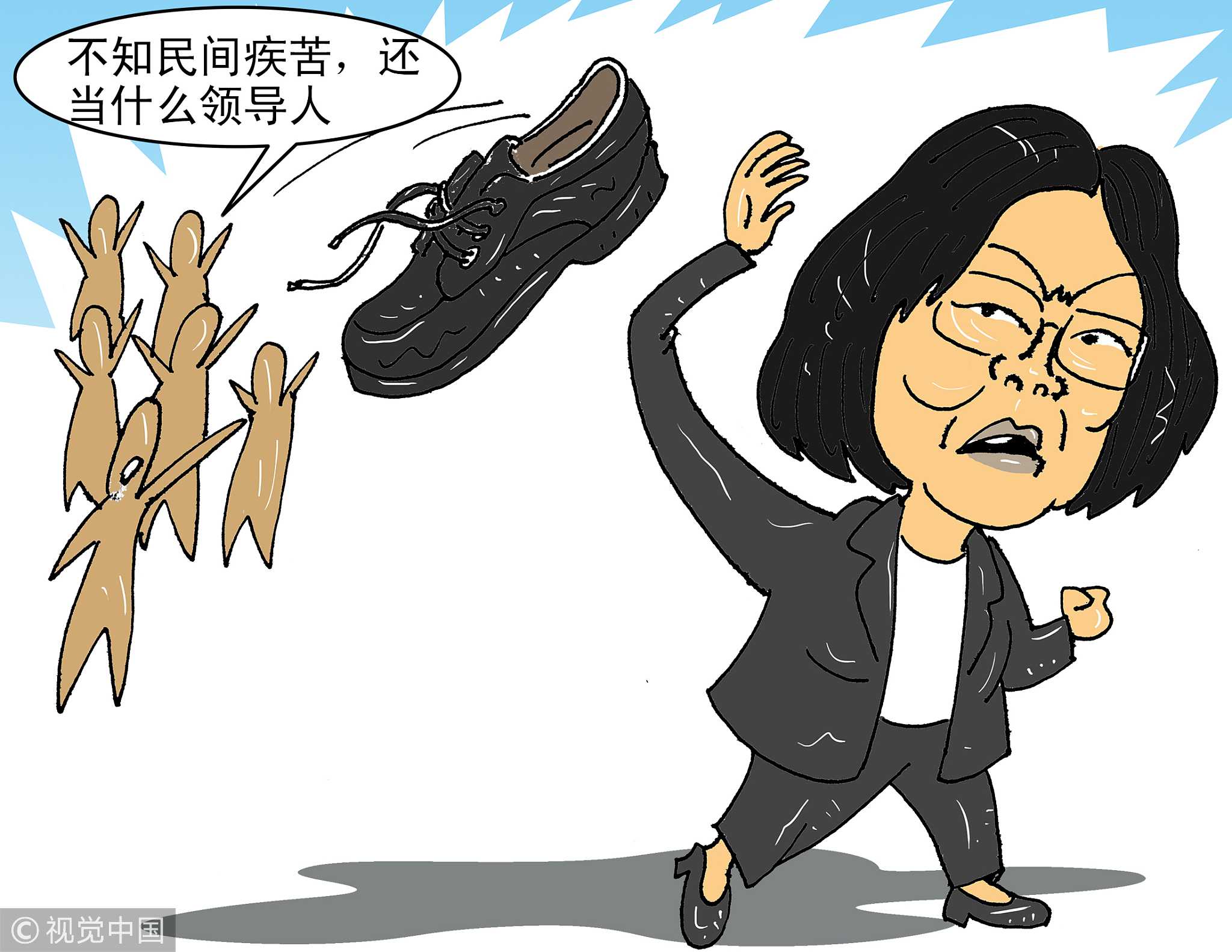
A cartoon depicting Tsai Ing-wen, criticizing her not caring people. /VCG Photo
A cartoon depicting Tsai Ing-wen, criticizing her not caring people. /VCG Photo
This fully shows that the "One-China principle" is the shared hope of all people and it is also an inevitable trend. “We welcome Burkina Faso to join the big family of Chinese-Africa friendly cooperation as early as possible on the basis of ‘One China principle’".
According to my experiences of shuttling between Beijing and Africa over the last several years, what Lu Kang said really points out the truth. And for Tsai Ing-wen, my suggestion is to open the air route from Taiwan to Africa and encourage Taiwan people to start business and to live there as Chinese companies and young people did. Only then Tsai Ing-wen will have the say.