
Tech & Sci
22:50, 26-Apr-2018
GMIC Beijing attracts AI-themed products
 ["china"]
Share







Copied
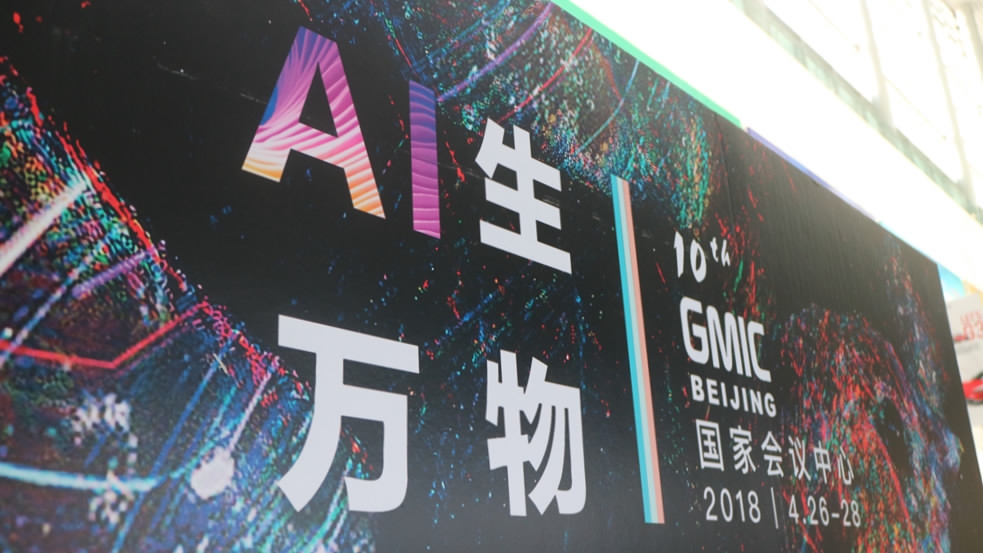
The Global Mobile Internet Conference kicked off in Beijing on Thursday, underlining the trend of artificial intelligence (AI) has been shifting from things like home robots and smart speakers to something more necessary for daily lives, such as autonomous vehicles, food printer and gadget for public security.
Mobile executives, entrepreneurs, developers, and investors from around the globe gathered for the three-day event to discuss hot topics in the tech world.
Organized by the Great Wall Club (GWC), this year marks the 10th anniversary of GMIC Beijing. With the theme “AI Genesis”, more than 200 companies appeared in the exhibition area and demonstrated their latest technology.
Highlights from the exhibition area
- Huawei Honor 10
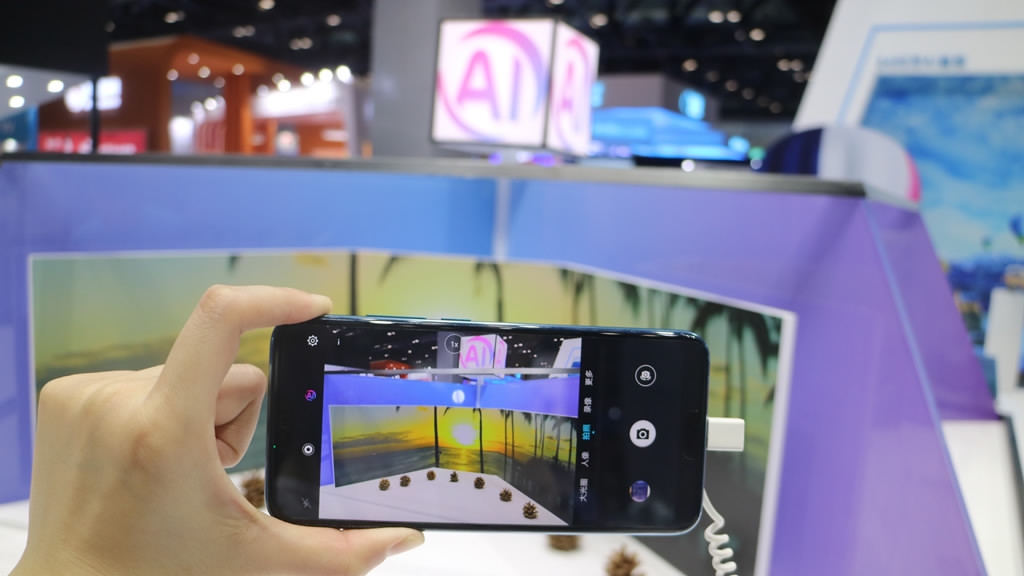
Huawei Honor 10 features AI camera. /CGTN Photo
Huawei Honor 10 features AI camera. /CGTN Photo
Echoing the theme of this year’s GMIC Beijing, Huawei exhibits their latest Honor series – Honor 10, featuring its AI camera. With the intelligent photography algorithms, the Honor 10 can identify 13 different types of scenes and objects.
It automatically adjusts your camera settings to help you shoot like an expert. The other shining function is the AI-powered Portrait mode, which can deliver sharp portrait edges and more accuracy in background blurring.
- Xpeng electric vehicle
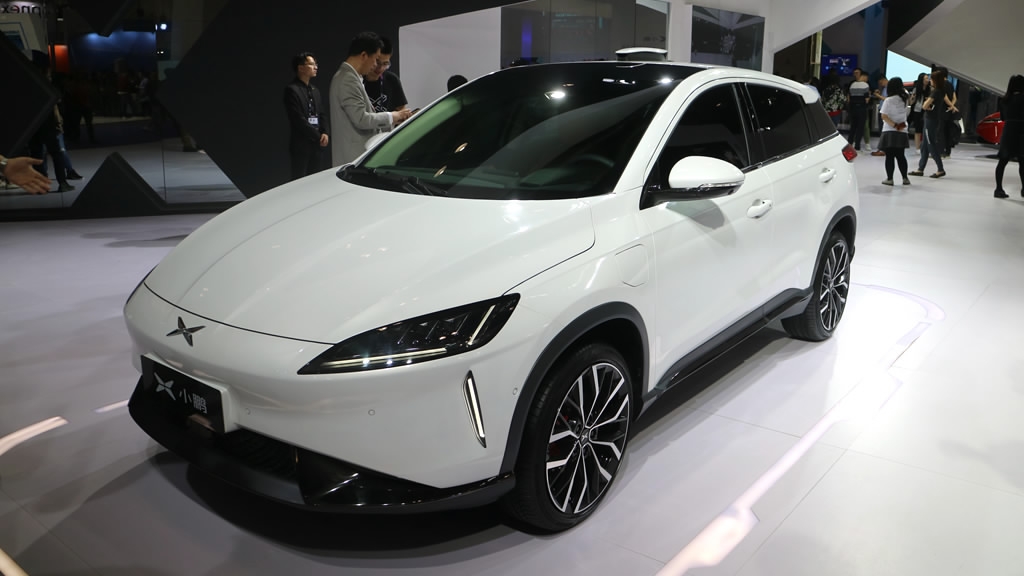
Electric SUV G3 from Xpeng. /CGTN Photo
Electric SUV G3 from Xpeng. /CGTN Photo
Chinese startup Xpeng, an Internet electric car company committed to making future vehicles for the young generation, displays its hottest model – G3 at the exhibition.
The G3 features a panorama cabin, as well as a roof-mounted camera that provides a view with an unobstructed field of vision. Right now the vehicle can handle some parking situations entirely on its own with the current technology, which means a lot for the new drivers.
- Shiyin 3D chocolate printer
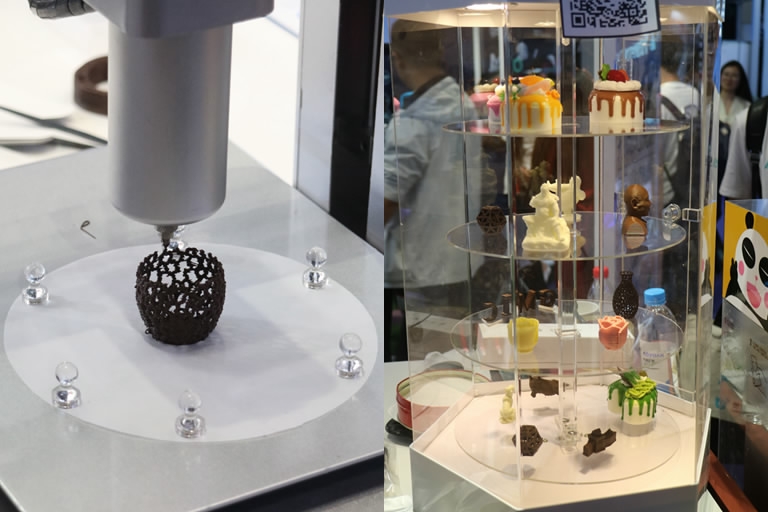
The 3D chocolate printer of Shiyin (L) and printed desserts (R). /CGTN Photo
The 3D chocolate printer of Shiyin (L) and printed desserts (R). /CGTN Photo
One of the most crowded spots in the exhibition area was the booth Shiyin, which demonstrates 3D chocolate printers. By scanning the QR code and drawing the things you want to print on your smartphone, a piece unique looking chocolate could be printed out in 3 to 5 minutes.
The device uses the principles of rapid prototyping to layer molten chocolate, rather than plastic.
- LLvision smart glasses
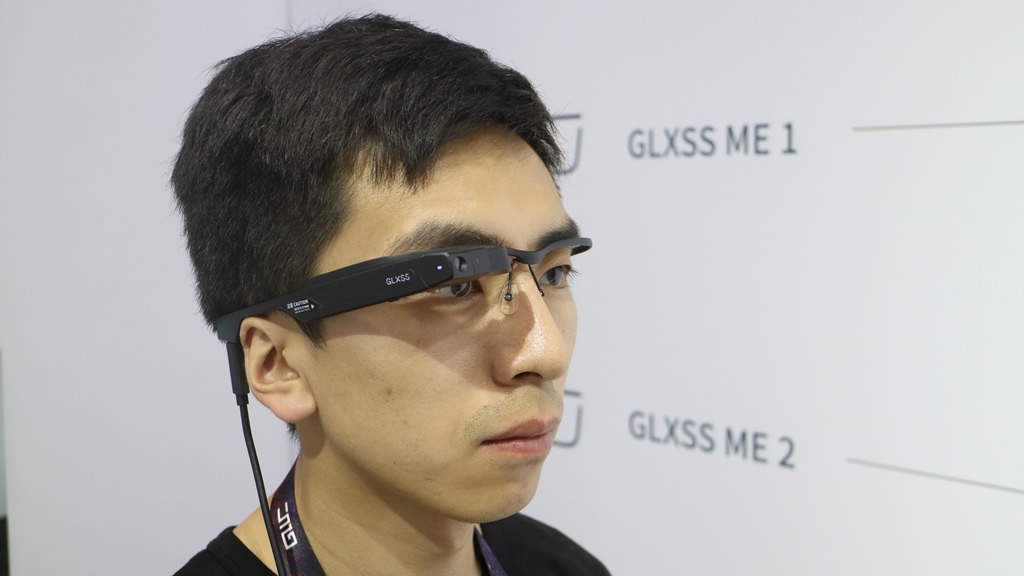
LLvision staff demonstrates smart galsses. /CGTN Photo
LLvision staff demonstrates smart galsses. /CGTN Photo
Remember the facial recognition glasses wore security personnel at Zhengzhou East Railway Station during the Chinese Spring Festival rush?
Using technology from LLvision, police officers read passengers' information at one glance by matching faces captured by the accessory’s scanner with existing profile photos stored in a database. Outlaws on the run and suspected criminals using fake IDs would be immediately identified.
So far, the AI glasses have identified seven fugitives involved in crimes including trafficking and hit-and-run accidents. Twenty-six people suspected of holding fake IDs were also spotted.
China aims to build leading AI industry by 2030
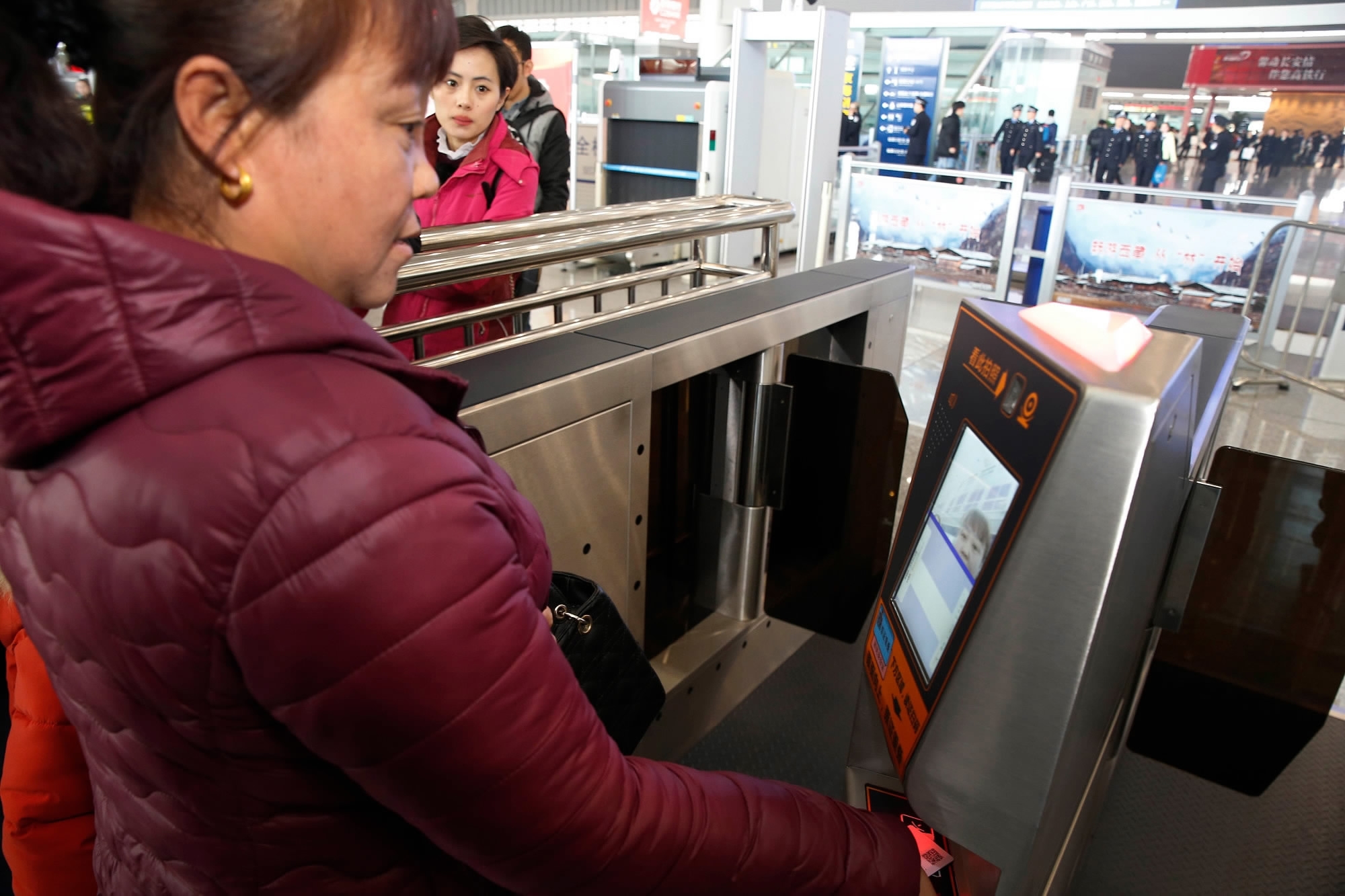
Passengers board train by facial recognition rather than ticket or ID. /CFP Photo
Passengers board train by facial recognition rather than ticket or ID. /CFP Photo
AI has been gaining momentum in China. Last July, the country unveiled its plan to build an AI technologically world-leading domestic industry by 2030.
In the first stage, domestic companies and research facilities are expected to be at the same level as leading countries like the US by 2020, when it could foster more national professional talents and companies for global AI development.
Five years later, the AI technology is tasked to become “a key impetus for economic transformation” in China. In the final stage, the country is expected to be the world’s premier AI innovation center by 2030.
11km