
China
11:25, 02-Jul-2018
Wanted dead or alive: China’s popular mitten crab delicacy is an invasive species in the US
Updated
11:08, 05-Jul-2018
 ["china"]
Share







Copied
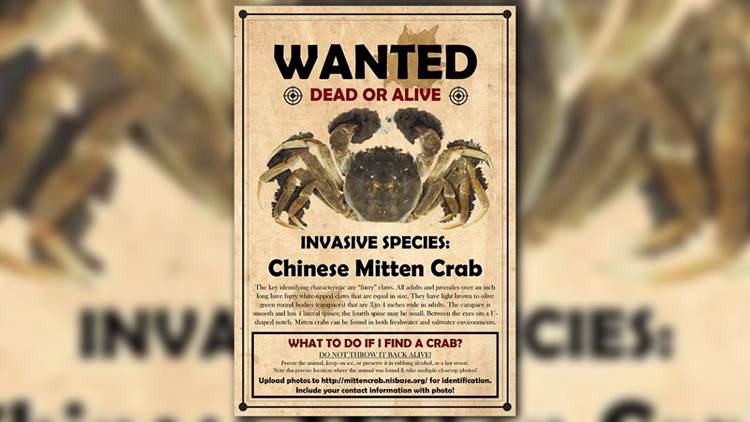
Many Chinese people were astonished to found that their traditional delicacy, the Chinese mitten crab, was “wanted dead or alive” as an invasive species by a local public works department in the US.
The Anne Arundel County Department of Public Works in Maryland put forward through social network on June 25 an “order for hunt” of the Chinese mitten crab as a threat to the local environment and fishing population.
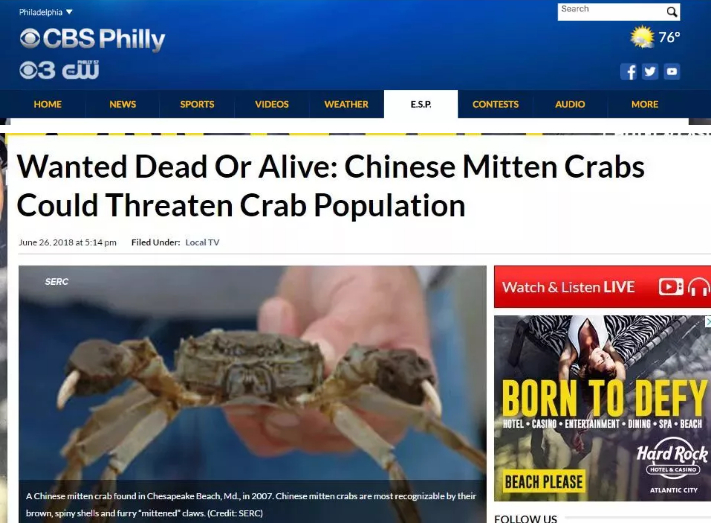
Screenshot
Screenshot
The post gave a detailed description of the crab, including its length, color, habitats and identifying features of the furry claws and I-shaped notch between the eyes, warning people to “NOT THROW IT BACK ALIVE” when encounter it.
According to the Smithsonian Environmental Research Center, anyone who catches a Chinese mitten crab is suggested to:
1. Do not throw it back alive!
2. Take a close-up photo.
3. Note the precise location where the animal was found. Freeze the animal, keep it on ice, or as a last resort preserve it in rubbing alcohol.
4. Please report a mitten crab by submitting information and photos here or email to SERCMittenCrab@si.edu.
5. For other questions, you can also contact the Mitten Crab Hotline at 443-482-2222.
Chinese mitten crabs are native to East Asia, but began establishing a US population in the 1980s. The first time its claw was confirmed in the Chesapeake Bay near Baltimore, Maryland in 2005. It was considered one of the world’s worst injurious species of wildlife as it can clog water systems, disrupt fishing and destabilize river banks.
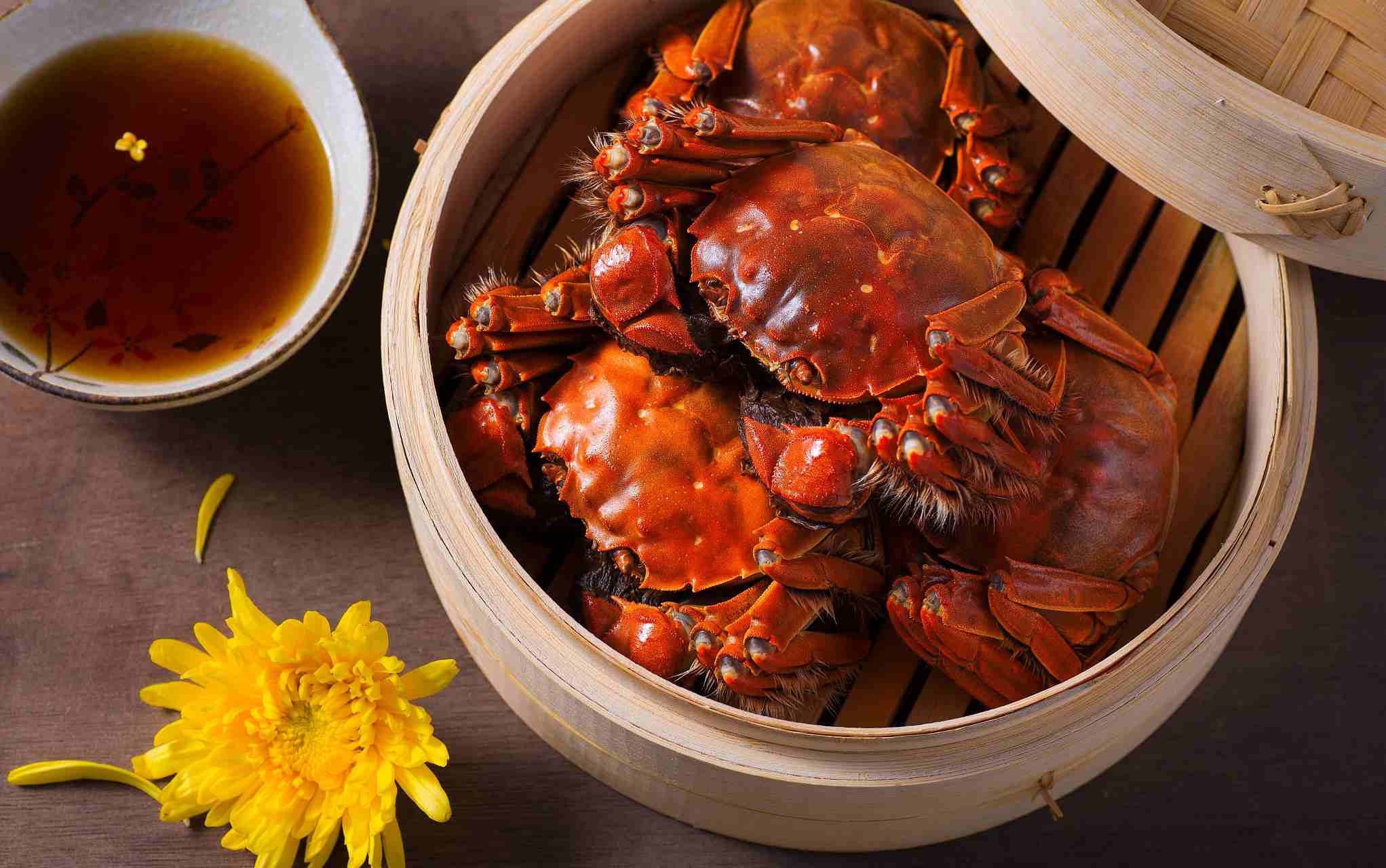
Steamed Chinese mitten crabs. /VCG Photo.
Steamed Chinese mitten crabs. /VCG Photo.
Hearing of the news, many Chinese netizens shared their enthusiasm to help rule out the ecological and economical problems for the local people since the mitten crab is considered a delicacy in Chinese cuisine. They are especially popular in the autumn, when the mitten crabs come into season and can cost as much as 100 US dollars per kilogram.

Screenshot on Weibo
Screenshot on Weibo
But the hope of Chinese foodies may be dashed. As environmentalist Kristen Minogue at SERC warns, people should be cautious about eating the crab, since these may have heavy metals in their system and contain contaminants that are noxious to a person's health.
In addition, under the US lacey Act, it is illegal to import, export, sell, acquire, purchase or conduct interstate commerce of Chinese mitten crabs without a permit.