
Opinions
22:55, 01-May-2018
Analysis: What are the messages behind Trump's tariff delay?
 ["china"]
Share







Copied
04:32
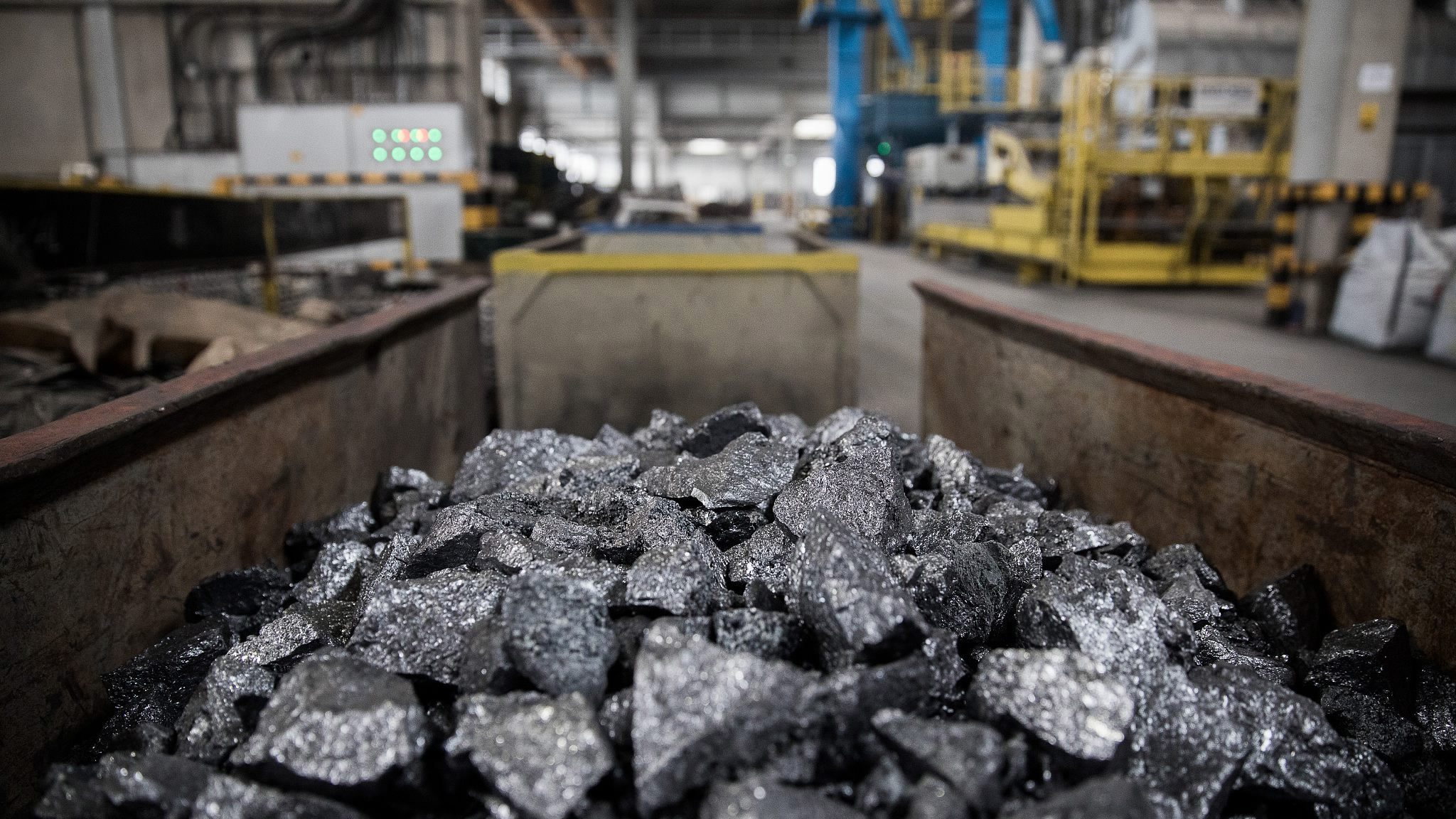
The European Commission said Tuesday that the US had merely prolonged "market uncertainty" by its decision to hold off on imposing controversial tariffs on steel and aluminum from the EU, Canada and Mexico.
This came after a statement late Monday night that President Donald Trump would delay imposing steel and aluminum tariffs on the European Union, Mexico and Canada until June 1 as he finalized deals with them.
John Gong, a professor from the University of International Business and Economics, spoke to CGTN about the messages of the delay and the possibility of more trade spats between the US and the EU.
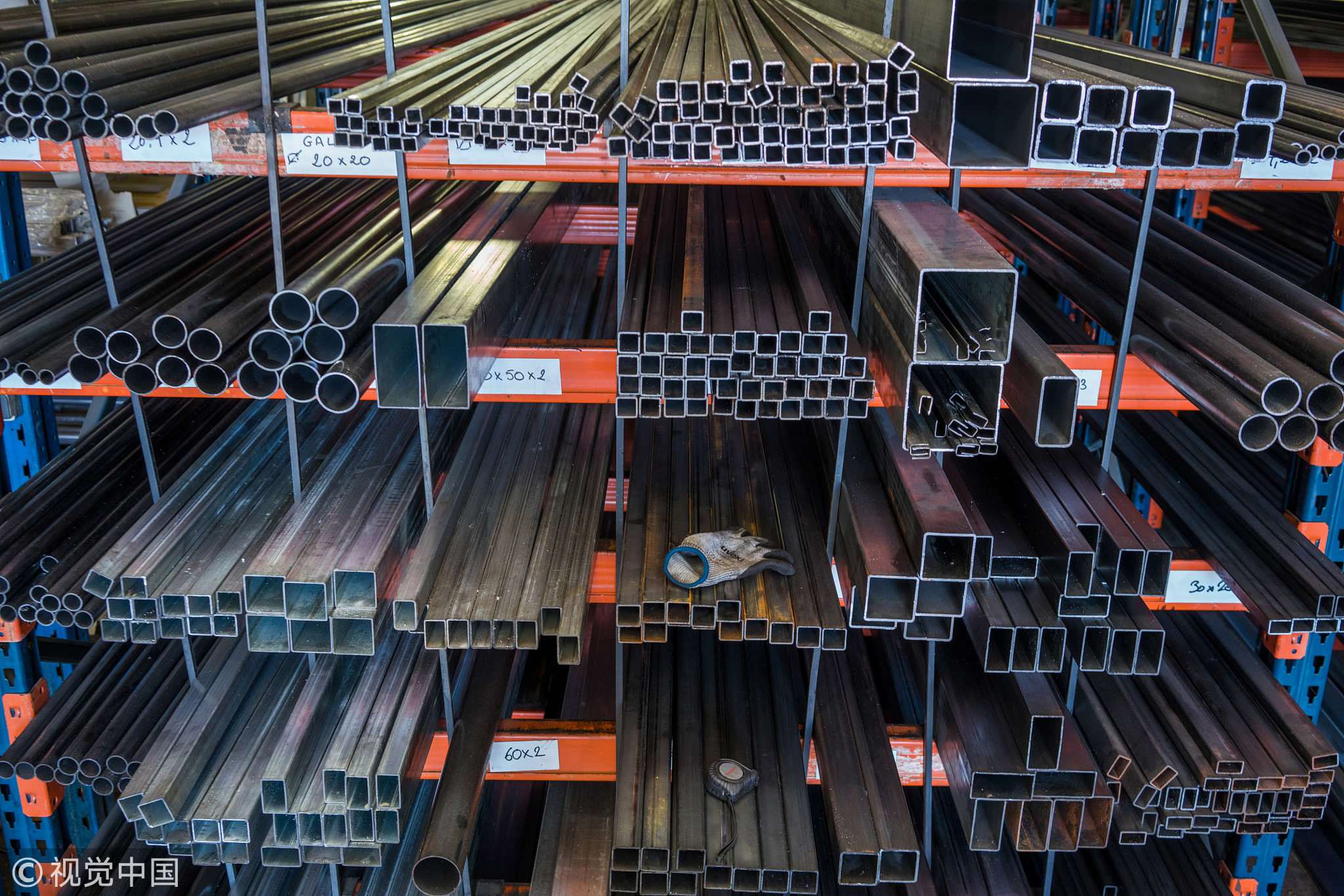
Lengths of steel tube sit in a rack before cutting at LeMetal SARL wholesale storage warehouse in Aubagne, France, March 26, 2018. /VCG Photo
Lengths of steel tube sit in a rack before cutting at LeMetal SARL wholesale storage warehouse in Aubagne, France, March 26, 2018. /VCG Photo
Asked about steel and aluminum exports to the US in the overall trade picture with the EU, John noted the steel and aluminum trade was actually not a large part of the trade between two sides but crucially is "a matter of principle".
"This is supine because the European Union is based on steel and coal in the very beginning."
The EU steadfastly rejects Section 232, according to John, which was based on a national security argument and was treated as a unilateral safeguard measure.
"If this case goes to the WTO – both the European Union and China jointly filing this case with the WTO – the US has not a chance of winning the case."
Therefore, Washington's statement is "a very weak argument": Donald Trump is using this as a negotiation chip to solve the trade problems with European countries based on a unilateral approach, John added.
Given the US's loss in the WTO about the case, John said if the US could not make use of WTO rules, then it should be pushed aside.
"The countries, including China and the European Union, are going to band together and defend the important multilateral system," John noted. "For instance, the US is blocking the nomination of some the WTO panel members and it is a clear attempt to thwart the WTO's role in governing international trade from global perspective."
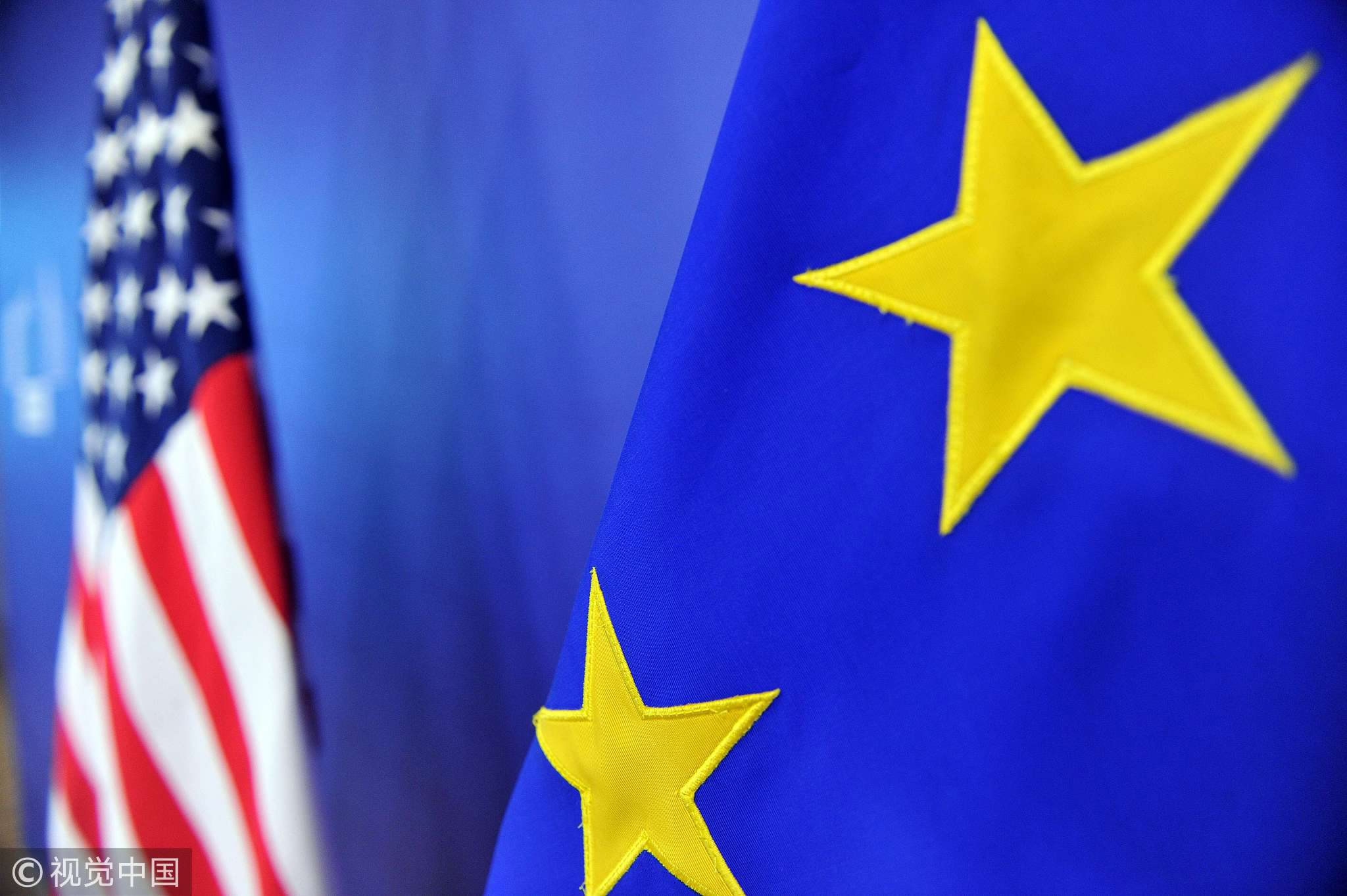
The European Union and the US flags are seen at the EU Headquarters in Brussels. /VCG Photo
The European Union and the US flags are seen at the EU Headquarters in Brussels. /VCG Photo
Responding to whether the delay is a result of Macron and Merkel's meetings last week with Trump, John said no because "Macron and Merkel's negotiation with Trump didn't generate many results".
As a bargaining chip, according to John, Trump would "extend again by the time we reach June 1".
As for the possibility of more trade spats between the US and the EU, John said it's "highly unlikely at this point" for "it's already on hot water" in terms of the current political atmosphere in Washington.
"Donald Trump is not going to introduce additional trade friction with his most important allies – probably not in the near future."
Also, John noted that, currently, Donald Trump's focus was China. "This is the most important initiative, he is sending almost all his trade advisers to China this week."
John added that US politicians and experts have been advising Trump to come up with an alliance based on "constructive computation" approach with China.