
Opinions
10:16, 20-Sep-2018
Opinion: Turkey-Russia buffer zone is the start of a new chequers game in Syria
Updated
09:18, 23-Sep-2018
 ["china"]
Share







Copied
Editor's note: Martin Jay is an award-winning journalist based in Beirut, his career as a foreign correspondent includes working for several major international media. The article reflects the author's opinion, and not necessarily the views of CGTN.
The most prominent point about the latest peace efforts in Syria is not about who was at the table, but more about who wasn't; the West didn't even get a look in.
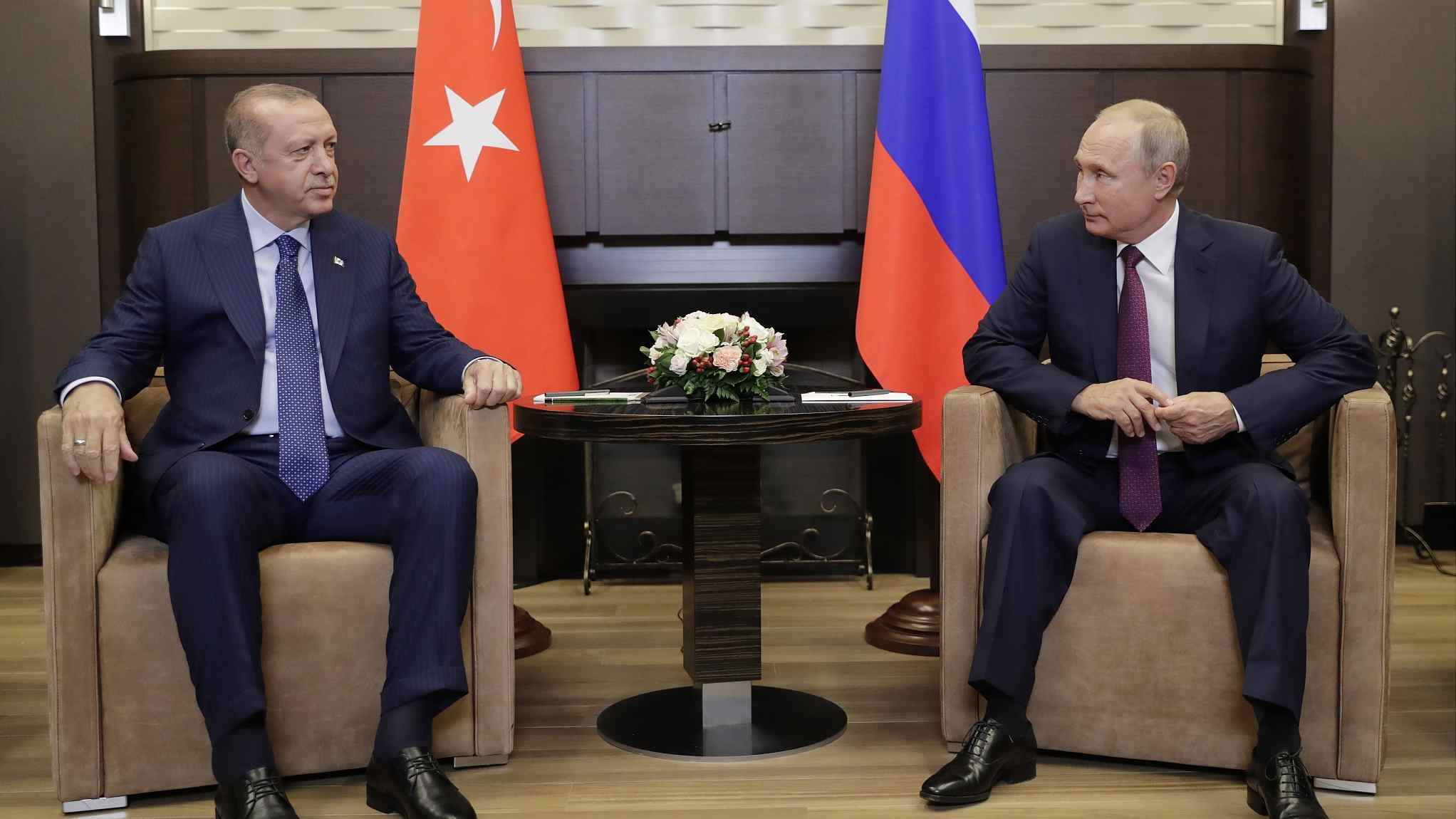
This latest initiative by Russia and Turkey, to prevent a bloodbath in Idlib region and a fresh exodus of refugees heading to Turkey, shows that the relationship between these two regional powers is developing and both have vested interests in each other's' stability.
Despite having entirely opposing relationships with the Assad government, the two countries are proving that the old Arab adage of "my friend's enemy is my enemy" is both outdated and unworkable in what is an increasingly complicated chequers game in the Syrian War.
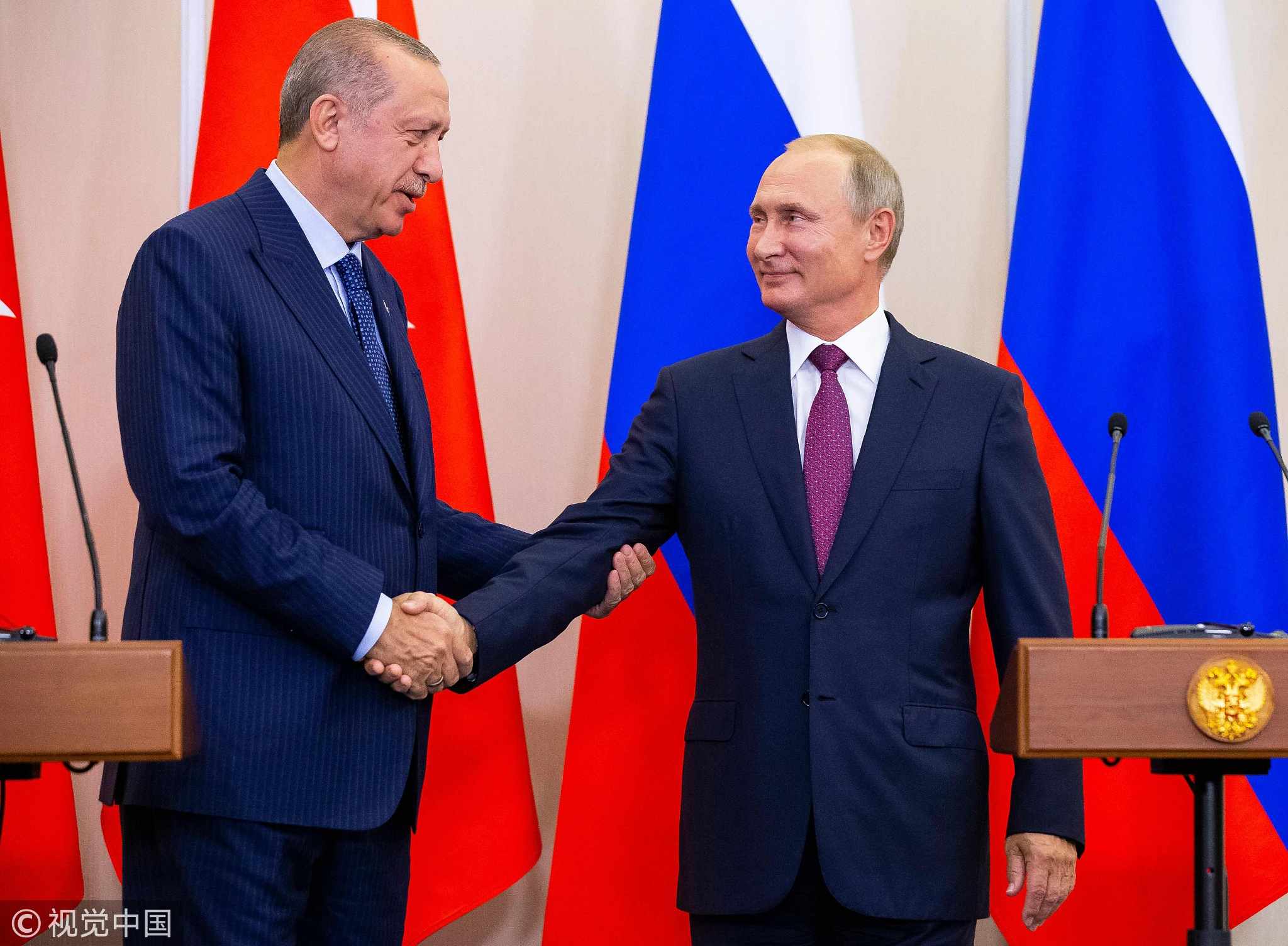
Russian President Vladimir Putin (R) shakes hands with Turkish President Recep Tayyip Erdogan after their joint press conference following bilateral talks in Sochi, Russia, September 17, 2018. /VCG Photo
Russian President Vladimir Putin (R) shakes hands with Turkish President Recep Tayyip Erdogan after their joint press conference following bilateral talks in Sochi, Russia, September 17, 2018. /VCG Photo
The deal struck is hardly perfect as it contains extremists, rather than routing them out; and already a number of commentators have said that it will be hard to keep given the numbers on the ground who will resist it, as Idlib was a location where many extremists in Syria ended up after losing battles elsewhere in the country.
The definition is also tricky of who are the hardcore extremists and who are mere "jihadists," some of whom have supported Turkey in its battle against Kurdish and Assad forces.
Neither Putin nor Erdogan has explained how they are going to differentiate "radically minded" rebels from other anti-Assad groups. Also, the question of how much of Idlib falls within the zone remains unanswered.
Idlib is controlled by various rebel groups, the most notorious being the Hay'at Tahrir al-Sham (HTS), which is an umbrella group of Islamist factions dominated by the former Nusra Front - an Al-Qaeda affiliate until 2016, which was supported by Israel and the West.
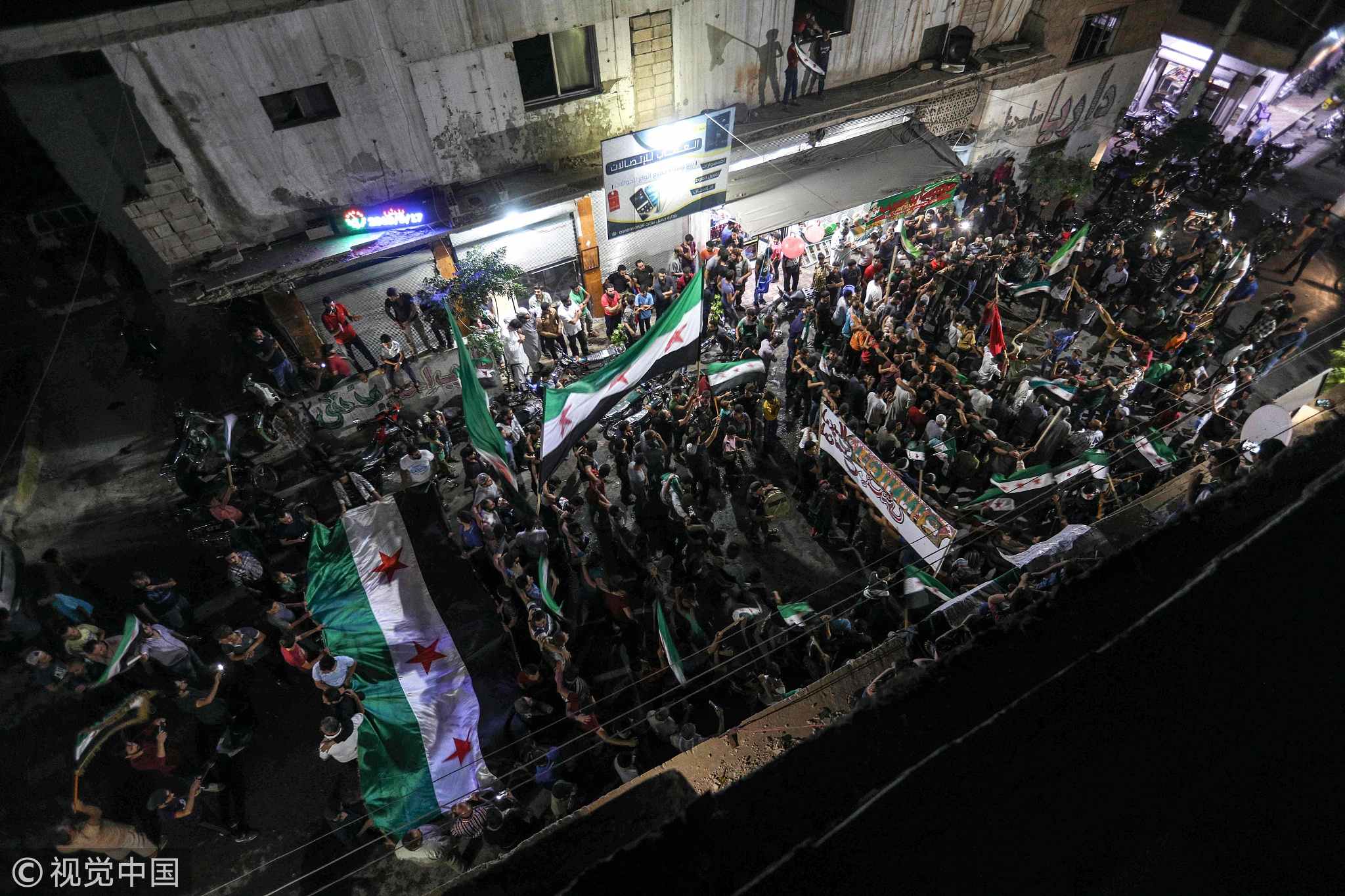
Demonstrators chant slogans and wave flags against the Syrian government, Binnish, Idlib, September 17, 2018. /VCG Photo.
Demonstrators chant slogans and wave flags against the Syrian government, Binnish, Idlib, September 17, 2018. /VCG Photo.
Less complicated are those fighting as the Free Syrian Army (FSA), who are now believed to be on the payroll of Turkey (previously the US) and considered "moderate" fighters.
But we shouldn't celebrate yet what is a positive step by Turkey and Russia. There are trickier negotiations ahead to tackle in the balancing act that Moscow plays with Ankara. Whereas Russia can use its power to keep Iranian forces and Hezbollah out of Idlib, Putin's influence in Israel, now a staunch enemy of Assad, is less clear.
Ironically, while Turkey is also a strong foe of Israel, Russia strives to keep working relations with Netanyahu, even asking Iranian forces in the south of Syria to move further back from the Golan as a token of well-meaning to the Israeli leader who visited Russia in July this year.
After the downing of the Russian IL-20 though, it's unclear how much further this bizarre setup can last, and Turkey will no doubt be watching very carefully to see if the cracks appear as Israel has made it clear that it is prepared to take Russian lives to get noticed and derive the respect it needs from Moscow over the point of Iranian and Hezbollah's nefarious activities in Syria.
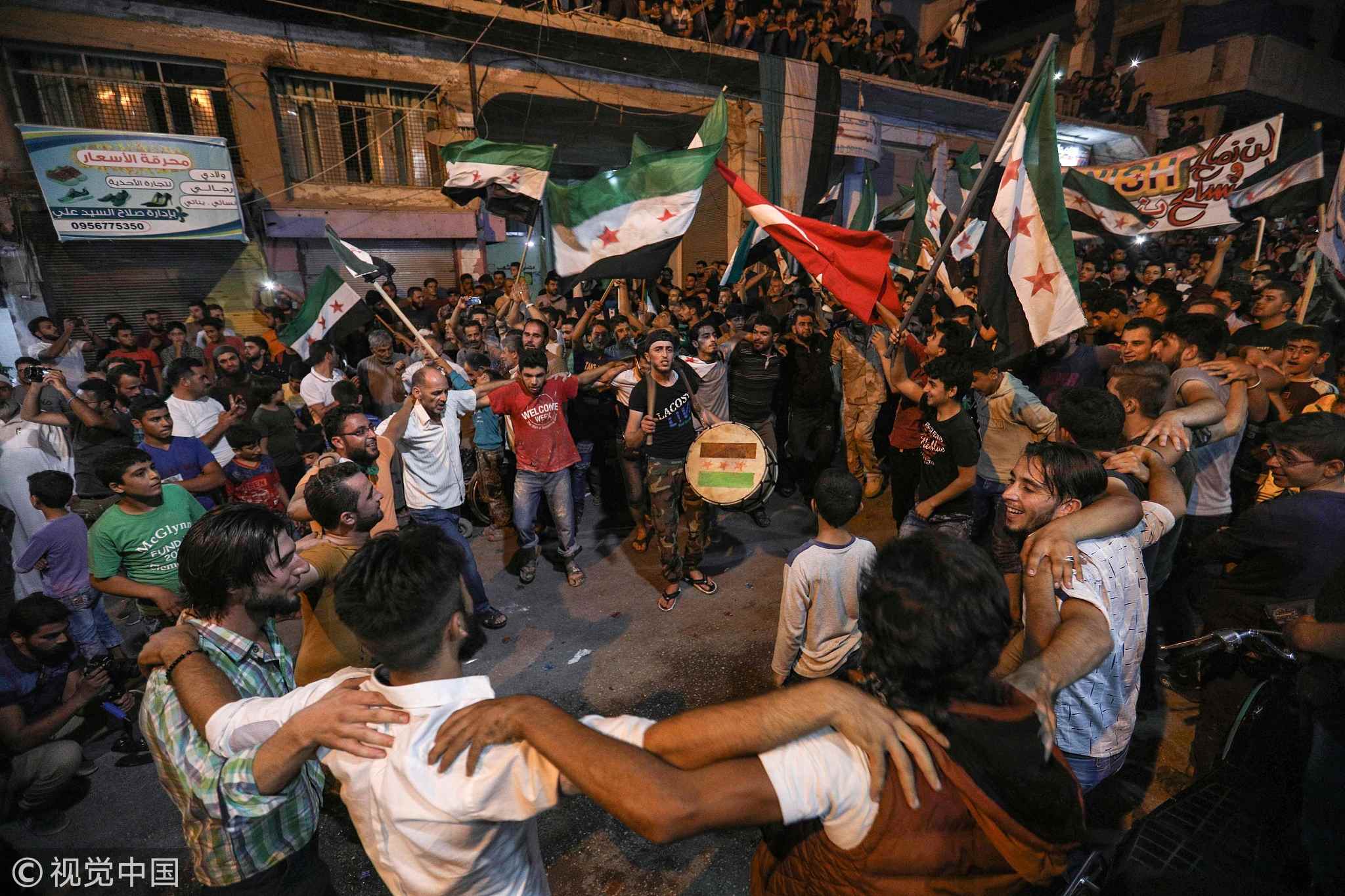
Protesters dance, chant slogans and strike drums against the Syrian government during a demonstration in Binnish, Idlib, September 17, 2018. /VCG Photo.
Protesters dance, chant slogans and strike drums against the Syrian government during a demonstration in Binnish, Idlib, September 17, 2018. /VCG Photo.
The peace initiative in Idlib will certainly irk Israel and the West and we can soon expect Al-Qaeda groups in the region to orchestrate a "fake chemical attack," giving the West an excuse to bomb the Syrian province and disrupt the red line drawn together by Russia and Turkey.
It's sour grapes for the West as it has never gotten over with Assad staying in power, while the US, UK, and France all crave for the opportunity to disrupt his victory, which an Israeli official recently described as "like swallowing a poisonous frog."
Though, the deal struck between Russia and Turkey is a sign that even Erdogan is prepared to work with the Syrian leader during a period where the Syrian army is less engaged in fighting and may well look in other directions and other trophies, perhaps even Golan.
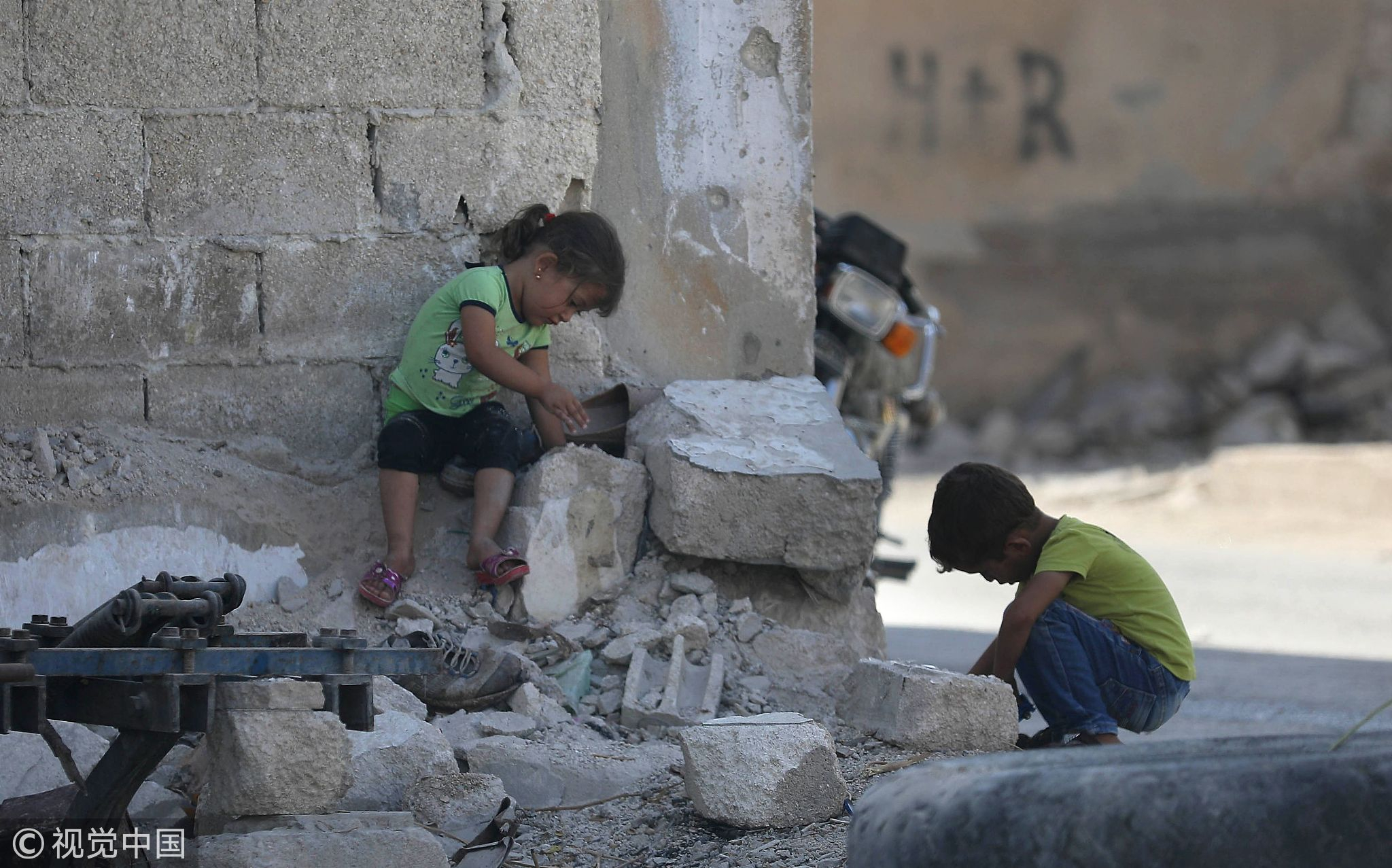
Syrian children play in Morek, a town in the northern countryside of Hama province that links government-held areas to the south and rebel territory in neighboring Idlib province to the north, on September 18, 2018. /VCG Photo.
Syrian children play in Morek, a town in the northern countryside of Hama province that links government-held areas to the south and rebel territory in neighboring Idlib province to the north, on September 18, 2018. /VCG Photo.
If Erdogan, as part of building relations with Russia, now that his own standing with Washington is at an all-time low, can swallow Assad's victory in Syria, then this is an indicator that others should also, for peace in the region.
If Turkey's capricious leader can play a cool hand in Syria and stay loyal to Russia, trade and energy deals - not to mention tourism - will help Turkey as it battles US sanctions.
Erdogan needs to stay cool though and give the Russians the benefit of the doubt in Syria as Putin's own elan in the region is now being tested as he juggles Iran, Syria and Israel relations and comes out on top.
(If you want to contribute and have specific expertise, please contact us at opinions@cgtn.com.)