
Domestic
16:54, 05-Apr-2019
Aging society brings change in attitudes toward elderly care
Updated
19:40, 05-Apr-2019
 ["china"]
Share







Copied
03:02
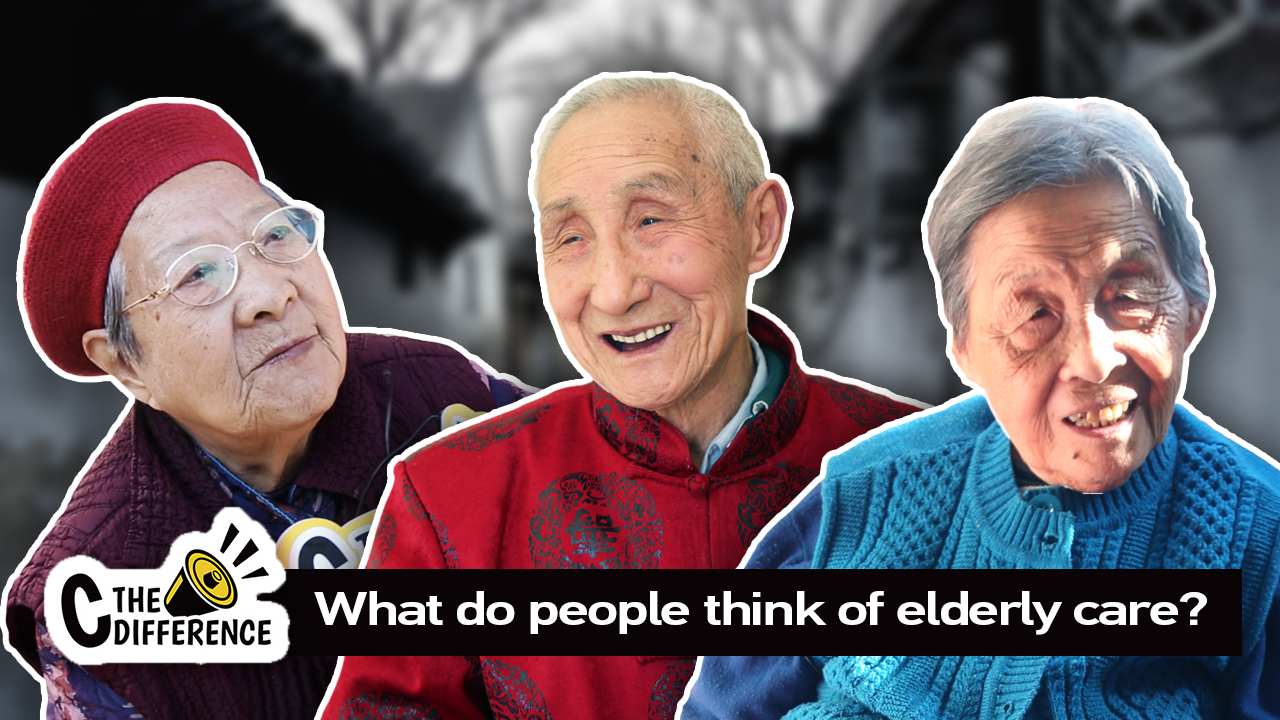
What will happen when you get old? That is a question more ordinary Chinese have found themselves contemplating.
91-year-old Li has made herself a new home in an elderly-care community inside a quadrangle courtyard, tucked away in an old-fashioned Beijing alleyway. She told CGTN that her only son, who lives in coastal Shenzhen in the south, doesn't know she's here.
"He is away. I don't tell him anything," Li said, while sitting outside in the sun with other residents of the care home.
On this early spring day, the courtyard had a rare serenity that contrasted with the city life outside. And the residents were in good spirits.
Xing, 88, has lived here for four years. He commended the care home's staff for keeping the place clean and tidy, and said he is in good health.
"Students at the nearby primary school would come and visit us. It's so great to see them," Xing grinned.
Zhang agrees that she is well taken care of. "He (my son) worried that I would fall or bump into something," said the 83-year-old, who walks with a crutch. "The staff here cook us hot meals that are served on the table. It's good."
The Golden Fall Garden elderly-care home belongs to the local community and is now managed by a private firm specializing in elderly care services. The quadrangle courtyard has been modified to be more friendly to seniors.
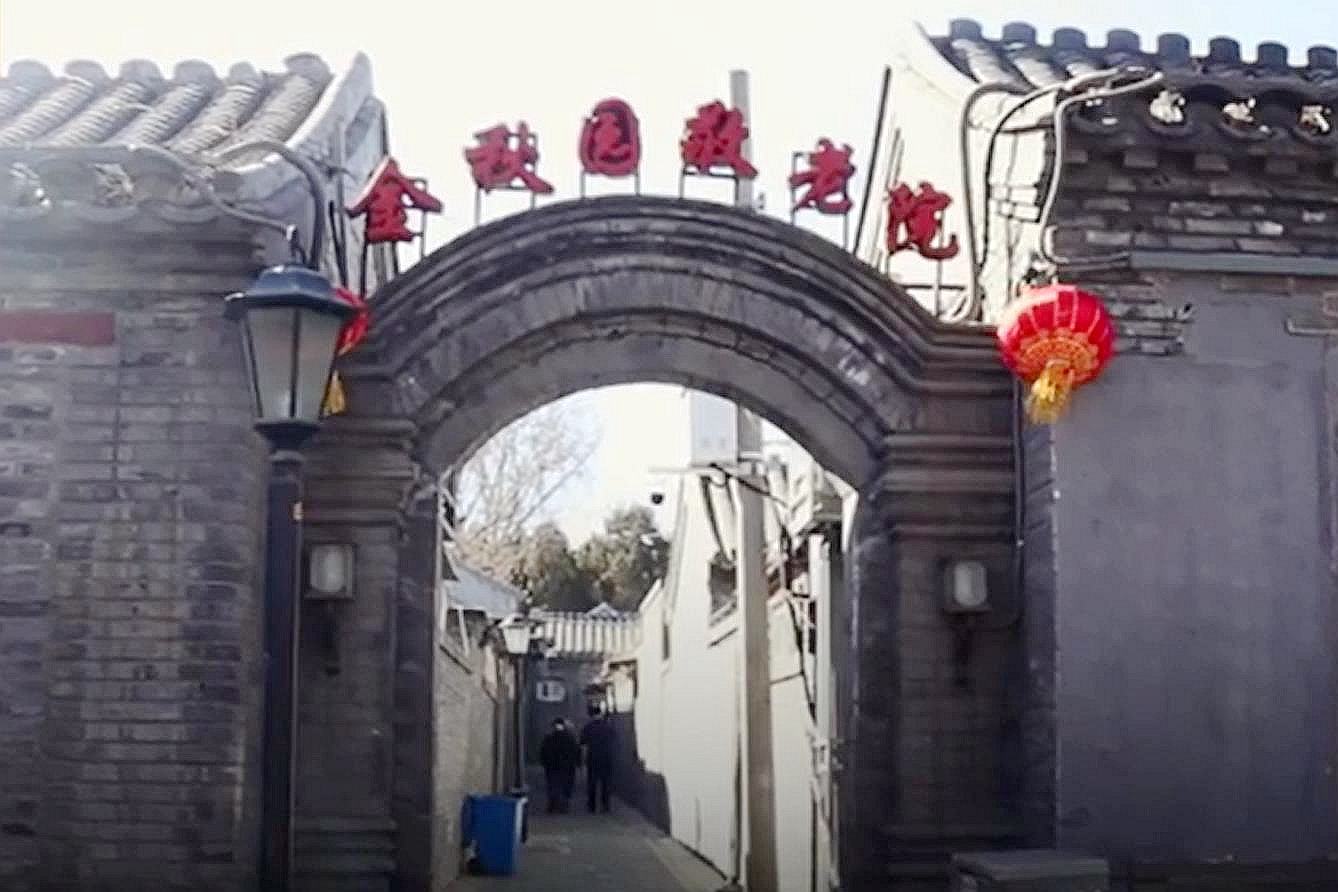
The Golden Fall Garden elderly-care home in an old-fashioned alleyway in Beijing. /CGTN Photo
The Golden Fall Garden elderly-care home in an old-fashioned alleyway in Beijing. /CGTN Photo
'Rising sun industry'
The so-called "silver economy" of providing products and services for the elderly is booming in China. The industry is expected to double its size from 2018 to reach 8 trillion yuan in 2020, or about 7 percent of China's GDP. Experts widely agree that elderly care is a "rising sun industry."
"Industrialization of the elderly care system can attract more private investment, which could help with the service's distribution to help needs meet demands. The problem is this is not merely an industry. It's also a social service," said Liu Chunsheng, an associate professor at the Central University of Finance and Economics.
The Chinese have a tradition of raising children who would in turn care for parents in old age. Until the past decade, nursing homes and commercial elderly care were considered novel concepts for many Chinese families. But that is going to change, and soon.
With increasing life expectancy and falling birth rates, it has dawned on the nation that the traditional model of depending on family ties is not going to work for much longer. This prospect is especially real given that China has the fastest aging population in the world.
The number of Chinese citizens aged 60 and above is set to rise from 249 million in 2018 to more than 490 million in 2050, accounting for more than a third of the country's total population. That is more people than the combined populations of Germany, Japan, France and Britain.
How to take care of the vast number of elderly people is a pressing issue for the state, the efforts of which to improve elderly care services were highlighted in this year's government work report. The National Health Commission (NHC) said last year that China aims to build a nursing service system supported by medical institutes, with communities as the platform and families as the basis by 2020.
After four decades of the one-child policy, China's single-child generations, who make up the majority of its working population, are finding it increasingly difficult to care for elderly family members and their own offspring.
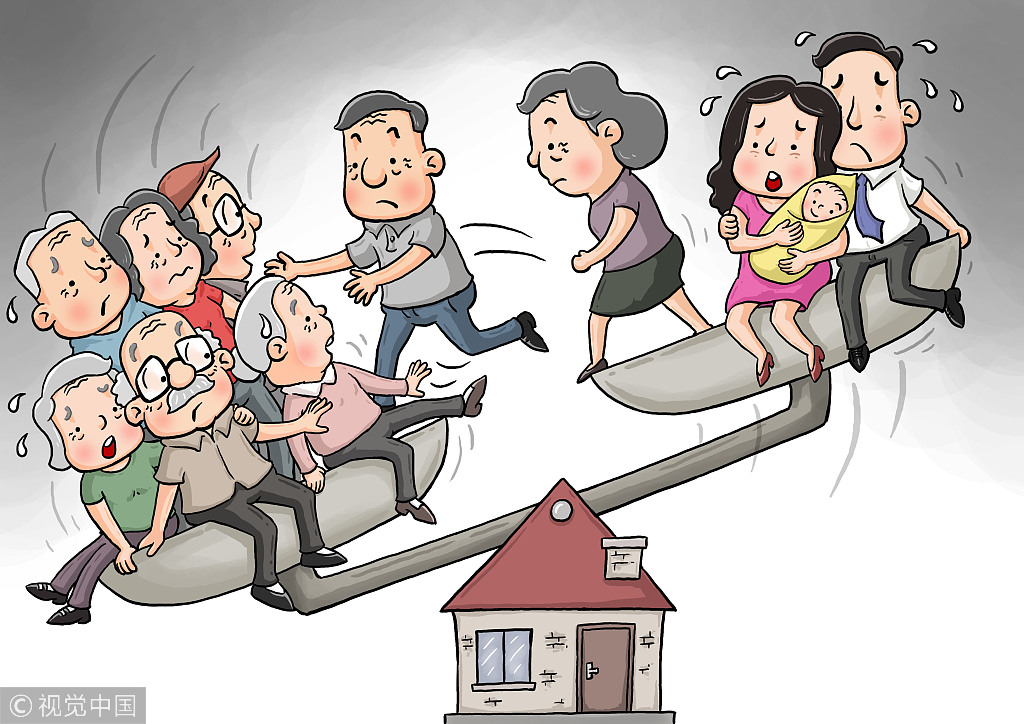
The typical Chinese family is burdened by responsibilities to care for the elderly. /VCG Photo
The typical Chinese family is burdened by responsibilities to care for the elderly. /VCG Photo
"People's thinking needs to change now, because the aging society is a future and a reality we must prepare for. That means improving supporting facilities and services," said professor Lu Jiehua at Peking University, vice president of the China Association of Gerontology and Geriatrics.
Setting the children free
For the elderly, it is all about how to live out their twilight years when their adult children can't take care of them. As they come to terms with this reality, more Chinese seniors are checking themselves into nursing homes.
"I don't want to live with my children. I asked them and said whether they agree or not, I must live here," said Wu.
Her two sons visit her every week, as long as they have time off, she told CGTN, showing pictures of her family at the care home.
For Cao, a resident of over 10 years, moving into this community was a decision made out of consideration for her son.
"I came here after my husband died. I had only one son who took care of me. There was no time for him to live his life," she said.
"He asked me if I really wanted to live here. He disagreed at first but later agreed. I set him free."
Sitting in her sunlit room, Cao showed CGTN her drawings of flowers while humming a tune. "Flowers of happiness booming from the heart…"
Currently, about 45 percent of China's senior citizens live with at least one adult child. In a country where filial piety is a cultural mainstay, most young people still feel it's their duty to take care of their parents the best they can.
In recent years, upmarket nursing homes incorporating healthcare and hospitality facilities have sprouted across the country, offering an appealing vision of what retirement life could be.

Companionship in the twilight. /VCG Photo
Companionship in the twilight. /VCG Photo
Despite the hefty fees for a spot in one of the high-end nursing homes, which would keep the average family out, some younger Chinese have expressed optimism for their own future.
"The nursing homes that I saw are all modern. I was extremely surprised to see inside them," a woman in her early 20s who didn't give her name told CGTN.
"The elderly are enjoying their lives. My husband and I would be very happy to live there," she said.
Video by Mi Xue, Liu Lian