
Opinions
23:21, 01-Jun-2018
Opinion: Is this how the US severs trade ties?
 ["china"]
Share







Copied
Editor's note: This article is based on an interview with Einar Tangen, a current affairs commentator.
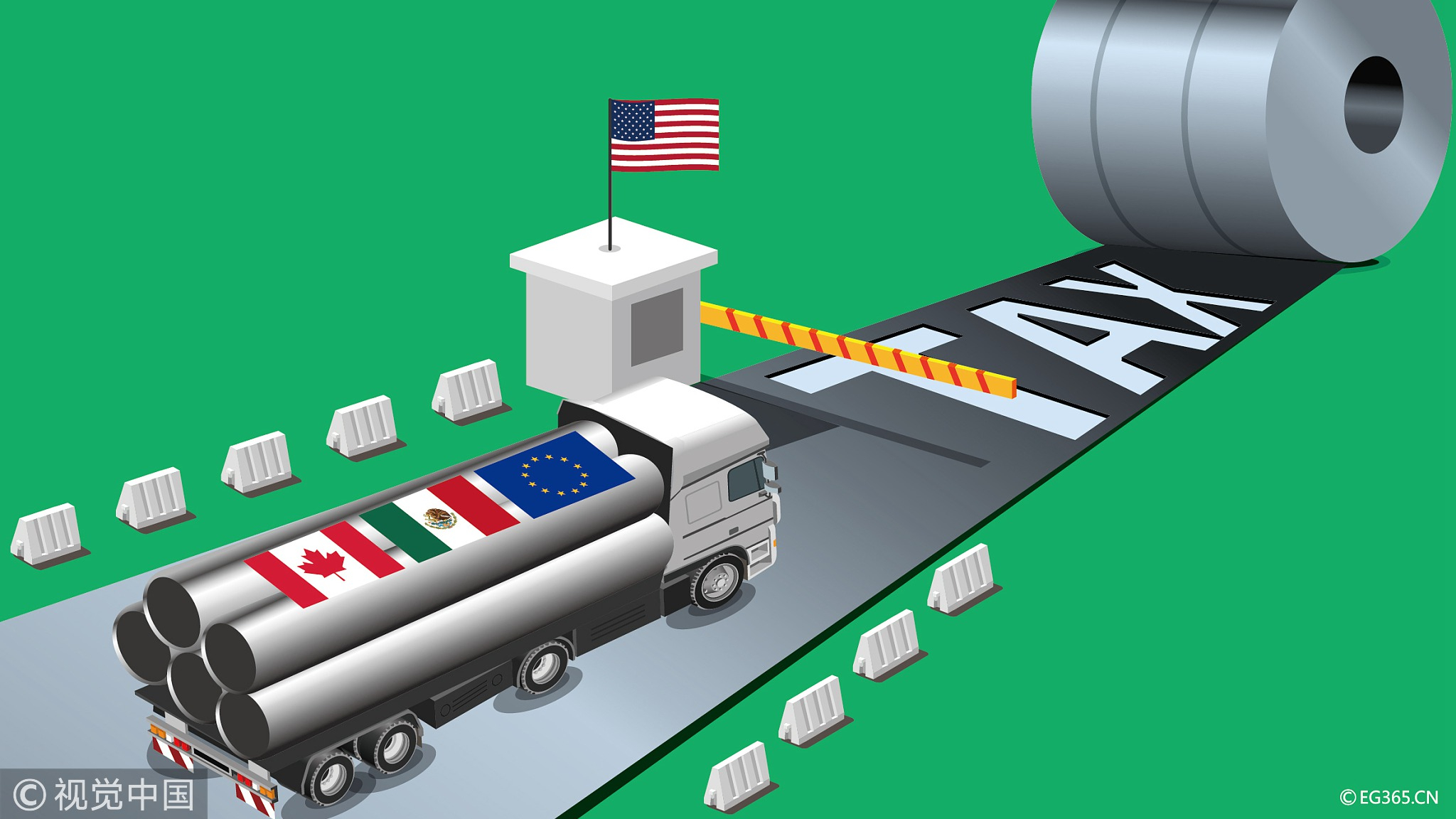
After US President Donald Trump decided to impose tariffs on imported steel and aluminum, the EU fought back immediately, announcing that it would impose a 25 per cent tariff on 3.5 billion US dollars' worth of American products.
The US represents just fewer than 25 per cent of the world GDP, while other countries that are influenced by Donald Trump’s tariff imposition measures represent 60 per cent. The US has 2.3 trillion US dollars in exports, goods and services. These countries reflect almost half of exposure that the US could have. That’s the reason the EU retaliated.
The trade confrontation between the two sides marks a fact that a global trade war triggered by Trump has already commenced, and the future plans for the US president remains unknown.
Einar Tangen, a current affairs commentator, said “it is a global trade war already when you talk about 60 per cent of world GDP versus 25 per cent. But I think most people expected Trump to walk it back, perhaps, this is an attempt to change the conversation in DC and across America away from his domestic ills and troubles”.
Actually, in the past few decades, trade wars between the EU and the US have happened several times, among which the latest one took place in 2002. At that time, the Bush administration decided to begin the collection of tariffs of up to 30 per cent on most types of steel, starting March 2002 for a period of three years.
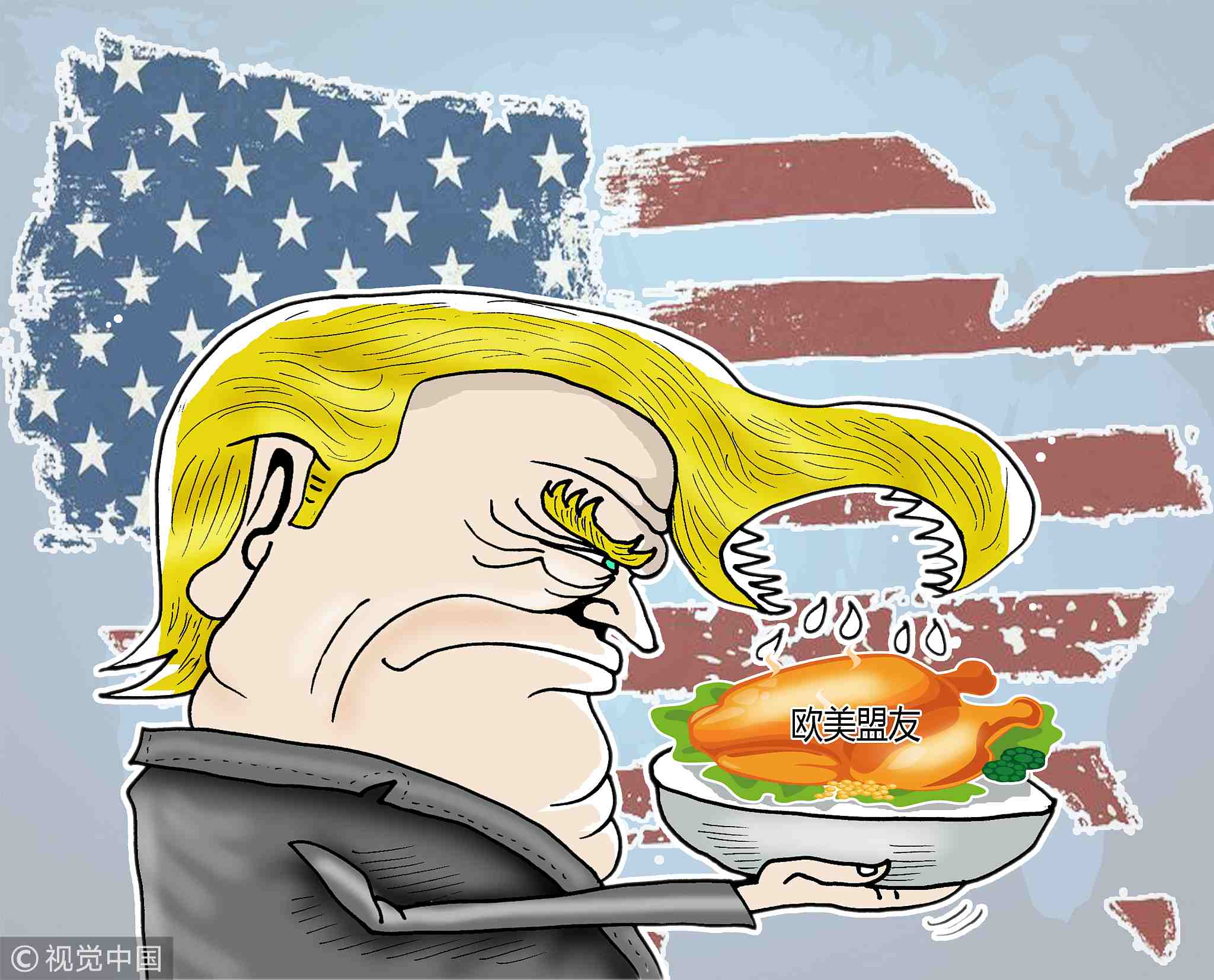
Trump triggers a trade war against his allies./ VCG Photo
Trump triggers a trade war against his allies./ VCG Photo
In addition, import quotas and import licenses have also appeared in trade restrictions. However, such measures taken by Washington were countered by many countries.
In retaliation, the European Union decided to impose a tariff of up to 26 per cent on imported steel, carry out an import quota system and appeal to the WTO with seven other countries.
Forced by the pressure from global trading partners and domestic steel consumption, the Bush administration announced the cancellation of the above-mentioned protective tariffs in 2003, representing the end of the trade war.
This is an appropriate exemplar that reflects the potential and presumable consequences the existing trade war is expected to result in.
The statistics from the US Chamber of Commerce shows that 2.6 million American high-paying manufacturing jobs are at risk. This is dreadful for both the US and the world. But the real trouble is what Trump is doing to America.
“He is isolating it by doing all of these things with having Chinese government come out and say we are opening the door at the same time as Trump saying we are closing it. He is moving Europe and everybody else closer to China’s position as a more reasonable party you can rely on,” said Einar Tangen.
(Cover: US imposed tariffs on steel and aluminum imports to EU, Canada and Mexico./ VCG Photo)