
Opinions
13:30, 29-Jun-2018
Opinion: No global consensus in support for Trump’s economic war with Iran
Updated
13:18, 02-Jul-2018
 ["china"]
Share






Copied
Editor's note: Ghanbar Naderi is an Iranian columnist and political commentator. The article reflects the author’s opinions, and not necessarily the views of CGTN.
Despite international statements in support of the nuclear deal, the United States plans to re-impose unilateral sanctions on Tehran after President Donald Trump voided the landmark agreement between major world powers and Iran in which sanctions were lifted in return for curbs on its nuclear program.
This may cut Iran's hard currency earnings from oil exports, and the prospect could trigger a further panicked flight of Iranians' savings from the rial into US dollar.
This might also disrupt businesses by driving up the cost of imports and even trigger new strikes and clashes at Tehran's Grand Bazaar between police and protesters.
But that’s all it is really. The protests should not be interpreted as a move in line with what Trump is after: regime change. The protests happened before and they will happen again.
The government, however, should listen to the protesters, and must shore up its economic team, and if necessary, this team must change, seeing that the trust account is still high between Iran and the world community and the nuclear deal is worth saving.
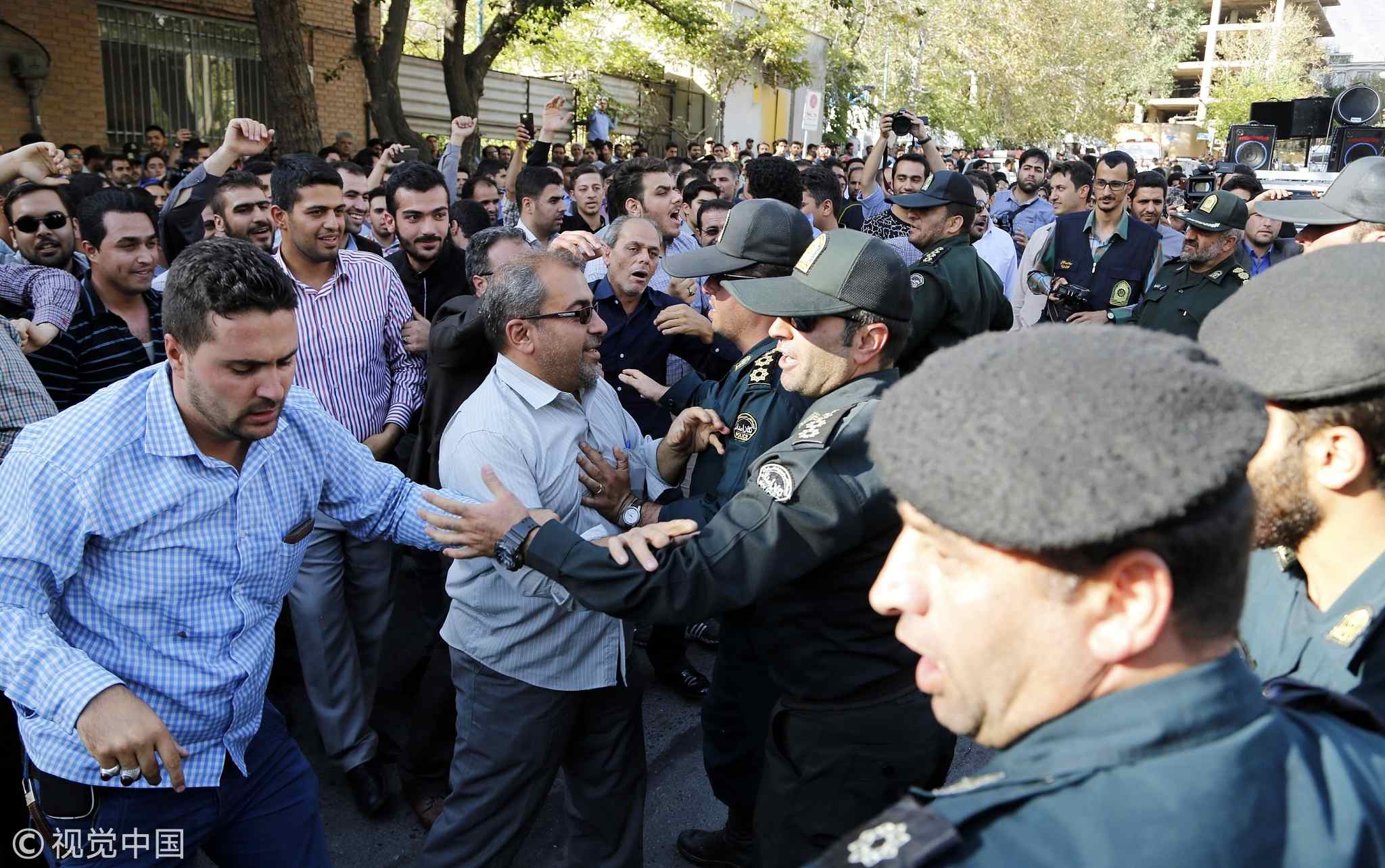
A group of protesters gather outside the Embassy of Saudi Arabia in Tehran to protest against the Saudi Government over the Mina stampede in Tehran on September 27, 2015./ VCG Photo
A group of protesters gather outside the Embassy of Saudi Arabia in Tehran to protest against the Saudi Government over the Mina stampede in Tehran on September 27, 2015./ VCG Photo
Putting things in perspective
A higher rate of urgency in the Iranian market does not imply ever-present panic, anxiety, or fear. It means a state in which complacency is virtually absent.
The truth is, a nation, which helped Iraq and Syria to defeat the terrorist group of ISIL and its medieval caliphate in the Levant, has already acquired the art of reaching down and finding the inner strength to get through the psychological challenges and difficulties of new economic sanctions and threats by the United States.
Iran is not desperate or alone either. International support for the 2015 nuclear deal between the P4+1 (China, France, Germany, Russia, and the United Kingdom) and Iran remains strong, despite comments by Trump threatening the future of the agreement.
Many countries have already released statements in support of the deal, including the European Union, China, Russia, Australia, Canada, Republic of Korea, Japan, South Africa, Turkey, Argentina, Brazil, and Nordic countries.
As they have always said, “the nuclear deal is not a bilateral agreement and it is not in the hands of any single country to terminate it unilaterally.” It has been unanimously endorsed by UN Security Council Resolution 2231.
It is a key element of the global nuclear non-proliferation architecture, it is relevant in itself, but even more so in these times of encouraging signals on the perspective of the denuclearization of the Korean Peninsula. The nuclear deal with Iran is crucial for the security of the region, of Europe and of the entire world.
Perhaps, it is against this backdrop that President Hassan Rouhani is more than ever confident to promise the Iranian people that his administration would be able to handle the new US sanctions.
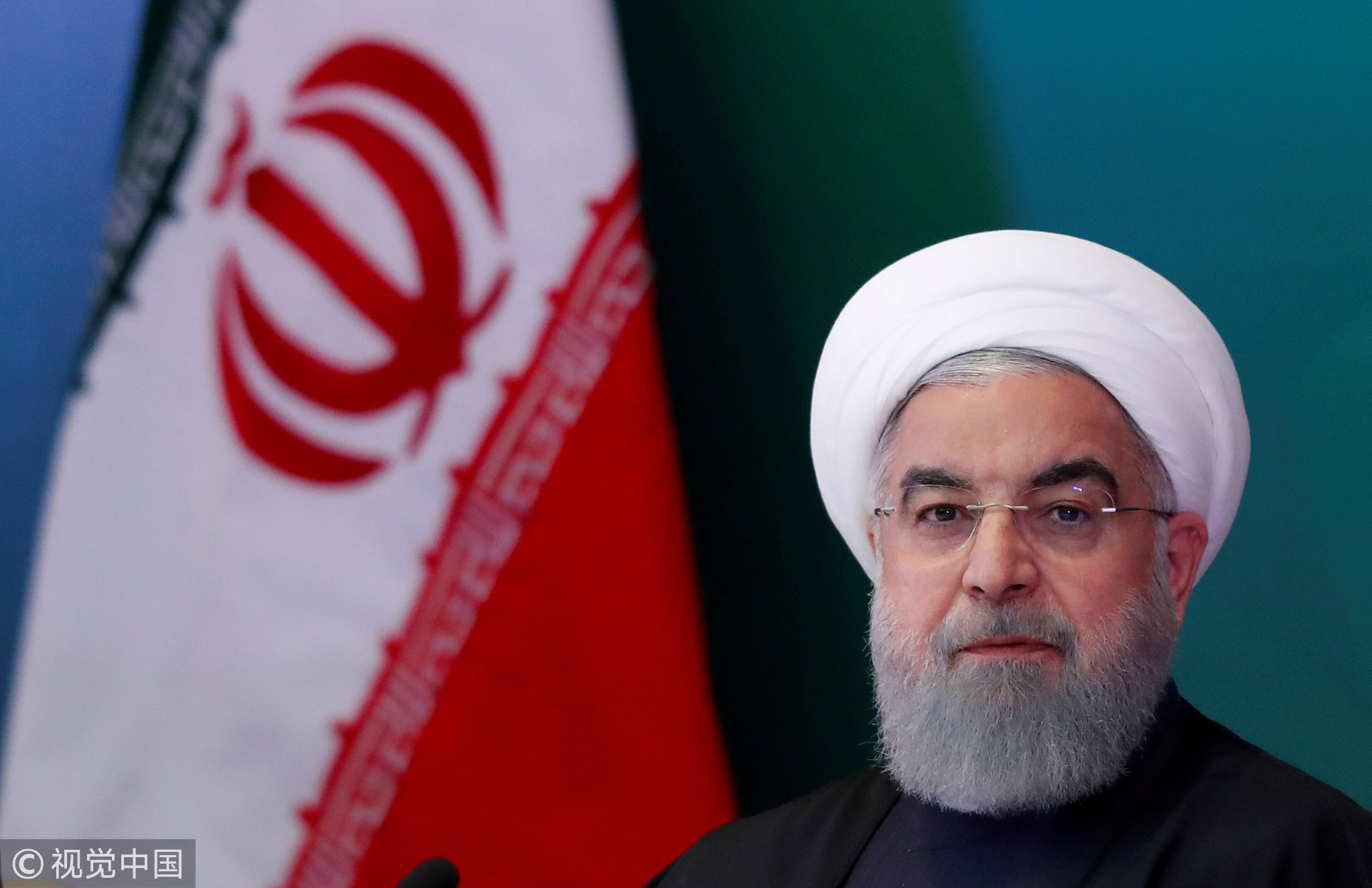
Iranian President Hassan Rouhani attends a meeting with Muslim leaders and scholars in Hyderabad, India, February 15, 2018./ VCG Photo
Iranian President Hassan Rouhani attends a meeting with Muslim leaders and scholars in Hyderabad, India, February 15, 2018./ VCG Photo
What Trump is doing is a psychological war. But he won’t be able to blind the Iranians from the truth of their possibilities, worthiness and purpose.
Tehran is open for dialogue with the international civil society. Tehran will live up to its commitments, because aside from the US, all the negotiating parties involved in the nuclear deal support maintaining the framework.
Economic sovereignty
True, Trump’s decision to walk away from the nuclear deal threatens to cost European companies billions of dollars in lost sales, with German, Italian and French players especially exposed.
The re-imposition of sanctions on Iran aims at limiting the flow of its oil to European markets.
This month, Trump even refused to spare Europe from his tariffs on steel and aluminum imports, then used an annual meeting of the G7 in Canada to double down on his clash with allies, enhancing fears of trade conflicts.
Irrespective of all that, EU efforts to continue trading with Iran is not crumbling in any way.
Quite the opposite, Europe is trying to protect European companies with Iranian business interests despite the threat of US retaliation. Some European leaders have already taken effective measures to nullify the US sanctions.
French Finance Minister Bruno Le Maire has said: “We have to work among ourselves in Europe to defend our European economic sovereignty.”
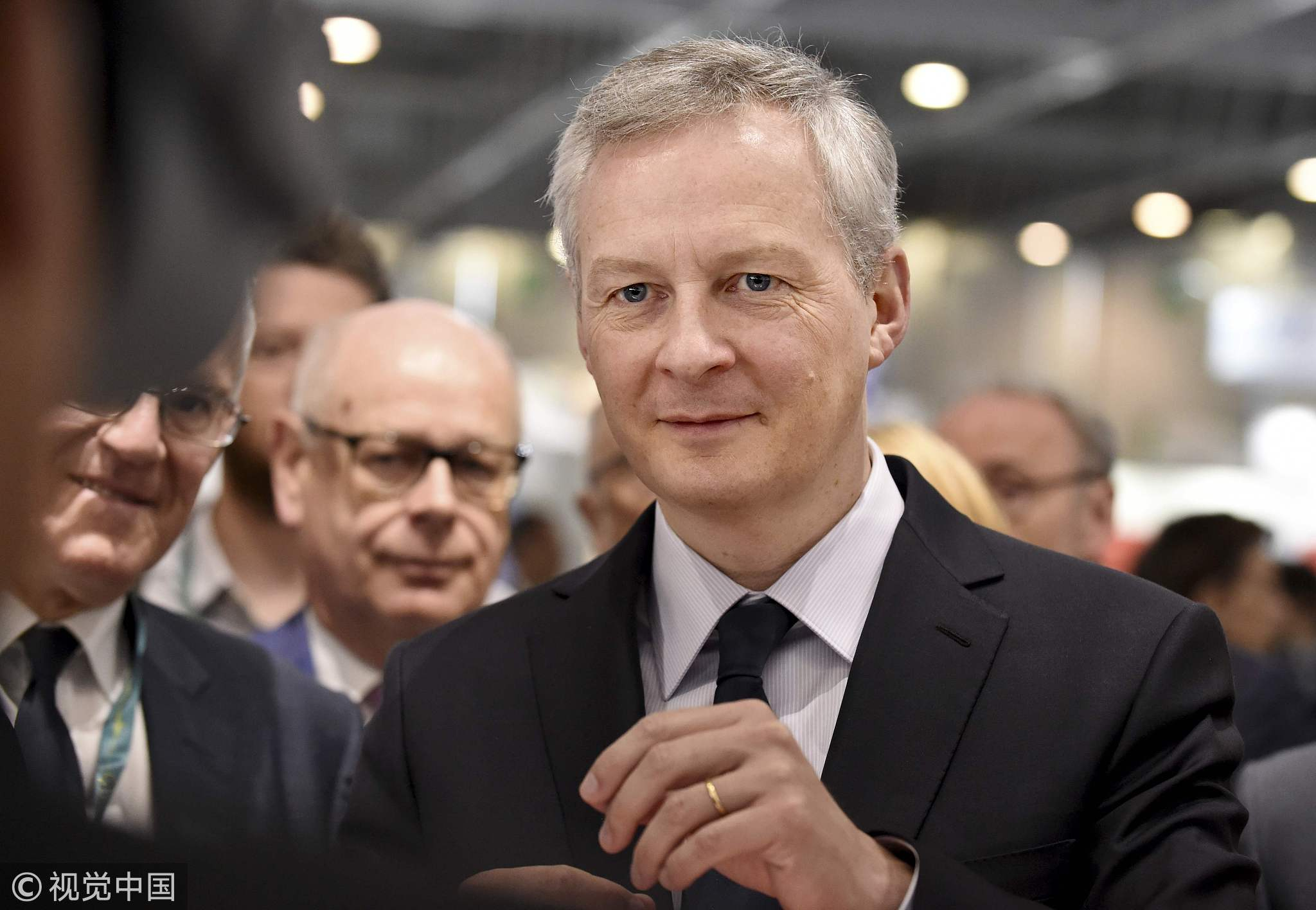
June 26, 2018: French Finance Minister Bruno Le Maire visits the World Nuclear Exhibition (WNE) in Villepinte, near Paris. / VCG Photo
June 26, 2018: French Finance Minister Bruno Le Maire visits the World Nuclear Exhibition (WNE) in Villepinte, near Paris. / VCG Photo
And defending their economic sovereignty is what German leaders are doing as well. AMB Iran 2018, an exclusive forum for the metalworking industry in the Middle East, was held in Tehran on June 20-22.
The annual event is the essential showcase for automobile industry, component suppliers, mechanical engineering and electric industries.
The organizers and participants told me that despite the US threat of sanctions they will continue to sell their products and technologies in Iran.
It gets interesting to know that this year the German Federal Ministry for Economic Affairs and Energy, in cooperation with the Association of the German Trade Fair Industry, is supporting this particular forum and this has all happened after Trump pulled out of the nuclear deal and threatened to punish Europeans doing business in Tehran.
The way forward
No doubt Trump is unpredictable and difficult. That is the fundamental truth the international civil society is beginning to learn to accept. In that acceptance, lies the inner strength, the strength to overcome the new challenges posed by the Trump administration and his one-man foreign policy.
Another truth is that there is no global consensus in support for what the Trump administration is trying to do against Iran, and there isn’t going to be one.
The way to defeat Trump and his unilateralism is through international cooperation and dialogue, based on multilateralism, international law, clear intelligence, and a measured and appropriate diplomatic response.