
Opinions
12:00, 06-Oct-2018
Expert: India is hitting the reset button with Russia
Updated
12:01, 09-Oct-2018
 ["china"]
Share







Copied
03:37
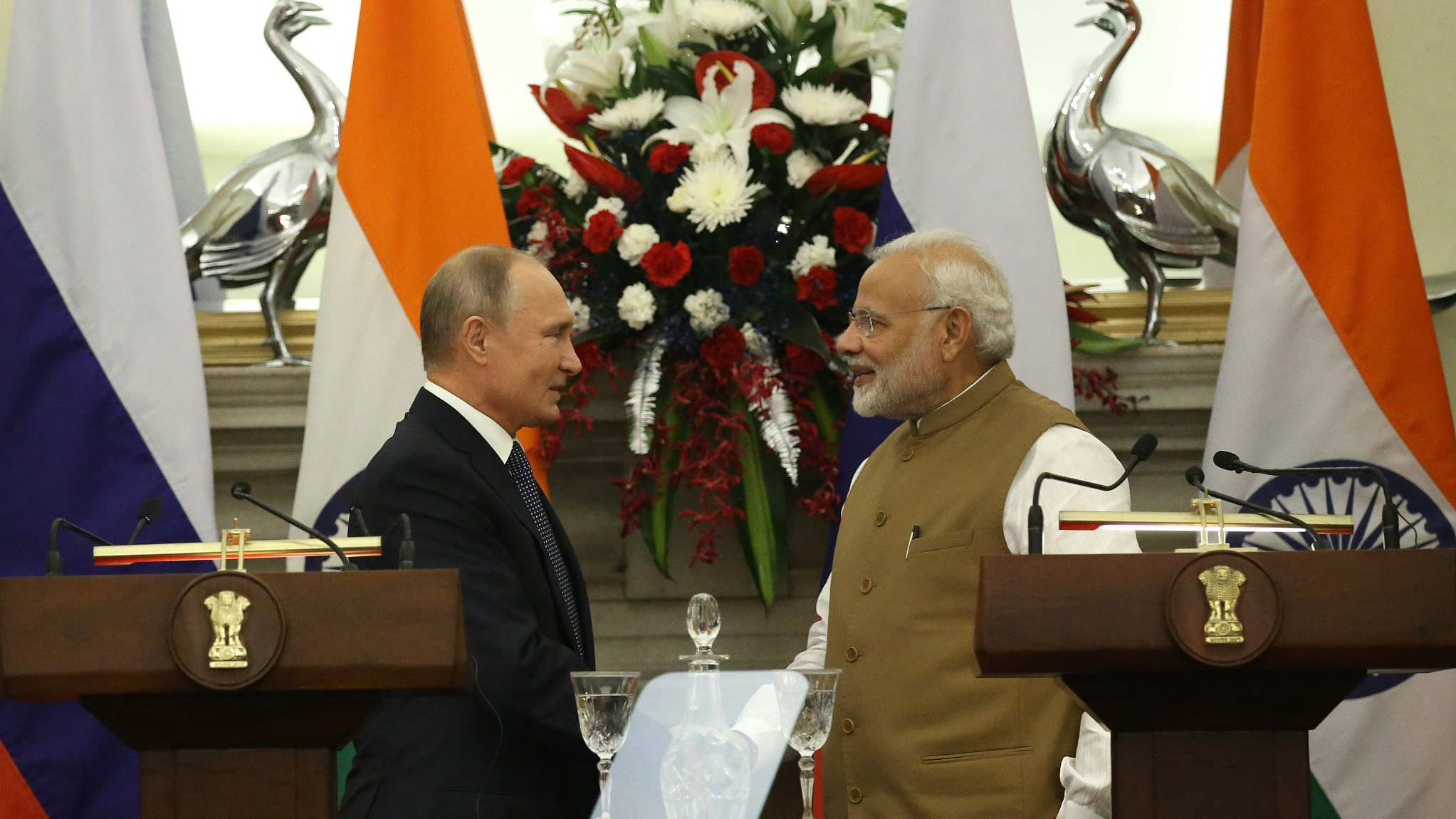
India has agreed to a multi-billion-dollar deal with Russia to buy S-400 surface-to-air missile systems, which are considered one of the best defense systems in the world. The deal will also help India boost its defense capabilities.
The high profile deal was made during Russian President Vladimir Putin's trip to the South Asian country for an annual summit. It is the second such summit meeting between the leaders of two Asian heavyweights. According to C. Uday Bhaskar, director of the Society for Policy Studies in India, the deal is a sign of India's determination to inject new resolve and content into the bilateral relations. He said India is trying to hit the reset button with Russia after a period of aloofness.
The two countries have a strong, time-tested relationship dating back to the Cold War. The India-Russia bilateral relationship was elevated to Special and Privileged Strategic Partnership in 2010. Russia is India's largest arms supplier, with 70 percent of Indian defense equipment of Russian origin, according to India's Defense Ministry.
However, Mr. Bhaskar said the close relationship has gone through a couple of hurdles in recent years. He said Delhi is increasing the frequency of high-level exchanges with Moscow to devote new commitments to the relationship.
As good as the defense system deal is for India-Russia relations, the United States perhaps won't like the purchase and the trend of revitalizing ties between the two. Washington has said countries trading with Russia, Iran and DPRK's defense and intelligence sector would face sanctions under a law called Countering America's Adversaries Through Sanctions Act (CAATSA). India has said that it would ask Washington for a special waiver from sanctions, but the US has previously said it would not necessarily do so. Will strengthened India-Russia ties drive a wedge between New Delhi and Washington?
Mr. Bhaskar says this major arms deal could attract sanctions from the Trump administration like what it has done to China. The US Treasury has slapped the Chinese Military Commission's Equipment Development Department with sanctions, accusing the agency of violating US sanctions against Moscow by buying Russian fighter jets and the S-400 missile system.
It is a recent precedent of US sanctions on countries doing business with the Russian defense sector, Mr. Bhaskar said. But he also said India had already conveyed to the US when its defense officials came to India that the country's security requirements warranted this engagement with Moscow. Mr. Bhaskar said India is trying to push the US to review its domestic policy, but whether it will succeed or not remains to be seen.
(If you want to contribute and have specific expertise, please contact us at opinions@cgtn.com.)