
Politics
14:37, 15-May-2018
Further protests and unrest expected in Gaza after bloodshed
 ["other"]
Share







Copied
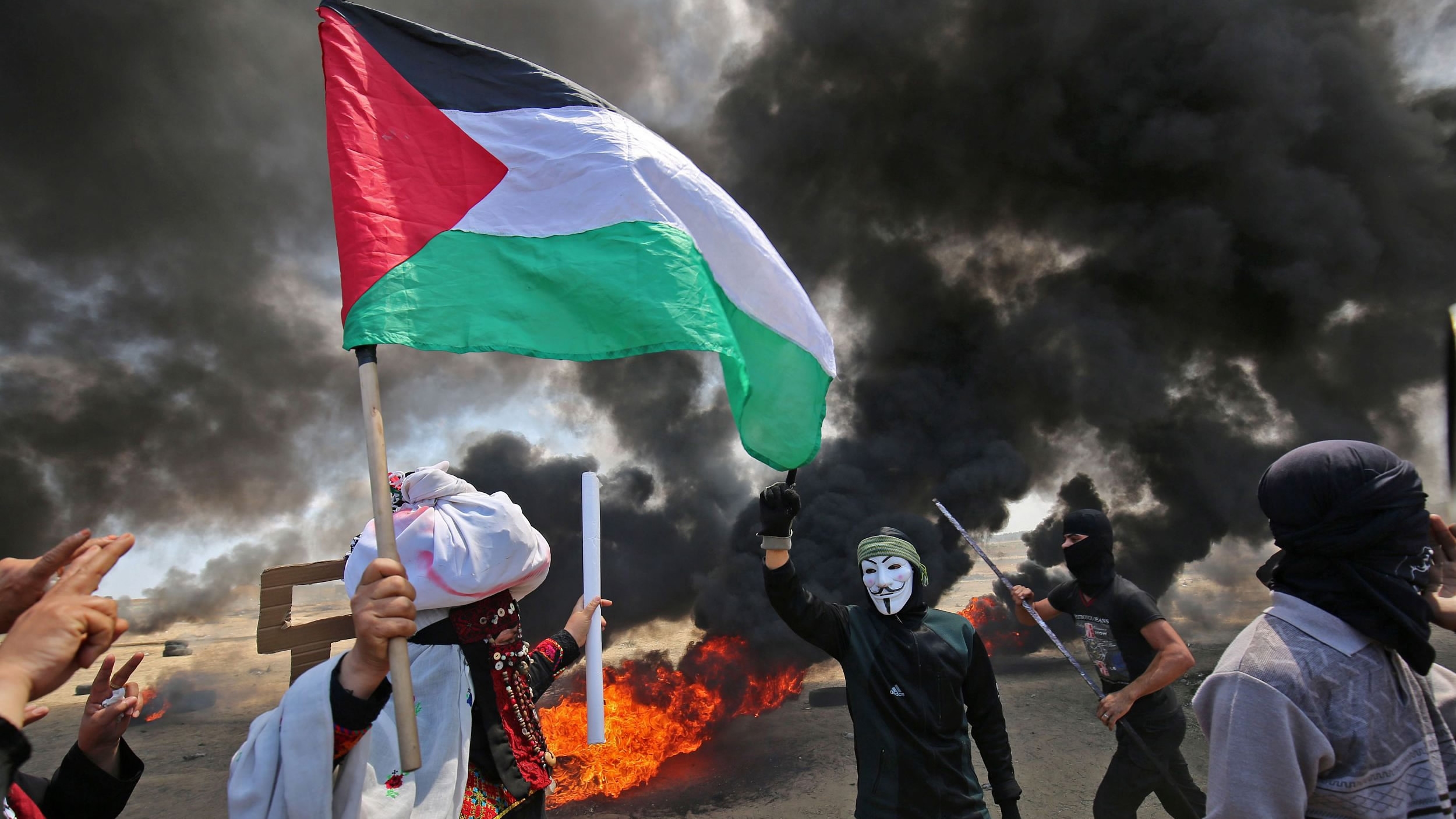
Demonstrations are expected to continue in Gaza on Tuesday following deadly clashes between protesting Palestinians and Israeli soldiers on Monday.
Monday's unrest, which coincided with the opening of the new US embassy in Jerusalem, was the bloodiest for Palestinians since 2014.
Read more: Calls for restraint as 58 killed
Read more: US blocks call for Gaza inquiry
Gunfire, tear gas and "other means" led to the deaths of 58 Palestinians and injuries to a further 2,700, according to the Palestine health ministry.
What's expected on Tuesday?
The protests, which have been going on for several weeks, are scheduled to culminate on Tuesday.
May 15 is the day Palestinians mourn as the "Nakba" or "Catastrophe" when, in 1948, hundreds of thousands of them were driven out of their homes or fled the fighting around Israel's creation.
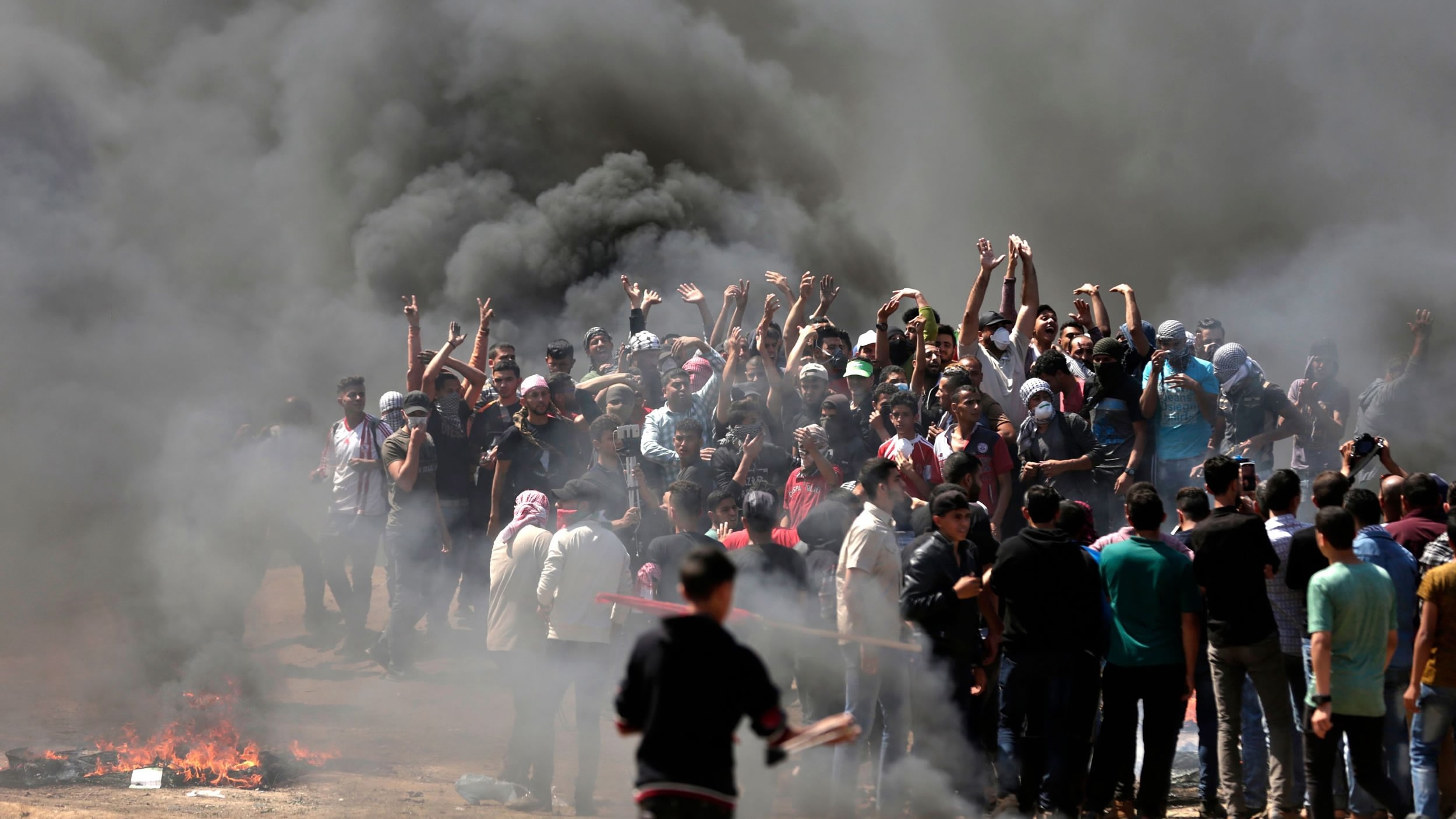
Palestinian demonstrators burn tires near the Gaza-Israel border, May 14, 2018. /VCG Photo
Palestinian demonstrators burn tires near the Gaza-Israel border, May 14, 2018. /VCG Photo
More than 100 Palestinians have been killed by Israeli fire in border protests since March 30. No Israelis have been killed and the military has faced criticism over the use of live fire.
Funerals of those killed in Gaza on Monday are also expected to take place on Tuesday.
What happened on Monday?
Tens of thousands of Palestinians gathered at the Gaza border on Monday, with small groups attempting to break through the fence.
Demonstrators set tires alight and hurled stones at the Israeli security forces, who fired volleys of tear gas and intense rounds of gunfire.
Palestinian President Mahmud Abbas accused Israel of "massacres," while Turkish President Recep Tayyip Erdogan accused Israel of "state terror" and "genocide" and said he was recalling his ambassadors from the US and Israel "for consultations." European countries, including Britain and France, called for calm and restraint.
Read more: New US embassy opens
Opinion: A counterproductive move?
The US again distanced itself from European allies, blocking the adoption of a UN Security Council statement calling for an investigation and pinning blame squarely on Gaza's ruling Hamas group.
Israeli Defense Minister Avigdor Lieberman said in a message to Gazans that "we will protect our civilians with all our means and not enable the fence to be crossed."
Why is Jerusalem controversial?
Israel occupied the West Bank and east Jerusalem in 1967 and later annexed east Jerusalem in a move never recognized by the international community.
Jerusalem's status is perhaps the thorniest issue in the Israeli-Palestinian conflict. Israel considers the entire city its capital, while the Palestinians see east Jerusalem as the capital of their future state.
International consensus has been that the city's status must be negotiated between the two sides, but Trump broke away from that by moving the US embassy in Israel to Jerusalem.
The Trump administration says it has nearly completed a new Israeli-Palestinian peace plan but is undecided on how and when to roll it out.
(With input from agencies)