
Opinions
11:58, 22-Jul-2018
China-Senegal ties: A new chapter is unfolding
Updated
11:23, 25-Jul-2018
 ["china","africa"]
Share







Copied
Editor’s note: Sun Hong is a research assistant under the African Institute at the China Institutes of Contemporary International Relations. The article reflects the author’s opinions, and not necessarily the views of CGTN.
For his first state visit abroad after being successfully reelected as Chinese President, Xi Jinping has traveled across to the other end of the world, the country of Teranga on the east coast of the Atlantic, to start his Africa tour. The act itself reveals the importance China attaches to Senegal and will write a new chapter in China-Senegal friendship.
So, why Senegal? What brings two peoples of different cultures, languages, and histories together? What’s the future trajectory of China-Senegal relations?
After the reestablishment of relations in 2005, China and Senegal agreed to march ahead along the road of common development by leaving behind the burden of history.
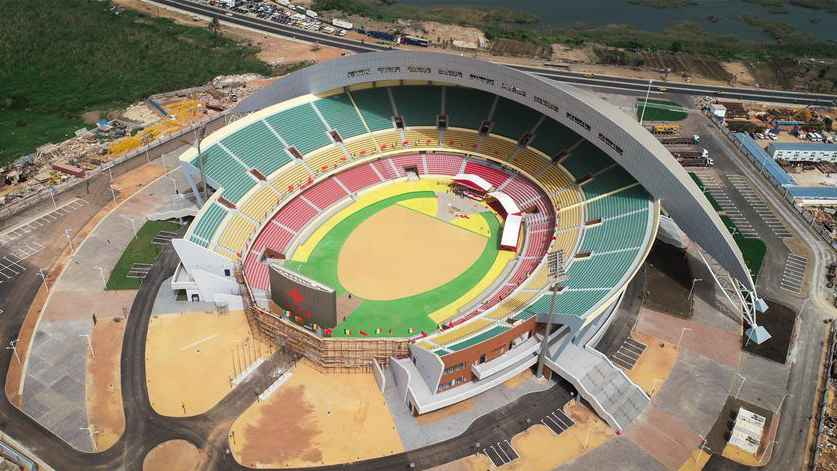
Aerial photo taken on July 18, 2018, shows the National Wrestling Arena in Dakar, Senegal. /Xinhua News Agency
Aerial photo taken on July 18, 2018, shows the National Wrestling Arena in Dakar, Senegal. /Xinhua News Agency
The past 13 years have witnessed an increasingly deepened mutual trust and respect between the leadership and people of the two countries, leading to the establishment of a comprehensive strategic partnership in 2016 while Senegalese President Macky Sall visited China. The mutually beneficial cooperation has continued to produce fruitful results on multiple dimensions.
On the economic front, China stands as Senegal's second largest trading partner and top importer of Senegalese peanuts. Since 2015, the bilateral trade volume has surpassed 2 billion US dollars.
When it comes to foreign sources of financing, according to China's ambassador to Senegal Zhang Xun, China is second to none by providing over 1 trillion CFA (nearly 1.79 billion US dollars) to support Senegal's economic and social development during the past five years. It's worth mentioning that China has been the largest contributor to the implementation of the Plan for an Emerging Senegal(PES).
This national vision brought forward by President Sall in 2014 outlines 27 pilot projects, among which the Foundiougne bridge and the Thies-Touba highway were completed with Chinese financing.
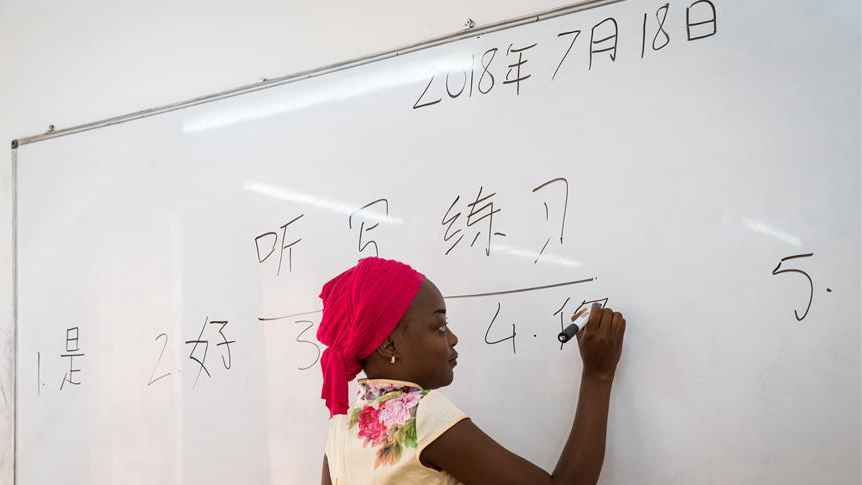
Cultural exchanges also play an indispensable role to animate people-to-people interactions. This is eloquently represented by the building of the Grand National Theater, the Museum of Black Civilizations and the Confucius Institute in the University of Dakar.
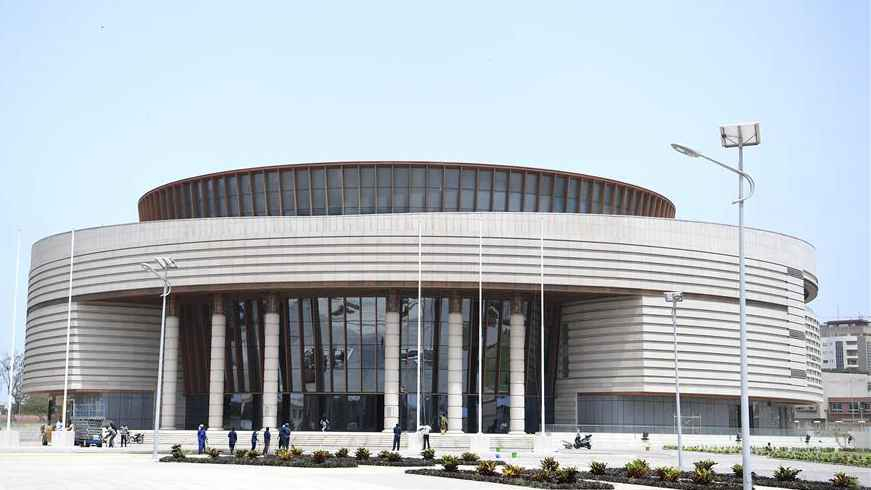
Photo taken on July 18, 2018, shows the Museum of Black Civilization in Senegal's capital Dakar. / Xinhua News Agency
Photo taken on July 18, 2018, shows the Museum of Black Civilization in Senegal's capital Dakar. / Xinhua News Agency
Studying abroad in China is getting more and more popular among Senegal youth. Every year, nearly 800 Senegalese students would fly to China with scholarships and register in Chinese universities.
China and Senegal also share similar views over regional and global issues. Senegal has been proactively participating in the resolution of regional hot-spot issues, such as contributing to the resolution of the political crises in Gambia, Burkina Faso, etc.
It also plays an active role on continental level affairs. Senegal is the chairman nation of the New Partnership for Africa's Development (NEPAD) and is a member of the African Union Committee of Ten Heads of State and Government (C-10).
The significance of President Xi's visit is multidimensional.
First of all, it injects new impetus into future bilateral cooperation. Both China and Senegal find themselves facing the challenging mission of economic transformation: Senegal endeavors to achieve goals settled in the PES, which are industrialization, agriculture mechanization, and poverty alleviation, to turn the country into an emerging economy by 2035.
Meanwhile, China is devoted to seeking high-quality growth and socialist modernization before 2035. There's huge potential waiting to be tapped by combing the respective advantages of the two countries, to work together in sectors including, but not limited to, export-oriented and labor-intensive manufacturing, agribusiness, tourism, IT and telecommunication, etc.
Secondly, the visit will deepen China-Senegal strategic ties. The sincere willingness and commitment from China's side to participate in the development of this region with no other hidden intentions will, therefore, help China knock on the door of sub-regional countries in western Africa.
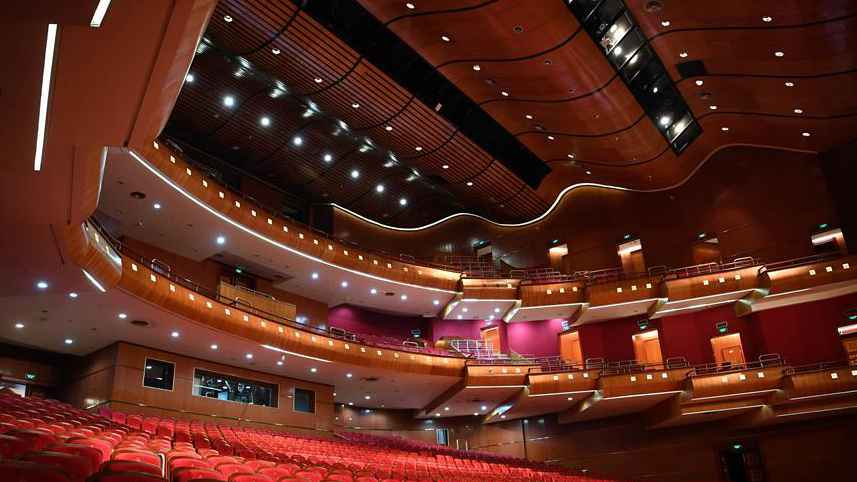
Photo taken on July 18, 2018 shows the inner view of National Grand Theater in Dakar, Senegal. /Xinhua News Agency
Photo taken on July 18, 2018 shows the inner view of National Grand Theater in Dakar, Senegal. /Xinhua News Agency
Due to language barriers and the great distance between the region and China, exchanges between the two have lagged behind compared with other parts of the continent. The good example of China-Senegal friendship and concrete results will help to improve the situation in the long run.
Thirdly, the common commitment of China and Senegal to work together under the framework of the Belt and Road Initiative to achieve common prosperity means a lot against the current international context.
African countries are always the natural allies of China, especially in the extremely tumultuous global situation. The frank and candid dialogue on issues of common interests like combating climate change, terrorism, and public health crisis reconfirms the determination of the two countries to promote a fair and rational international system, even though some countries have been acting unilaterally and pursuing its own interests at the expense of the other's interests.
As an old Chinese saying goes, a common goal brings people together no matter how far apart they may be. The successful visit of President Xi will bring the two nations closer. A new chapter is unfolding.
(Cover Photo: A student writes Chinese at the Confucius Institute of Cheikh Anta Diop University of Dakar, Senegal, July 18, 2018. /Xinhua News Agency)