
Politics
14:33, 21-Jun-2018
US Indo-Pacific commander assures Japan over DPRK denuclearization
 ["china"]
Share







Copied
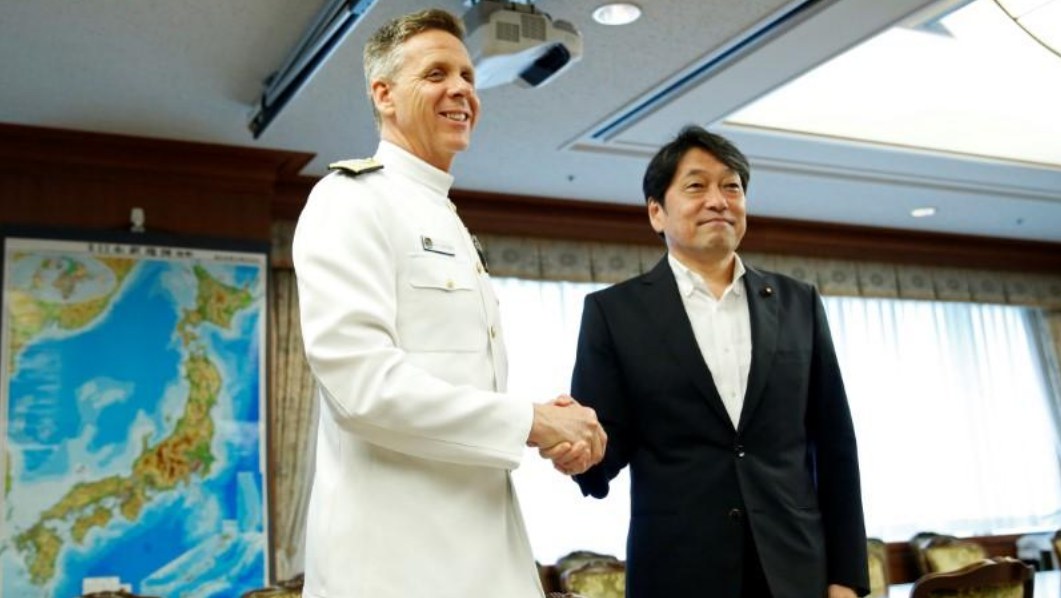
The US Indo-Pacific military commander told Japan's defense minister on Thursday that Washington remained committed to the complete, verifiable and irreversible denuclearization of the Democratic People's Republic of Korea (DPRK).
Promoted to commander of the US Indo-Pacific Command (INDOPACOM) last month, Admiral Philip Davidson gave the assurance during his first official visit to Japan for two days of talks with Defense Minister Itsunori Onodera.
His visit comes after President Donald Trump said the United States would halt large-scale military drills with neighboring South Korea during denuclearization talks with the DPRK.

New US Indo-Pacific military commander (INDOPACOM) Admiral Philip Davidson reviews an honor guard at the Defense Ministry in Tokyo, Japan, June 21, 2018. /Reuters Photo
New US Indo-Pacific military commander (INDOPACOM) Admiral Philip Davidson reviews an honor guard at the Defense Ministry in Tokyo, Japan, June 21, 2018. /Reuters Photo
Trump made that announcement following a summit with Pyongyang's leader Kim Jong Un in Singapore earlier this month.
"The US is firmly committed to the complete verifiable and irreversible denuclearization of the Korean peninsula and I am committed to our mutual alliance," Davidson said in Tokyo.
Read more:
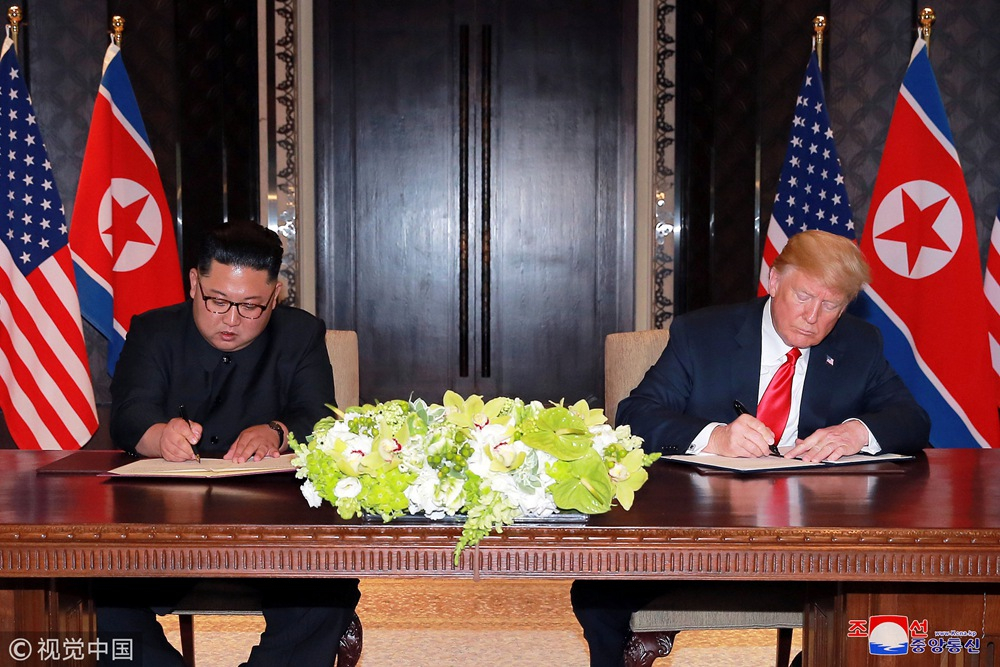
US President Donald Trump (R) and DPRK leader Kim Jong Un sign a joint statement after their meeting in Singapore, June 12, 2018. /VCG Photo
US President Donald Trump (R) and DPRK leader Kim Jong Un sign a joint statement after their meeting in Singapore, June 12, 2018. /VCG Photo
Japan, which hosts some 50,000 US military personnel, including the biggest overseas concentration of US Marines and a US Navy carrier strike group, relies on Washington for its defense and operates closely with its military.
"We need to closely watch North Korea's (DPRK) steps toward denuclearization. The Japan-US alliance plays a crucial role in this," Onodera said.
Meanwhile, Japan's Kyodo news agency reported that Tokyo has decided to halt evacuation drills to prepare for a missile attack from the DPRK.
A Cabinet Office official told Reuters it would make an announcement on Friday concerning the drills.
Japan welcomed the summit as a first step toward the denuclearization of the DPRK, but also said the US-ROK exercises were a vital deterrent to DPRK threats.
The DPRK last year launched two missiles that flew over Japan. It also conducted its sixth nuclear test.
Japan's capital of Tokyo held its first evacuation drill in January and smaller Japanese towns and villages have conducted similar exercises as the DPRK pushed ahead with its missile and nuclear weapons programs.
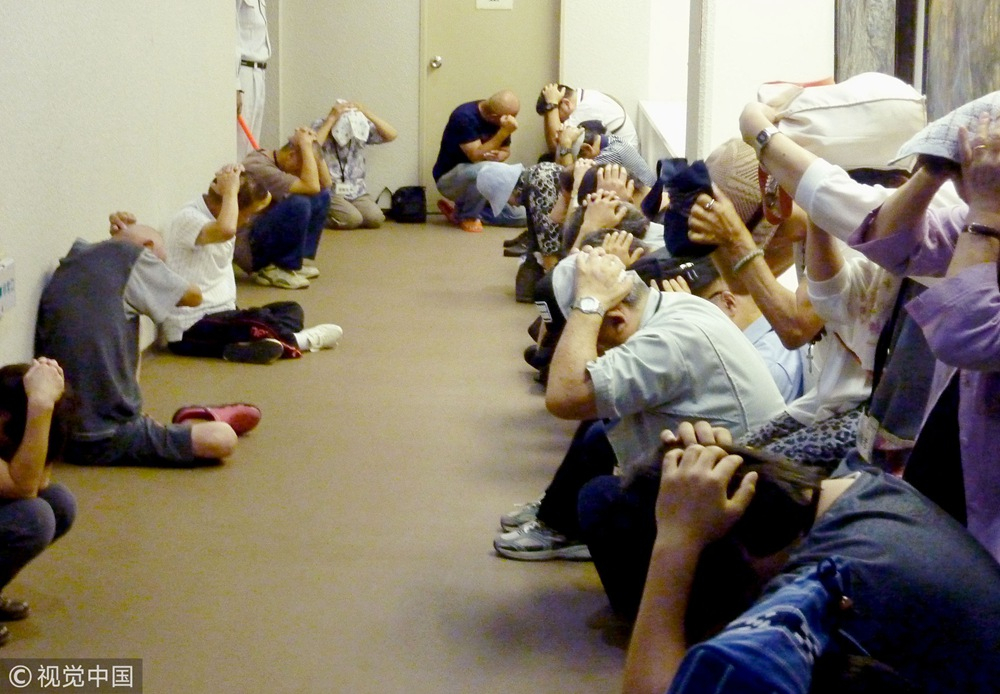
August 30, 2017: Residents participate in an evacuation drill in Japan's coastal city Wajima. /VCG Photo
August 30, 2017: Residents participate in an evacuation drill in Japan's coastal city Wajima. /VCG Photo
Kyodo said there were plans for evacuation drills this year in nine prefectures.
An official in Yaita, in northern Japan, told Reuters that Tochigi Prefecture, where it is located, had notified the city that the central government had decided to halt the planned drill "taking into account the international situation."
Kyodo said several other prefectures had also been notified of the imminent decision to halt the drills.
Japanese Prime Minister Shinzo Abe is eyeing his own summit with Kim to tackle the matter of Japanese citizens kidnapped by DPRK agents decades ago.
In 2002, the DPRK admitted that its agents had kidnapped 13 Japanese citizens in the 1970s and 1980s. Japan says 17 of its citizens were abducted, five of whom were repatriated. Pyongyang has said eight are dead, while another four never entered the country.
Abe has made the issue a pillar of his political career and vowed not to rest until all the abductees come home.
2105km
Source(s): Reuters