
Politics
15:41, 11-Aug-2018
One year after Charlottesville: America further divided under Trump's presidency
Updated
14:48, 14-Aug-2018
 ["china"]
Share







Copied
02:09
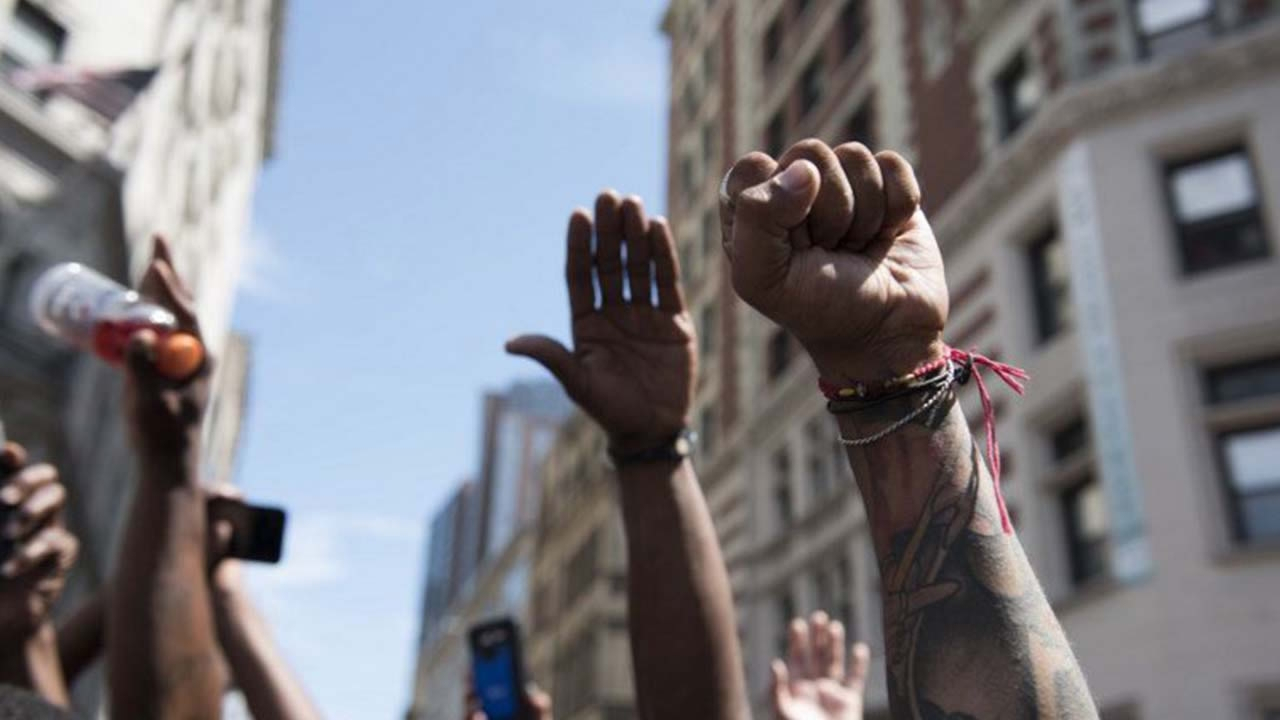
It has been a year since one woman was killed and 19 injured amid conflicts between white supremacists and counter-protesters in the violent protest in Charlottesville, Virginia.
A look back at the riotous protest
It started on Aug. 11, 2017, with hundreds of neo-Nazi sympathizers yelling white nationalist slogans, in protest of the City Council’s efforts to remove statues of Confederate leaders, including one of the Confederacy's top general, Robert E. Lee.
Fighting broke out between these neo-Nazi supporters and anti-fascists from a black-clad group, and culminated with a man driving a car into a crowd of counter-protesters, killing 32-year-old Heather Heyer.
One year has passed, and against the expectation that it would have urged Americans to reflect on their racial stance and strive for a less apartheid-esque mentality, the violent tragedy in Charlottesville is considered to be one of the moments that sent America's extreme right mainstream.
Many traced this back to US President Donald Trump's ambivalent attitude on the incident: he refused to call out any neo-Nazi groups by name and blamed both sides in the incident.
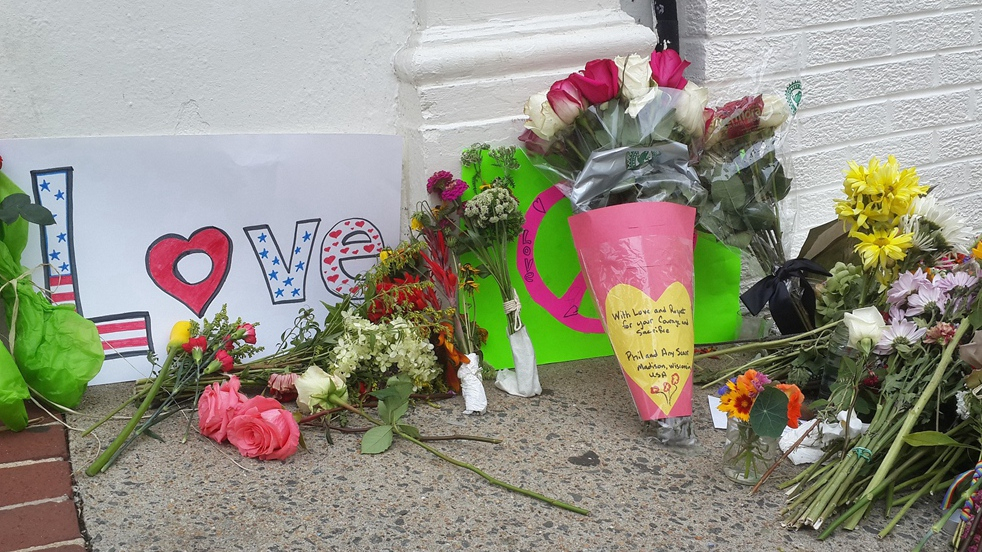
People place flowers at an informal memorial to 32-year-old Heather Heyer, in Charlottesville, Virginia, US, August 14, 2017. /VCG Photo
People place flowers at an informal memorial to 32-year-old Heather Heyer, in Charlottesville, Virginia, US, August 14, 2017. /VCG Photo
In a news conference after the violence last year, Trump made comments like "what about the 'alt-left' that came charging at, as you say, the 'alt-right,' do they have any semblance of guilt?"
He also condemned the anti-fascists who came "with clubs in hands."
Trump's failure to condemn the extreme right-wingers outright has emboldened the group. Proof of this is that many of them have since rallied behind him, including David Duke, a former KKK leader and avowed racist and anti-Semite who praised Trump's "courage" in defending white nationalist protesters.
In fact, during the rally in Charlottesville, Duke already said that what they were going to do was to take their country back, "to fulfill the promises of Donald Trump."
Trump's views on race and his policies
Trump's comments on people who are not white have always been controversial.
As early as in his election campaign, he famously disparaged Mexican immigrants as "criminals and rapists."
He criticized US District Judge Gonzalo Curiel, who served as the judge over some lawsuits alleging fraud against Trump University, by saying that the judge may be biased against him because of his Mexican heritage.
The New York Times even dug out old stories about Trump, saying his real-estate company tried to avoid renting apartments to African-Americans in the 1970s.
The newspaper also said Trump treated black employees at his casinos differently, learning from a former hotel executive who said Trump once made remarks like "laziness is a trait in blacks” while criticizing an African-American accountant.
Trump's verbal attack on people of color didn't stop even after his being elected as the US president.
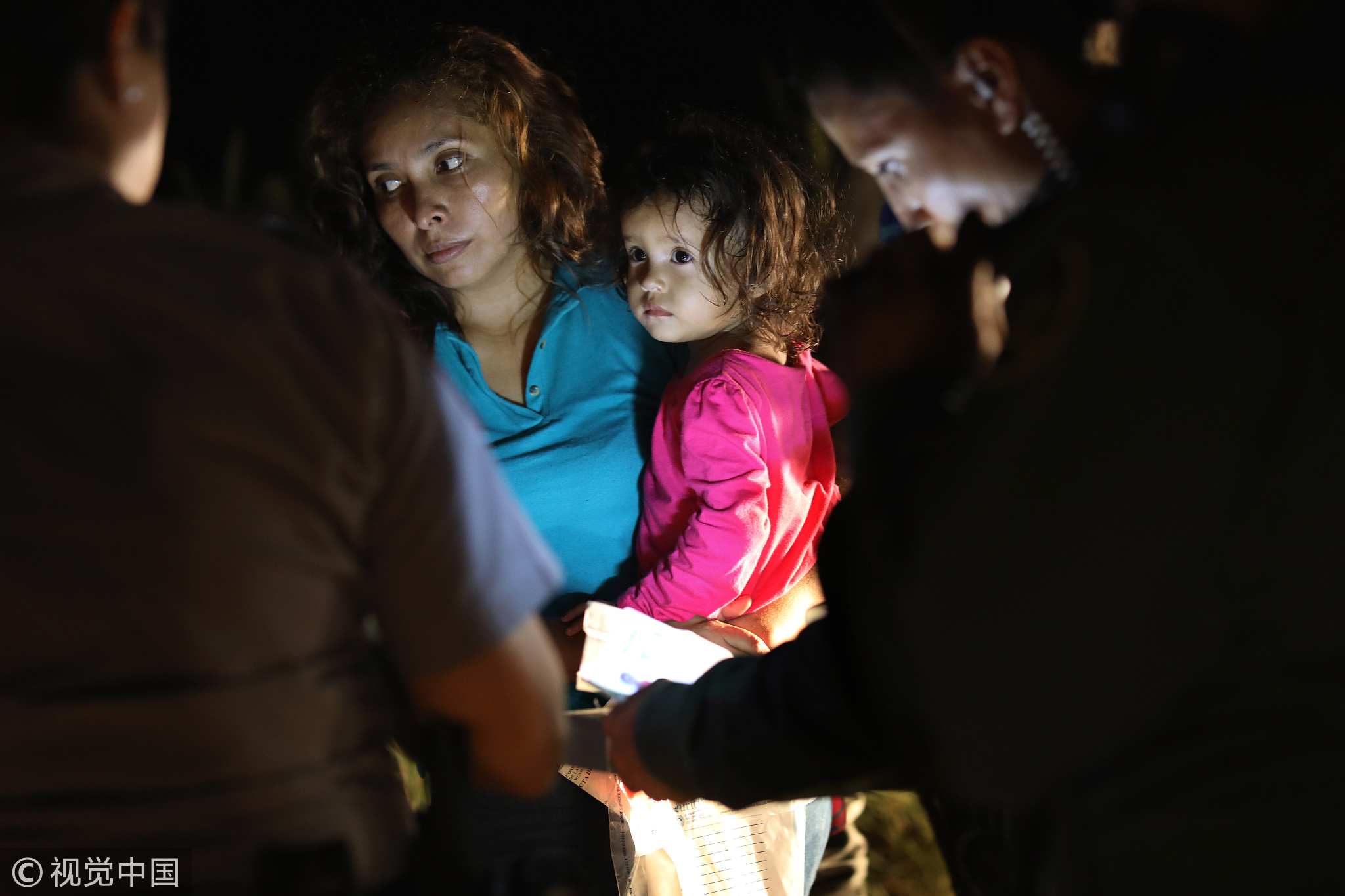
A Honduran mother holds her two-year-old as US Border Patrol agents review their papers near the US-Mexico border in McAllen, Texas, US, June 12, 2018. /VCG Photo
A Honduran mother holds her two-year-old as US Border Patrol agents review their papers near the US-Mexico border in McAllen, Texas, US, June 12, 2018. /VCG Photo
He called African, Caribbean, and Central American nations "shitholes" and at a recent dinner at Bedminster, New Jersey, with CEOs and White House staff, he referred to an unnamed country - which one attendee told Politico was clearly China - and said "almost every student that comes over" to the US from that nation "is a spy."
Apart from those offensive remarks, Trump has also carried out policies that have been deemed racist: A main one being his executive order in 2017 that sought to ban people from predominantly Muslim countries, and the other being his policy to separate children from their parents during the prosecution process of the adults for crossing the southern US border with Mexico in the middle of this year.
Ramifications
It would be deterministic to attribute the rising of right-wing extremism in the past year or so in the US all to President Trump's racial views; however, it is undeniable that the country has grown more divided ever since he came to office.
USA Today reports that according to a report by the Southern Poverty Law Center, the number of hate groups has surged under Trump's presidency.
The center said more than 950 hate groups operated in the US last year, with the majority focused on white supremacy. The report also found about 223 black extremist groups but more than 600 white extremist organizations.
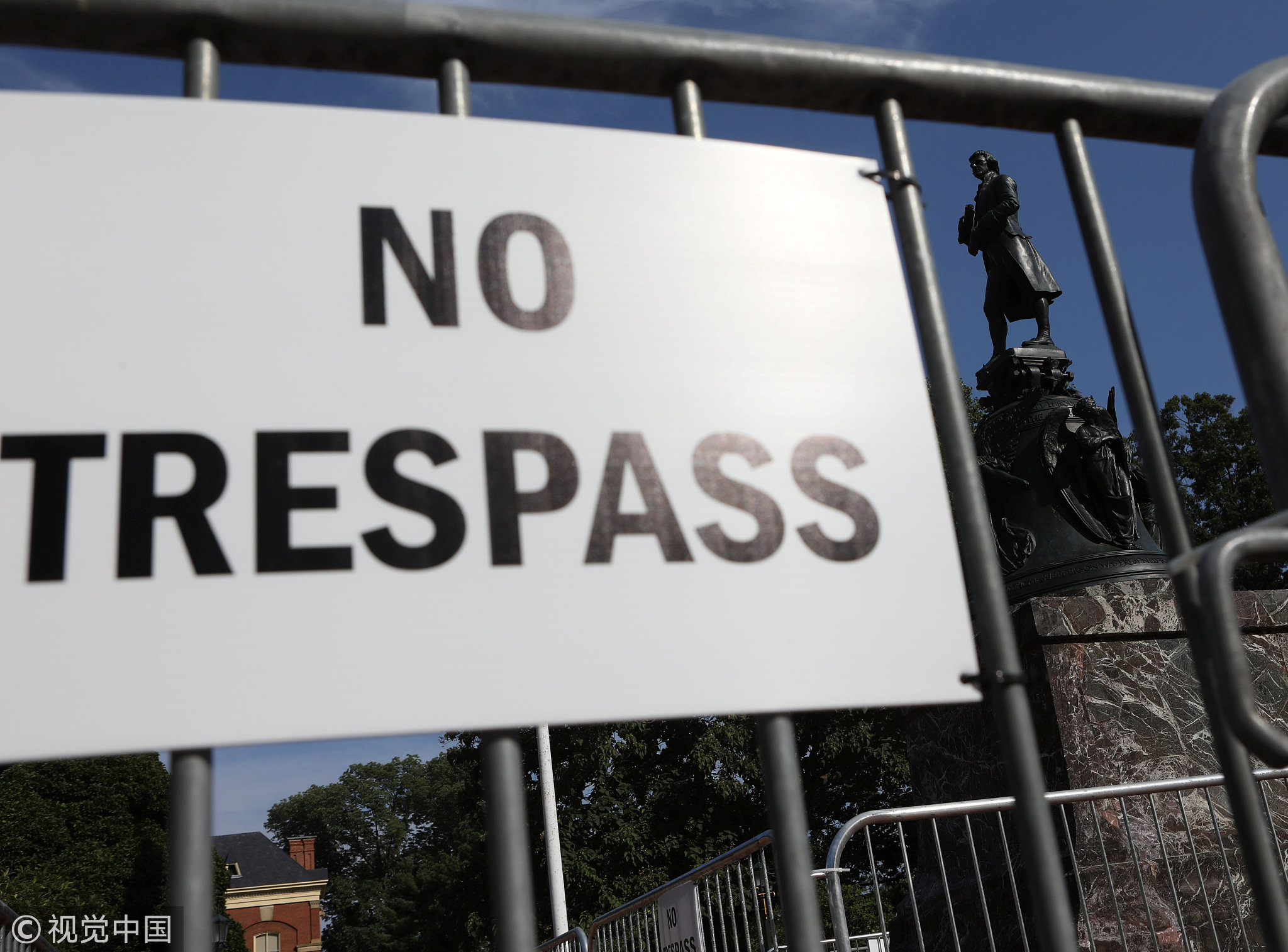
Barricades are placed in front of a statue of Thomas Jefferson at the Rotunda on the campus of the University of Virginia ahead of the one-year anniversary of 2017 Charlottesville "Unite the Right" protests, in Charlottesville, Virginia, US, August 10, 2018. /VCG Photo
Barricades are placed in front of a statue of Thomas Jefferson at the Rotunda on the campus of the University of Virginia ahead of the one-year anniversary of 2017 Charlottesville "Unite the Right" protests, in Charlottesville, Virginia, US, August 10, 2018. /VCG Photo
On the public office level, the rise of politicians with extreme views has also been noticeable. Chief White House Strategist Steve Bannon for the first seven months of Trump's presidential term used to be the former editor of rightwing Breitbart website.
Several openly racist or white nationalist candidates are seeking elected office this year, including avowed Nazi Arthur Jones of Illinois, who won his district's Republican party primary and is running for Congress. In Wisconsin, Paul Nehlen, the leading Republican running to fill the seat in Congress currently held by retiring Speaker of the House Paul Ryan, has emerged as a leader of the alt-right movement.
Discord expected to continue
At the time of the one-year anniversary of the Charlottesville protest, white nationalists are set to rally outside the White House on Sunday. A permit for a counter-protest has also been granted.
Smaller anniversary events are planned in Charlottesville, ahead of which Virginia Governor Ralph Northam and city officials declared a state of emergency.
It is hard to tell now whether the activities will remain peaceful or not, but one thing that is almost certain is that American society will remain fractured as long as Donald Trump is president.
(Cover: White nationalists participate in a torch-lit march on the grounds of the University of Virginia ahead of the Unite the Right Rally in Charlottesville, Virginia, US, August 11, 2017. /VCG Photo)
(With input from AFP)