
Opinions
23:09, 12-Aug-2018
Opinion: Cooperation between Iran, China must be protected from US sanctions
Updated
22:20, 15-Aug-2018
 ["china"]
Share






Copied
Editor's note: Ghanbar Naderi is an Iranian columnist and political commentator. The article reflects the author's opinion, and not necessarily the views of CGTN.
It is said you can’t kill someone and trade with him too. Perhaps, it is within this context that China’s Foreign Ministry says commercial cooperation between Iran and China should be protected from unilateral US sanctions.
In a move to revive this effort and launch a new set of initiatives devoted to peace through commerce, Chinese Foreign Ministry has also said that Beijing's business ties with Tehran are "reasonable and do not breach UN Security Council resolutions or China’s promised international obligations.”
A sensible pairing
Countries always seek to protect wealth gained through international trade, while trading partners are less combative than non-trading nations.
The nuclear deal would have meant opening Iran to western commerce, a greater regional stability, and a bonanza for US and European companies. It didn’t happen. Tehran, however, remained in the deal as it was ratified by the UN Security Council.
This encouraged the European Union to launch a package of measures to counter US sanctions. It includes enabling EU member states to make direct payments for oil to Iran’s central bank and the revival of a 1990s era so-called “blocking statute” to allow companies to ignore US sanctions without fear of punishment in Europe. There will be limits to the effectiveness of the Brussels response, but the EU’s moves managed to defy Trump’s global experiment.
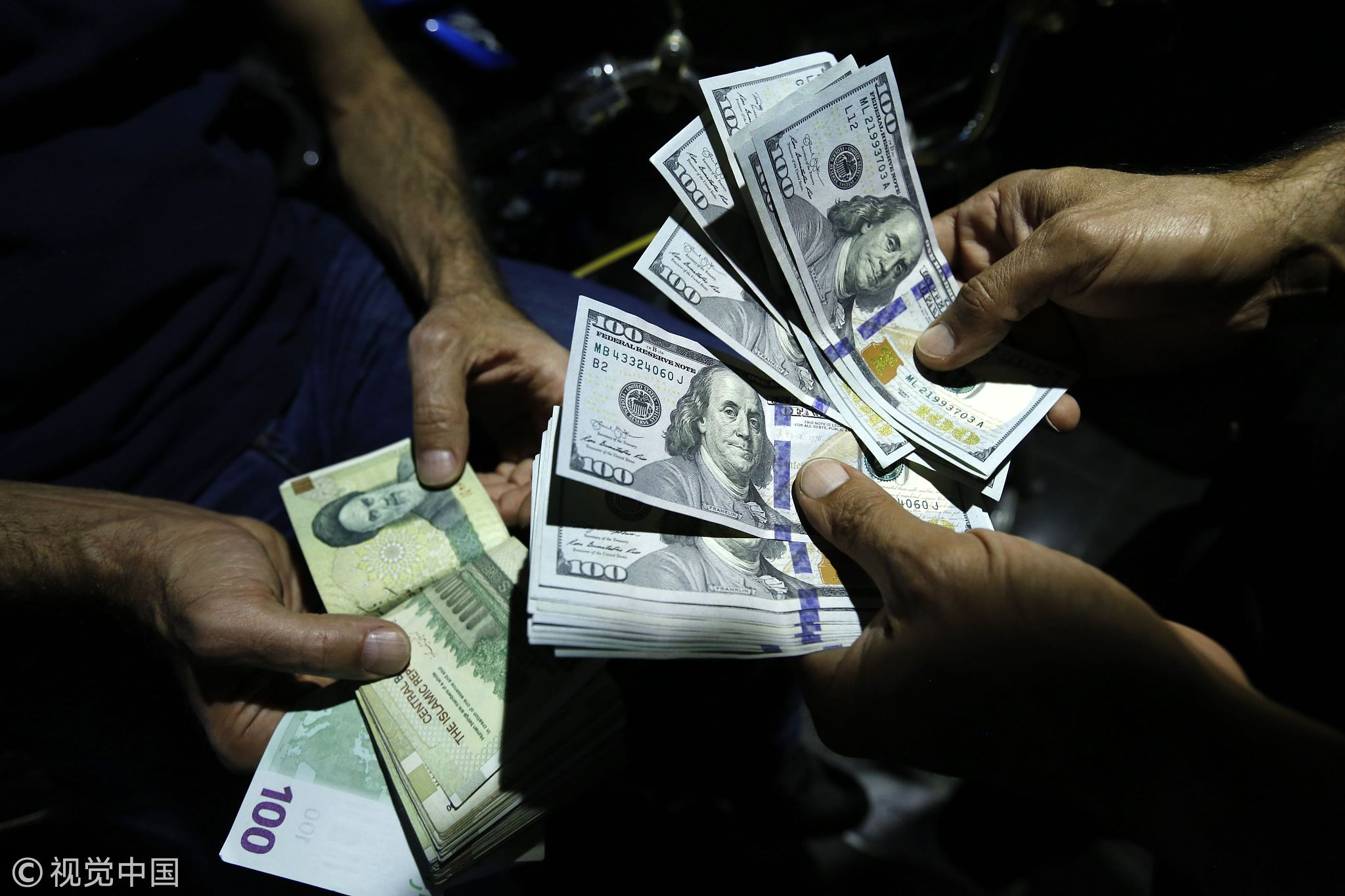
A man exchanges Iranian Rials against US Dollars at an exchange shop in the Iranian capital Tehran, August 8, 2018. /VCG Photo
A man exchanges Iranian Rials against US Dollars at an exchange shop in the Iranian capital Tehran, August 8, 2018. /VCG Photo
The Russian Foreign Ministry is also "deeply disappointed" by the US measures, vowing to do "everything necessary" to save the deal and protect its shared economic interests with Tehran. Like Beijing, Moscow wants to defend its business ties, views commerce and peace as a sensible pairing, and believes US sanctions have an extra-territorial effect that violates international law.
The message: Through belligerence and falsehoods, Trump, whose political career was built on betting on the opposite, wrecked one of the most successful arms-control deals in modern history, disrupted unity with allies and partners, damaged US credibility, worsened instability in the Middle East, and possibly boosted the chance of war. All this to make us believe that US unilateralism is neither normal nor noble.
Making America 1929 again
There is no nobility in falling into Trump’s trap or in normalizing his belligerence and falsehoods. Countries can expect anything from Washington now, he is a very unpredictable international actor. Trump also isn’t going to make America great again, he’s just going to make it 1929 again.
It should be clear by now to everyone outside the US government that as per international law and UN Security Council Resolution 2231, the remaining parties to the nuclear deal have the right to disregard threats from Washington, go against the American institution of economic warfare, maintain trade with Iran, ignore the Disrupter-in-Chief’s ‘with us or against us’ tweets and publicity stunts, and promote peace through international commerce.
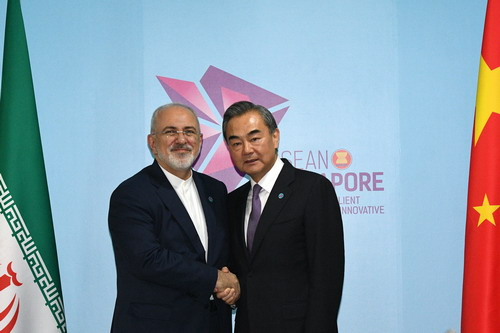
Chinese State Councilor and Foreign Minister Wang Yi (R) meets with Iranian Foreign Minister Mohammad Javad Zarif in Singapore, August 3, 2018. /Xinhua Photo
Chinese State Councilor and Foreign Minister Wang Yi (R) meets with Iranian Foreign Minister Mohammad Javad Zarif in Singapore, August 3, 2018. /Xinhua Photo
This is a catalyst for stability and prosperity as well. The larger risk to international stability today comes not from Iran which has no nuclear weapons program and seeks international trade, but from the United States which has trade and economic inhibitions – and with no other methods to advance itself in a multilateral world.
It feeds the concern that bully-boy Trump & Co. find it useful to heighten international tensions with incipient trade wars and sanctions, no matter how negative or how bad it is cutting the legs out from under the American workers.
Playing a dangerous global poker game and reliance on economic warfare rather than a rules-based, more diversified international system can allow them to rough up rivals and foes, bluster more often and occasionally engage in naked aggression. They are even trying to push Iran to the wall and provoke it to lash out at US forces in the region. A navel closure of the Strait of Hormuz in the Persian Gulf is the obvious pretext for war.
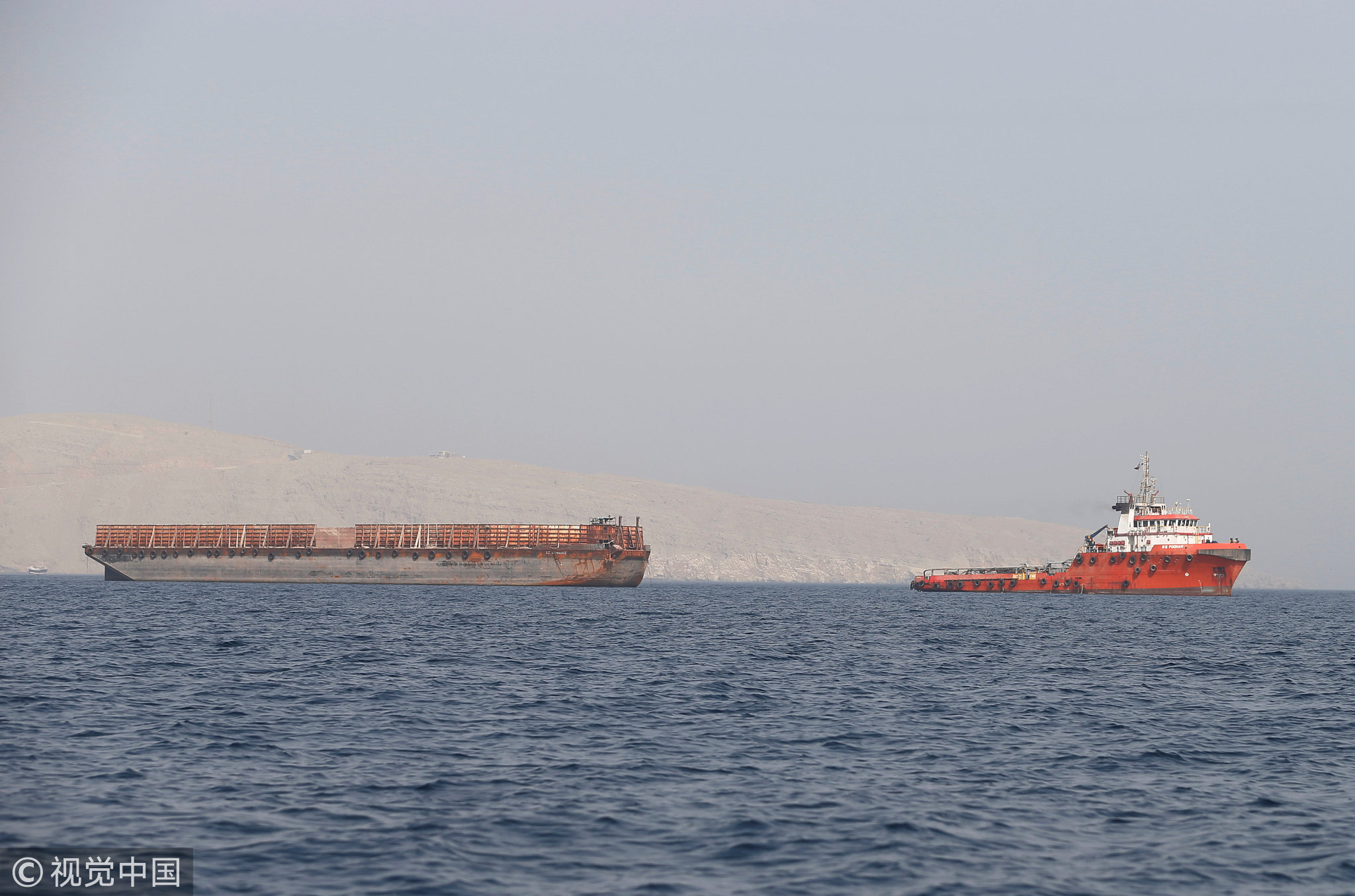
A tug boat moves cargo towards the Strait of Hormuz, in Musandam province, Oman, July 20, 2018. /VCG Photo
A tug boat moves cargo towards the Strait of Hormuz, in Musandam province, Oman, July 20, 2018. /VCG Photo
Fortunately, the remaining parties in the nuclear deal are using their considerable diplomatic power and influence against the Great Disrupter and his economic upheavals and displacements. These sober minds are at the center of the international system, not on the periphery. They have no wish for war and refuse to be drawn into unnecessary contests just because Trump wants to jump ship and show who is the big boss.
If there is one thing we know by now, it’s that the current campaign to side with international law and not Trump, to calibrate actions and grant Tehran some relief, to translate Washington’s foreign policy disconnect and ruinous trade and currency wars into greater commercial ties, and to create and sustainable and all-inclusive economic world order.
By saying no to Trump’s anti-Iran bans, China, a formidable global economic superpower, is also playing an effective role in this, seeing that in today’s turbulent world, trade and economic cooperation is no longer a matter of choice; it has become a necessity, both locally and globally.