
Opinions
10:08, 17-Aug-2018
Opinion: What signals have been sent in upcoming Sino-US talks?
Updated
09:18, 20-Aug-2018
 ["china"]
Share







Copied
Editor’s note: This article is translated from an editorial piece originally published in the WeChat official account of Bullpiano.
China and the US are about to have another round of trade talks in late August, which no doubt sends a positive signal in the heat of the China-US trade war.
There are only two paragraphs in the statement about the upcoming talks released by the Ministry of Commerce of China on Aug. 16:
At the invitation of the US side, Wang Shouwen, Vice Minister of Commerce and deputy China international trade representative, will lead a delegation to visit the US in late August to meet with US representatives led by David Malpass, undersecretary for international affairs at the US Treasury Department, for talks on bilateral economic and trade issues of their respective concerns.
China reiterates that it opposes unilateralism and trade protectionism and will not accept any unilateral trade restrictions. China welcomes dialogue and communication on the basis of reciprocity, equality, and integrity.
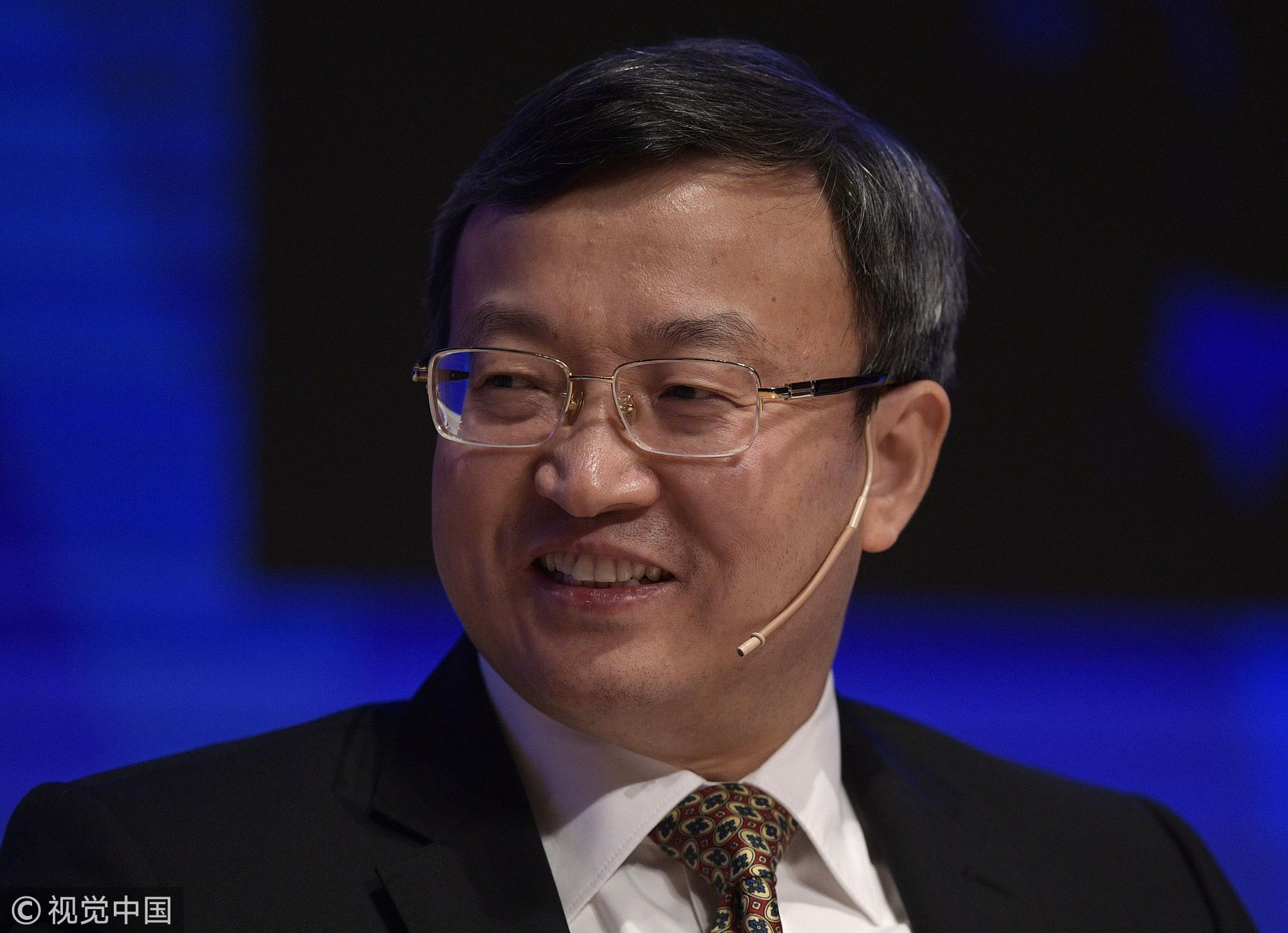
In this file photo taken on December 12, 2017, China's Vice Minister of Commerce Wang Shouwen talks during a plenary session of the Business Forum of the 11th Ministerial Conference of the World Trade Organization (WTO) in Buenos Aires. /VCG Photo.
In this file photo taken on December 12, 2017, China's Vice Minister of Commerce Wang Shouwen talks during a plenary session of the Business Forum of the 11th Ministerial Conference of the World Trade Organization (WTO) in Buenos Aires. /VCG Photo.
The talks are of special significance given their timing and circumstances. I think we can get at least three messages from the talks.
Message 1: The Chinese delegation has been invited by the US side to visit the US for this round of high-profile trade talks.
The statement of the Ministry of Commerce of China started with “at the invitation of the US side.” Why did the US invite the Chinese delegation? The US side is probably trying to adjust its position as it becomes clear that no one will emerge a winner from a trade war.
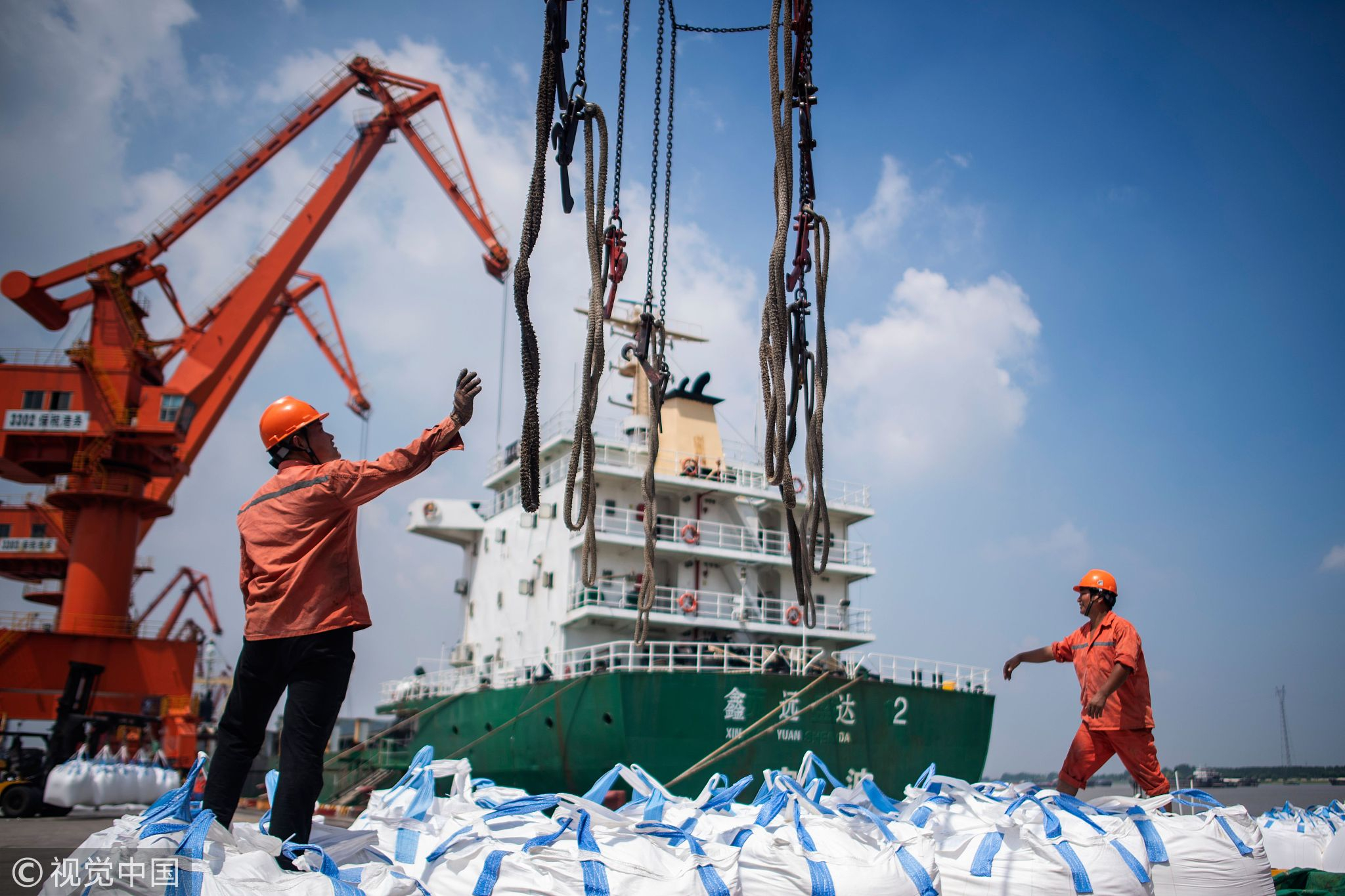
This file photo taken on August 7, 2018, shows workers unloading bags of chemicals at a port in Zhangjiagang in China's eastern Jiangsu Province. /VCG Photo
This file photo taken on August 7, 2018, shows workers unloading bags of chemicals at a port in Zhangjiagang in China's eastern Jiangsu Province. /VCG Photo
This unprecedented trade conflict has already seriously affected many companies and industries in both countries. Both sides will incur heavy losses if the trade war escalates. In this context, the only choice is to restart negotiations and resolve outstanding issues through dialogue and communication.
Message 2: Both countries are very cautious, so they send vice ministers rather than higher-level officials for this round of talks.
In the previous three rounds of talks, both China and the US sent ministerial or even higher-level officials. The two sides reached a consensus that “there would be no trade war.” However, the White House backed away from the consensus and launched a trade war against China even before the ink of the agreement dried.
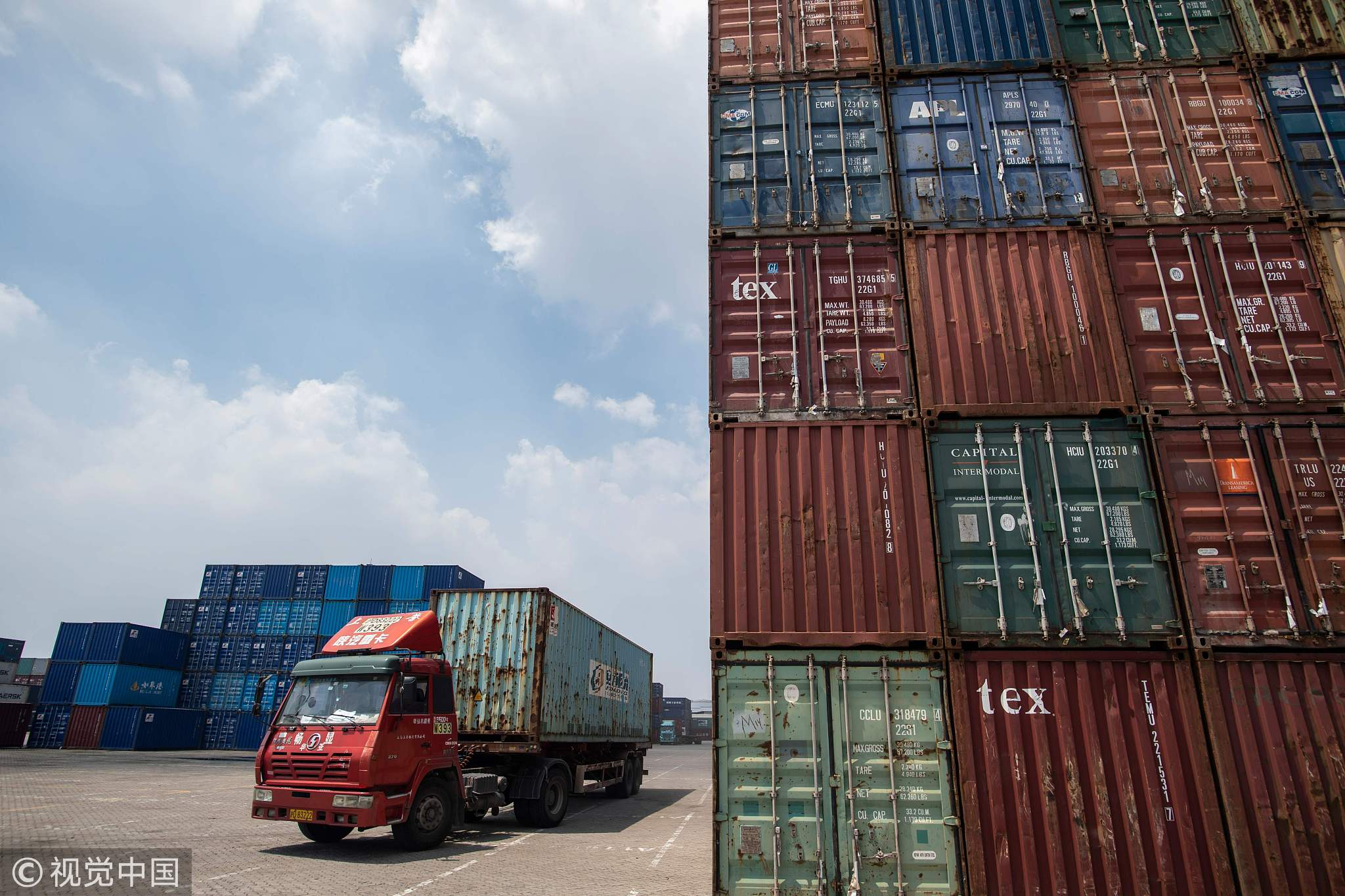
This file picture taken on August 7, 2018, shows a truck transporting a container next to stacked containers at a port in Zhangjiagang in China's eastern Jiangsu Province. /VCG Photo
This file picture taken on August 7, 2018, shows a truck transporting a container next to stacked containers at a port in Zhangjiagang in China's eastern Jiangsu Province. /VCG Photo
Having learned a hard lesson from those talks, both sides are now more cautious, so they send lower-level officials for the talks. China may feel unsure whether the US will stay true to its words this time even though the two sides reach a deal again.
Message 3: Keywords in the statement point to China’s stance and concerns.
The trade talks may send a positive signal, but the problems are still there. In announcing the upcoming trade talks, China also reiterates its stance of opposing unilateralism and trade protectionism, and not accepting any unilateral trade restrictions.
“Reiterate” means China’s stance has been consistent; that is to say, China will not be forced to swallow bitter fruit and will keep fighting bullying.
The statement also said that “China welcomes dialogue and communication on the basis of reciprocity, equality, and integrity.” “Integrity” is used here for a purpose. I hope the US side understands what it means as we all do.
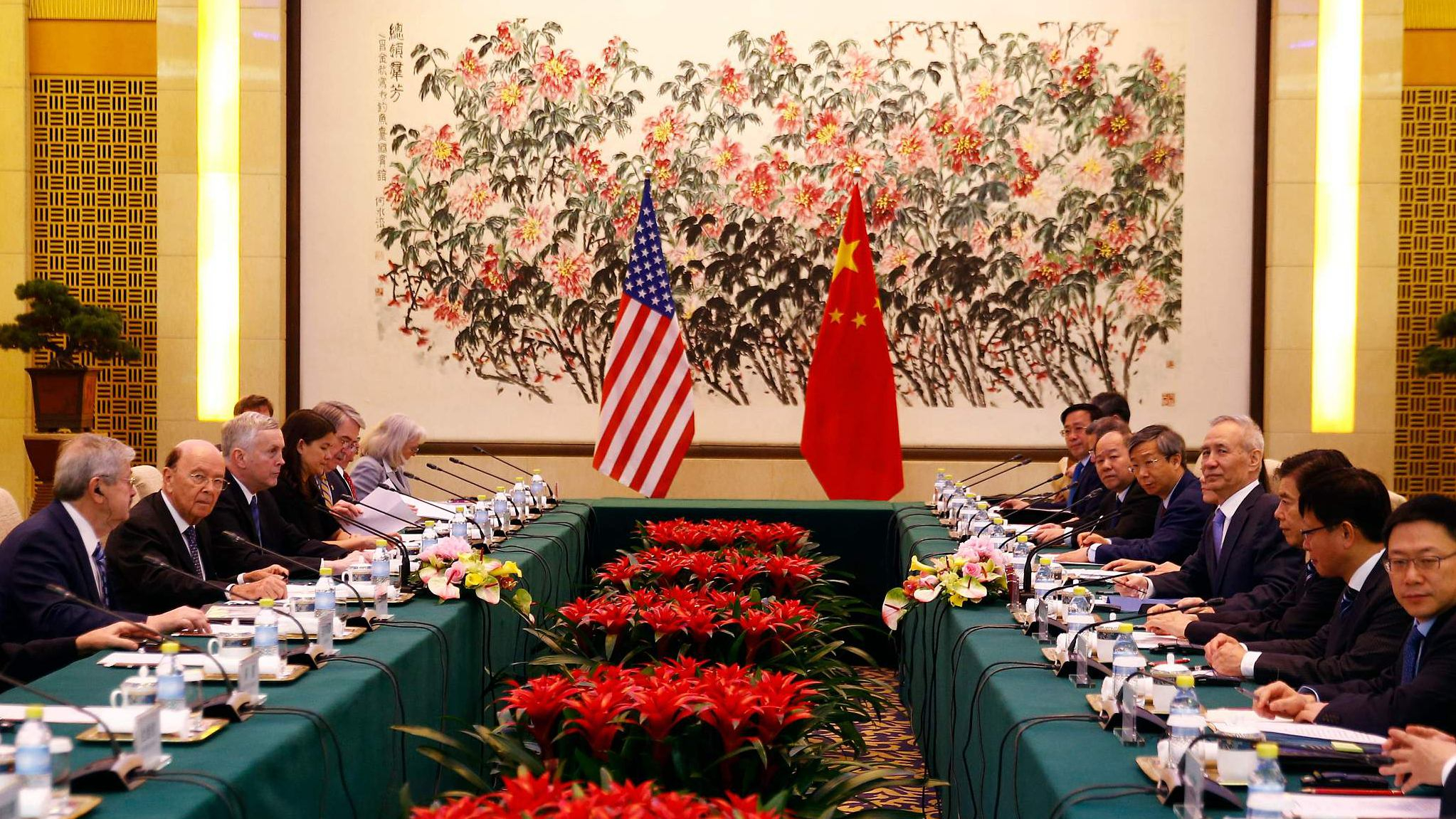
(Cover photo: US Commerce Secretary Wilbur Ross (2nd-L) and Chinese Vice Premier Liu He (4th-R) attend a meeting at the Diaoyutai State Guesthouse in Beijing, June 3, 2018. /VCG photo.