
Opinions
15:58, 30-Aug-2018
Opinion: "The art of the deal" of Shinzo Abe
Updated
15:23, 02-Sep-2018
 ["china"]
Share







Copied
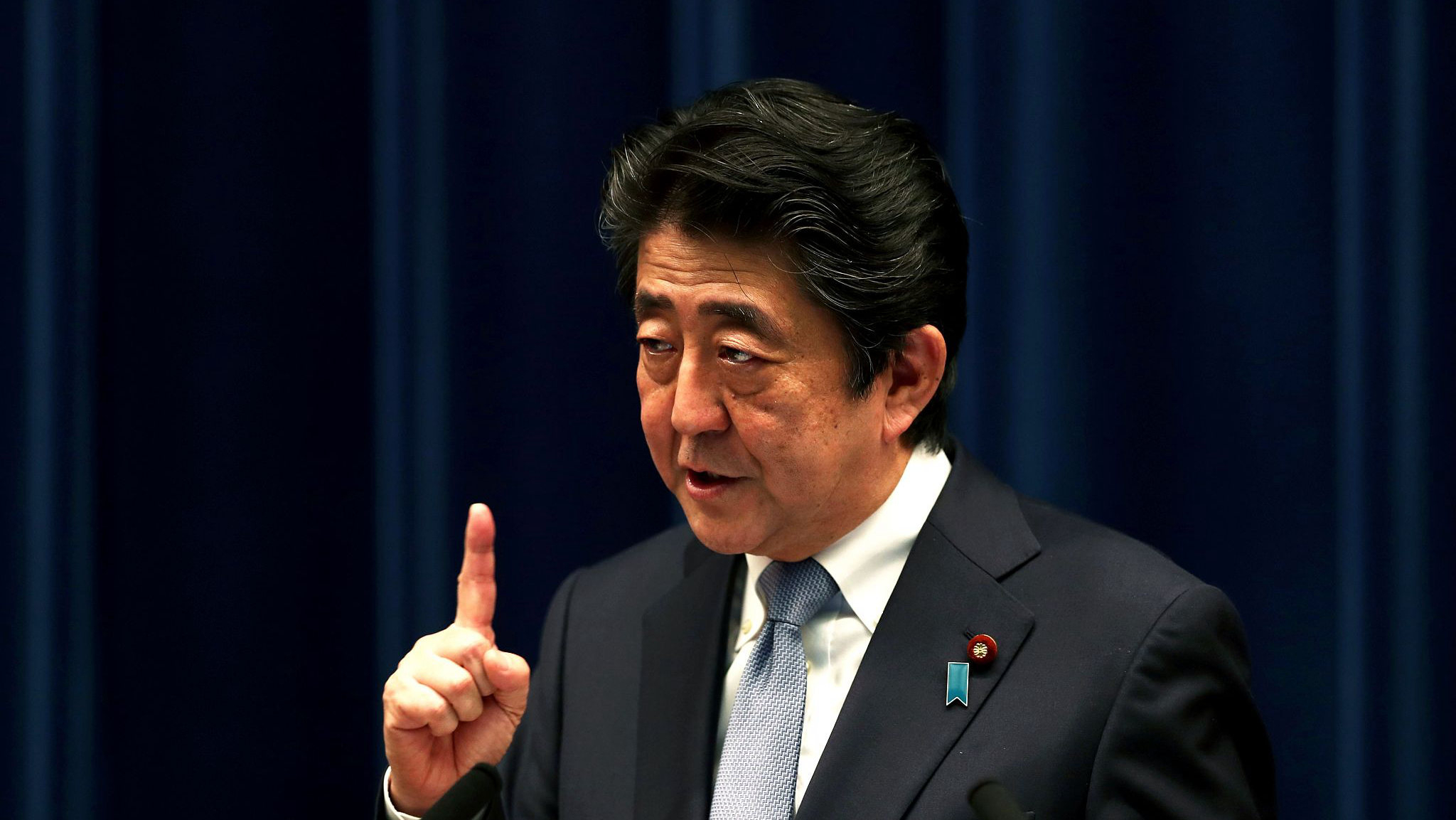
Editor’s note: Xu Fangqing, senior editor at China News Week, non-resident fellow with Center for China and Globalization. The article reflects the author's opinion, and not necessarily the views of CGTN.
The Japanese annual defense white paper released on Tuesday still takes the South China Sea and the nuclear issue with the Peninsula of Korea as the prominent threats in the region regardless of the improving stability on the waters of South China Sea and the historic summit between the Democratic People’s Republic of Korea and United States in Singapore this June.
It seems now Shinzo Abe, Japanese Prime Minister, has turned himself to be an Asian practitioner of “deal art” from American incumbent President. As a matter of fact, the “hazardous regional situation” is nothing short of an excuse for Japan to undertake its strategic military aims.
A military budget plan once issued to set goals for exercising the land-based Aegis ballistic missile defense system by 2023 and purchasing the most advanced stealth fighter jet F-35A and other long-range cruise missile faces fiercely berating from the opposition party given the mitigation of Korean nuclear tensions as the Democratic People’s Republic of Korea in April has announced to halt its atomic test and launching of ballistic missile.
Obviously, the Abe administration would not convert its elaborate strategy that would make Japan a “normal country” by amending its “peace constitution” and enhancing its military capabilities. The budgets for the armed forces have increased in a row since 2012 as the Japanese Prime Minister took office for his second tenure in the name of proactive peace.
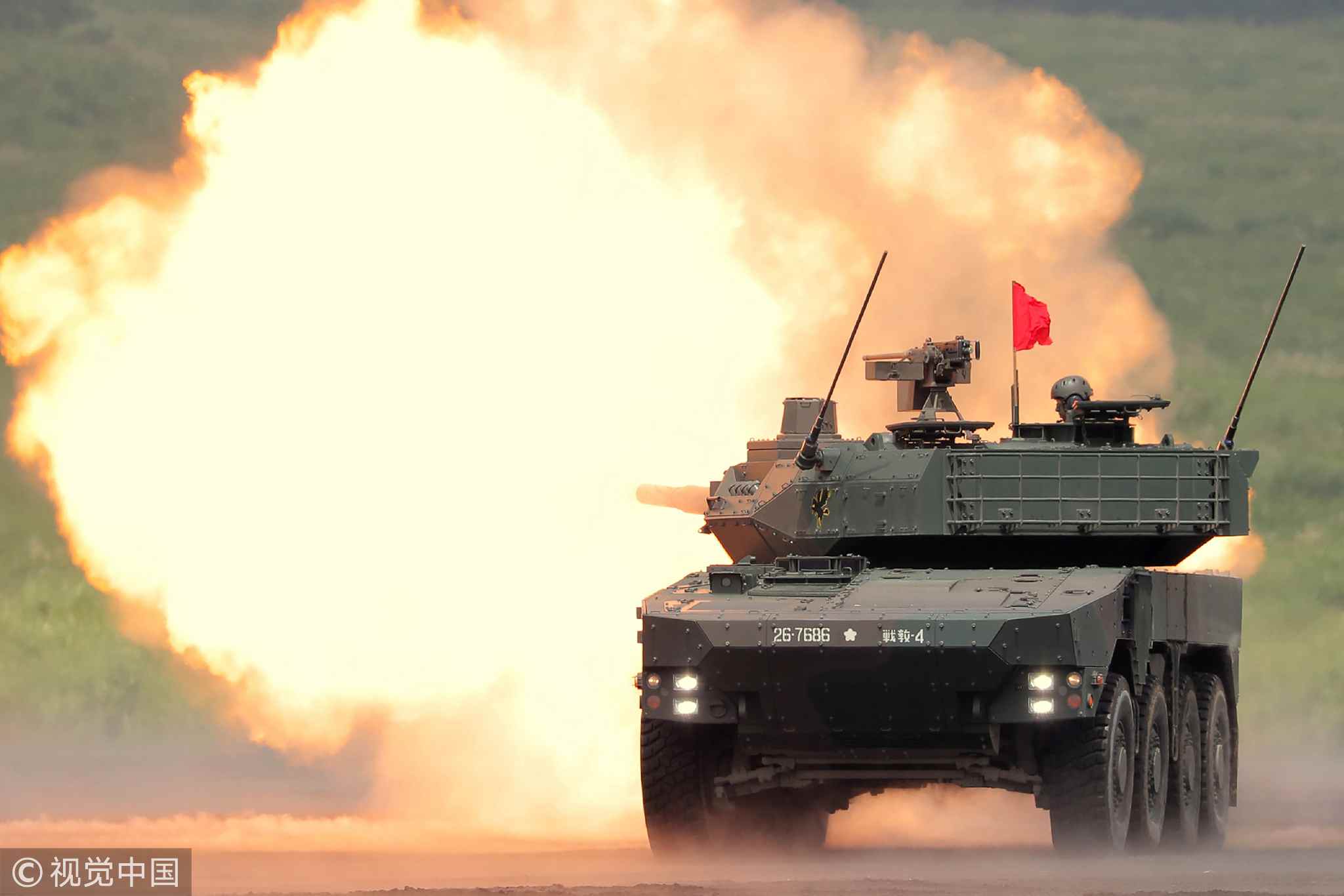
A Japan Ground Self-Defense Forces type-16 mobile combat vehicle fires during an annual live fire military exercise at the Higashi-Fuji firing range in Gotemba, at the foot of Mount Fuji in Shizuoka prefecture, on August 26, 2018. /VCG Photo
A Japan Ground Self-Defense Forces type-16 mobile combat vehicle fires during an annual live fire military exercise at the Higashi-Fuji firing range in Gotemba, at the foot of Mount Fuji in Shizuoka prefecture, on August 26, 2018. /VCG Photo
It’s predicted that Abe would probably win the election of the Liberal Democratic Party, the ruling party in September which would embolden him to move further along the well-designed road map.
Meanwhile, Japanese administration also makes active adjustments on its hard-line stance like returning to Asia and improving Sino-Japanese relations as the global situation has changed dramatically.
Japan has now reacted positively to the “Belt and Road” initiative steered by China and got an equivalent feedback from China soon. Chinese Prime Minister set foot in Japanese land again on May 8, after nearly eight years standoff between the bilateral top-level visits. The visit indicates that he Beijing-Tokyo relationship is witnessing a turning point and heading towards a track of improvement. Furthermore, Abe’s return visit to China is reasonable and would definitely boost the ties of the two largest economies in East Asia.
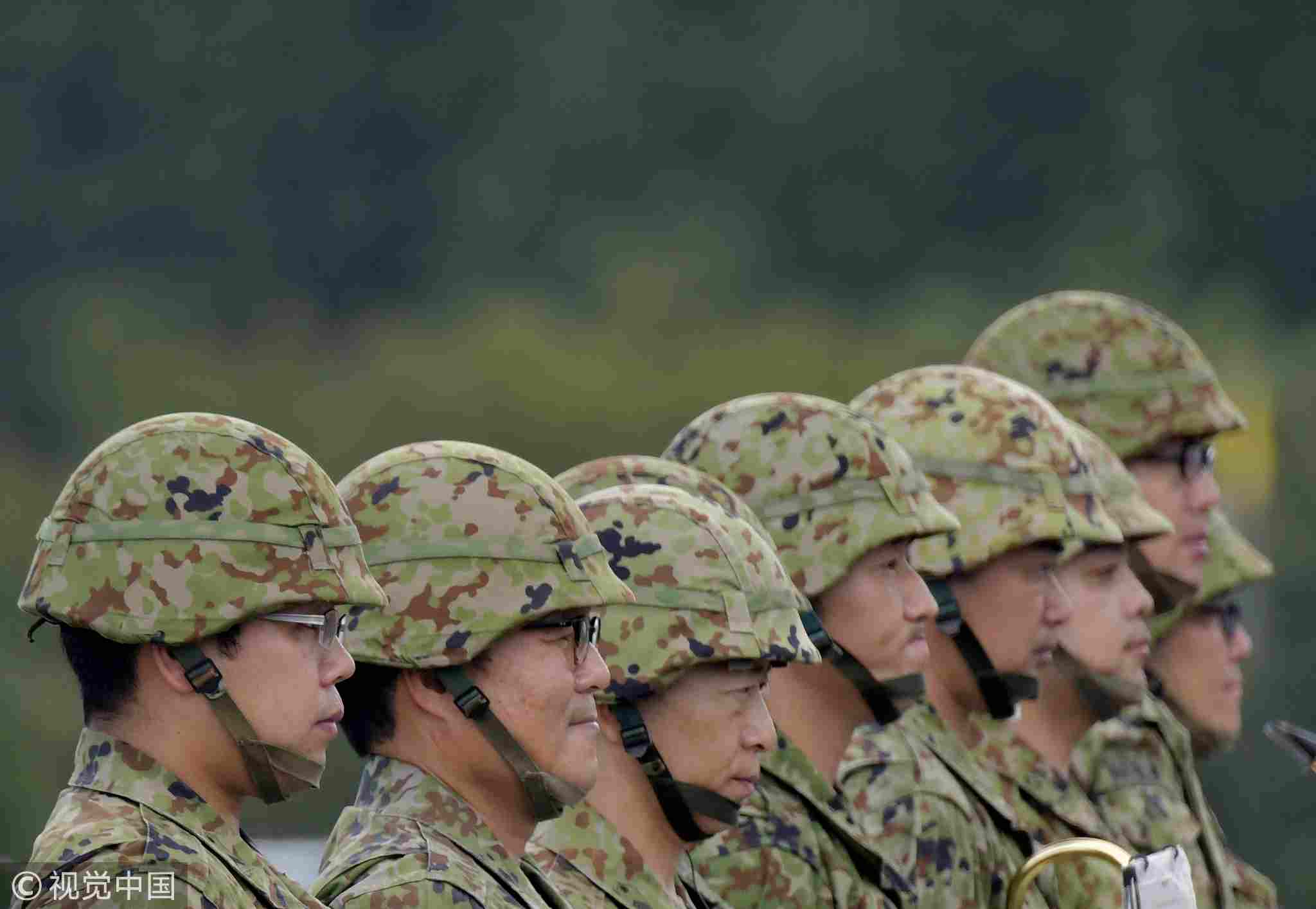
Japan Ground Self-Defense Force (JGSDF) personnel participate in an annual live-fire exercise at the foot of Mt. Fuji in Shizuoka prefecture, central Japan, August 23, 2018. /VCG Photo
Japan Ground Self-Defense Force (JGSDF) personnel participate in an annual live-fire exercise at the foot of Mt. Fuji in Shizuoka prefecture, central Japan, August 23, 2018. /VCG Photo
Abe administration has come into a new period of resettlement of its foreign policies and security values with regard to the long-term dependent tradition towards American-Japanese alliance since the World War II. But it doesn't mean an upheaval would take place overnight cause the post-war alliance between Japan and US is still the pillar for Abe’s foreign strategy. It would likely be a zig-zag process for Japan’s new resettlement course.
Therefore, we should take a prudent and upbeat position to deal with the Abe’s “art” and reckon the Sino-Japanese relationship under a regional and global environment as both sides need to apprehend the changes and adjust timely. With double efforts, the two countries could interact reciprocally and materialize the “normal relations” diplomatically and psychologically.
More trustful and concrete actions instead of artful plots and sophisticated tricks should be undertaken for Abe Administration if he really anticipates a win-win rapport of Sino-Japan and peaceful, stable regional situation.